
Displaying items by tag: Events Chicago
Review: The Movement You Need: An Evening with Brendan Hunt at Steppenwolf Theatre

A show somewhere between a play, standup act, memoir, and PowerPoint presentation. A show so chaotic you think it could never work. A show only Brendan Hunt could so perfectly pull off. Hunt’s solo performance is as hilarious as it is unexpectedly emotional, striking a balance between humor and trauma that only a child of divorce could pull off.
Hunt begins in 2022 with the story of the impromptu opportunity he had to meet Paul McCartney. Despite getting the opportunity by virtue of being a celebrity himself, Hunt – a lifelong, second-generation Beatles fan – was starstruck and wanted to tell Paul everything. He refrained, however, and thus The Movement You Need was born: a show where, instead, Hunt tells you everything he wanted to tell Paul. What unfolds is less a traditional narrative and more a kind of extended, often chaotic, and retrospective confession that uses that near-miss encounter as a framing device. It’s a clever but risky structure that gives the show both direction and elasticity, allowing Hunt to bounce between stories, timelines, and emotional registers (as well as lean into his personal neuroticism) without ever letting us forget that he’s fangirling to Sir Paul McCartney.
Loosely structured like a memoir, the show traces Hunt’s life from his earliest memories through adulthood and into fatherhood. Along the way, he paints a picture of growing up as a child of divorce and the son of an addict, filtering those experiences through humor that feels both self-aware and disarmingly honest. The performance leans into its rough edges in a way that works in its favor – featuring remarkably bad impressions, authentically cringey home videos, and stories that range from deeply processed to intentionally brushed past. Often, the line between curated and embarrassing is difficult to walk well (and such is the risk of making art) but as both a writer and performer, under the incredible direction of Ashley Rodbro, Hunt does so perfectly.
The evening, however, actually included more than one Brendan: Brendan Hunt, an avid Beatles fan, and an audience member who we will refer to as Brendan #2 – the lone, brave audience member who admitted to not being a Beatles fan at all. Centering a play around a fandom, even one of the largest of all time, is a premise that, on paper, might seem limiting. And yet, while Hunt’s love for the Beatles is the backbone of the piece, it’s not the barrier to entry you might expect. The show ultimately isn’t about encyclopedic knowledge of the band; it’s about memory, identity, and the stories we carry with us, as well as the way that we use something – anything – to form connections with those around us, even in the hardest of circumstances.
Technically, the production is just as thoroughly considered as the writing. The set strikes a careful balance between cozy realism and subtle nostalgia, creating a space that feels lived-in without becoming cluttered. Design elements – from Meredith Ries’s scenic work to Nick Solyom’s lighting, Kate Marvin’s sound, and Stefania Bulbarella’s projections – support the storytelling without overpowering it. Under the direction of Ashley Rodbro, everything feels intentional, giving Hunt the space to carry the show while ensuring the world around him remains fully realized and reflects his theatrical background, but never overpowering his performance.
Brendan Hunt’s one-man play-comedy-memoir hybrid is, from its writing to acting to production, one of the most cohesive and well-executed pieces of art I have seen in a long time. One big creative risk, the result is a show that feels less like something you watched and more like something you experienced alongside him. It’s funny, yes, and often wildly so – but it’s the emotional honesty underneath that gives it weight, turning what could have been a niche concept into something far more universal.
The Movement You Need: An Evening with Brendan Hunt is running at Steppenwolf Theatre through May 10th. More information and tickets are available at https://www.steppenwolf.org/tickets--events/seasons-/2025-26/the-movement-you-need/.
This review is proudly shared with our friends at www.TheatreInChicago.com.
Redtwist’s Sobering ‘night Mother Asks Us to Look for the Unseen

Mother-daughter relationships are somehow deemed different. More seminal than the bond between a father and son. More instinctive than between sisters. When trust is broken, all bets can certainly be off. But that doesn’t seem to be the case for Thelma and Jesse, a mom and her daughter who live together in Marsha Norman’s magnificent ‘night Mother, just opening at Redtwist Theatre in Edgewater. They have a balance and flow that suggests a seasoned understanding. A harmonic acceptance of their lives together.
Thelma, played so fully by Redtwist ensemble member, Kathy Ruhl, is a pleasing mix of pragmatism and discreet earnestness. A woman who’s lived a long life, withstood a lot and is making the most of the years in her final season. Knitting on her well-cushioned sofa, cell phone dangling from her lanyard, TV playing in the background, she’s thinking about how she’s going to satisfy her sugar fix. And settles on a snowball before contemplating many other options as the evening passes.
Thanks to the prodigious thought and scrupulous detail Bobbie Buie poured into the set design, Thelma’s modest home has the soft glow of easy unpretentious comfort. Everywhere there are signs that point to a contentment that’s been well earned. The world she created, along with Harper Justus’s precise and subtle sound design, saturated you in place.
Anne Sheridan Smith in the role of her daughter, Jesse, is much more wired; frenzied in an organized way. When she shoots out of her bedroom door, she’s clearly a woman on a mission to get a lot of things done. Quickly. As she settles down, she’s simply determinedly methodical and impressively so. There’s some light haggling with her mother. It seems like something they just occasionally do. Normal. Tonight, giving her mother a manicure is high on Jesse’s to do list. It’s not long before they settle down at the kitchen table and normal goes away.
A small cloud of foreboding drifted in when Jesse began looking for some things in their makeshift attic. One of them is a gun. When her mother keeps pressing her on why she wants or needs one, she forces her daughter’s hand. Jesse declares to her mother, not coldly but matter-of-factly, that tonight she’s going to use it to kill herself.
It’s the kind of statement that instantly triggers incredulity. And automatically, by reflex, Thelma’s “mom” response zooms past tilt. Even though she may not initially believe Jesse, she hears her. And intuitively she wants to fix it as she struggles to even comprehend the magnitude of what she’s been told. ‘night Mother soon becomes a push and pull with Jesse always exhibiting the greater strength against a formidable opponent. She has the inner conviction to see this grim task through. You can sense that when she first told her mother what she was going to do. Like her mother, we too want to know why.
A dissection of one person’s why is what this intricate and intimate story is all about. And the way Smith inhabits her character, she functions as an outstandingly plausible stand-in for many of us. People who not only have had enough but also look at themselves and don’t see enough.
Her mother doesn’t really understand. Not at first. It’s as the tandem airing of their lives that reveals how it’s come to this.
Well into this gripping one act performance, wonderfully directed by Redtwist’s Artistic Director, Dusty Brown, Thelma describes herself as a “plain country woman”. Life for her is something you just did. It’s the kind of existence where naivete and ignorance may thrive in abundance, but neither carries an especially detrimental cost. When it came to Jesse’s early childhood rearing of Jesse though, perhaps it did. Thelma and her husband discovered late in their daughter’s development that the fits she experienced as a child were epileptic. Undiagnosed and untreated for far too long, Jesse internalized them as manifestations of a personal flaw. A flaw that inevitably, in her mind, produced terrible consequences.
She never directly states it, but it’s clear she blames herself for the way her son, Ricky, is turning out. A thief, drugs, regularly in run-ins with the police. Thelma says it’s just a phase. He’ll grow out if it and be a “fine young man”. But through a haze that’s draped in quiet anguish, Jesse senses otherwise. It’s the same with her ex-husband. In Cecil’s case, he was there and then he was gone. The man her mother found for her, who she came to love and who chose not to stay.
They’re all hard blows. Jesse has weathered them. Now it sounds like she’s tired. Sick of it all. Living with her mother. Lonely present. Lonely future. She’s felt this way for so long that she’s used the last 10 years to plan for this night. She’s gotten it so fine-tuned, she can give her mother detailed instructions on who to call when after the deed is done, and why.
For this compassionate plunge into the unthinkable, Marsha Norman won the Pulitzer Prize for drama in 1983. A native of Kentucky, you can hear a faint sound of the south in the way Thelma and Jesse talk to one another. The weight of the subject matter, the care in which these two women are drawn and portrayed, the way every argument Thelma raises against this tragic decision is rebuffed by unswayable conviction, keeps you rapt. A sliver of life captured beautifully and unforgettably on the stage.
‘night Mother
Through May 24, 2026
Redtwist Theatre
1044 W. Bryn Mawr Ave.
Chicago, IL 60660
For tickets and more information: https://www.redtwisttheatre.org
Highly Recommended
This review is proudly shared with our friends at www.TheatreInChicago.com.
Premiere of OUT HERE at Court Theatre a Charming Deconstruction of Marriage and Musical

Everyone encounters many crossroads in their lives, where they make a choice that determines the future…and many people live to regret it. That is where Dawn, the protagonist of Out Here, the new musical receiving its premiere at Court Theatre finds herself. Unlike most people, however, her realization does not come in a quiet moment of reflection, but just as she and her husband, Brian, and 15-year-old daughter, Cleo, have discovered that they have a band and an audience. It’s a lot, and the extremely metatheatrical musical reflects the chaos well. While there are drawbacks to the format, including the impossibility of fully developing most of the characters, the one-act musical by Leslie Buxbaum (book and lyrics) and Erin McKeown (music and lyrics), based on a concept by Buxbaum, McKeown and David J. Levin, is an entertaining and often moving reflection on personal choices and the people they affect.
Breaking the fourth wall is a hallmark of musical theater, and metatheatrical reflections on the musical being performed are also not uncommon these days, but Out Here takes these conceits to a new level. And that, arguably, is what makes it work so well. The characters must learn how to respond to the fact that they are living their lives in a musical as they navigate the changes in their family structure. The musical form proves to be a convenient way to condense the journey into an evening for the benefit of the audience that comes with it. It also provides a metaphor for the families’ (there are several) journeys from fumbling with new relationships and legal and geographic uncertainty to settling into the rhythms of new lives. The music reflects the jarring awkwardness of both the unexpected performance and the fallout of Dawn’s announcement that her “here” is no longer where she wants to be. As they get more comfortable with both performance and marital differences, the characters begin to exploit their access to a band—and apparently new-found guitar skills—to sing their own songs and share their emotions with each other and the audience. Buxbaum and McKeown toy with breaking the rules of musical theater, allowing characters to exit to the green room and the lobby and to directly address the band and audience. When a mediator is needed, he enters from the band and introduces potential shared custody options in song—a song that that Cleo recognizes from a friend’s experience (and wonders if she could get a puppy, too). Director Chay Yew wisely trusts the material and allows characters and audience to just keep up—no unnecessary scene changes or projections indicating changes in setting—making for a fast-paced exploration of relationships, time, and what’s important in a life. It’s occasionally messy or unfulfilled, but always compelling.

Photo of Alex Goodrich, Ellie Duffey, and Becca Ayers in Out Here at Court Theatre. Phot by Michael Brosilow.
Despite all the metatheatrical machinations, Out Here has an easy-to-follow plot and a singular protagonist. This is Dawn’s story, and the character uses this to her advantage, controlling both the narrative and the other characters as much as possible—though neither musicals nor reality allow for time travel, not that Dawn doesn’t try. While passionately pursuing the life that she wants (and simultaneously trying to figure out what that means), Dawn could quickly become grating, as she seems to be surrounded by good options and supportive friends and family, plus a band. Fortunately, Becca Ayers brings lightness and self-awareness to the role, as well as the ability to belt out power ballads and harmonize with her partners in multiple musical genres. Cliff Chamberlain as Brian plays to his strengths as a mostly non-musical actor—and his voice works well for the folksy guitar serenades that Brian chooses as his musical medium. He is charming and initially almost overly forbearing but grows stronger as he realizes that he has been given an opportunity that he is not willing to give up. As their daughter, Cleo, Ellie Duffey is charismatic and complicated, thrilled to have an audience, wanting to support her parents, but irritated that she is being left out of the decision-making. When she finally gets a song, it’s a propulsive punk declaration that is a necessary release. Bethany Thomas as Robin, Dawn’s ex-girlfriend who reluctantly reenters Dawn’s life, is uncompromising and vulnerable, wanting to rekindle their relationship, but justifiably apprehensive, and her dynamic voice is perfect to convey both her character’s surety about what she needs, and her fear that she might be disappointed again. Thomas’s comic timing also complements Robin’s sarcasm.
Alex Goodrich brings charm and flair to the most musical-theater role of the musical, Martin—he’s in the band! He’s the mediator! He’s the BFF! He can be anything you want him to be, keep the tempo and find the right accompaniment. Though not personally invested, his empathetic performance ingratiates him to both the family and the audience. Also, part of the familial rebuild are Gina, the woman Brian begins dating and Jett, Robin’s grown child. They, too, get swept up in the musical, but they do not have their own songs (maybe if there were a second act?), though they manage to hold their own in the musical/slash family drama they have entered. Amanda Pulcini brings a grounded humor and composure to the most awkward of situations Gina finds herself in. The fact that Jett’s entrance is often introduced with the ominous phrase “the plot thickens” is ironic, since Jett, as played by Z Mowry, is amiable and understanding, someone who seems like a good person to have as a friend, and usually offers sound advice that helps the plot along.
The musical and the cast get top-notch support from the designers and musicians. Co-orchestrator (with Erin McKeown), conductor, and keyboard player Christie Chiles Twillie backs up the vocals and underscores the book perfectly, keeping the tempos tight and the volume attuned to the singers and the script. Breon Arzell’s movement adds controlled chaos, matching the verbal humor and tension with apt but unintrusive movement. Scenic Designers Andrew Boyce and Lauren M. Nichols have created a musical-scale proscenium out of roof beams that mirror the moods of the home’s inhabitants, with a large but cozy interior and expansive outside. Sound designer Lee Fiskness integrates sound effects with the music to mesh the sounds of home with the beats of the band. The musicians make it seem possible to suddenly have a life become a musical, moving easily between styles, “acting” in response to the cast and swelling instrumental lines for onstage instruments.
Whether one likes Out Here will probably depend on one’s tolerance for stories of privileged people choosing between multiple good options surrounded by understanding friends and family. However, there is no denying that using a DIY musical to represent the struggles of a family trying to deal with change is a resonant metaphor, and the music captures some common challenges in fresh and thought-provoking ways. The book by Leslie Buxbaum explores the joy and tension of familial and other relationships with compassion and a great deal of humor. Erin McKeown’s music (with lyrics by Buxbaum and McKeown) allows the audience to get to know the characters and share moments from years of their lives in around 90 minutes (the magic of “theater time”). Chay Yew’s production is fast-paced, uncluttered, funny, moving, and thoughtful. Though Out Here wisely avoids trying to tie up all loose ends, it leaves the audience with a lot of good questions to ponder.
Out Here runs through May 10 at Court Theatre, Wed/Thurs/Fri at 7:30pm, Sat/Sun at 2:00pm & 7:30pm.
This review is proudly shared with our friends at www.TheatreInChicago.com.
safronia soars at Lyric Opera

safronia at Lyric Opera of Chicago emerges as a deeply personal story of the Great Migration - one that resists grandiosity in favor of something more intimate, more lived-in, and ultimately more affecting. Drawn from the family history of Chicago’s inaugural Poet Laureate avery r. young, the work feels less like a conventional opera and more like an embodied poem, carried on breath, rhythm, and memory.
Young himself, as Fiery Baar Booker, gives a performance that is searing. There is fire in his portrayal - a man negotiating identity, displacement, and legacy. Opposite him, Maiesha McQueen’s Magnolia is the emotional anchor of the piece. Her performance radiates warmth and steadiness, embodying the sustaining force of family amid upheaval. She nurtures without sentimentality, giving Magnolia strength.
Lorenzo Rush Jr. brings a charismatic edge to King Willie Tate, a figure caught between aspiration and instability. His chemistry with Meaghan McNeal’s safronia is particularly compelling. McNeal delivers a spiritual performance - her safronia is less a single character than a vessel of generational memory, carrying the emotional weight of those who moved, hoped, and endured.

The company of safronia. Photo by Kyle Flubacher.
The looming presence of white power is sharply rendered through Zachary James as Cholly and Jeff Parker as Bossman. Their performances are unsettling not because they are exaggerated, but because they are so matter-of-fact. The banality of their authority underscores the systemic nature of the oppression the Booker family faces.
The ensemble - Bailey Haynes Champion, Sydney Charles, Miciah Lathan, Eric Andrew Lewis, Renelle Nicole, Jessica Brooke Seals, Maxel McLoud Schingen, and Kendal Marie Wilson - serves as a living chorus, shifting seamlessly between roles while maintaining a unified emotional pulse. They embody community, memory, and migration itself.
Musically, Paul Byssainthe Jr.’s conducting and orchestration weave together spirituals, blues, and textures into a soundscape that feels both rooted and expansive. Under Timothy Douglas’s direction, the production is carefully shaped, allowing stillness and movement to coexist in a way that honors the story’s emotional depth.
Yet for all its power, safronia at the Lyric Opera feels like a work yearning for closer quarters. Its most resonant moments are the quietest ones - the glances, the silences, the shared breath between performers and audience. It is fitting, then, that the production will be remounted at Court Theatre in May 2027. In that more intimate space, safronia may fully realize its potential, allowing audiences not just to witness the story, but to feel it - deeply, personally, and without distance.
This review is proudly shared with our friends at www.TheatreInChicago.com.
At Steppenwolf, Windfall Doesn’t Cash In on Its Promise

Steppenwolf Theatre Company’s, Windfall arrives with all the promise its pedigree suggests. Written by Academy Award–winning ensemble member Tarell Alvin McCraney and directed by Awoye Timpo, the production aspires to be a pulsing, lyrical meditation on grief, justice, and the uneasy intersection of activism and capitalism. What unfolds instead is a work rich in intention but frustratingly elusive in execution.
The play centers on a protest encampment that erupts into violence, culminating in the shooting of Eli, a member of Never Wrestle Justice - a group of activists unafraid to raise their voices. In the aftermath, Marcus (Glenn Davis), who has transitioned, lingers alongside his aging adoptive father, Mr. Mano (Michael Potts). Mano is left reeling, unable to fully accept the reported death of his child, Eli (Esco Jouléy). It’s a potent premise: a father who refuses to confirm his child’s death, a government eager to offer a financial settlement, and a moral dilemma that questions whether survival can - or should - be measured in dollars. Tarell Alvin McCraney frames the story as a “chosen family” drama, but the emotional foundation never fully coheres.
Marcus urges Mano to identify Eli’s body and accept the settlement, arguing that “blood money is still money.” Yet Mano resists, clinging to the unbearable ambiguity of loss. The arrival of various state representatives - played with dynamic range by Alana Arenas as First Lady, Miss Second, and The Last One - pushes the narrative into increasingly surreal territory. These figures, along with Jon Michael Hill and Namir Smallwood in multiple roles, embody a bureaucratic machine that is at once apologetic, predatory, and opaque.
There are flashes of McCraney’s signature lyricism, particularly in the spectral appearances of Eli. Whether ghost, memory, or manifestation of guilt, Eli’s presence should anchor the play’s emotional core. Instead, it muddies the stakes. When Eli ultimately reappears - alive, defiant, and ready to fight - the revelation feels less like a cathartic turn and more like a narrative sleight of hand that the play hasn’t earned.
This points to the central issue: the characters are too thinly drawn to sustain the weight of the play’s ideas. We see Mano’s grief, Marcus’s urgency to settle, and Eli’s activism, but we rarely feel them. The stakes, which should be life-altering, register as curiously low. Even the moral dilemma - to take the money or resist the system - never fully ignites because the emotional investment isn’t there.
Timpo’s direction leans into the play’s abstraction, emphasizing its communal and ritualistic elements. At times, this works; the staging has a fluidity that suggests a world where reality and memory bleed into one another. But the lack of clarity ultimately undermines the experience. Confusion becomes less a deliberate aesthetic choice and more a barrier to engagement.
There is also the question of place. Though the play is set in Chicago, it rarely feels rooted there. References to Rainbow Beach or Pequod’s Pizza read as surface-level markers rather than lived-in details. For a story so deeply tied to protest, policing, and community, the absence of a tangible sense of Chicago is a missed opportunity.
Still, the performances strive to elevate the material. Arenas is the undeniable standout, bringing vitality and nuance to each of her roles. Whenever she takes the stage, the play briefly finds its pulse. Potts lends dignity to Mano, though the script gives him limited room to build a fully realized arc.
McCraney has proven himself to be a playwright of profound depth and clarity. Windfall gestures toward that brilliance but never quite achieves it. It is a communal experience, yes - but one that leaves you searching for emotional and narrative footing long after the final moment fades.
Somewhat Recommended
When: Through May 31
Where: Steppenwolf Theatre, 1650 N. Halsted
Tickets: $20 - $148.50
Box Office: 312-335-1650
This review is proudly shared with our friends at www.TheatreInChicago.com.
Porchlight Music Theatre Announces its 2026 - 2027 Season

|
|
|
|
|
|
|
|
|
|
|
|
|
|
|
|
|
|
Northlight’s Angel Offers Charm, Even Without Full Lift‑Off

Screwball comedy went the way of the dinosaur after the 1940s, but Northlight Theatre attempts to revive it with The Angel Next Door.
For those unfamiliar, screwball was a film subgenre that mixed romance, slapstick, and banter, like Mentos and Coke, and watched them explode to great effect. Stars like Cary Grant, Katharine Hepburn, William Powell, and Barbara Stanwyck delivered punchlines like a punch to the gut and made the over-the-top plotlines land with ease. A modern-day screwball comedy is a welcome idea. Unfortunately, The Angel Next Door doesn’t quite fly to its predecessors’ heights.
Written by Paul Slade Smith, this comedy was adapted from Ferenc Molnar’s Play at the Castle. It follows Oliver Adams, played by Garrett Lutz, who just finished his first novel. It’s set to be adapted for the stage by married playwrights, Arthur and Charlotte Sanders (Sean Fortunato and Katy Sullivan). They desperately need a hit after their last venture flopped, and their only hope is Oliver’s book.
Unfortunately, things don’t go as planned, and the bright-eyed, innocent author discovers that the beautiful Margot Bell (Aja Alcazar), his love and the novel’s inspiration, has been intimate with Victor Pratt (Andres Enriquez), Broadway’s favorite baritone. It’s then up to Charlotte to bring the two together before Oliver flushes his dreams – and everyone else’s – down the drain.
The Angel Next Door is a love letter to theatre, poking fun at stage tropes, breaking the fourth wall, and preaching about the importance of laughter and escapism in today’s world. In fact, by the end, an unbeliever, Olga (Erin Noel Grennan), the maid, is converted. Unfortunately, the script is so saturated with inside jokes, that the plot is only as deep as a puddle. The first act feels like one long set-up for a mediocre pay-off in the second. Much of the time is spent in exposition or watching characters react to scenes the audience watched happen moments ago.
The cast is the saving grace. The entire troupe, with the exception of Sullivan, actually performed their same parts in Peninsula Players Theatre’s 2024 production. Linda Fortunato, Peninsula’s Artistic Director, directed those performances and also directs Northlight’s version, guiding the production with confidence and clarity even though this particular script doesn’t quite rise to meet her.
Sean Fortunato and Katy Sullivan work wonderfully together as the veteran playwrights who have been through it all. Alcazar balances Margot’s ego and grace well, making it easy to understand why it was love at first sight for Oliver. Enriquez is hilarious as the dumb Victor, who is always ten steps behind everyone else and gets lost in his own reflection. Alcazar and Enriquez also have great physicality, and it was fun to watch the flair they added to simple movements, like sitting down with style or stomping their foot. Erin Noel Grennan steals every scene as the grim Olga. Her comedic timing and presence make this kooky character pop.
Ultimately, The Angel Next Door has all of the parts of a solid comedy but in the wrong proportions. For example, Olga is a crowd-favorite, but scenes would occasionally stall to give her joke after joke. Too much of a good thing is a bad thing, especially when the audience got very few interactions between Oliver and Margot, despite everyone’s future hinging on their romance.
Still, The Angel Next Door delivers an enjoyable experience, lifted by a strong cast, even if it doesn’t linger long after the curtain falls.
For more information, visit https://northlight.org/series/the-angel-next-door/.
This review is proudly shared with our friends at www.TheatreInChicago.com.
New Leadership on Display at Alvin Ailey Dance Theater with Alicia Graf Mack

Sustaining legacy is no simple task, especially when considering the arts. How do you preserve continuity of spirit while simultaneously establishing artistic harmony with the past, present and future? Knowledge, skill and vision at the top are always critical. But there are other intangibles that ultimately determine long term success.
When Robert Battle unexpectedly announced he could no longer act as artistic director for Alvin Ailey American Dance Theater in 2023 for health reasons, one of the most accomplished and revered dance companies in the United States began a search to fill a pair of epic shoes. Since its inception in 1958, nearly 70 years ago, the company has only had three artistic directors, Mr. Ailey himself, his designated successor and former principal Ailey dancer, Judith Jamison, and Mr. Battle whose initial association with the Ailey company was that of a guest choreographer. He’d go on to distinguish himself as a master in his field.
Late in 2024, Alvin Ailey Dance Theater chose Alicia Graf Mack, at the time director of the dance division at Juilliard, to become its fourth artistic director. She began her tenure as Ailey’s new artistic director in July last year.
Mack’s background and credentials are all exemplary and on their own portend a fruitful stewardship. Born in California and raised in Columbia Maryland, her parents, one Jewish the other African-American, were socially engaged academics who encouraged their children’s creative interests. Mack trained in ballet and by 17 was accepted into Dance Theater of Harlem where, at nearly 6’ tall and willowy, her height and grace contributed to building her celebrity. Consequential injuries necessitated that she quit dance, leading her to acquire a History degree at Columbia University.
After finishing Columbia, Mack returned to the Dance Theater of Harlem where the company’s financial difficulties made her homecoming brief. Applying to the American Ballet Theater and being rejected because of her height, she approached the Ailey company where she was not only accepted into the company, but she was also “embraced” in her totality.

Artistic Director Alicia Graf Mack. Photo by Andrew Eccles.
Her initial time with Ailey, from 2005 and 2008, allowed Mack to explore and hone other dance styles more deeply and to intellectually mature as a dancer. After leaving the company to obtain a degree in non-profit management at Washington University in St. Louis, she returned to Ailey in 2011 where she enjoyed notable success as one of its premier dancers until 2014. Mack then redirected her career and devoted it to education.
At a luncheon held in her honor at Chicago’s Auditorium Theater earlier this year, Mack talked about the people and experiences that led her from being an aspiring teenage dance professional to heading one of the world’s leading dance organizations. As she recounted her past, the emotional intelligence and natural humility she’s noted for were readily apparent. In her remarks, the new artistic director recognized the wealth of experience, knowledge and talent resident in the Ailey staff and stated she would be relying on those resources to help her fulfill her mission. She also credited the mentorship she received from dance titans, including Ms. Jamison, pioneering Black ballerina Lorraine Graves and the legendary Carmen de Lavallade. The advice and counsel they all shared will prove valuable assets for the future.
Just as she balanced the need to adapt to tomorrow while respecting heritage at Juilliard, Mack addressed doing much the same in her new role with Ailey. Not only is she mindful in honoring the “Ailey aesthetic”, but she also shared her interest in bringing in new choreographic voices to complement, expand and enhance the principles and values Mr. Ailey displayed in his work and that of the choreographers he admired.
Providing avenues for dancers to achieve fulfillment in their craft is also central to Mack’s mission. One she’s shown to advance through an ethos of affirmation.
As the climax to the Auditorium’s 2025-2026 Celebrating Women in Dance season later this month, the Alvin Ailey Dance Theater engagement at the theater is a welcome to Ms. Mack. The three-day run will see two programs performed. In addition to Alvin Ailey’s classic Revelations and an excerpt from Judith Jamison’s 2005 Reminiscin’, the remaining five dances are contemporary creations of pioneering luminaries in choreography. All five works saw their world premieres in 2025.
Giordano’s Ignite the Soul Dance Concert a Study in Topflight Versatility

It’s no secret every new dance season is filled with its own undercurrent of anticipation. Regardless of the company, audiences who follow them silently wonder what will be the prevailing theme that will dominate a troupe’s next major performance. What attributes will signal growth and maturity. What kind of insights are going to be shared through a gifted choreographer’s storytelling skills. What unexpected feat of technical or physical prowess is going to once again prove dance’s unmatched ability to translate the full scope our humanity.
Some companies can always be relied on to provide brilliant responses to those kinds of musings. Giordano Dance Chicago (GDC) is one of them and their Ignite the Soul program at the Harris Theater for Music and Dance Friday night demonstrated that even with more than 60 years’ experience dancing at the top, the growing process never ceases. The will and desire to keep striving, learning and absorbing does much more than simply avert atrophy. It fuels the kind of energy that invigorates everyone on the stage and in the seats. And it enables some of the galvanizing moments found in Ignite the Soul.
A broad ranging show that spanned genres of dance and artistic temperaments, half of the program’s six dance roster consisted of works that have never previously been performed publicly. Two of the three world premieres were made possible by donors who, not so uncommonly, prefer to remain anonymous.
The show opened with resident choreographer Al Blackstone’s Latin inspired, Sana. Receiving its own world premier last year, the dance lives as comfortably in the realm of contemporary dance as it does jazz. Meant to evoke notions of healing, Sana highlights the beneficence of community and the power of the collective. Thrillingly dynamic and often probing, Stahv Danker’s original score makes for a potent force that enhances Sana’s appeal.
Over the years, GDC has fine-tuned the way it incorporates film shorts to provide supporting information about the company, its history, its dancers, the choreographers it partners with and the wealth of community initiatives it conducts. Each season these interludes become more polished and prove more indispensable. One preceded each of the evening’s new dance segments; providing priceless insights into what fuels a talented choreographer’s creative process. By the time tap dancer, choreographer and arts executive Mike Minery finished his explanation on how My Kind of Girl came about, you couldn’t wait to see the world premier he collaborated with GDC’s Artistic Director, Nan Giordano, to produce for the company.

Adam Houston and Sasha Lazarus - photo by Zach Kemper.
Through his lead in, we learn how crucial tap is to much of modern dance and how instructive it can be to a dancer’s technical foundation. Then we were reintroduced to how therapeutic and beautiful the dance form can be when Minery himself took to the stage with GDC’s splendid Erina Ueda to enrapture the hall with a gorgeous tap duet. In this hyper-digitized, infamously disconnected world, My Kind of Girl is as analog as a warm hug and twice as pleasing. Loaded with dance prowess of the highest level and bathed in Frank Sinatra’s silky voice backed by Count Basie’s band, the audience couldn’t help but cheer heartily after My Kind of Girl came to its swoon worthy close.
Following that welcome touch of sweetness, the company brought out the flame throwers with Sabroso, a 2011 torcher crafted by Del Dominguez and Laura Flores. Quintessential Giordano in its presentation, dancers shimmied and strutted their way through a sassy half dozen Latin dance styles that came packed with plenty of sensual heat. Flaunting knock-out sequined costumes designed Nina G., the women in the company made sultry soar while their male counterparts wrapped machismo in a thick layer of sophistication. Adam Houston and Analysse Vance picture perfect Bolero highlighted the exceptional individual artistry dancers bring to a performance. The kind that always guarantees delight.
Something of the transformational arrived with Jon Rua’s namuH, a dance signifying the power and importance of love at its most basic and pure. Rua’s video explanation of his personal background and the trajectory of his career from street dancer to choreographer ideally framed the dance that followed. The word “Human” spelled backward, namuH feels as if it has one foot in the present day and one in the future. Bjork and Stateless’s music draw an intense landscape. Rugged and difficult. Coupled with neutral, utilitarian costumes worn by the dancers and you sense a sterile almost bleak world. The energy and magnetism come from the dance and the dancers who, despite any obstacle or hardship, invariably end up leaning on each other to keep on keeping on.
The music, the way the dance unfolds, the unorthodox movements whose origins clearly derive from the grit of urban streets, all draw you in and leave you captivated. As rewarding as the choreography itself is, the company’s dancers give it life by fully internalizing its precepts and projecting its message so beautifully.
This is about as far away from jazz dance as you can get, but namuH’s central theme of cohesion and co-dependence; as well as the way it helps us see the latent generosity in all of us, make it an ideal match for this venerable dance company that can shape shift so elegantly.
Excerpts of Ronen Koresh’s 2015 Crossing/Lines preceded the night’s finale and final world premiere, Dumb Luck!, choreographed by Mr. Blackstone. A salute to the country’s upcoming 250 anniversary and an intentional lighthearted salve to our erratic times, Dumb Luck!, with its nautical pastiche and post-war verve, is a happy escape to nostalgia. Nina G.’s period sailor outfits take you right back to the grand old days of splashy Hollywood musicals. Coasting on jazz gold via the sounds of The Nate King Cole trio, the Manhattan Transfer, and Big Bad Voodoo Daddy, dancers cavort while maintaining tight but jaunty dance formations.
A very fine effort, strengthening the dance’s core character would make it more even more distinctive.
Whetting the appetite for more is what Dumb Luck! and the rest of the dances making up Ignite the Soul’s program do all too well. Placing those expectation reveries about their next stage outing on high boil once again.
Ignite the Soul
Giordano Dance Chicago
April 10-11, 2026
Venue: The Harris Theater for Music and Dance
205 E. Randolph Street
Chicago, IL 60601
For more information about Giordano Dance Chicago: https://www.giordanodance.org
This review is proudly shared with our friends at www.TheatreInChicago.com.
Drury Lane’s Father of the Bride Charms with Effortless Fun

The 1950s is easy to idealize. Men styled tailored suits, women dazzled in pleated dresses, and everything glimmered like it was in a commercial. Life’s troubles were solved with a talk from pop or a hug from mom – or that’s how it seemed. Drury Lane Theatre’s Father of the Bride transports audiences to that romanticized time, and it’s a welcome trip!
Published in 1949, Father of the Bride was adapted for the stage and screen, including two beloved movies starring Hollywood heavy-weights Elizabeth Taylor, Spencer Tracy, and, later, Steve Martin in 1991. While a wedding-gone-wrong may be a familiar story, director Michael Heitzman infused Drury Lane’s rendition with charm, laughter, and sincerity, making it feel fresh.
The play follows Stanley Banks, whose one-and-only daughter prepares for her big day, but she just wants a simple ceremony. Then again, she does want to invite all of her friends… and wants a beautiful dress… and well, by the time everything adds up, the small affair balloons into a whopping headache for dad.
Joe Dempsey’s portrayal of Banks, the set-in-his-ways father, is spot on, and his ad-libbed groans and physical comedy can’t help but make you laugh and empathize with poor, ol’ dad. He balances his old‑school bravado with the teddy-bear-interior so well, creating the heart of the story and avoiding the tired “dumb dad” troupes.

Aurora Penepacker and Jake DiMaggio Lopez in Father of the Bride. Photo by Justin Barbin.
Also making up the family is Rachel Sullivan, who plays the mother, Ellie Banks, with a gentle, confident air, and sons Ben and Tommy are portrayed by Kyle Ringley and Charlie Long, who bring charismatic Leave It to Beaver energy.
Aurora Penepacker plays Kay Banks, the soon-to-be bride with all of the charm of Elizabeth Taylor, and Jake DiMaggio Lopez is her moonstruck, in-over-his-head fiancée, Buckley Dunstan. Their chemistry is fun to watch as every emotion ping-pongs around as their nuptials draw near.
The ensemble also includes some fantastic performances. Michele Vazaquez portrays the tightly wound secretary, Miss Bellamy, who delivers a hilarious meltdown when every member of the family sabotages her efforts to finalize a guest list. Ed Kross brings quirky comedy as the caterer, Mr. Missoula, who steamrolls the Banks (and jumps like Super Mario), and Maya Hlava as Peggy Swift is an overzealous girl-next-door who plots to catch the bouquet.
The original compositions composed by Curtis Moore also deserve a shout-out. They serve as the perfect soundtrack during sequences which showed seasons changing or wedding gifts flooding in and add that extra something that makes you feel like you’re watching your favorite black-and-white sitcom.
Comedy can be tricky to tackle, but Father of the Bride makes ever beat work. It’s whimsical, playful, and a reminder that when things go awry, those you love will always be there. Father of the Bride is an invitation to a pure, wholesome evening, and it’s an invite you should not pass up.
Father of the Bride runs through May 31 at Drury Lane Theater. Click here for tickets and more information.
This review is proudly shared with our friends at www.TheatreInChicago.com.

Holiday Hilarity! Paramount presents The Second City’s Nut-Cracking Holiday Revue at downtown Aurora’s Copley Theatre, Nov. 20-Dec. 23
21 October 2026 in Upcoming TheatreNeed something better than old reruns of Hallmark Movies this holiday season? Want to see some real nut-crackers? Then dash…
Mary, A Holiday Dansical Returns for one performance only at Logan Center December 13th
21 October 2026 in Upcoming DanceBlack Girls Dance®, which centers Black and Brown girls in joyful community, presents its sixth annual production of Mary, A…
The Gift Theatre's Hayward: A Floridian-Style Shiva
20 October 2026 in Theatre in ReviewThere are funerals where grief brings a family together, and then there are funerals where grief opens the door to…

Chicago Shakespeare Makes Winter’s Tale a Story Worth Telling
20 October 2026 in Theatre in ReviewChicago Shakespeare Theater’s production of The Winter’s Tale delivers a compelling evening of theater, showcasing an exceptional company of actors…

Steppenwolf Theatre Presents JESSIE MUELLER WITH SETH RUDETSKY – December 18 & 19, 2026
20 October 2026 in Upcoming TheatreSteppenwolf Theatre Company and Mark Cortale are pleased to announce the return of Tony Award-winning Broadway star Jessie Mueller (Beautiful:…
Remy Bumppo’s Mud Row: A Family Haunted by the Past
20 October 2026 in Theatre in ReviewRemy Bumppo opens its 30th anniversary season with Mud Row, a play by Tony Award nominee and MacArthur “Genius” Grant…

A Joe & Melanie Thing Theatre Company announces The Hanukkah Humbug at Greenhouse Theater Center - December 3-6
20 October 2026 in Upcoming TheatreThe world premiere of The Hanukkah Humbug brings ghosts, history, tradition, and a whole lot of family fun to the…
Identity Performing Arts' Fifth Anniversary Gala: Movement That Keeps Becoming
19 October 2026 in Dance in ReviewFive years is an important milestone for any arts organization, but for a contemporary dance company it also marks an…

Music Theater Works Pours a Beachy Cocktail with Escape to Margaritaville
19 October 2026 in Theatre in ReviewA gentle, tide‑easy current settles in right from the start, immediately signaling the kind of story this musical wants to…

Overshadowed Theatrical Productions Brings Beloved Holiday Classic It’s a Wonderful Life to the Stage
18 October 2026 in Upcoming TheatreThis holiday season, Overshadowed Theatrical Productions is thrilled to present the timeless holiday classic, It’s a Wonderful Life, live on…
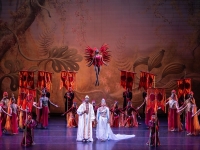
Dance Theatre of Harlem fills Auditorium Theatre with fire and funk
18 October 2026 in Dance in ReviewProjecting a vibe that felt more homecoming party than ballet presentation, Dance Theatre of Harlem returned to Chicago on October…

“A Strange Loop” Lets the Intrusive Thoughts Win at Raven Theatre in partnership with About Face Theatre
17 October 2026 in Theatre in ReviewA musical, but it’s just the voices in your head. Sounds just crazy enough to win the 2020 Pulitzer for…

BTE Opens New Season with Gunderson's "Louisa May Alcott's Little Women" Nov. 12-Dec. 13
16 October 2026 in Upcoming TheatreBuffalo Theatre Ensemble (BTE), the professional Equity theater companyin residence at the McAninch Arts Center (MAC), opens its 2026-27 three-play…

Announcing Goodman's 22nd New Stages 2026 Festival Line-Up
15 October 2026 in Upcoming TheatreFrom a "Kung Fu rom-com" to a witchy new musical, The Goodman's popular New Stages Festival in its 22nd year continues…

TIMELINE THEATRE’S 100TH PRODUCTION, THE CHICAGO PREMIERE OF LAURA WADE’S HOME, I’M DARLING, DIRECTED BY MECHELLE MOE, SATIRIZES THE SEDUCTIVE FANTASY OF A “SIMPLER PAST,” NOVEMBER 11 - DECEMBER 13
14 October 2026 in Upcoming TheatreTimeLine Theatre’s 30th Anniversary Season at its new home in Uptown rolls merrily along in November with the company’s 100th…

Court Theatre announces America@250 - Now is the Time: Artists Go to Work
14 October 2026 in Theatre BuzzUnder the leadership of Marilyn F. Vitale Artistic Director Avery Willis Hoffman and Executive Director Angel Ysaguirre, Court Theatre proudly…

JK Entertainment presents WHEN WE WERE YOUNG AND UNAFRAID at Greenhouse Theater Center November 12 – 29, 2026
14 October 2026 in Upcoming TheatreJK Entertainment has released first look rehearsal photos for WHEN WE WERE YOUNG AND UNAFRAID, the first production of the…
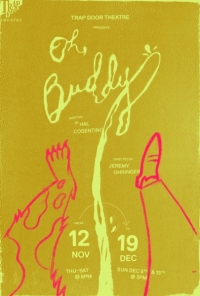
Trap Door Theatre Presents the World Premiere of OH, BUDDY, by Hal Cosentino. Opening November 12th, 2026
14 October 2026 in Upcoming TheatreTrap Door Theatre is thrilled to continue its 33rd season with a Chicago Premiere of Oh, Buddy, written by Hal…

Announcing the Cast of the 49th A CHRISTMAS CAROL
14 October 2026 in Upcoming TheatreTis the season, in spite of today's unseasonable temps, as A Christmas Carol begins rehearsals for The Goodman's 49th annual…

NOVA ENTERTAINMENT CURRENT AND UPCOMING 2026 CIRCA PINTIG UPDATES
14 October 2026 in Now PlayingNova Entertainment is pleased to announce the upcoming performance schedule and updates for CIRCA Pintig, with a visual rebrand and…

Steppenwolf Theatre Announces "ha ha ha ha ha ha ha" January 13 – February 7, 2027
14 October 2026 in Upcoming TheatreThe blurb is: hahahahahahahahahaha hahahahahahaha hihihi hahahahahahaha hoho hahahhahaha hehe hahahahahahahahahaha. Julia Masli's award-winning solo phenomenon ha ha ha ha…

'Sanctuary Stories' Ventures Into Emotional Drama Behind the News on Immigration
13 October 2026 in Theatre in ReviewSanctuary Stories plumbs the line between theater and journalism, and the powerful human dramas both can depict. Funded by a Northwestern…
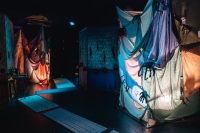
Inside Six Strange Worlds: Exquisite Corpse VI: LULLABIES
13 October 2026 in Theatre in ReviewFor its sixth Halloween season, Rough House Theater Co. has transformed Steppenwolf’s Merle Reskin Garage into a spectacular puppet haunted…
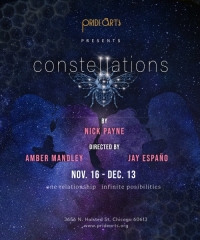
PrideArts announces cast and production teams for Nick Payne's CONSTELLATIONS, performed by alternating same-sex casts, November 13- December 13
12 October 2026 in Upcoming TheatreThursdays – Saturdays at 7:00 pm, Sundays at 3 pm Additional Saturday matinees at 3:00 pm on November 28 and December…

Robert Falls Directs a Sinfully Satisfying Don Giovanni at Lyric Opera of Chicago
11 October 2026 in Theatre in ReviewLet he without sin cast the first stone, Lyric’s “Don Giovanni” seemingly says when they bring up the house lights…

Teatro Vista Productions in collaboration with Audible presents Cafecito & Loops: A Mexodus Listening Tour Headed South Sundays, through November 1st
11 October 2026 in Now PlayingTeatro Vista Productions (TVP), the Midwest's only Latine-led Equity theatre company, in collaboration with Audible, presents Cafecito & Loops: A…
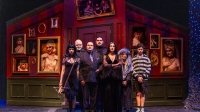
BrightSide’s Addams Family Musical Revives the Wonderfully Weird World of the Addams Clan
10 October 2026 in Theatre in ReviewThey're creepy and they're kooky, Mysterious and spooky, They're altogether ooky, The Addams Family. Yes, ooky. BrightSide Theatre’s production of…
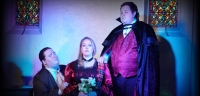
Chicago City Opera Delivers a Rare Operatic Haunting with Der Vampyr
08 October 2026 in Theatre in ReviewWith Halloween creeping closer, there’s something fitting about revisiting one of opera’s earliest flirtations with macabre horror - especially in…

Avalanche Theatre stages the world premiere of They Broke Up by Skyler Tarnas November 6–22, 2026
08 October 2026 in Upcoming TheatreAvalanche Theatre announces the world premiere production of They Broke Up by Chicago playwright Skyler Tarnas, November 6–22, 2026. Opening…

Oil Lamp Theater Announces the cast and creative team for the return of IT'S A WONDERFUL LIFE: A LIVE RADIO PLAY, Nov. 20 - Dec. 27
08 October 2026 in Upcoming TheatreOil Lamp Theater is proud to announce the cast and creative team for its next production and the final production…





Latest Articles
-
 Holiday Hilarity! Paramount presents The Second City’s Nut-Cracking Holiday Revue at downtown Aurora’s Copley Theatre, Nov. 20-Dec. 23
Written by Buzz Center StageNeed something better than old reruns of Hallmark Movies this holiday season? Want to see some real nut-crackers? Then dash on through the snow to catch The Second City’s Nut-Cracking Holiday Revue, November 20-December 23 at Paramount’s Copley Theatre, 8…
Holiday Hilarity! Paramount presents The Second City’s Nut-Cracking Holiday Revue at downtown Aurora’s Copley Theatre, Nov. 20-Dec. 23
Written by Buzz Center StageNeed something better than old reruns of Hallmark Movies this holiday season? Want to see some real nut-crackers? Then dash on through the snow to catch The Second City’s Nut-Cracking Holiday Revue, November 20-December 23 at Paramount’s Copley Theatre, 8… -
Mary, A Holiday Dansical Returns for one performance only at Logan Center December 13th
Written by Buzz Center StageBlack Girls Dance®, which centers Black and Brown girls in joyful community, presents its sixth annual production of Mary, A Holiday Dansical, choreographed, written, and directed by Founder Erin Barnett. This fundraiser returns for one night only Sunday, December 13…
-
 The Gift Theatre's Hayward: A Floridian-Style Shiva
Written by Wesley DavidThere are funerals where grief brings a family together, and then there are funerals where grief opens the door to everything a family has spent years trying to keep buried. In Hayward, playwright Netta Walker turns a father’s funeral into…
The Gift Theatre's Hayward: A Floridian-Style Shiva
Written by Wesley DavidThere are funerals where grief brings a family together, and then there are funerals where grief opens the door to everything a family has spent years trying to keep buried. In Hayward, playwright Netta Walker turns a father’s funeral into… -
JK Entertainment presents WHEN WE WERE YOUNG AND UNAFRAID at Greenhouse Theater Center November 12 – 29, 2026
Written by Buzz Center StageJK Entertainment has released first look rehearsal photos for WHEN WE WERE YOUNG AND UNAFRAID, the first production of the company's second season. JK Entertainment's production brings this story to Chicago audiences November 12–29, inviting audiences to consider how far…


Does your theatre company want to connect with Buzz Center Stage or would you like to reach out and say "hello"? Message us through facebook or shoot us an email at This email address is being protected from spambots. You need JavaScript enabled to view it..
*This disclaimer informs readers that the views, thoughts, and opinions expressed in the text belong solely to the author, and not necessarily to Buzz Center Stage. Buzz Center Stage is a non-profit, volunteer-based platform that enables, and encourages, staff members to post their own honest thoughts on a particular production.