

Wesley David
Chicago Shakes' Play On!: With a Syncopated Harlem Beat
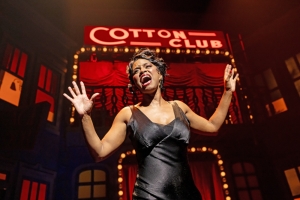
There are some productions you watch, and then there are productions that make your heart swoon and your toe tap. Sheldon Epps’ Play On! is definitely the latter. Now playing at Chicago Shakespeare Theater, this exuberant musical takes Shakespeare’s Twelfth Night, moves it to 1930s Harlem, adds the extraordinary music of Duke Ellington, and transforms the story into a celebration of love, ambition, identity and music.
The magical kingdom of Illyria becomes Harlem, where aspiring songwriter Vy (Hailee Kaleem Wright) arrives with dreams of making it in show business. To get close to the legendary bandleader known as The Duke (Edred Utomi), Vy disguises herself as a man. Complications quickly follow when Lady Liv (Krystal Joy Brown) becomes attracted to Vy's alter ego. Shakespeare's mistaken identities remain at the heart of the story, but Cheryl L. West's book gives the familiar comedy a distinctly African American cultural identity.
West's script is hot and popping, filled with rhythm, humor and personality. She understands that the language of Shakespeare can be transformed without losing the comic machinery that makes Twelfth Night work. The characters may come from Shakespeare, but they walk, talk and move to the syncopated Harlem beat of the 1930s.
And that Harlem beat is everywhere.
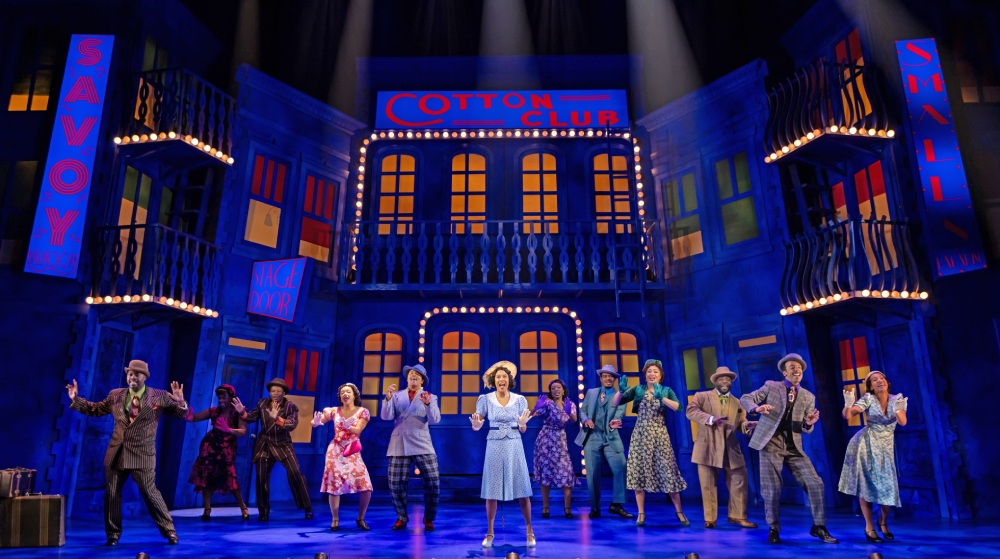
The company of Chicago Shakespeare’s production of Play On! Photo by Kyle Flubacker.
The production's exciting choreography by Edgar Godineaux captures the elegance, sophistication and exuberance of the big-band era. The ensemble - Marquez Linder, Selena Robinson, Dylan C. Smith, Joey Stone, Shelbi Voss and Danny Dwaine Wells II - keeps the stage alive with movement and energy. The choreography doesn't simply accompany the music; it becomes part of the storytelling.
The Duke Ellington score is the production's heartbeat. Under the musical direction of Theodis Rodgers Jr., with beautiful orchestrations by Luther Henderson Jr., the music has both sophistication and swing. Ellington's compositions give the characters another way to express what they sometimes cannot say in words.
For me, the Harlem setting brought back a very personal theatrical memory. Play On! reminded me of the very first show I ever worked on, Bubbling Brown Sugar by Loften Mitchell, from a concept by Rosetta LeNoire (my theatre Godmother), in New York City. That experience introduced me to the power of Black theatre, music and storytelling existing together onstage. Watching Play On! brought some of that same feeling back—the excitement of seeing Black history, Black music and Black theatrical expression become one living theatrical experience.
That connection makes Play On! particularly meaningful. This isn't simply Shakespeare with jazz added to it. It is a conversation between William Shakespeare and Duke Ellington, two artists separated by centuries but connected through their understanding of human behavior, love, comedy and the power of performance.
The cast embraces that world beautifully. James Earl Jones II brings comic energy and warmth to Sweets, while Alanna Lovely gives Miss Mary a strong and engaging presence. James Harkness brings charm and theatricality to Jester. Alan H. Green gives Rev authority and comic flair.
At the center, Wright's Vy captures the vulnerability and determination of a young artist trying to discover who she is and where she belongs. Brown's Lady Liv brings glamour and emotional power, while Utomi's Duke possesses the commanding presence of a bandleader who has created his own musical kingdom.
Epps understands that the success of Play On! depends upon allowing Shakespeare's story and Ellington's music to breathe together. The result is a production that feels celebratory without becoming superficial, and contemporary without abandoning its literary foundation.
Play On! is Shakespeare filtered through the cultural richness of 1930s Harlem, propelled by Duke Ellington's music and driven by a syncopated Harlem beat.
It is a joyous reminder that great stories can travel across centuries - and sometimes, when the right music is added, they can still make us want to dance.
Highly Recommended
When: Through Oct. 18
Where: The Yard at Chicago Shakespeare Theater on Navy Pier, 800 E. Grand Ave.
Running time: 2 hours, 20 mins.
Tickets: $55-150
312-595-5600
- Play On
- Musical theatre
- Sheldon Epps
- Chicago Shakespeare Theater
- Chicago Shakes
- Duke Ellington
- Shakespeare
- Harlem
- Hailee Kaleem Wright
- Edred Utomi
- Krystal Joy Brown
- Cheryl L West
- African American
- Twelfth Night
- Edgar Godineaux
- Luther Henderson Jr
- Theodis Rodgers Jr
- live theatre
- on stage
- Chicago events
- chicago theatre
Definition's How We Got On: A Mixtape for the Stage
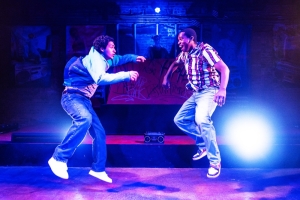
What happens when three young people discover hip-hop and realize they might have something to say? Idris Goodwin’s How We Got On, directed by Definition Theatre Artistic Director Tyrone Phillips, answers that question with rhythm, humor, attitude and plenty of heart. Think of it as a mixtape for the stage - a collection of voices, beats, dreams and memories that takes us back to the 1980s, when hip-hop was still growing and figuring out what it could become.
Jamal Turner’s Hank is ambitious, curious and hungry to find his place. He’s a young guy who discovers that writing rhymes gives him a voice and a way to express what he may not always be able to say out loud. Turner makes Hank likable, funny and real. You can see the excitement in him as he begins to realize that maybe he has something special.
Tony Garcia’s Julian brings a completely different flavor. He is confident, competitive and determined to prove himself. Garcia gives Julian plenty of swagger, but there is vulnerability underneath it. His chemistry with Turner makes their friendship and competition fun to watch.
And then there’s Luann, played by Anuoluwa T. Awolola. Luann is a talented rapper who has almost everything under control. She has the confidence, the skills and the flow. Her one problem is that she’s a girl trying to make it in a male-dominated hip-hop world. Awolola gives Luann the confidence of someone who knows exactly what she can do - and isn’t waiting for anyone’s permission to do it.
Maya Vinice Prentiss is a standout as the Selector, shifting effortlessly between narrator, DJ and several different characters. She is our guide through this musical journey, constantly reminding us that this isn’t just a story being told - it’s a story being spun.
Sydney Lynn Thomas’s set design gets the vibe right from the start. A wall filled with different beatboxes immediately transports us into the world of early hip-hop. It feels like walking into someone’s bedroom, record shop or neighborhood hangout where the next great track might be created.
Adding another visual dimension is Chicago artist John Vergara’s art installation. His colorful work, influenced by graffiti, portraiture and Chicago’s street culture, fits naturally alongside the production’s celebration of hip-hop and self-expression.
The show does have some pacing issues. There are moments when the energy drops, but once the rhythm kicks back in, How We Got On is hard not to enjoy.
This is a mixtape for the stage - a lively blend of music, memories, friendship and youthful ambition. It reminds us that before hip-hop became a worldwide cultural force, it was young people with something to say, a beat to work with and the courage to get on the mic.
RECOMMENDED
When: through September 27th
Where: Definition Theatre@55th, 1160 E. 55th Street., Chicago, Il.
Running time: 90 minutes no intermission
Tickets: Start at $25
312-469-0390
ETA’s for colored girls Honors the Enduring Power of Ntozake Shange
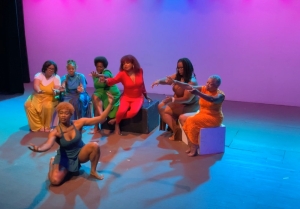
Nearly fifty years after its groundbreaking premiere, Ntozake Shange's for colored girls who have considered suicide / when the rainbow is enuf remains one of the most important works ever written for the American stage. Neither conventional play nor musical, Shange called her work a "choreopoem," a seamless fusion of poetry, dance, music, and theatrical ritual that forever changed the landscape of Black theatre.
When the work premiered in 1976 it shattered theatrical conventions. The original production gave Black women something rarely afforded on the American stage: the authority to tell their own stories without apology, through language that was lyrical, raw, sensual, political, and deeply personal. At a time when Black women were often relegated to supporting roles in theatre, Shange centered their voices, their pain, their joy, and ultimately, their survival. The production earned multiple Tony Award nominations and cemented itself as a cornerstone of the American theatrical canon.
Its relevance today is perhaps even more striking. In an era shaped by conversations surrounding gender-based violence, mental health, reproductive autonomy, identity, and the ongoing struggle for Black women to be fully seen and heard, Shange's words continue to resonate with astonishing clarity. The emotional truths embedded in her poetry refuse to age.
ETA Creative Arts Foundation's production, directed by Donn Carl Harper, wisely understands that the strength of for colored girls lies in trusting Shange's language. Harper resists the temptation to over-direct or impose unnecessary concepts upon the material. His direction is careful, respectful, and largely unobtrusive, allowing the poetry to remain the undeniable centerpiece.
The production, however, begins on an unfortunate note. Opening night started approximately thirty minutes late, a delay that inevitably affected the audience's energy. Compounding that issue was the decision to open with Nina Simone's haunting "Four Women." While Simone's anthem is unquestionably a masterpiece and shares thematic kinship with Shange's work, its placement here felt somewhat gratuitous. After already waiting half an hour, the audience was asked to spend another five minutes listening to a recorded song while nothing occurred onstage. Rather than heightening anticipation, the extended prelude tested the audience's patience before the choreopoem had the opportunity to speak for itself.
Once the production settles into Shange's text, however, it finds its rhythm.
Levi Wilkins' abstract scenic design provides an uncluttered visual landscape that allows the performers to inhabit both literal and emotional spaces. His lighting effectively supports the shifting moods of the evening, although both scenic and lighting concepts occasionally seem content to complement the material rather than challenge it. Given the limitless theatrical possibilities inherent in a choreopoem, I wish he would have made bolder visual choices that embrace the work's dreamlike qualities.
Markene Peavy's costume designs honor the play's iconic color symbolism, a safe choice, but it doesn't distinguish each woman as individuals, a missed opportunity. Peavy's choreography becomes the production's most compelling storytelling device. Rather than serving as decorative movement between monologues, the choreography extends Shange's language into the body, allowing emotion to continue flowing.
Among the ensemble, Madison Savannah (Lady in Purple) emerges as an exceptional physical storyteller. Her dancing possesses remarkable precision, grace, and emotional transparency, making every movement feel deeply connected to the poetry. She consistently commands attention without disrupting the ensemble's collective balance.
The performances throughout demonstrate a clear understanding that these women are not individual characters so much as facets of a shared experience.
Tina Marie (Lady in Red) delivers her poetry with commanding authority and emotional maturity. Margo Harper (Lady in Blue) brings quiet dignity and introspection, while Deborah Ross (Lady in Green) grounds her moments with warmth and humanity. Tracey Renee (Lady in Orange) finds welcome humor amid the heartbreak, providing necessary moments of emotional release. L.A. Holts (Lady in Yellow) infuses her work with youthful vitality and infectious spirit. Kennedi Coleman (Lady in Brown) offers moments of thoughtful restraint that contribute beautifully to the ensemble's collective voice.
Opening night also presented an increasingly familiar frustration that falls outside the production itself but nonetheless affected the theatrical experience. The persistent glow of cell phones and repeated audience distractions proved difficult to ignore. Theatre remains one of the few art forms built upon a shared agreement between artists and audience to be fully present in the moment. When that agreement is repeatedly broken, everyone in the room loses something.
Even with its uneven opening and a few missed opportunities for greater theatrical imagination,
ETA's production succeeds where it matters most: it trusts Shange.
That trust is ultimately enough.
Nearly fifty years after its premiere, for colored girls who have considered suicide / when the rainbow Is enuf continues to remind audiences that Black women's stories are not peripheral to the American experience - they are central to it. Their pain, laughter, sensuality, vulnerability, resilience, and joy remain as urgent today as they were in 1976.
Shange did more than write a play. She created a language for survival.
ETA Creative Arts Foundation honors that legacy with sincerity, sensitivity, and respect, reminding us that some masterpieces require no reinvention- only artists willing to listen deeply enough to let them speak.
Recommended
When: thru August 31
Where: 7558 South Chicago Ave Chicago
Tickets: $30 - $50 general admission
- ETA
- ETA Creative Arts Foundation
- NTOZAKE SHANGE
- For Colored Girls
- for colored girls who have considered suicide when the rainbow is enuf
- Black theatre
- Donn Carl Harper
- Nina Simone
- Madison Savannah
- Tina Marie
- Margo Harper
- Deborah Ross
- Tracey Renee
- LA Holts
- Kennedi Coleman
- live theatre
- chicago theatre
- Chicago events
- on stage
- Chicago plays
- powerful plays
Chicago Shakespeare's Brokeback Mountain Soars

Some stories refuse to fade with time, and Brokeback Mountain is one of them. What began as a modest short story by Annie Proulx in The New Yorker in 1997 grew into an award-winning literary work, an acclaimed film, and now a deeply moving stage adaptation by Ashley Robinson at Chicago Shakespeare Theater. Under the assured direction of Jonathan Butterell, this production achieves something rare: it honors the source material while creating an emotionally overwhelming theatrical experience that stands on its own merits.
Proulx's story unfolds in 1963, in a world where homophobia was not merely accepted but embedded within the culture. In rural America, far removed from urban centers and decades before meaningful LGBTQ+ rights protections, Ennis Del Mar and Jack Twist find themselves trapped between the lives they are expected to live and the love they cannot deny. Although the story concludes in 1983, its themes remain startlingly relevant. The prejudice that shaped their lives has not disappeared; it has simply changed forms.
Butterell's direction is masterful. He understands that the power of Brokeback Mountain lies not in grand declarations but in silences, glances, and opportunities missed. Every scene is infused with aching restraint, allowing the audience to feel the enormous weight of what remains unspoken. The result is a production that slowly tightens its grip on the audience.
Harrison Ball delivers a remarkable performance as Ennis Del Mar, capturing the character's stoicism, fear, and buried longing with heartbreaking precision. Opposite him, Jack Cameron Kay gives Jack Twist an irresistible warmth and optimism, making his refusal to surrender to a life of secrecy all the more poignant. Together, the two actors create a chemistry so natural and compelling that the audience becomes deeply invested in every stolen moment they share.
The supporting cast is equally extraordinary. Cordelia Dewdney's Alma Del Mar is nothing short of revelatory. Dewdney charts Alma's transformation from a hopeful young wife into a woman forced to confront painful truths with astonishing emotional depth. Her performance is so finely calibrated, so emotionally authentic, that it feels destined for award recognition. Every look, every hesitation, every moment of heartbreak lands with devastating force. It is one of the finest performances currently on a Chicago stage.
Thomas Cox and Kat Eggleston excel in multiple roles, helping populate the world around Ennis and Jack with richly drawn characters. Eggleston's work as the Balladeer provides a haunting thread that runs through the production, giving voice to emotions the characters themselves cannot express.
Tom Pye's scenic and costume design is stunning in its simplicity. With minimal elements, he evokes the sweeping grandeur of Wyoming's mountains and the claustrophobic domestic spaces that confine the characters for much of their lives. The contrast is striking. On Brokeback Mountain, Ennis and Jack briefly experience freedom. Everywhere else, they are hemmed in by expectations, obligations, and fear. Sammi Grant's dialect coaching enriches the production, lending authenticity to the Wyoming accents and further immersing the audience in the world of the play.
What makes this production particularly resonant is its willingness to confront the societal forces that shaped Ennis and Jack's tragedy. The play never becomes didactic, yet it clearly illustrates how homophobia was reinforced by cultural institutions, including religious traditions and biblical interpretations that were frequently used to condemn same-sex relationships and enforce rigid definitions of masculinity. Whether through family expectations, community pressure, or appeals to religious authority, the message was clear: people like Ennis and Jack were expected to deny who they were. The production allows audiences to witness the devastating human cost of those beliefs without reducing its characters to symbols or political arguments.
Although Brokeback Mountain is not a musical, musical elements are woven seamlessly into the storytelling, becoming an emotional landscape of their own. Rather than interrupting the narrative, the ballads deepen it, expressing feelings that the characters are unable to articulate. Combined with the breathtaking visual and emotional scope of the production, the music helps transform the story into something more.
What is most impressive is how contemporary the play feels. Nearly forty years after the events depicted, Brokeback Mountain remains a cautionary tale about the consequences of intolerance and the lives damaged when love is forced into secrecy. Yet it is also a story of resilience, desire, and the human need for connection.
Chicago Shakespeare Theater has delivered one of the most powerful productions of the season. Under Jonathan Butterell's direction, every artistic element works in harmony to create an evening of theater that is both intimate and epic. It would not be surprising to see this production enjoy a future life beyond Chicago. The quality of the staging, the strength of the performances, and the universal appeal of the material suggest a production that could fare exceptionally well in New York and beyond.
Brokeback Mountain is theater at its finest—beautifully acted, exquisitely directed, emotionally devastating, and utterly unforgettable. It is not merely a revival of a story; it is a production that reminds us why stories like this continue to matter. And in Jonathan Butterell's hands, it soars.
Highly Recommended
Running Time: 90 minutes
When: Through June 28
Where: Chicago Shakespeare Theater 800 East Grand Avenue in Chicago
Tickets: $65 - $125
Box Office: 312-595-5600
Info: www.chicagoshakes.com
This review is proudly shared with our friends at www.TheatreInChicago.com.
- Brokeback Mountain
- Chicago Shakespeare Theater
- Ashley Robinson
- Annie Proulx
- Jonathan Butterell
- LGBTQ
- Harrison Ball
- Jack Cameron Kay
- Cordelia Dewdney
- Thomas Cox
- Kat Eggleston
- Pride Month
- Heath Ledger
- Jake Gyllenhaal
- Tom Pye
- on stage
- live theatre
- chicago theatre
- Chicago events
- Chicago plays
- Now playing
keerah - Lost Between Myth and Reality

Definition Theatre's Amplify New Play Program exists to elevate emerging voices, and Netta Walker's keerah certainly arrives with ambition. Loosely inspired by the mythological lovers Orpheus and Eurydice, the play explores race, identity, love, and memory through the relationship between Ciara and Cormac. While the production benefits from strong performances and excellent design work, the script ultimately struggles to transform its compelling ideas into equally compelling drama.
The cast features Netta Walker as Ciara, Cat Christmas as Lucy, Beck Nolan as Cormac, and Jacob Coggeshall as Finn. Under the direction of McKenzie Chinn, the actors work tirelessly to bring depth and authenticity to the material. Walker and Nolan, in particular, share a natural chemistry that anchors the evening. Their relationship serves as a constant reminder of the play's potential. Even when the script falters, both actors remain committed to finding emotional truth in their characters.
The first act unfolds as something of a meandering exploration of youthful angst and attraction. While it establishes the emotional stakes, it often feels unfocused. The second act finds greater urgency but also becomes increasingly forced, pushing emotional revelations rather than allowing them to emerge organically. Although Walker draws inspiration from the story of Orpheus and Eurydice, these characters never achieve the mythic resonance suggested by that source material. In fact, despite the strong acting, Ciara and Cormac never fully emerge as people who exist beyond the play's thematic framework.
The central relationship also bears the weight of a nearly two-hour running time. Scene after scene dissects emotional wounds without revealing enough new dimensions to sustain the audience's investment. The result is a play that feels longer than it is, with the stakes remaining surprisingly low considering the intensity with which they are discussed.
More problematic is the play's handling of race and identity. At one point Cormac declares, "I'm not white, I'm Irish," a statement that hints at a potentially fascinating conversation about ethnicity and cultural identity. Unfortunately, the play never meaningfully explores the implications of that claim. Even more troubling is a scene in which Ciara opens a bottle of Hennessy and mutters a racial slur. Rather than illuminating character or advancing the narrative, the moment feels gratuitous and awkwardly inserted for shock value.
Fortunately, the production's design elements are consistently strong. Scenic Designer Isa Noe creates realistic environments that are immediately recognizable and lived-in. The restaurant where the women work, the city streets, and the bedroom scenes all feel authentic. Garrett Bell's lighting design beautifully supports the shifting moods of the play, while Costume Designer Janelle Smith outfits the characters in clothing that feels both realistic and specific. Sound Designer Aaron Harris Woodstein further enriches the atmosphere.
One leaves keerah admiring the effort more than the result. Definition Theatre has repeatedly demonstrated its ability to produce work of the highest caliber, and its commitment to developing new plays remains invaluable. While keerah contains moments of promise and is bolstered by a talented cast and creative team, it remains a work still searching for the emotional and thematic clarity that would allow its ideas to truly resonate.
Somewhat Recommended
When: Through June 28
Where: Definition Theatre @1160 E. 55th Street Chicago
Running Time 2 hours with a 15-minute intermission
Tickets: Start at $25
312-469-0390
https://www.definitiontheatre.org/shows/keerah
This review is proudly shared with our friends at www.TheatreInChicago.com.
'The Last Word' - A Cocktail of Comedy, Mystery, and Heart

Some theatrical experiences ask you to sit back and watch. "The Last Word" invites you to pull up a chair, have a cocktail, and tumble headfirst into a delightfully strange fever dream about life, death, friendship, and a very famous green liqueur.
Its title refers both to a classic cocktail and to the screenplay at the center of the evening, and the two become intertwined in ways that are clever, surprising, and ultimately moving. The story revolves around Chartreuse, the legendary French liqueur whose closely guarded recipe is known by only two monks at any given time. When Mike discovers one of those monks dying in the woods and is entrusted with the only known copy of the recipe, he faces an impossible choice: return it to the monastery or risk everything to preserve it himself.
Presented as a live screenplay reading, "The Last Word" (at the iO Theater on Kingsbury) cleverly blurs the line between stage play and film script. Plays are meant to be heard; screenplays are meant to be seen. It takes a special kind of theatrical imagination to make a screenplay reading compelling. Fortunately, this production understands that challenge and embraces it. Through lighting effects, sound design, music, and a constant sense of playful invention, the audience is encouraged to visualize the movie unfolding in their minds.
The evening begins with audience members seated around a long table draped in green, scripts spread out before them, and a bottle of Chartreuse placed prominently center stage like a sacred relic. As the cast settles in and begins reading, we gradually discover who these characters are and the wild journey ahead.
A great deal of credit belongs to host and narrator Declan Grogan, who guides the audience through the evening with infectious enthusiasm. Between the screenplay's four acts, Grogan pauses the action to introduce a specially crafted cocktail inspired by that portion of the story.
The first act is paired with a Chartreuse Swizzle, a bright tropical concoction made with gin, that eases the audience into the tale. The second act features a Green drink made with homemade herbal clove liqueur whose complexity mirrors the increasingly mysterious turns of the plot. A Bijou, rich and blood red, accompanies the third act as the story deepens and the stakes become more profound. Finally, the evening concludes with the iconic Last Word, the cocktail that inspired both the title and much of the play's thematic spirit. Grogan's descriptions are delivered with such enthusiasm and detail that even audience members unfamiliar with mixology may find themselves suddenly fascinated by botanical spirits, obscure liqueurs, and the mystical allure of Chartreuse itself.
The cast—James Cullinane, Rachel Thomas, Declan Grogan, Claire Glennon, Spencer Gallagher, Colleen Grogan, and Liam Mahon—fully commits to the material's offbeat humor and emotional sincerity. What initially appears to be an eccentric comedy gradually reveals deeper themes about mortality, legacy, and the connections we leave behind.
One of the evening's most unusual choices involves video montages featuring the loved ones of cast members speaking about their affection and appreciation for the cast member. At first, the device feels unexpected, even a little puzzling. Yet by the final scene, its purpose becomes crystal clear. The production's emotional threads suddenly converge, and what seemed odd earlier becomes genuinely beautiful.
In the end, "The Last Word" asks a deceptively simple question: We will all have a last word. What will yours be? The answer arrives not through grand speeches but through shared experiences, laughter, friendship, and perhaps a perfectly balanced cocktail. This is an inventive, heartfelt, and thoroughly unique theatrical experience that l have to experience again.
Highly Recommended
When: The Last Friday of the month - June 26, July 31, August 28
Where: iO Theater, 1501 N. Kingsbury St. Chicago
Tickets: $50 general admission (Drink Package)
$20 general admission designated driver
Info: https://www.thelastwordshow.com/
This review is proudly shared with our friends at www.TheatreInChicago.com.
Everybody Got a Secret: York Walker’s Covenant Haunts The Goodman

The Goodman Theatre’s Covenant announces York Walker as a playwright ascending rapidly into the highest tier of American theater. This is not simply an impressive new work; it is the kind of play that reminds audiences why live theater remains uniquely capable of unsettling the spirit. Walker has written something rare: a Southern Gothic thriller steeped equally in folklore, faith, desire, and dread. Under the extraordinary direction of Malkia Stampley - arguably some of the finest work of her already remarkable career - the production unfolds with hypnotic control and devastating emotional precision.
Set in 1936 Georgia, Covenant begins with Ruthie’s haunting declaration: “Everybody got a secret.” That line becomes the pulse beneath the entire production. Secrets saturate every corner of Walker’s world. Desire hides beneath scripture. Fear hides beneath righteousness. Love hides beneath suspicion. And every revelation threatens to crack the play wide open.
Walker’s writing is lyrical without becoming self-conscious, poetic without sacrificing danger. His dialogue moves like music - earthy, funny, intimate, and increasingly ominous. The play’s supernatural undertones never overpower its humanity. Instead, Walker roots every eerie moment in emotional truth. The result is a suspenseful theatrical experience that genuinely keeps the audience on edge. Spooky, suspenseful plays this good are rare. Even rarer are ones disciplined enough not to betray themselves too early. The less one knows going in, the better. This production rewards surrender.
Stampley directs with astonishing confidence. She understands that terror often lives in silence, stillness, and suggestion. The production breathes with tension. Every pause feels loaded. Every gesture seems to carry spiritual consequence. The prayer sequences become almost ritualistic choreography, while scenes of intimacy hum with equal parts longing and danger. Stampley masterfully balances the play’s realism and its creeping nightmare logic without allowing either to overpower the other.
The production’s technical elements are equally exceptional. Set designer Ryan Emens creates a sparse wooden structure dominated by a cross front and center, a deceptively simple design that transforms effortlessly, with the addition of a few pieces of furniture, into both a humble church and a family home. Costume designer Evelyn M. Danner has clearly done her homework; the costumes feel authentically rooted in the period without ever appearing overly theatrical. The lighting design by Gina Patterson becomes an entirely new character in the production. Patterson’s work shapes mood and terror with remarkable precision, particularly during a stunning sequence involving thunder, lightning, and pouring rain that sends a chill through the audience. Complementing it beautifully is Dee Etti-Williams’ sound design, which works in haunting tandem with the lighting to create an atmosphere of gathering doom.

Ashli René Funches in Covenant at Goodman Theatre. Photo by Hugo Hentoff.
The all-Chicago cast is exceptional from top to bottom.
Debo Balogun delivers magnetic work as Johnny “Honeycomb” James, a wandering blues musician whose charm conceals depths the audience is never fully certain it understands. Balogun’s performance is seductive, wounded, and quietly terrifying all at once. He understands the danger of charisma.
As Ruthie, Ashli Renè Funches gives the production its emotional anchor. Her narration draws us into the story with heartbreaking vulnerability, and her slow awakening to the darkness surrounding her becomes deeply affecting.
Jaeda Lavonne is luminous as Avery, a young woman desperate to escape the suffocating boundaries of her world. Lavonne beautifully captures Avery’s hunger for freedom while allowing fear and spiritual confusion to shadow every choice she makes.
As Violet, Felicia Oduh brings sharp intelligence, humor, and emotional volatility to the stage. Violet often functions as the play’s skeptic and truth-teller, and Oduh gives her a raw immediacy that keeps the character from becoming merely symbolic.
Then there is Anji White as Mama. White disappears entirely into the role. Her performance is extraordinary in its complexity - unyielding, terrifying, wounded, and deeply tragic. Mama could easily become a caricature of religious severity, but White reveals the grief and horror buried underneath her righteousness. Her monologues land like thunderclaps.
What makes Covenant especially impressive is how fully it trusts the audience. Walker refuses easy answers. The play constantly asks whether evil is supernatural, inherited, psychological, or self-created. Is the devil real in this world? Or do people simply need something external to blame for the violence they carry inside themselves? The play never simplifies those questions.
And then comes the ending.
Do not spoil it for yourself. Do not let anyone spoil it for you. The audience will not see it coming.
Covenant is beautifully written, beautifully acted, and beautifully told. It lingers long after the lights go down, like a whispered warning you cannot quite forget.
HIGHLY RECOMMENDED
When: Through May 31 *Now extended though June 7th
Where: Goodman Theatre, 170 N. Dearborn St.
Runtime: 140 minutes (no intermission)
Tickets: $24-$44
Info: www.goodmantheatre.org
Box Office: 312-443-3800
This review is proudly shared with our friends at www.TheatreInChicago.com.
Chicago Danztheatre's Architecture of Memory Turns Personal Reflection Into Collective Catharsis

At first glance, the performance space for Architecture of Memory feels less like a theater and more like a living museum of human experience. Before a single performer moves, the audience is invited into an art installation featuring the work of three artists whose visions quietly prepare us for the emotional terrain ahead: multidisciplinary artist Hart Ginsburg of Digital Tapestries; Candance Casey, whose photography examines abandoned urban ruins and the possibility of rebirth within decay; and director and creator Ellyzabeth Adler, who transforms discarded letters, notes, and forgotten objects into vessels of memory and meaning.
Scattered throughout the space are boxes labeled “generational trauma,” “pain,” “hurt,” “reflection”, “rebirth” and other life experiences. The symbolism is immediate but never heavy-handed. These fragments of emotional inheritance become the foundation for Chicago Danztheatre Ensemble’s Architecture of Memory, a deeply personal yet profoundly universal meditation on how memory shapes identity, relationships, and healing.
Divided into nine interconnected chapters - Intersecting Voices, Petals, Directions, Cliffside Postcards, Pathways, Carry Forward, Carry Back, Enough, The Red String That Has No End, and Beginning Again—the production unfolds like a stream of consciousness. Rather than relying on traditional narrative structure, the work moves through movement, visual imagery, soundscapes, and emotional association. Remarkably, the transitions between sections feel fluid and organic, as though each chapter emerges naturally from the emotional residue of the one before it.
Founded in 2001, Chicago Danztheatre Ensemble has built its reputation on socially conscious, politically engaged performance work rooted in community activism and social justice. Architecture of Memory represents something of a departure. While the production still carries the company’s trademark emotional honesty and collaborative spirit, it turns inward rather than outward. This is not overtly political theater. Instead, it is reflective, intimate, and autobiographical in feeling. Yet its themes - loss, memory, connection, generational wounds, and renewal - resonate broadly.
The ensemble performers - Nik Graves, Maya Paletta, Austin Rambo, collaborator Anthony Taylor, and Virginia Vanlieshout - bring extraordinary vulnerability and physical precision to the piece. Because the production relies less on dialogue and more on movement, gesture, and emotional presence, the performers must communicate interior states through embodiment alone. Each artist contributes distinct emotional textures to the work, whether conveying longing, grief, tenderness, or release. Together, they function less as individual characters and more as collective carriers of memory itself, moving through Adler’s fragmented emotional landscape with remarkable cohesion and sincerity.
The production’s visual language is especially striking. Props are used extensively and intentionally throughout. Door frames become portals between emotional states and remembered spaces. Mannequins suggest the ghosts of former selves or absent loved ones. Clothing carries traces of identity and history. Nothing onstage feels accidental. Every object appears charged with emotional residue, as though memory itself has physical weight.
Hart Ginsburg’s multimedia projections add another evocative layer, creating dreamlike environments that blur the boundaries between physical and emotional landscapes. The integration of movement and projection often produces images of startling beauty.
Most impressive, however, is the emotional sincerity at the heart of the work. Architecture of Memory is not interested in tidy conclusions. Instead, it acknowledges the messiness of grief, the persistence of memory, and the complicated process of carrying pain while still choosing renewal. The result is a production that feels cathartic and quietly healing.
By the final chapter, Beginning Again, the audience is left not with answers but with a sense of release. Architecture of Memory reminds us that memory can imprison us, but it can also connect us, sustain us, and ultimately help us begin anew.
As Chicago Danztheatre Ensemble celebrates its 25th anniversary season, Architecture of Memory feels like both a reflection on the company’s artistic journey and a reminder of its continued evolution. And while I am not at liberty to discuss a project slated for next season, audiences would be wise to keep a close eye on Chicago Danztheatre Ensemble. If this production is any indication, the company is entering an exciting new creative chapter.
Highly Recommended
When: May 3 to 18 Friday/Saturday @8pm
Where: The Auditorium at Ebenezer Lutheran Church
1650 W. Foster Avenue
Running time: 80 minutes with a 10 minute intermission
Tickets: $10 - $25
safronia soars at Lyric Opera

safronia at Lyric Opera of Chicago emerges as a deeply personal story of the Great Migration - one that resists grandiosity in favor of something more intimate, more lived-in, and ultimately more affecting. Drawn from the family history of Chicago’s inaugural Poet Laureate avery r. young, the work feels less like a conventional opera and more like an embodied poem, carried on breath, rhythm, and memory.
Young himself, as Fiery Baar Booker, gives a performance that is searing. There is fire in his portrayal - a man negotiating identity, displacement, and legacy. Opposite him, Maiesha McQueen’s Magnolia is the emotional anchor of the piece. Her performance radiates warmth and steadiness, embodying the sustaining force of family amid upheaval. She nurtures without sentimentality, giving Magnolia strength.
Lorenzo Rush Jr. brings a charismatic edge to King Willie Tate, a figure caught between aspiration and instability. His chemistry with Meaghan McNeal’s safronia is particularly compelling. McNeal delivers a spiritual performance - her safronia is less a single character than a vessel of generational memory, carrying the emotional weight of those who moved, hoped, and endured.

The company of safronia. Photo by Kyle Flubacher.
The looming presence of white power is sharply rendered through Zachary James as Cholly and Jeff Parker as Bossman. Their performances are unsettling not because they are exaggerated, but because they are so matter-of-fact. The banality of their authority underscores the systemic nature of the oppression the Booker family faces.
The ensemble - Bailey Haynes Champion, Sydney Charles, Miciah Lathan, Eric Andrew Lewis, Renelle Nicole, Jessica Brooke Seals, Maxel McLoud Schingen, and Kendal Marie Wilson - serves as a living chorus, shifting seamlessly between roles while maintaining a unified emotional pulse. They embody community, memory, and migration itself.
Musically, Paul Byssainthe Jr.’s conducting and orchestration weave together spirituals, blues, and textures into a soundscape that feels both rooted and expansive. Under Timothy Douglas’s direction, the production is carefully shaped, allowing stillness and movement to coexist in a way that honors the story’s emotional depth.
Yet for all its power, safronia at the Lyric Opera feels like a work yearning for closer quarters. Its most resonant moments are the quietest ones - the glances, the silences, the shared breath between performers and audience. It is fitting, then, that the production will be remounted at Court Theatre in May 2027. In that more intimate space, safronia may fully realize its potential, allowing audiences not just to witness the story, but to feel it - deeply, personally, and without distance.
This review is proudly shared with our friends at www.TheatreInChicago.com.
At Steppenwolf, Windfall Doesn’t Cash In on Its Promise

Steppenwolf Theatre Company’s, Windfall arrives with all the promise its pedigree suggests. Written by Academy Award–winning ensemble member Tarell Alvin McCraney and directed by Awoye Timpo, the production aspires to be a pulsing, lyrical meditation on grief, justice, and the uneasy intersection of activism and capitalism. What unfolds instead is a work rich in intention but frustratingly elusive in execution.
The play centers on a protest encampment that erupts into violence, culminating in the shooting of Eli, a member of Never Wrestle Justice - a group of activists unafraid to raise their voices. In the aftermath, Marcus (Glenn Davis), who has transitioned, lingers alongside his aging adoptive father, Mr. Mano (Michael Potts). Mano is left reeling, unable to fully accept the reported death of his child, Eli (Esco Jouléy). It’s a potent premise: a father who refuses to confirm his child’s death, a government eager to offer a financial settlement, and a moral dilemma that questions whether survival can - or should - be measured in dollars. Tarell Alvin McCraney frames the story as a “chosen family” drama, but the emotional foundation never fully coheres.
Marcus urges Mano to identify Eli’s body and accept the settlement, arguing that “blood money is still money.” Yet Mano resists, clinging to the unbearable ambiguity of loss. The arrival of various state representatives - played with dynamic range by Alana Arenas as First Lady, Miss Second, and The Last One - pushes the narrative into increasingly surreal territory. These figures, along with Jon Michael Hill and Namir Smallwood in multiple roles, embody a bureaucratic machine that is at once apologetic, predatory, and opaque.
There are flashes of McCraney’s signature lyricism, particularly in the spectral appearances of Eli. Whether ghost, memory, or manifestation of guilt, Eli’s presence should anchor the play’s emotional core. Instead, it muddies the stakes. When Eli ultimately reappears - alive, defiant, and ready to fight - the revelation feels less like a cathartic turn and more like a narrative sleight of hand that the play hasn’t earned.
This points to the central issue: the characters are too thinly drawn to sustain the weight of the play’s ideas. We see Mano’s grief, Marcus’s urgency to settle, and Eli’s activism, but we rarely feel them. The stakes, which should be life-altering, register as curiously low. Even the moral dilemma - to take the money or resist the system - never fully ignites because the emotional investment isn’t there.
Timpo’s direction leans into the play’s abstraction, emphasizing its communal and ritualistic elements. At times, this works; the staging has a fluidity that suggests a world where reality and memory bleed into one another. But the lack of clarity ultimately undermines the experience. Confusion becomes less a deliberate aesthetic choice and more a barrier to engagement.
There is also the question of place. Though the play is set in Chicago, it rarely feels rooted there. References to Rainbow Beach or Pequod’s Pizza read as surface-level markers rather than lived-in details. For a story so deeply tied to protest, policing, and community, the absence of a tangible sense of Chicago is a missed opportunity.
Still, the performances strive to elevate the material. Arenas is the undeniable standout, bringing vitality and nuance to each of her roles. Whenever she takes the stage, the play briefly finds its pulse. Potts lends dignity to Mano, though the script gives him limited room to build a fully realized arc.
McCraney has proven himself to be a playwright of profound depth and clarity. Windfall gestures toward that brilliance but never quite achieves it. It is a communal experience, yes - but one that leaves you searching for emotional and narrative footing long after the final moment fades.
Somewhat Recommended
When: Through May 31
Where: Steppenwolf Theatre, 1650 N. Halsted
Tickets: $20 - $148.50
Box Office: 312-335-1650
This review is proudly shared with our friends at www.TheatreInChicago.com.
Now Boarding: Bonnie’s Last Flight, a Sky‑High Comedy with Real Heart
23 September 2026 in Theatre in ReviewRivendell Theatre Ensemble closes its milestone 30th season with Bonnie’s Last Flight, a sly, sky‑high comedy set during a flight…
Step Right Up and Ride the Cyclone (The Musical) at Metropolis Arlington Heights
22 September 2026 in Theatre in ReviewIf anyone has ever told you to buckle up and enjoy the ride, they were talking about life—and even if…
Funny ‘Prayer Circle’ Is Loaded With Laughs
22 September 2026 in Theatre in ReviewErik Gernand is resident playwright at Redtwist Theatre, and his Prayer Circle is absolutely laugh-out-loud funny. The strength of this…

Steppenwolf Presents GRACEFUL WARRIOR: AN EVENING WITH GARY SINISE - Tuesday, November 24, 2026
22 September 2026 in Upcoming TheatreSteppenwolf Theatre Company, the nation's premier ensemble theater company, is pleased to present Graceful Warrior: An Evening with Gary Sinise on Tuesday, November…

Acclaimed Mexodus musical makes Chicago premiere November 7-21 at Studebaker Theater
22 September 2026 in Upcoming TheatreStudebaker Theater, P3 Productions and Audible, in collaboration with Teatro Vista Productions, present the Chicago premiere of the groundbreaking, award-winning new hip-hop musical Mexodus, written and performed…

American Blues Theater hosts its annual costumed fundraiser HALLOWEEN BOO BASH October 25th
21 September 2026 in Theatre BuzzAmerican Blues Theater, under the continued leadership of Executive Artistic Director Gwendolyn Whiteside, presents Halloween Boo Bash, its annual costumed fundraiser benefiting artists' wages…
Definition's How We Got On: A Mixtape for the Stage
21 September 2026 in Theatre in ReviewWhat happens when three young people discover hip-hop and realize they might have something to say? Idris Goodwin’s How We…
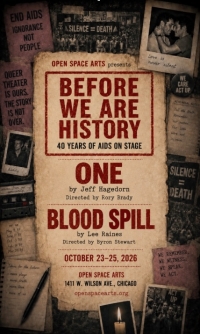
Open Space Arts Presents BEFORE WE ARE HISTORY October 23 – November 8
21 September 2026 in Upcoming TheatreOpen Space Arts presents BEFORE WE ARE HISTORY, a three-week theatrical exploration of LGBTQ+ theater created during and in response to…
Northlight Delivers a Headline-Making, Hilarious Front Page
20 September 2026 in Theatre in ReviewNorthlight Theatre opened its new venue with Jeffrey Hatcher’s smart, rejuvenated adaptation of The Front Page. Commissioned by Artistic Director…
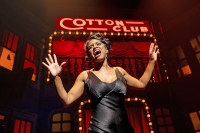
Chicago Shakes' Play On!: With a Syncopated Harlem Beat
20 September 2026 in Theatre in ReviewThere are some productions you watch, and then there are productions that make your heart swoon and your toe tap.…

Overshadowed's Flame of Fire Finds Humanity, Strength, and Forgiveness in a Tragic Chapter of Missionary History
19 September 2026 in Theatre in ReviewOvershadowed Productions’ Flame of Fire revisits one of the most polarizing true stories in mid‑century missionary history, and the result…
The Attic at Goodman Theatre Redefines Memoir Through Breathtaking Physical Storytelling
19 September 2026 in Theatre in ReviewAt intermission, I sent Ken, Buzz Center Stage’s managing editor, a text: “So thankful I made it!! It’s intermission, and…
Class is back in session with Victory Gardens’ World Premiere of The Humanities
19 September 2026 in Theatre in ReviewCoincidentally (or not), Victory Gardens’ new play about a controversial campus speaker opens just days after the one-year anniversary of…
Babes With Blades's Announces William Shakespeare's KING LEAR, playing October 22 - November 21
18 September 2026 in Upcoming TheatreBabes With Blades Theatre Company’s (BWBTC) announced today new production dates for the final production in its 2026 season, William Shakespeare’s King…

Layered, Lovely, and Lasting; The Joffrey Ballet's Liliom Lights up The Lyric Opera
18 September 2026 in Dance in ReviewSometimes when we reach into the past to resurrect or revive an old story, we find it doesn’t age well.…

Cast and Production Team Announced for Fleetwood-Jourdain Theatre's THE NICETIES, October 31 – November 15
18 September 2026 in Upcoming TheatreFleetwood -Jourdain Theatre, an award-winning theatre company that has been thrilling audiences with over four decades of unique, inspirational, and invigorating Black…

Goodman’s centennial is its all‑time most successful year, with 300,000 patrons at 4,000 performances & events
18 September 2026 in Theatre BuzzThe Goodman wraps its 2025/2026 Centennial Season, an unprecedented line-up marking the 100th anniversary of Chicago's flagship not-for-profit theater, as the…

The Jinkx & DeLa Holiday Show - December 6th at Auditorium Theatre
17 September 2026 in Upcoming TheatreThe greatest holiday show south of the North Pole returns for its 9th year with another brand spankin' new wintertide…
Paramount’s smash hit, immersive Million Dollar Quartet returns for its final run at Aurora’s Stolp Island Theatre, October 7-January 3
17 September 2026 in Upcoming Theatre“Great Balls of Fire!” Chicago audiences have just one last chance to catch Paramount Theatre’s immersive musical Million Dollar Quartet, returning more…

Holiday Cheer (and an earlybird discount) come to The Second City November 25th through December 27th
17 September 2026 in Upcoming TheatreTis' the season for laughter and cheer! The Second City is decking its holiday lineup with shows for every sense…
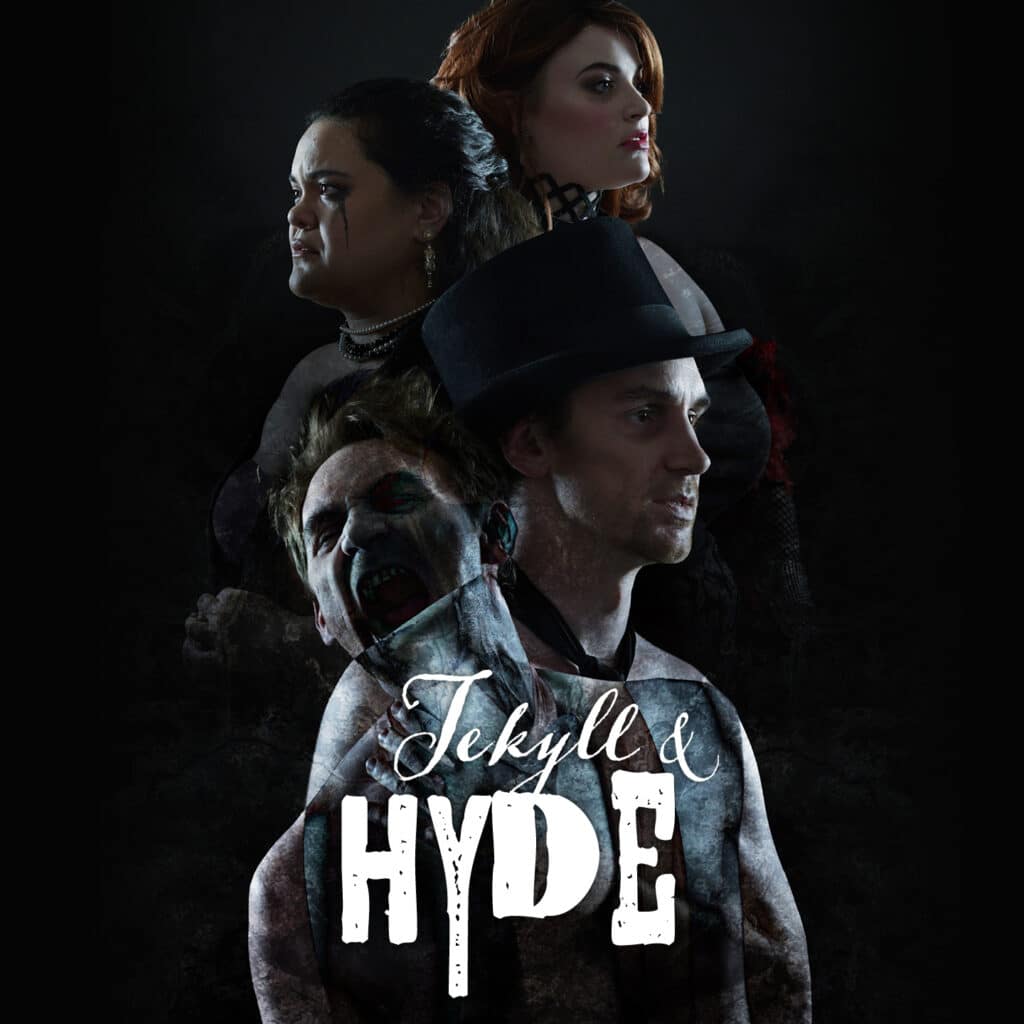
Kokandy Productions’ Jekyll & Hyde: A Fearless Reworking Elevated
17 September 2026 in Theatre in ReviewKokandy Productions’ Jekyll & Hyde, now presented by Broadway In Chicago at the Broadway Playhouse, arrives with the momentum of…

Chicago City Opera presents Chicago premiere of Der Vampyr October 7-11
16 September 2026 in Theatre in ReviewChicago City Opera (CCO) presents the Chicago premiere of gothic horror opera Der Vampyr by composer Heinrich Marschner to a…

Full Casting Announced for A Red Orchid Theatre's HEROES OF THE FOURTH TURNING - October 29 – December 6, 2026 - Chicago Premiere!
16 September 2026 in Upcoming TheatreA Red Orchid Theatre is pleased to announce full casting for its Chicago premiere of Will Arbery's politically-charged drama Heroes of the Fourth Turning, directed…

Chicago Legend Da Brat to Host and MC THE HIP HOP NUTCRACKER
16 September 2026 in Upcoming TheatreBroadway In Chicago is thrilled to welcome trailblazing hip hop artist and Chicago legend Da Brat as special guest host…
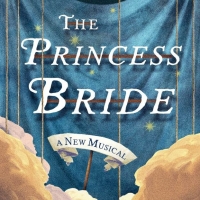
THE PRINCESS BRIDE to have Pre-Broadway World Premiere in Chicago July 19 - August 22, 2027
16 September 2026 in Upcoming TheatreProducer Jeffrey Seller and Broadway In Chicago have announced the world-premiere of the new musical THE PRINCESS BRIDE will begin performances in…
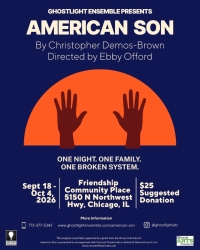
American Son - Friendship Community Place - Through October 4th
16 September 2026 in Now PlayingGhostlight Ensemble's production of American Son, written by Christopher Demos-Brown and directed by Ebby Offord, opens on Friday, September 18,…

MARRIOTT THEATRE REVEALS A 2027 SEASON OF SHOWSTOPPING MUSICALS AND BELOVED STORIES
16 September 2026 in Upcoming TheatreMarriott Theatre, Chicagoland's longest-running musical theatre, presents its 2027 subscription season featuring five thrilling and memorable musicals: Pippin, A Gentleman's Guide to…

Kokandy Productions Concludes 2026 Season with A CLOCKWORK ORANGE: A PLAY WITH MUSIC November 5, 2026 – January 10, 2027 - Full Casting Announced!
15 September 2026 in Upcoming TheatreKokandy Productions is pleased to conclude its 2026 Season with A Clockwork Orange: A Play with Music, a live adaptation of Anthony Burgess's dystopian…

Raíces to Roots’ Unpacking Home - Collaboraction's House of Belonging - Through September 27th
15 September 2026 in Now PlayingCollaboraction Theatre Company is thrilled to host a limited run of Unpacking Home by Chicago’s Raices to Roots as part of the 9th Destinos…
Identity Performing Arts Celebrates 5 Years with Gala Performance at MCA's Edlis Neeson Theater October 18th
14 September 2026 in Upcoming DanceIdentity Performing Arts celebrates five years as a dance company embracing artistic innovation, collaboration and community at their Fifth Anniversary Gala at MCA…



Latest Articles
-
 Now Boarding: Bonnie’s Last Flight, a Sky‑High Comedy with Real Heart
Written by Ken PayneRivendell Theatre Ensemble closes its milestone 30th season with Bonnie’s Last Flight, a sly, sky‑high comedy set during a flight attendant’s final day on the job - a blend of sharp satire and warm, traditional character comedy that’s genuinely, disarmingly…
Now Boarding: Bonnie’s Last Flight, a Sky‑High Comedy with Real Heart
Written by Ken PayneRivendell Theatre Ensemble closes its milestone 30th season with Bonnie’s Last Flight, a sly, sky‑high comedy set during a flight attendant’s final day on the job - a blend of sharp satire and warm, traditional character comedy that’s genuinely, disarmingly… -
 Chicago Shakes' Play On!: With a Syncopated Harlem Beat
Written by Wesley DavidThere are some productions you watch, and then there are productions that make your heart swoon and your toe tap. Sheldon Epps’ Play On! is definitely the latter. Now playing at Chicago Shakespeare Theater, this exuberant musical takes Shakespeare’s Twelfth…
Chicago Shakes' Play On!: With a Syncopated Harlem Beat
Written by Wesley DavidThere are some productions you watch, and then there are productions that make your heart swoon and your toe tap. Sheldon Epps’ Play On! is definitely the latter. Now playing at Chicago Shakespeare Theater, this exuberant musical takes Shakespeare’s Twelfth… -
 Step Right Up and Ride the Cyclone (The Musical) at Metropolis Arlington Heights
Written by Anne RakowieckiIf anyone has ever told you to buckle up and enjoy the ride, they were talking about life—and even if they didn’t know it, they were talking about Ride the Cyclone, the musical. When six teenagers die in a rollercoaster…
Step Right Up and Ride the Cyclone (The Musical) at Metropolis Arlington Heights
Written by Anne RakowieckiIf anyone has ever told you to buckle up and enjoy the ride, they were talking about life—and even if they didn’t know it, they were talking about Ride the Cyclone, the musical. When six teenagers die in a rollercoaster… -
 Funny ‘Prayer Circle’ Is Loaded With Laughs
Written by Bill EslerErik Gernand is resident playwright at Redtwist Theatre, and his Prayer Circle is absolutely laugh-out-loud funny. The strength of this script is the characters—who are clearly defined and familiar types—and the performances, directed by Dusty Brown, are uniformly outstanding. Set…
Funny ‘Prayer Circle’ Is Loaded With Laughs
Written by Bill EslerErik Gernand is resident playwright at Redtwist Theatre, and his Prayer Circle is absolutely laugh-out-loud funny. The strength of this script is the characters—who are clearly defined and familiar types—and the performances, directed by Dusty Brown, are uniformly outstanding. Set…


Does your theatre company want to connect with Buzz Center Stage or would you like to reach out and say "hello"? Message us through facebook or shoot us an email at This email address is being protected from spambots. You need JavaScript enabled to view it..
*This disclaimer informs readers that the views, thoughts, and opinions expressed in the text belong solely to the author, and not necessarily to Buzz Center Stage. Buzz Center Stage is a non-profit, volunteer-based platform that enables, and encourages, staff members to post their own honest thoughts on a particular production.