
Displaying items by tag: John Accrocco
Review: 'The Gentleman Caller' at Raven Theatre

They say you should never meet your heroes. That may be the case in Philip Dawkins' new play 'The Gentleman Caller' at Raven Theatre. Dawkins', a popular local playwright, was commissioned to write this play about the strange friendship between Tennessee Williams and William Inge. This is Cody Estle's first production as artistic director of Raven Theatre. Tennessee Williams and Inge are often featured in Raven seasons, and 'The Gentleman Caller' gets a fitting premiere here.
The play is told in two scenes, the first takes place in a young William Inge's garden apartment in St Louis in 1943. It's supposed that Inge, a newspaper critic attempted to interview a then unknown Tennessee Williams about his upcoming play 'The Glass Menagerie'. The second act is a few months later, New Year’s Eve. Inge visits Tennessee Williams in a Chicago hotel following the premiere of the play. No record exists of dialogue between the two playwrights, but they maintained a relationship of sorts over the years. The dialogue in Dawkins' play is as he imagined it would have been.
This is an important distinction to make. The events of this play are highly fictionalized. 'The Gentleman Caller' says a lot about what Philip Dawkins thinks of these two playwrights. The character he's written for Tennessee Williams isn't very likeable. Throughout the play Williams feeds Inge a frustrating string of non-answers. Inge, a closeted homosexual is uptight and put off by Williams' vulgarity. There's a lot of sexual tension between the characters, but who’s to say if that was really the case.
Dawkins' play has an inspiring message for creative types or anyone that feels different. It gets a little buried in slow-moving and often redundant dialogue but there's some solid wisdom in there. Estle seems to share a similar vision for this production. It has the feeling of being at a Tennessee Williams or William Inge play.
There are only two actors in this play, Curtis Edward Jackson plays William Inge and Rudy Galvan plays Tennessee Williams. Jackson is well suited for Inge's restrained temperament. His final monologue is captivating. Galvan is somewhat miscast. The depth of his character gets lost in an unconvincing and mostly unflattering impression of Tennessee Williams.
In this play, we see Inge so very disappointed in Tennessee Williams the man, rather than the hero he'd imagined him to be. It may be that when researching this play the author came to the same conclusion. There's a melancholic thread throughout 'The Gentleman Caller'. It shows us a side of our literary heroes we may not like to see. The part behind closed doors and sometimes without success. In that regard, Tennessee Williams would certainly approve of this play.
Through May 27th at Raven Theatre 6157 N Clark Street. 773-338-2177
*Extended through May 27th
Review: How I Learned to Drive at The Artistic Home

Never has there been a more relevant time for Paula Vogel’s 1998 Pulitzer Prize winner ‘How I Learned to Drive’. By now, it’s considered a modern classic and has certainly made Vogel a hot playwright ever since. The fact that this play is now twenty years old and is arguably more topical now than when it premiered is unsettling. The Artistic Home Ensemble is reviving this play in hopes that we don’t have cultural amnesia regarding sexual abuse.
‘How I Learned to Drive’ is simply staged. There’s a few seats on a platform to be the car, and then a few other small set pieces here and there. What’s not so simple is Vogel’s narrative structure. This is almost like a personal essay come to life. Non-linear, or non-traditional structure is a hallmark of Vogel’s work. In this play, Li’l Bit (Elizabeth Birnkrant) relates how her uncle taught her how to drive and also taught her about adult love.
Using driving and cars as a structure, Vogel spins Li’l Bit’s story about growing up in 1960s conservative Maryland. Intermittently, she includes cleverly constructed nuggets of sexual wisdom learned from her mother and grandmother. As Li’l Bit matures into a woman, she notices how the world around her changes. Her Uncle Peck (John Mossman) takes advantage of her isolated feeling. What adds layers to a familiar story are the moments when Li’l Bit initiates or at the very least plays into a pedophile’s hand. There are such moments of tender depth that you nearly forget how illegal their affair is.
With an almost absence of scenery to hide behind, Elizabeth Birnkrant plays to the comedy in the script. She’s often more engaging to watch when she’s portraying Li’l Bit in her teenage years. Adults are quick to forget the agony of being so unavoidably vulnerable. Mossman delivers sex appeal without seeming like a predator, which is what makes his performance all the more slick.
It’s tough to bring much character to the “Greek chorus” as their purpose in the play is mostly to pipe in with mortifying one-liners. Though, Jenna Steege distinguishes herself as Li’l Bit’s heavy smoking mother. She provides some pretty sound advice on how a lady (or anyone) should drink on a date.
Artistic Home Ensemble is a storefront theater that specializes in the Meisner (or method acting) approach. Therefore, their productions tend to rely more on character than set pieces. ‘How I Learned to Drive’ perfectly lends itself to director Kayla Adams’ black box vision. This story is so compelling that you don’t need scenery. The images conjured in Vogel’s script are as familiar to us as a Coca Cola ad. It’s a trip through Americana, which fittingly includes an older man taking advantage of a young woman. It’s an odd thing to comment on the chemistry between a pedophile and his victim but since the actors are both around the same age, it seems okay to say. These two seem very comfortable with each other and that makes the seduction all the more tragic. ‘How I Learned to Drive’ tells us what’s old is new again, but a 2018 audience may ask itself, does it have to be?
Through May 6 at The Artistic Home. 1376 W Grand Ave. 866-811-4111
Review: Court Theatre's 'Guess Who’s Coming to Dinner'

By now we all know who’s coming to dinner. Based on the 1967 film starring Sidney Poitier and Katharine Hepburn, Court Theatre presents a new stage adaptation of ‘Guess Who’s Coming to Dinner.’ Written in 2013 by Todd Kreidler, this fresh look points at the progress America has made regarding interracial marriage, as well as the progress that still lies ahead.
Marti Lyons directs this quickly-paced comedy-drama. The scenes are trimmed with a sweeping score that recalls the golden era of 60s television. The mid-century mod set by Scott Davis drops us square into 1960s suburban San Francisco. A solid white house on a hill, obvious symbolism. Kriedler’s script begins on an impossibly rosy note, a sure sign that trouble is afoot for these fine looking white folks.
Christina (Mary Beth Fisher) and Matt Drayton’s (Tim Hopper) upper middle class, pseudo-liberal lifestyle is upended when their adult daughter Joanna (Bryce Gangel) brings home an acclaimed African American doctor, John (Michael Aaron Pogue). The two naïve lovers wish for their parents’ blessing before they proceed with a hasty marriage. In asking, Joanna and John call into question everything they’ve known about their so-called progressive parents.
In today’s world, some may see an interracial marriage as no big deal. And largely, for most parts of America, it’s not a big deal. That’s what’s so interesting about this script. The characters don’t spend much time debating if it’s right or wrong for races to intermarry. What’s at stake for them is how the world will perceive their coupling and whether it’s actually putting them in danger.
This is a prickly little play about the nuances of race. That is not to say it’s not funny. In fact, it’s the sit-com style set-up of jokes and physical humor that make this show so fun to watch. Mary Beth Fisher is a gifted physical comedian. It’s a real treat to see her quickly twisting facial expressions, she’s able to get so much across without dialogue. Working off her is Sydney Charles in the role of the Drayton’s maid, Tillie. Sydney Charles has some of the best one-liners of the evening and really brings her character to the focal point.
The young lovers portrayed by Bryce Gangel and Michael Aaron Pogue are what this show comes down to. There’s so much chemistry between these two and that is key. The audience has to believe in this love in order to believe in the parent’s eventual coming around. Gangel so aptly captures the stubborn optimism of her character through an almost lilting speech pattern. In her final monologue, Gangel goes from school girl crush to a woman seriously in love.
The Court Theatre’s area premier of Todd Kriedler’s stage adaptation of ‘Guess Who’s Coming to Dinner’ is very cute. It’s strange to say a play about tense race relations is cute, but it’s a play about love. It’s also incredibly sleek. The costumes and sets are like an episode of Mad Men. While the direct themes may not be entirely relevant in a post Marriage Equality world, there are still indirect themes that must be discussed. This play is making a bigger point about the subtler forms of racism that are present in even the most liberal minded places.
Through April 15th at Court Theatre. 5535 S Ellis Avenue. 773-753-4472
'An Enemy of the People' not your average period piece

"In real life, you're exploited by the moneyed class and then you die." says Petra in Robert Falls' new production of 'An Enemy of the People' at Goodman Theatre. His adaptation of Ibsen's 1882 play, spends two and a half hours exploring the theme of freedom.
"An Enemy of the People" is set in an ambiguous time and place but the highly conceptualized world in which this production exists is familiar. In it, idealistic small-town Doctor Stockmann (Philip Earl Johnson) discovers the water supply is poisoned. Hoping to save the town, he's politically thwarted by his brother the mayor (Scott Jaeck).
Robert Falls adapted the script from a translation by Eleanor Marx-Aveling and it's got some teeth. As Arthur Miller adapted Ibsen's play in 1950 to fit the McCarthy era, Falls aims his at Trumpism. Despite some occasional lapses in subtlety, this version chugs along at an urgent pace. Some liberties are taken with Ibsen's script but, given the current political climate, the topical dialogue fuels the thrilling intensity. Even 130 years later, this play is still a warning.
The square-off between Philip Earl Johnson and Scott Jaeck for the town's soul is all too relevant. Johnson physically exhausts himself trying to scream the truth while a calm and dignified Jaeck lulls the townspeople into submission. They're both so convincing you're almost able to see both sides, which is precisely the danger. Many of the most provocative lines come from Petra played by Rebecca Hurd. Her performance is sincere and brings more depth to the character than just what's in the dialogue.
It's an event when Robert Falls produces a classic at Goodman. 'Enemy of the People' lives up to the hype. As he's done with Chekhov, Falls has a vision for these plays that is far from the faithful productions of yore. It's essential for directors to reinterpret these classics for new eras. It's how a younger generation will connect with Ibsen. This version is well designed and brightly colored. Almost too cheerful for the subject matter. The costumes will leave you unsure of the time period, but that's the point. Whatever the era, the costumes are chic and the sets are memorable. This isn't your average period piece melodrama.
This production is exciting from beginning to end. There's not a moment of dead air. The dialogue is fresh and mirrors the absurd hypocrisy of our times. There's a lot of lightness in this play, and it's not until afterward that the darkness of its themes settle in. That might be one of it's strongest assets, it's so engaging you forget how bleak the conclusion is. If you don't leave this play angry, there's probably something wrong with you.
Through April 15th at Goodman Theatre 170 North Dearborn. 312-443-5151
Review: Faust at Lyric Opera of Chicago

"Faust" is revered as the world's most popular opera. It was the first opera performed at the Met in New York in 1863. This iconic French opera took Charles Gounod several years and several drafts to complete. Since its debut in Paris in 1859, "Faust" has continued to seduce audiences. Lyric Opera continues the tradition with a thrilling new production by Kevin Newberry.
From the poem by Goethe, "Faust" tells the story of an old man who wakes one morning with nothing left to live for. His youth is gone and the pleasures of life no longer interest him. Faust tries suicide but is rescued by Mephistopheles (the devil), who offers him eternal youth in exchange for his soul. Mephistopheles is sung by Christian Van Horn. He's got the youthful energy and allure of the devil as he pounces about in a very orange suit.
Faust is promised a beautiful maiden, Marguerite (Ailyn Perez). She's crippled and her brother Valentin worries for her as he heads off to a vague battle (there is almost always a distant war in an opera). Faust instantly falls in love with Margueite who is exquisitely sung by Ailyn Perez, she is making her full Lyric debut in this production. French singer Benjamin Bernheim eloquently sings the title character. He brings a necessary sex appeal to the young Faust role. After the relationship is consumated, Faust splits. Drama ensues.
Gounod's brilliant music soars in this highly stylized production. David Adam Moore's unsettling projections throughout have an eerie Tim Burton quality to them. The convention really works here. Along with Gounod's cinematic score, there's an added sensory detail that never fails to captivate.
"Faust" is above all things, an incredibly accessible opera. The contract between mortal and devil is always intriguing. Gounod's music is as relevant as today as it was in the 1860s. You can hear traces of it in film scores and musical theater orchestras. There's a little something here for everyone, it's a cheeky horror story, a love story, a story of redemption, a musical and a little je ne said quoi.
Staging like this brings "Faust" into the twenty-first century, which is essential to the survival of opera in the modern era. Never a dull moment in the nearly four hour run time. Opera has a way of lulling even the most ardent enthusiast to sleep after a glass of chardonnay during the intermission. "Faust" is riveting in all five acts. Those familiar with the classic work will be impressed by the new lens with which Kevin Newberry shows it through.
Through March 19 at Lyric Opera Chicago. 20 N Upper Wacker Drive. 312-332-2244
Review: ‘Cosi fan tutte’ at Lyric Opera

“No woman ever died for love” says Despina in Mozart’s charming little opera ‘Cosi fan tutte’. There may not be any deaths from love but, maybe a few tickled funny bones in this revival going on now at the Lyric Opera of Chicago. Originally conceived by John Cox about ten years ago, this version of ‘Cosi fan tutte’ moves the setting to WWI, or 1914. This seasons’ production is largely the same with direction by Bruno Ravella.
‘Cosi fan tutte’ is a lighter work by opera standards. It’s basically a rom-com sung in Italian. Written in 1790, Mozart would only see this opera performed five times in his life, as he died the following year. Mozart operas are typically upbeat with plenty of repeated phrasing. There’s no shortage of beauty pouring out of the pit conducted by James Gaffigan. This is a very accessible piece in both music and performances.
The plot is fairly uncomplicated. Two men Ferrando (Andrew Stenson) and Guglielmo (Joshua Hopkins) question the fidelity of their fiances Fiordiligi (Ana Maria Martinez) and Dorabella (Marianne Crebassa). With the help of Don Alfonso (Alessandro Corbelli) and sexy maid Despina (Elena Tsallagova), the two men pretend to go off to war. They return to their future wives in disguise and each attempts to seduce the other’s fiancé. If it sounds familiar, it is. This opera is loosely inspired by Shakespeare’s ‘Twelfth Night’.
Few people attend an opera for the dramatic chops of the performers. Opera is about beautiful music first and foremost. That said, these two fantastic sopranos are also gifted comedic actresses. The over-the-top emotions of these two characters makes for some really great physical humor. The projected dialogue is almost as ridiculous as the plot itself. Martinez takes up the pious role, making her seduction all the more fun to watch. Crebassa is the goofball and her performance radiates joy even as she’s cheating on her fiance. Though, it’s really Tsallagova who runs away with the laughs in her performance as Despina. This is also her US debut. A talent we’ll hopefully see more of in coming seasons.
As always, the set and costumes are sumptuous. Setting this piece in 1914 gives costume and set designer Robert Perdziola a lot to work with. It’s not terribly often you seen somewhat modern fashion at the Lyric. There are some lovely flapper-flavored looks going on. Nothing quite compares to the second act opening though. A background of venetian boats adorned with twinkling lights opens up to reveal the imposter suitors sailing in to claim their respective victories. The visual against the lovely Mozart music is one of the most arresting moments of the evening.
‘Cosi fan tutte’ is not an opera you’ll find on any before-you-die lists, but it’s an opera worth seeing. While it’s not the shortest show of Lyric’s season, clocking in at just under four hours, it’s definitely the easiest to get into. The music is for everyone, and will leave you feeling warm and tingly.
Through March 16th at Lyric Opera of Chicago. 20 N Wacker Drive. 312-827-5600
Review: Joffrey Ballet's "Modern Masters"

As the era of streaming entertainment and sweatpants-clad binge watching continues, you have to applaud those who attend the performing arts. It’s certainly not an easier medium to consume, but some would argue it’s much more rewarding. Unfortunately, ballet and opera are struggling to attract a millennial audience.
The Joffrey Ballet, however, opened its Modern Masters to no lack of enthusiasm. The massive Auditorium Theater was packed with audiences of all ages. Modern Masters is a four-piece show featuring the works of four different choreographers including the popular George Balanchine. Modern Masters is presented as part of the Ashley Anniversary, celebrating Ashley Wheater’s 10th season as artistic director of the Joffrey.
They begin with Balanchine’s ‘Four Temperaments’, a visual take on the ancient belief that the body is influenced by four humors. This piece is the most traditional and lengthy of the four. The costumes and staging are sparse. Music by Paul Hindemith is soft but stirring.
After a brief intermission, they return with Myles Thatcher’s ‘Body of Your Dreams’. The energy picks up here. With colorful 80s-flavored workout inspired costumes, 'Body of Your Dreams' is a cheeky take on fitness. It's a little ironic for a stage full of perfectly sculpted dancers to slightly criticize the "perfect body" obsession. The steps are fun, and the music is catchy.
Next is the world premiere of Nicolas Blanc's multi-part piece 'Beyond the Shore'. This one is more similar in style to Balanchine's. The staging is as sparse, but the choreography is visually stunning. Music by Mason Bates is intricate with a cinematic scope. Think John Williams.
The final piece is the Chicago premiere of 'Glass Pieces' by legendary choreographer Jerome Robbins. This is the piece to come for. Ballet fans of Chicago have been waiting for this one. It's well worth the hype. The set and costumes are striking. Philip Glass' music really shines in this meticulously choreographed number. The dance begins chaotic and busy but comes full circle to inspire the movement of a busy city. Bright and thrilling, 'Glass Pieces' is the strongest of the four.
Modern Masters is a perfect evening for those looking to touch their toe into the waters of modern dance. Tread without fear of boredom for this highly engrossing show. Joffrey has a great way of being accessible to all audiences despite familiarity with the art of dance.
Through February 18th at Joffrey Ballet. 50 E Congress Parkway. 312-386-8905
Review: I Puritani at Lyric Opera of Chicago

There are fewer things in theatre more exciting the curtain going up on the first act of an opera. Often there’s no ceremony or pre-recorded note from management. The lights dim and the overture begins. How enchanting to take your first look at the sumptuous sets and costumes Lyric Opera has created for this production. Pilgrim-chic you might call it. Tradition and form make opera a unique theatrical experience. On a snowy Sunday afternoon, the curtain came up on Bellini’s ‘I Puritani’, signaling to its audience, get comfortable.
Eric Einhorn’s production of Bellini’s drama runs just under four hours with two intermissions. The first act is the longest at eighty minutes. ‘I Puritani’ concerns a Puritan hamlet in which a young princess Elvira (Albina Shagimuratova) chooses another suitor, Arturo, over the pre-arranged marriage to Riccardo (Anthony Clark Evans). Just before the wedding, Arturo obliges himself to save condemned Queen Enrichetta (Lauren Decker). While he’s smuggling her out of the country, word returns to Elvira that her fiancé has run off with another woman. She is devastated and the army pursues him.
Yeah, that’s the plot. Nearly four hours to convey that relatively simple story along with Bellini’s beautiful score. This is why opera is special, because for four hours, we really don’t care what the plot is. For centuries opera was performed without the super script translations, leaving the audience to presume based on summaries in their playbills. Projected translations are used sparingly in this production of ‘I Puritani’ – maybe because the plot is so uncomplicated, they’re not necessary. In any case, they’re certainly not missed and would likely be distracting. What should be paid attention to are these beautiful singers and the gorgeous orchestra.
A significant difference between musical theatre and opera is that the leads are not expected to be great actors. Voice is most important in these roles, especially in Bellini’s works. He believed that a beautiful voice is what stirs audience emotions. He’s not wrong. Though, Russian soprano Albina Shagimuratova is a good actress. She’s not heard until the second scene, but her performance is easily the most accessible aspect of this production. Her heartbreak is palpable in voice and gesture regardless of language. Act II is worth the entire afternoon.
As always, the costumes and sets are overwhelmingly beautiful. Haunting imagery is captured by the large cast numbers and soaring melodies. ‘I Puritani’ may lose the attention of its audience during the lengthy solos, but will quickly recapture focus when the whole ensemble fills the stage. Just as exciting as the curtain going up, is the curtain coming down. Opera enthusiasts scream “brava” and beg for more curtain calls, a truly opera-specific tradition. In opera, the energy of the experience sustains the art itself.
Through February 28 at Lyric Opera of Chicago. 20 N Wacker Drive. 312-827-5600
Review: Blind Date at Goodman Theatre

Who’d have thought a Cuban-born playwright could endear an auditorium of liberals to Ronald Reagan. Rogelio Martinez’s new play ‘Blind Date’ is a fictionalized account of the very real first meeting between Soviet general secretary Mikhail Gorbachev (William Dick) and President Ronald Reagan (James D. Farruggio). Robert Falls returns to the Goodman to direct this world premiere.
Billed as a comedy, some will wonder what could be funny about a world on the brink of nuclear war? As it turns out, quite a bit. ‘Blind Date’ is basically a drawing room comedy. Most of the scenes are two-person conversations between the various historic players of the time. Beginning with US Secretary of State George Schultz (Jim Ortlieb) and Soviet foreign minister Eduard Shevardnadze (Steve Pickering) all the way up to the fateful meeting between Gorbachev and Reagan in Geneva.
The narrative structure of this piece is interesting. In some cases, cast members speak their opinions directly to the audience. In other instances, there’s narration by way of British biographer Edmund Morris (Thomas J. Cox). The narration serves the playwright’s thesis that even his own biographer didn’t really understand Reagan. The asides are more often a conveyance for one-liners. Though, they do provide insight into the mindset of the Soviets and Americans in these meetings.
It’s no surprise that Falls has assembled some of Chicago’s foremost actors for this new play. Deanna Dunagan plays Nancy Reagan, in a nearly perfect likeness no less, while Goodman favorite Mary Beth Fisher plays Raisa Gorbachev. The two first ladies share a scene in which almost nothing of consequence is discussed, but the slight backhanded compliments and fuss made over tea bags versus loose leaf underscore how tenuous relations between the super powers were. Each thinking themselves superior in domesticity and political ideology. Scenes featuring Dunagan and Fisher are the most engaging as the dialogue sharpens to a point. What few may consider is how much influence these two women had over their husbands. Despite contradicting opinions, both sides desperately wanted to see an end to the nuclear arms race. A noble idea that has unfortunately taken a wrong turn since the mid-80s.
There’s danger in glorifying Ronald Reagan as an innocuous savior from nuclear war. His optimism regarding the Soviets was certainly helpful but in the end, the Soviet Union collapsed from a failing economy, not Reagan’s pro-Democracy initiatives. And yes, it’s easy to look at Reagan and think, at least he’s not our current president, but let’s not forget the homophobic blind eye his administration turned toward the AIDS crisis, and the lasting effects of the unsuccessful war on drugs.
This play is a lot like an average Oscar-bait movie. You know the type: polished historical drama about a specific section of history, usually starring high profile British actors like Judi Dench. Ones that you know you should see, but probably won’t. It’s okay for a play to be ephemeral. In this case, the global nuclear stakes are so high right now that it’s vital for Americans to understand how serious even the tiniest miscommunication could be. It’s important for Americans to remember what diplomacy looked like. Think of the current president’s impulsive behavior on Twitter. Rogelio Martinez’s play may make you giggle at Reagan’s loveable weirdness, but the gravity of this meeting with Gorbachev in 1986 should frighten us all. These were poor leaders who made a very smart decision. It’s a terrifying shame our current leaders would rather go back in time.
At Goodman Theatre through February 25th. 170 N Dearborn. 312-443-3811
Review: All My Sons at Court Theatre

Whenever things get hot in America, Arthur Miller comes back in vogue. It's hard to fathom what he would think of today's world though. Court Theatre features Miller's first hit play 'All My Sons' . Directed by Charles Newell, this provocative new production is vibrant and exceedingly well acted.
'All My Sons' first appeared on Broadway in 1947, establishing Arthur Miller as a major playwright. Though considered among his best, there's an amount of melodrama here that later Miller works would shed. In this dark play, he examines the moral and psychological effects of WWII on ordinary Americans.
John Judd plays Joe Keller, the good-guy neighbor type who has just arrived home from prison. He's been acquitted of manufacturing faulty airplane parts that caused plane crashes in WWII. His partner remains in jail having accepted all responsibility. His adult son Chris, played by Timothy Edward Kane survived the war while his brother Larry did not. On an ordinary summer day Chris invites Larry's former fiance and daughter of Joe's business partner, Annie (Heidi Kettenring) for a visit. Chris' mother Kate (Kate Collins) cannot reconcile that Larry is dead and is slowly unraveling.
Newell takes this script in an interesting direction. The central conflict is Joe, a normal guy with a huge moral dilemma. "I know you're no worse than most men, but I thought you were better." Miller writes. It's through Kate Collins that Newell puts the emphasizes on the women's narrative of this play though. Kate's dialogue swings from reality and delusion so rapidly. Collins' interpretation has an eerie Blanche DuBois quality to it. This is also a story about a woman losing her grip in a time when life was supposed to be cheerful.
Heidi Kettenring brings Annie to the foreground in this version. With 'All My Sons' Miller wanted to show how aspects of the war effected all parts of America. Many women were left widows. Social constructs made finding love more challenging for women. Kettenring captures every scene she's in. Her portrayal of a lonely woman with few options is haunting.
Newell's production is artful. The staging is vivid and unique. When every theater company is offering Arthur Miller, it's cool to see how these works are being reinterprated to appeal to a new generation. For some, two and a half hours of classic American theater sounds like a school field trip. Newell's production proves that there's always a new way to see a play.
Through February 11th at Court Theatre. 5535 S Ellis Ave. 773-753-4472
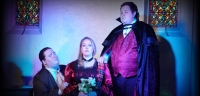
Chicago City Opera Delivers a Rare Operatic Haunting with Der Vampyr
08 October 2026 in Theatre in ReviewWith Halloween creeping closer, there’s something fitting about revisiting one of opera’s earliest flirtations with macabre horror - especially in…

Avalanche Theatre stages the world premiere of They Broke Up by Skyler Tarnas November 6–22, 2026
08 October 2026 in Upcoming TheatreAvalanche Theatre announces the world premiere production of They Broke Up by Chicago playwright Skyler Tarnas, November 6–22, 2026. Opening…

Celebrate 100 Years of the Cadillac Palace and James M. Nederlander Theatres
08 October 2026 in Theatre BuzzGrab your party hats — Broadway In Chicago ’s Cadillac Palace and James M. Nederlander Theatres are turning 100! The…

Oil Lamp Theater Announces the cast and creative team for the return of IT'S A WONDERFUL LIFE: A LIVE RADIO PLAY, Nov. 20 - Dec. 27
08 October 2026 in Upcoming TheatreOil Lamp Theater is proud to announce the cast and creative team for its next production and the final production…

Adults-only holiday fun: Who's Holiday! brings R-rated Cindy-Lou Who back to Theater Wit for her sixth year, Nov. 27-Dec. 27
08 October 2026 in Upcoming TheatreChristmas Day is in our grasp. Why the vodka? Glad you asked! Who's Holiday! brings R-rated Cindy-Lou Who back to…

Two-Time Tony Award-Winning Actress Victoria Clark To Receive the Sarah Siddons Society Award at Annual Benefit on Monday, November 9, 2026
08 October 2026 in Theatre BuzzThe Sarah Siddons Society is pleased to present its 2026 Award to actress and director Victoria Clark, who recently starred…
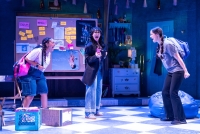
Goodman's Dead Girl’s Quinceañera: When Fifteen Meets the Adult World
07 October 2026 in Theatre in ReviewAt fifteen, the world can feel like a television show you haven't quite figured out how to turn off. For…

Steppenwolf Theatre's ADIRONDACK CHAIR CIRCLE In Rehearsal – Playing October 22 – December 6, 2026 – World Premiere!
07 October 2026 in Upcoming TheatreSteppenwolf Theatre Company, the nation's premier ensemble theater company, is pleased to launch its 51st Season with the world premiere of…

Hell in a Handbag Productions Announces 25th Anniversary Season!
07 October 2026 in Upcoming TheatreHell in a Handbag Productions is thrilled to announce its 25th Anniversary Season, featuring three "camptacular" shows guaranteed to delight lovers of…

Chicago’s Theater Wit introduces new Watchword closed captioning system, dramatically improving access in all three of its theaters
07 October 2026 in Theatre BuzzChicago’s Theater Wit is now offering new, state-of-the-art closed captioning service, marking a dramatic improvement in making live theater more…

Paramount Theatre’s reimagined A Christmas Carol promises to be a dazzling new, all-ages spectacle for Chicago’s holiday theater season, November 11-January 3
07 October 2026 in Upcoming Theatre“God bless us, everyone,” because there’s a fresh, new, reimagined version of Charles Dickens’ classic tale A Christmas Carol debuting…
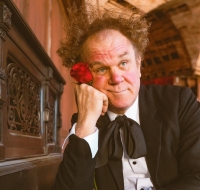
"John C. Reilly is Mister Romantic" Returns to Steppenwolf Theatre - December 10 – 13, 2026
06 October 2026 in Upcoming TheatreFollowing last year's critically acclaimed, sell-out engagement, Steppenwolf Theatre Company is pleased to announce the return of John C. Reilly…

Saint Sebastian Players Open 45th Season With A Murder Is Announced by Agatha Christie Classic Miss Marple Mystery Runs Oct. 23–Nov. 15
06 October 2026 in Upcoming TheatreThe Saint Sebastian Players open their 45th season of travels to different places with A Murder is Announced, a classic Miss Marple mystery…

Announcing "The Goodman, For Good" Campaign
06 October 2026 in Theatre BuzzToday, Goodman Theatre raises the curtain on its future as leadership and artists share a vision for its next century…

Two Edge Theater Company to stage A VIEW FROM THE BRIDGE as its inaugural Chicago production, December 4 through January 10
05 October 2026 in Upcoming TheatreTwo Edge Theater, a reincarnation of the Edge Theater Company that enjoyed eight successful seasons in the Denver, Colorado area,…

Frankenstein at Studebaker Theater adds performances for Halloween run
05 October 2026 in Upcoming TheatreChicago's historic Fine Arts Building and Studebaker Theater are thrilled to announce their Halloween co-production of Manual Cinema's acclaimed Frankenstein…
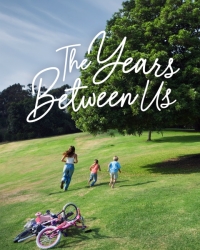
Chicago-Area World Premiere of Liana Sonenclar's The Years Between Us - October 15-18
05 October 2026 in Upcoming TheatreJonathan James Productions presents the world premiere of The Years Between Us, a new play by Liana Sonenclar, directed by…

Oil Lamp Theater Announces its 2027 Season
05 October 2026 in Upcoming TheatreOil Lamp Theater, currently presenting the highly recommended Dial M for Murder, through November 1, is proud to announce its…

Dial M for Mastery: Oil Lamp’s Thriller Tightens the Screws
04 October 2026 in Theatre in ReviewAs a lifelong Hitchcock fan, Dial M for Murder has always been one of my comfort film thrillers - the…

ARTEMISIA REVEALS PLAYWRIGHTS AND DIRECTORS FOR THE 2026 WEWOMEN PLAY FESTIVAL At Bramble Arts Loft from Nov 16 - 18th
03 October 2026 in Upcoming TheatreArtemisia Theatre is proud to announce the return of the WeWomen Play Festival, its annual celebration of new feminist work.…
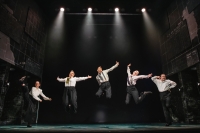
Operation Mincemeat: A Smart, Scrappy Musical That Shines When Its Cast Takes the Wheel
01 October 2026 in Theatre in ReviewIn the 2019 film Yesterday, a struggling musician wakes up in a world where The Beatles never existed. A similar…
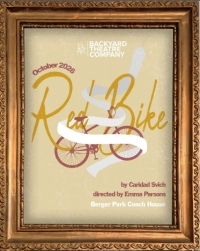
Backyard Theatre Company’s Red Bike - Berger Park Coach House Theatre - Through October 24th
30 September 2026 in Now PlayingRed Bike is an intimate, movement‑driven play that follows a young person navigating a town transforming faster than they can…

Red Theater presents the world premiere of CHURCH HURT October 24 - November 21, 2026
30 September 2026 in Upcoming TheatreRed Theater is thrilled to announce the cast and production team of the world premiere of Church Hurt by Brynne…
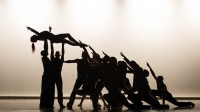
Ballets Jazz Montréal Makes Chicago debut at THE AUDITORIUM Saturday, November 7th
30 September 2026 in Upcoming DanceThe Auditorium (Chicago's landmark stage at 50 E. Ida B. Wells Drive) continues its 2026-27 Dance Season titled North American…

A Red Orchid Theatre Opens 34th Season with Chicago Premiere of HEROES OF THE FOURTH TURNING October 29 – December 6, 2026
29 September 2026 in Upcoming TheatreA Red Orchid Theatre is pleased open its 34th Season, exploring the theme of "world on fire," with the Chicago…

Lookingglass announces new leadership team
29 September 2026 in Theatre BuzzLookingglass Theatre Company today announced a new leadership structure that brings together four longtime members of its acclaimed ensemble and…
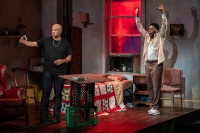
Steppenwolf’s Topdog/Underdog: When History Deals the Cards
28 September 2026 in Theatre in ReviewSusan-Lori Parks’ Topdog/Underdog, the Pulitzer Prize-winning masterpiece, is the kind of play that changes depending on when—and how many times—you…

MAMMA MIA! and HADESTOWN Return to Chicago in Spring 2027
28 September 2026 in Upcoming TheatreBroadway In Chicago is excited to announce two fan-favorite shows are returning to our stages this year: MAMMA MIA! and…

Collaboraction to premiere Mud Life, drawn from Willie Round’s experience as a writer and rapper on Chicago’s west side, October 21-November 15
27 September 2026 in Upcoming TheatreMud Life, a world premiere drama by Chicago writing duo G. Riley Mills and Willie Round, drawn from Round’s life…

'I’m Going to Marry You Tobey Maguire,' Full of Laughs, Ends With a Fizzle
25 September 2026 in Theatre in ReviewHere’s a play that should be really good, based on its reputation alone. Written by Chicago comedy writer Samantha Hurley,…





Latest Articles
-
 Avalanche Theatre stages the world premiere of They Broke Up by Skyler Tarnas November 6–22, 2026
Written by Buzz Center StageAvalanche Theatre announces the world premiere production of They Broke Up by Chicago playwright Skyler Tarnas, November 6–22, 2026. Opening November 7 at 7:30pm) at Rivendell Theatre Ensemble, 5779 Ridge Ave. They Broke Up is Avalanche's first world premiere presented…
Avalanche Theatre stages the world premiere of They Broke Up by Skyler Tarnas November 6–22, 2026
Written by Buzz Center StageAvalanche Theatre announces the world premiere production of They Broke Up by Chicago playwright Skyler Tarnas, November 6–22, 2026. Opening November 7 at 7:30pm) at Rivendell Theatre Ensemble, 5779 Ridge Ave. They Broke Up is Avalanche's first world premiere presented… -
Celebrate 100 Years of the Cadillac Palace and James M. Nederlander Theatres
Written by Buzz Center StageGrab your party hats — Broadway In Chicago ’s Cadillac Palace and James M. Nederlander Theatres are turning 100! The festivities will kick off with a birthday celebration at the Cadillac Palace Theatre (151 W. Randolph St.) on Saturday, October…
-
Oil Lamp Theater Announces the cast and creative team for the return of IT'S A WONDERFUL LIFE: A LIVE RADIO PLAY, Nov. 20 - Dec. 27
Written by Buzz Center StageOil Lamp Theater is proud to announce the cast and creative team for its next production and the final production in its 2026 season, It’s A Wonderful Life: A Live Radio Play, November 20 - December 27, adapted by Joe…
-
Adults-only holiday fun: Who's Holiday! brings R-rated Cindy-Lou Who back to Theater Wit for her sixth year, Nov. 27-Dec. 27
Written by Buzz Center StageChristmas Day is in our grasp. Why the vodka? Glad you asked! Who's Holiday! brings R-rated Cindy-Lou Who back to Theater Wit for her sixth consecutive year of adults-only holiday fun. Step inside Chicago’s #1 holiday bedazzled mobile home to…


Does your theatre company want to connect with Buzz Center Stage or would you like to reach out and say "hello"? Message us through facebook or shoot us an email at This email address is being protected from spambots. You need JavaScript enabled to view it..
*This disclaimer informs readers that the views, thoughts, and opinions expressed in the text belong solely to the author, and not necessarily to Buzz Center Stage. Buzz Center Stage is a non-profit, volunteer-based platform that enables, and encourages, staff members to post their own honest thoughts on a particular production.