
Displaying items by tag: Ireon Roach
The Gift Theatre's Hayward: A Floridian-Style Shiva
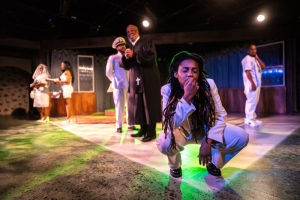
There are funerals where grief brings a family together, and then there are funerals where grief opens the door to everything a family has spent years trying to keep buried. In Hayward, playwright Netta Walker turns a father’s funeral into a reckoning with family secrets, unresolved pain, and the ghosts that refuse to stay in the past.
Given a bold world-premiere production by The Gift Theatre, presented at Steppenwolf’s 1700 Theater, Hayward, directed by AmBer Montgomery, reimagines elements of Hamlet and Electra through the eyes of Luna, the youngest daughter in a deeply complicated family. On the day of her father’s funeral, Luna announces that his ghost has come to visit her. What follows is part family drama, part dark comedy, and part haunting exploration of the emotional inheritance passed from one generation to the next.
The play opens with a funeral, and from the moment the family enters, it is clear that this will be no ordinary farewell.
Luna (Ireon Roach), her father’s favorite child, is overwhelmed by grief as she stands at the podium to deliver his eulogy. Her siblings seem considerably less interested in mourning. Eric (Victor Musoni), dressed in a white memorial T-shirt and sagging pants, and Leila (Sydney Charles), wearing a white dress that seems decidedly inappropriate for the occasion, give the impression they would rather be anywhere else. Their oldest brother, AJ (Gregory Fenner), a military man, stands rigidly at attention, as though guarding the proceedings at a state funeral.
Seated apart from the chaos is Maria (Shanesia Davis), the family matriarch, dressed in white, her face veiled and a white handkerchief close at hand. She carries herself with the solemnity of a woman accustomed to holding a family together, even when its members threaten to tear one another apart.
(from left) Alfred Wilson, Gregory Fenner, Shanesia Davis and Ireon Roach in The Gift Theatre's presentation of Hayward at Steppenwolf’s 1700 Theater. Photo by Joe Mazza / Brave Lux.
During the service, Luna sees her deceased father, Tony (Watson Swift). Her vision is quickly dismissed, but the encounter signals that something deeper is happening within this family. At the gravesite, the arrival of Uncle Johnson (Alfred Wilson), who is also a pastor, adds another layer of tension. There is little pastoral comfort in Johnson’s approach. He berates the family, directing particular hostility toward Luna because of who she is.
Religion, family expectations, and personal identity collide, and the resulting arguments reveal a household where love and resentment have become inseparable. The siblings fight, challenge one another, and expose old wounds, yet beneath their dysfunction is a recognizable bond. They may not know how to care for one another gracefully, but the connection remains.
At the center is Luna, whose grief is both the most visible and the most unsettling. Her father’s visits are not simply a supernatural manifestation of mourning; he has a request for her that reaches beyond the grave. As the family’s history unfolds, we learn that Tony served in the military during the Gulf War and returned carrying psychological wounds. The play suggests that the trauma he experienced did not end with him. His children, particularly Luna, may have inherited some of the emotional consequences without fully understanding their origins.
Walker’s most compelling achievement is her creation of characters who feel genuinely complicated. These are not tidy theatrical portraits of a dysfunctional family. They are people whose behavior can be outrageous, infuriating, and unexpectedly tender, sometimes within the same scene. The comedy emerges naturally from their interactions, offering relief without entirely diminishing the pain beneath the laughter.
Montgomery has assembled a strong ensemble and directs the actors with a clear sense of purpose. One of the production’s funniest moments comes when Maria sits center stage and her children gradually gather around her, one by one, as if seeking the comfort of the family’s center. When the last child arrives, Maria simply gets up and leaves them together. The gesture is hilarious, revealing, and familiar to anyone who has watched a family matriarch reach the limits of her patience. It is a moment best experienced rather than explained.
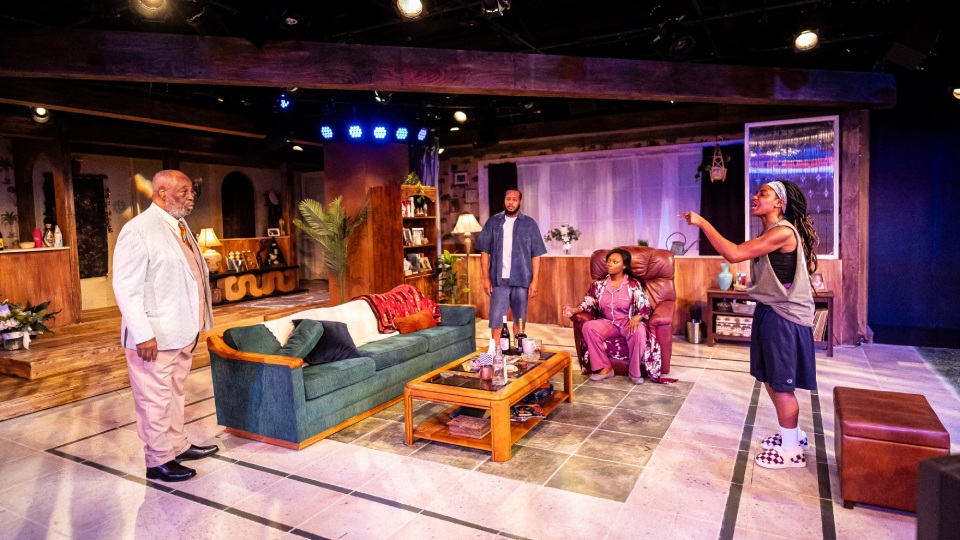
The scenic design is another notable achievement. The stage transforms from a church to a gravesite and eventually into the family’s living room. The final home setting is impressively detailed, providing a convincing domestic space in which the family’s conflicts can continue to unfold. My reservation is the time required to complete the transformation. Although the finished environment is effective, the process of getting there interrupts the production’s momentum.
Ultimately, Hayward is an entertaining and ambitious work that uses humor, supernatural elements, and family conflict to examine the lasting effects of trauma. Walker’s play is interested in the emotional territory families occupy: the memories they avoid, the wounds they pass along, and the love that survives even when they struggle to express it.
Still, the play would benefit from sharpening its central argument about mental health. Tony’s military service and the suggestion of inherited trauma offer fertile ground, but the relationship between psychological injury, family behavior, and Luna’s experiences could be developed with greater clarity. The subject deserves more than implication, particularly when the play so effectively demonstrates how one person’s unresolved pain can shape an entire household.
With its memorable characters, dark humor, and committed performances, Hayward offers a lively and often moving portrait of a family trying to find its way through grief. Like a Floridian-style shiva, the gathering is noisy, irreverent, and emotionally unpredictable. The dead may have been laid to rest, but in this family, the past is very much alive.
RECOMMENDED
When: Through Nov. 15
Where: Steppenwolf’s 1700 Theatre 1700 N. Halsted St. Chicago
Tickets: $45 - $50
Pot Girls: An Intelligent and Multilayered Explosion of Poetry and Feminism

The Story Theatre’s world‑premiere staging of Paul Michael Thomson’s Pot Girls bursts to life in a vivid, full‑throttle production at Raven Theatre. Pot Girls is a sharp, funny, and thought‑provoking new play that fuses feminist history, artistic accountability, and a rainbow haze of 1980s, weed‑soaked poetry and art.
Inspired as a thematic counterpart to Caryl Churchill’s Top Girls, Pot Girls - directed by Ayanna Bria Bakari - leans into humor, theatricality, and a cloud of intoxication to explore how women create, collaborate, and collide both onstage and off. And in a bit of theatrical serendipity, both productions are currently running simultaneously at Raven Theatre. In fact, Raven Theatre and The Story Theatre are even offering special marathon days, giving audiences the chance to catch a matinee of Lucky Stiff’s directed Top Girls, stick around for some conversation with the creative team, then return in the evening for Pot Girls - all at a discounted rate (click here for details).
The story follows Caryl herself, a playwright on the cusp of her first major, Olivier‑eligible production - a show designed to spotlight women in the workplace. The year is 1982 and as she toasts the achievement with friends, her colorful London flat transforms into an impromptu hub where a lively, time‑spanning cohort of feminist writers drop in to drink, smoke, debate, and probe the ideas she’s celebrating.
The haze of a jubilant night eventually clears, and what remains is a sharper truth: this play lays bare the exhausting contortions women are expected to perform just to gain a foothold as authors and playwrights. It highlights not only the uphill battle of competing in a landscape where men still discriminate against women in their productions regarding creative authority, but also the added burden of being scrutinized for perfect political correctness the moment a woman-led production finally reaches the stage.
The many ways that women as authors have been discriminated against and unfairly censored or even hunted over the centuries is thoroughly laid out in a fantastic cast of intelligent expressive women.
The period feels fully realized, aided by Katelyn Montgomery’s evocative scenic work and Racquel Postilgione’s sharp costume design.
As the play unfolds, Caryl is pulled through a tangle of personal and professional upheaval - romantic tension with her partner Edith, pointed accusations about her racial blind spots, and the mounting pressure to tell women’s stories with integrity. Around her, the ensemble slips effortlessly between roles, embodying historical figures, colleagues, and critics who collectively push her toward an uncomfortable, necessary self‑examination.
In Pot Girls, Brenna DiStasio centers the production as Caryl, offering a steady emotional clarity that grounds the play’s wilder turns and quietly establishes her as its moral anchor. Ireon Roach, as Edith, wields her well-rolled blunt with sharp wit and charismatic intelligence, building a lively, charged dynamic with DiStasio that keeps the energy flowing like a river.
Peter Ferneding lends understated but essential texture as he shifts through historical and contemporary figures, his easy timing playing neatly against Tamsen Glaser’s agile, precise turns as multiple feminist icons, which bring warmth, wit, and tonal delicacy.
Vibrant, expressive energy radiates through each of Emily Marso’s roles, elevating every moment and sparking electric interplay with Glaser and Maya Bridgewater. Glaser and Bridgewater, in turn, deliver a fierce yet deep human presence across their characters, adding tension and charge to the ensemble’s debates. One of Bridgewater’s characters delivers a beautifully crafted, cathartic reflection on a young girl’s kidnapping and rape - written with such grace and restraint that it resonates powerfully with the conversations society is having today about trafficking and vulnerability.
Rounding out the cast, Laney Rodriguez displays a great sense of humor and threads emotional nuance through each character she inhabits, serving as a subtle connective force while carving out memorable moments opposite DiStasio and Roach. As a unit, the ensemble stays quick, engaged, and combustible, amplifying the play’s ideas with palpable charge.
Ultimately, Pot Girls crackles with ensemble energy and sharp ideas, offering an engaging, thought‑rich night of theatre for anyone drawn to fresh feminist work.
Highly recommended.
Pot Girls has been extended through March 8th. For tickets and/or more show information, click here.
This review is proudly shared with our friends at www.TheatreInChicago.com.
Fat Ham at Goodman Theatre: Bold, Hilarious, and Heartfelt

James Ijames' Pulitzer Prize-winning play, Fat Ham, bursts onto the Goodman Theatre stage in a vibrant, deeply resonant co-production with Definition Theatre. Directed with an expert hand by Definition Theatre's Artistic Director Tyrone Phillips, this contemporary reinvention of Hamlet dazzles with humor, heart, and a profound exploration of identity, toxic masculinity, and generational burdens.
Set in a Southern backyard during a family barbecue, Fat Ham transforms Shakespeare's dark tragedy into a poignant yet hilarious meditation on living one's truth. At the center of this narrative is Juicy, played with remarkable nuance and emotional depth by Trumane Alston. Juicy's journey of self-discovery unfolds amid the ghosts—both literal and figurative—of his family's past, grappling with expectations of masculinity and the weight of inherited trauma.
Alston's performance is layered and compelling; his Juicy is introspective and tender yet brimming with an undercurrent of resilience, given time he will lean more into the character arc. His comedic timing is impeccable, delivering Ijames' sharp and incisive dialogue with a natural ease that invites the audience into his emotional world. Juicy's interactions with his spirited best friend Tio, brought to life by the dynamic Victor Musoni, provide some of the play's most humorous and thought-provoking moments. Musoni's portrayal of Tio is electric, offering a counterpoint to Juicy's introspection with boundless energy and unfiltered wisdom.
Ronald Connor impresses in the dual role of Rev and Pap, seamlessly shifting between the domineering ghost of Juicy's father and the charismatic over-sexed preacher presiding over family affairs. His presence looms large, embodying the toxic masculinity that haunts Juicy's world with an intensity that is both chilling and oddly comedic. Opposite him, Anji White as Tedra, Juicy's vivacious mother, delivers a powerhouse performance—balancing maternal warmth with an underlying desperation to escape her own past.
Ireon Roach’s Opal is a revelation, with her confidence simmering to the surface, while Sheldon Brown’s Larry, a stoic Marine grappling with his own identity, offers a poignant reflection of the play’s central themes. And no production would be complete without the powerhouse that is E. Faye Butler, whose presence on stage is nothing short of magical.
The technical elements of the production elevate the storytelling to new heights. Arnel Sancianco’s set design captures the essence of a Southern backyard with rich, lived-in detail, creating a tangible sense of place that enhances the play’s themes of home and heritage. Jos N. Banks’ costume designs are vibrant and character-driven, reflecting each individual's inner conflicts and outward personas. Jason Lynch’s lighting design cleverly shifts from naturalistic warmth to eerie supernatural hues, underscoring the play’s tonal shifts. Meanwhile, Willow James’ sound design punctuates the emotional beats with a careful blend of music and ambient sounds that ground the play’s heightened moments.
Phillips’ direction is both deft and sensitive. He embraces the play's comedic elements without undercutting its emotional weight. He crafts a production that honors Ijames’ bold vision while allowing the cast to fully explore the complexities of their characters.
Fat Ham is a triumph—an innovative, riotously funny, and ultimately moving exploration of what it means to break free from the ghosts of the past and forge an authentic future. Whether you're a Shakespeare purist or someone looking for a fresh, contemporary take on a classic story, this production offers something truly special.
With an outstanding ensemble, sharp direction, and a creative team firing on all cylinders, Fat Ham at Goodman Theatre is a must-see theatrical event that redefines what it means to inherit, to resist, and to thine own self be true.
Highly Recommended
When: Through March 2
Where: Goodman Theatre, 170 N. Dearborn St.
Tickets: $25 - $85
Info: Goodmantheatre.org/Ham

Holiday Hilarity! Paramount presents The Second City’s Nut-Cracking Holiday Revue at downtown Aurora’s Copley Theatre, Nov. 20-Dec. 23
21 October 2026 in Upcoming TheatreNeed something better than old reruns of Hallmark Movies this holiday season? Want to see some real nut-crackers? Then dash…

Mary, A Holiday Dansical Returns for one performance only at Logan Center December 13th
21 October 2026 in Upcoming DanceBlack Girls Dance®, which centers Black and Brown girls in joyful community, presents its sixth annual production of Mary, A…
The Gift Theatre's Hayward: A Floridian-Style Shiva
20 October 2026 in Theatre in ReviewThere are funerals where grief brings a family together, and then there are funerals where grief opens the door to…

Chicago Shakespeare Makes Winter’s Tale a Story Worth Telling
20 October 2026 in Theatre in ReviewChicago Shakespeare Theater’s production of The Winter’s Tale delivers a compelling evening of theater, showcasing an exceptional company of actors…

Steppenwolf Theatre Presents JESSIE MUELLER WITH SETH RUDETSKY – December 18 & 19, 2026
20 October 2026 in Upcoming TheatreSteppenwolf Theatre Company and Mark Cortale are pleased to announce the return of Tony Award-winning Broadway star Jessie Mueller (Beautiful:…
Remy Bumppo’s Mud Row: A Family Haunted by the Past
20 October 2026 in Theatre in ReviewRemy Bumppo opens its 30th anniversary season with Mud Row, a play by Tony Award nominee and MacArthur “Genius” Grant…

A Joe & Melanie Thing Theatre Company announces The Hanukkah Humbug at Greenhouse Theater Center - December 3-6
20 October 2026 in Upcoming TheatreThe world premiere of The Hanukkah Humbug brings ghosts, history, tradition, and a whole lot of family fun to the…
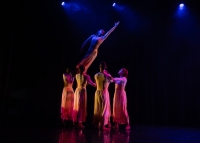
Identity Performing Arts' Fifth Anniversary Gala: Movement That Keeps Becoming
19 October 2026 in Dance in ReviewFive years is an important milestone for any arts organization, but for a contemporary dance company it also marks an…

Music Theater Works Pours a Beachy Cocktail with Escape to Margaritaville
19 October 2026 in Theatre in ReviewA gentle, tide‑easy current settles in right from the start, immediately signaling the kind of story this musical wants to…

Overshadowed Theatrical Productions Brings Beloved Holiday Classic It’s a Wonderful Life to the Stage
18 October 2026 in Upcoming TheatreThis holiday season, Overshadowed Theatrical Productions is thrilled to present the timeless holiday classic, It’s a Wonderful Life, live on…
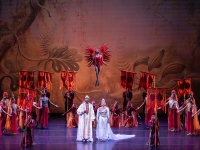
Dance Theatre of Harlem fills Auditorium Theatre with fire and funk
18 October 2026 in Dance in ReviewProjecting a vibe that felt more homecoming party than ballet presentation, Dance Theatre of Harlem returned to Chicago on October…

“A Strange Loop” Lets the Intrusive Thoughts Win at Raven Theatre in partnership with About Face Theatre
17 October 2026 in Theatre in ReviewA musical, but it’s just the voices in your head. Sounds just crazy enough to win the 2020 Pulitzer for…

BTE Opens New Season with Gunderson's "Louisa May Alcott's Little Women" Nov. 12-Dec. 13
16 October 2026 in Upcoming TheatreBuffalo Theatre Ensemble (BTE), the professional Equity theater companyin residence at the McAninch Arts Center (MAC), opens its 2026-27 three-play…

Announcing Goodman's 22nd New Stages 2026 Festival Line-Up
15 October 2026 in Upcoming TheatreFrom a "Kung Fu rom-com" to a witchy new musical, The Goodman's popular New Stages Festival in its 22nd year continues…

TIMELINE THEATRE’S 100TH PRODUCTION, THE CHICAGO PREMIERE OF LAURA WADE’S HOME, I’M DARLING, DIRECTED BY MECHELLE MOE, SATIRIZES THE SEDUCTIVE FANTASY OF A “SIMPLER PAST,” NOVEMBER 11 - DECEMBER 13
14 October 2026 in Upcoming TheatreTimeLine Theatre’s 30th Anniversary Season at its new home in Uptown rolls merrily along in November with the company’s 100th…

Court Theatre announces America@250 - Now is the Time: Artists Go to Work
14 October 2026 in Theatre BuzzUnder the leadership of Marilyn F. Vitale Artistic Director Avery Willis Hoffman and Executive Director Angel Ysaguirre, Court Theatre proudly…
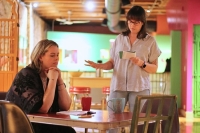
JK Entertainment presents WHEN WE WERE YOUNG AND UNAFRAID at Greenhouse Theater Center November 12 – 29, 2026
14 October 2026 in Upcoming TheatreJK Entertainment has released first look rehearsal photos for WHEN WE WERE YOUNG AND UNAFRAID, the first production of the…
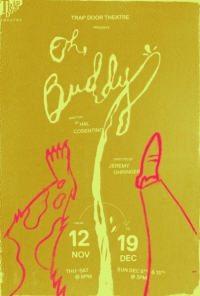
Trap Door Theatre Presents the World Premiere of OH, BUDDY, by Hal Cosentino. Opening November 12th, 2026
14 October 2026 in Upcoming TheatreTrap Door Theatre is thrilled to continue its 33rd season with a Chicago Premiere of Oh, Buddy, written by Hal…

Announcing the Cast of the 49th A CHRISTMAS CAROL
14 October 2026 in Upcoming TheatreTis the season, in spite of today's unseasonable temps, as A Christmas Carol begins rehearsals for The Goodman's 49th annual…

NOVA ENTERTAINMENT CURRENT AND UPCOMING 2026 CIRCA PINTIG UPDATES
14 October 2026 in Now PlayingNova Entertainment is pleased to announce the upcoming performance schedule and updates for CIRCA Pintig, with a visual rebrand and…

Steppenwolf Theatre Announces "ha ha ha ha ha ha ha" January 13 – February 7, 2027
14 October 2026 in Upcoming TheatreThe blurb is: hahahahahahahahahaha hahahahahahaha hihihi hahahahahahaha hoho hahahhahaha hehe hahahahahahahahahaha. Julia Masli's award-winning solo phenomenon ha ha ha ha…

'Sanctuary Stories' Ventures Into Emotional Drama Behind the News on Immigration
13 October 2026 in Theatre in ReviewSanctuary Stories plumbs the line between theater and journalism, and the powerful human dramas both can depict. Funded by a Northwestern…
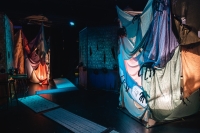
Inside Six Strange Worlds: Exquisite Corpse VI: LULLABIES
13 October 2026 in Theatre in ReviewFor its sixth Halloween season, Rough House Theater Co. has transformed Steppenwolf’s Merle Reskin Garage into a spectacular puppet haunted…
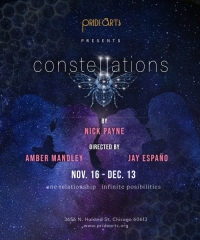
PrideArts announces cast and production teams for Nick Payne's CONSTELLATIONS, performed by alternating same-sex casts, November 13- December 13
12 October 2026 in Upcoming TheatreThursdays – Saturdays at 7:00 pm, Sundays at 3 pm Additional Saturday matinees at 3:00 pm on November 28 and December…

Robert Falls Directs a Sinfully Satisfying Don Giovanni at Lyric Opera of Chicago
11 October 2026 in Theatre in ReviewLet he without sin cast the first stone, Lyric’s “Don Giovanni” seemingly says when they bring up the house lights…

Teatro Vista Productions in collaboration with Audible presents Cafecito & Loops: A Mexodus Listening Tour Headed South Sundays, through November 1st
11 October 2026 in Now PlayingTeatro Vista Productions (TVP), the Midwest's only Latine-led Equity theatre company, in collaboration with Audible, presents Cafecito & Loops: A…
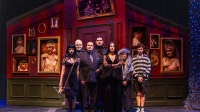
BrightSide’s Addams Family Musical Revives the Wonderfully Weird World of the Addams Clan
10 October 2026 in Theatre in ReviewThey're creepy and they're kooky, Mysterious and spooky, They're altogether ooky, The Addams Family. Yes, ooky. BrightSide Theatre’s production of…
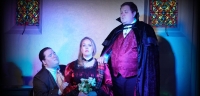
Chicago City Opera Delivers a Rare Operatic Haunting with Der Vampyr
08 October 2026 in Theatre in ReviewWith Halloween creeping closer, there’s something fitting about revisiting one of opera’s earliest flirtations with macabre horror - especially in…

Avalanche Theatre stages the world premiere of They Broke Up by Skyler Tarnas November 6–22, 2026
08 October 2026 in Upcoming TheatreAvalanche Theatre announces the world premiere production of They Broke Up by Chicago playwright Skyler Tarnas, November 6–22, 2026. Opening…

Oil Lamp Theater Announces the cast and creative team for the return of IT'S A WONDERFUL LIFE: A LIVE RADIO PLAY, Nov. 20 - Dec. 27
08 October 2026 in Upcoming TheatreOil Lamp Theater is proud to announce the cast and creative team for its next production and the final production…



Latest Articles
-
 Holiday Hilarity! Paramount presents The Second City’s Nut-Cracking Holiday Revue at downtown Aurora’s Copley Theatre, Nov. 20-Dec. 23
Written by Buzz Center StageNeed something better than old reruns of Hallmark Movies this holiday season? Want to see some real nut-crackers? Then dash on through the snow to catch The Second City’s Nut-Cracking Holiday Revue, November 20-December 23 at Paramount’s Copley Theatre, 8…
-
Mary, A Holiday Dansical Returns for one performance only at Logan Center December 13th
Written by Buzz Center StageBlack Girls Dance®, which centers Black and Brown girls in joyful community, presents its sixth annual production of Mary, A Holiday Dansical, choreographed, written, and directed by Founder Erin Barnett. This fundraiser returns for one night only Sunday, December 13…
-
 The Gift Theatre's Hayward: A Floridian-Style Shiva
Written by Wesley DavidThere are funerals where grief brings a family together, and then there are funerals where grief opens the door to everything a family has spent years trying to keep buried. In Hayward, playwright Netta Walker turns a father’s funeral into…
-
JK Entertainment presents WHEN WE WERE YOUNG AND UNAFRAID at Greenhouse Theater Center November 12 – 29, 2026
Written by Buzz Center StageJK Entertainment has released first look rehearsal photos for WHEN WE WERE YOUNG AND UNAFRAID, the first production of the company's second season. JK Entertainment's production brings this story to Chicago audiences November 12–29, inviting audiences to consider how far…


Does your theatre company want to connect with Buzz Center Stage or would you like to reach out and say "hello"? Message us through facebook or shoot us an email at This email address is being protected from spambots. You need JavaScript enabled to view it..
*This disclaimer informs readers that the views, thoughts, and opinions expressed in the text belong solely to the author, and not necessarily to Buzz Center Stage. Buzz Center Stage is a non-profit, volunteer-based platform that enables, and encourages, staff members to post their own honest thoughts on a particular production.