
Displaying items by tag: Chicago plays
City Lit’s Shane Saddles Up a Classic Western With Fresh Heart

City Lit Theatre’s world premiere of Shane, adapted for the stage and directed by Mark Pracht, brings a fresh, nostalgic perspective to Jack Schaefer’s classic novel - a story immortalized by Alan Ladd in the memorable 1953 film. Pracht, who has been developing this piece since the 2000s, crafts the adaptation as a heartfelt tribute to his own father and grandfather. The result is a sincere exploration of positive masculinity, celebrating men who stand by their virtues and protect others, even at great personal cost.
Set in the Wyoming Territory in the 1880s, the story kicks into gear when Shane, a quiet, mysterious stranger carrying the weight of a dangerous past, rides onto the homestead of Joe Starrett. Seeing something noble in the newcomer, Joe offers him a job as a farm hand, inviting him into his home and introducing him to his wife Marian and young son Bob. But the family’s peaceful routine is threatened by an escalating battle over land. Fletcher, a ruthless local cattle baron, wants to drive out the homesteaders at all costs, even hiring a killer to instigate a final conflict.
The narrative shines primarily through the eyes of young Bob, played warmly by Bruce Holtman. Spying on Shane at every opportunity, Bob serves as our window into understanding this complex, high-stakes frontier world. Narrating much of the action, Holtman skillfully transitions from an energetic, shy, and wide-eyed child into a mature observer. He injects a sense of humor into the production, as his younger self observes the adult world without always understanding the subtext. Through Bob’s perspective, the story taps into the beloved western's classic father-son overtones. He sees the mysterious stranger as the tough, capable man he wants to become, while Shane’s genuine kindness toward the boy shows that despite a dark past, he is capable of taking him under his wing.

Whitney Minarik (Marian Starrett), Josh Odor (Joe Starrett) in Shane at City Lit Theatre.
Michael B. Woods gives a strong performance as Shane, maintaining a jaded, guarded viewpoint that slowly softens. He gives the titular character a needed complexity as he wrestles with his past and rediscovers himself. Woods also executes the stage combat with convincing physical precision.
The ensemble also gives strong performances. Josh Odor plays Joe Starrett, with a steady, kind masculinity. He is stoic, hard-working, and fiercely devoted to his family, yet far from weak; in Shane, he finds a true blood brother who is willing to stand beside him in the fight against Fletcher's greed. Whitney Minarik plays the wife, Marian, with equal skill, portraying a stern woman who may be a little bit of a fish out of water in the frontier, but who manages regardless. Minarik handles the character's complex emotional landscape well, navigating a subtle romantic pull toward Shane.
Adapting a western presents production challenges, and yet, the play manages a compelling story. In a contemporary landscape where masculine energy is often framed negatively, this tale highlights what it means to be a man of integrity: placing the needs of others first and standing up for what is right despite fear. As Shane famously notes, "A gun is a tool. No better and no worse than any other tool.” In that same spirit, Shane learns to see himself as more than the past he ran from. By choosing to protect a family and a home he cares about, his ultimate victory on stage allows us, much like Bob, to recognize our own capacity for growth and virtue. City Lit’s Shane is earnest, capable entry for anyone looking to step into the Wild West for an evening.
Through October 4th. https://www.citylit.org/shows/46-s
Kokandy's JEKYLL & HYDE Extended by Popular Demand

|
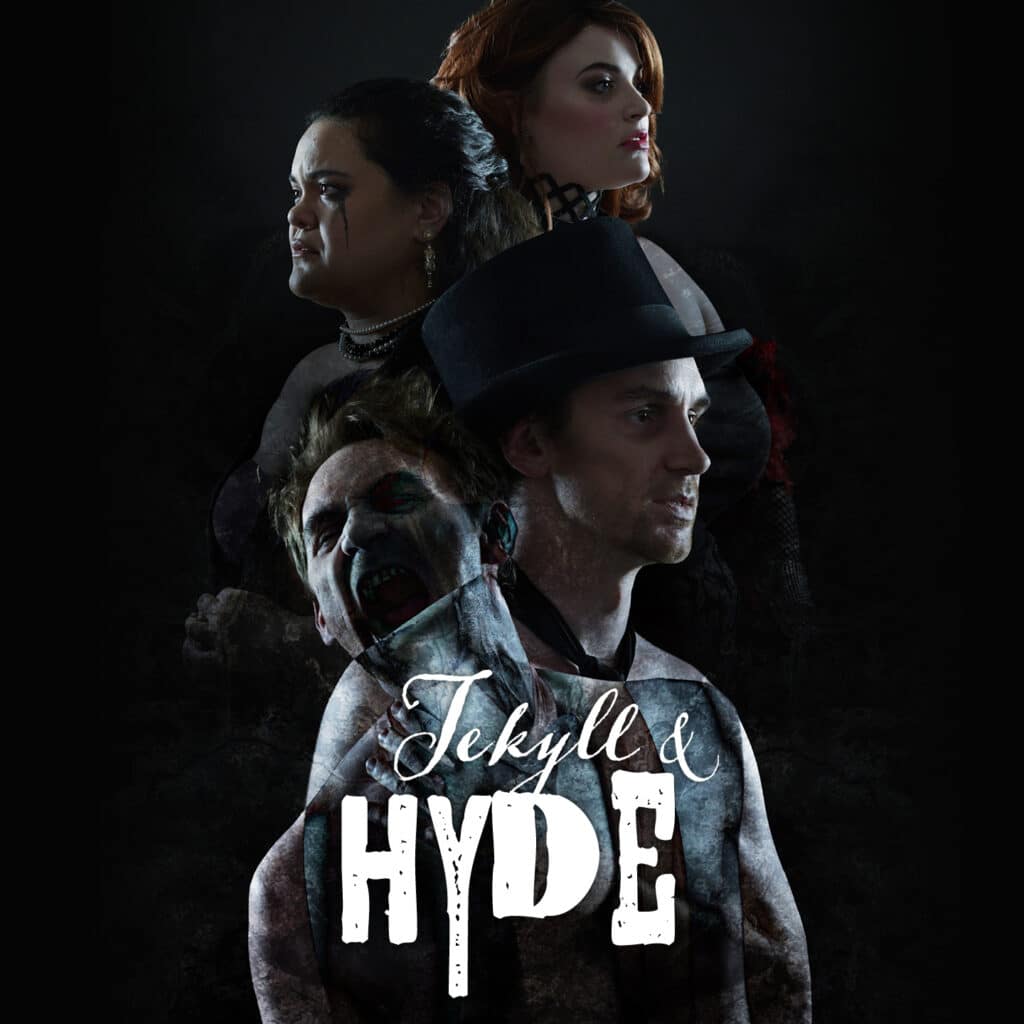
Broadway In Chicago is pleased to announce a darkly delicious Halloween surprise: Kokandy Productions’ critically acclaimed revival of JEKYLL & HYDE will be extended by popular demand through November 8. For a frightfully good group night, discounted group rates for parties of 10 or more may be purchased beginning today, Wednesday, August 26 at 10:00 AM, by emailing This email address is being protected from spambots. You need JavaScript enabled to view it. or calling 312-977-1710. For more information, visit www.BroadwayInChicago.com. A new block of individual tickets for this cauldron of thrills will go on sale tomorrow, Thursday, August 27, for the extended performances October 27—November 8, 2026. Individual tickets, priced from $45 to $110 with a select number of premium seats available for all performances, may be purchased at www.BroadwayInChicago.com or in person at any Broadway In Chicago venue box office. Additional fees apply for online purchases. Kokandy Productions’ Jekyll & Hyde will play the Broadway Playhouse at Water Tower Place (175 E. Chestnut St.) from September 8 to November 8. For the performance schedule and additional ticket information, see below. |
|
|
|
|
|
TICKET INFORMATION (as of 8/26/26, based on availability and subject to change) www.kokandyproductions.com |
Playmakers Lab’s That’s Weird Grandma’s 25th Birthday is a fine place to giggle

If you need an energy boost, skip the can of Monster and get yourself, plus loved ones of any age, to Playmakers Lab’s tasty birthday cake of a show. The very first edition of That’s Weird, Grandma, culled from Chicago elementary school students’ stories, occurred in the spring of 2001. The revue has somehow survived 9/11, Covid, funding cuts and all other slams against children’s wildest dreams and highest hopes.
No wonder director Brandon Cloyd and the cast can’t hide their excitement. Presented for the last 25 years at the Neo-Futurist Theater, That’s Weird, Grandma provides an hour of escape from adult common sense. It is rough hewn stuff, as scrappy in production and performance values as the gritty venue itself. But it’s a fine place to giggle at the audition of a giraffe who desperately wants to join the circus or a song about a burping bunny.
Cloyd’s intensity as he welcomes the audience reflects the entire project. What goes on in kids’ heads – and later on paper – matters enough to these dedicated grownups to say it out loud and in full volume. Young imaginations may lack both polish and boundaries, but the tales they generate don’t necessarily need a formal beginning, middle or end; or a neat divide between fact or fiction.
For example, “My Sister Fell” gets no farther than a little girl falling on some garbage and crying. “Rose Saves Tony” refers to Lake Michigan as an “ocean” which, given its vastness, makes perfect sense. With sheer glee, the ensemble performs the scene that gave birth to Playmaker Lab’s show title a quarter century ago – a grandma’s “weird” explanation of why her teeth are gleaming white.
Notable among the more complete sketches, “Egg Adventures” has the last remaining egg in a container urgently asking its commander via walkie-talkie to send reinforcements. Out come hens who lay more eggs, even as the commander warns, “Some of you will not be coming back.”
Ensemble members, who serve as teaching artists for the creative writing residencies, celebrate their double duty as educators and performers throughout the show. In addition to the current cast, actors from prior productions lend cameo performances – a nod to the past and a hope that Playmakers Lab can keep its weirdness going for years to come.
Runtime: 1 hour
Remaining show dates: Saturday Aug. 29, Sunday, Aug. 30, Saturday, Sept. 5 and Sunday, Sept 6; all performances at 2 pm
Playmakers Laboratory at Neo-Futurist Theater: 5153 N. Ashland Ave, Chicago
Tickets: www.playmakerslab.org.
Kowalski - Lookingglass Theatre - Through November 8th

Joining the previously announced stars of Kowalski Johnny Galecki ("The Big Bang Theory," "The Little Dog Laughed") as Tennessee Williams and Jacob Moskovitz ("Elle") as Marlon Brando are Alison Cimmet as Margo Jones, Reece Dos Santos as Pancho and Ellie Ricker as Jo. The celebrated new play by Gregg Ostrin, directed by Colin Hanlon, will come to Chicago's Lookingglass Theatre Company at the historic Water Tower Water Works, 163 E Pearson St. at Michigan Ave., playing September 15–October 25, 2026.
The creative team includes David Gallo (scenic designer), Lisa Zinni (costume designer), Jeff Croiter (lighting designer), Bill Toles (sound designer), Amanda Herrmann (props supervisor), Chels Morgan (intimacy director), Viveca Gardiner (associate scenic designer), Grace Wylie (assistant to the costume designer), Riva Fairhall (associate lighting designer), Sun Hee Kil (associate sound designer), J.P. Elins (production stage manager), and Tess Golden (assistant stage manager).
The understudies include Andrew Schoen (Tennessee Williams), Marck Kiselevach (Marlon Brando & Pancho), and Paige Cilluffo (Margo Jones & Jo).
Tickets are available at lookingglasstheatre.org and 312.337.0665. Kowalski is a part of the 26/27 Lookingglass Membership and Subscription Series. Single tickets range from $37 to $97, with a limited number of premium seats also available.
Set over one pivotal evening in 1947 Provincetown, Kowalski imagines the electrifying first meeting between Tennessee Williams and a young Marlon Brando, just as Williams searches for the actor who would forever change the destiny of A Streetcar Named Desire. Blending fact, memory, and theatrical imagination, the play offers a fascinating glimpse into the creative forces behind one of the most influential works in American theater. Kowaslki explores the intersection of ambition, artistry, desire, and the creation of theatrical history.
JOHNNY GALECKI (Tennessee Williams) is an acclaimed actor best known for his starring role as 'Leonard Hofstadeter' on the award-winning CBS comedy "The Big Bang Theory," for which he earned Emmy, Golden Globe and SAG award nominations. He first gained widespread recognition as 'David Healy' on the groundbreaking sitcom "Roseanne" and has appeared in numerous film and television projects throughout his career including Hancock, Vanilla Sky, I Know What You Did Last Summer, Suicide Kings, In Time and National Lampoon's Christmas Vacation. His stage credits include the Tony Award-nominated Broadway play The Little Dog Laughed for which he received a Theater World Award for Outstanding Broadway Debut, The Drawer Boy, Pot Mom, The Member of the Wedding and Galileo.
JACOB MOSKOVITZ (Marlon Brando) is a rising talent delivering versatile and engaging performances across film and television. Most recently, he starred in the highly anticipated Legally Blonde prequel series ELLE from Amazon and Hello Sunshine, which has already been renewed for a second season.
Moskovitz recently completed production on the Fernando Meirelles-directed Netflix feature Here Comes the Flood, appearing alongside Robert Pattinson, Denzel Washington, and Daisy Edgar-Jones. Earlier this year, Jacob also starred in Seth Meyers' produced feature Brian, which premiered to strong reviews at SXSW. He can currently be seen in the independent feature The Floaters, which was released July 10, 2026. Additional film credits include the A24 feature Y2K, directed and written by Kyle Mooney and Evan Winter, as well as Isle Child, directed and written by Thomas Percy Kim. On television, Jacob's credits include "Chicago P.D." (NBC), "The Good Fight" (Paramount+), Magnum P.I. (NBC), and "FBI: International" (CBS).
ALISON CIMMET (Margo Jones) has performed on Broadway in Gary, Amelie, She Loves Me, The Mystery of Edwin Drood, Bonnie & Clyde, Baby, It's You!, and A Tale of Two Cities. Off-Broadway/Regional favorites: Freya in Any Minute Now (HERE Arts Center); Margo Jones in Kowalski (Duke); Nelle in Someone Spectacular (Signature); Lady Capulet in Romeo & Juliet (Westport Country Playhouse); Witch in Into the Woods (Fiasco/The Old Globe); Mrs. Cratchit in A Christmas Carol (McCarter Theatre); Madame Thenardier in Les Miserables (NCT); 3 Kinds of Exile (Atlantic Theatre); Preparedness (Bushwick Starr); My Wonderful Day (Two River Theatre). Film/TV favorites: Best Medicine, The Wrath of Becky, The Big Sick, The Marvelous Mrs. Maisel, Ray Donovan, Blacklist, Younger, Bull, Evil, Dickinson, Law & Order: SVU. Alison is a graduate of Brown University, founder of Bonfire Theatre Group, and member of The Actors Center.
ELLIE RICKER (Jo) began her career as a professional Ballet dancer before earning her BFA in Theatre from Boston University. TV/Film credits include "Anne of Green Gables," "Blue Bloods," 12 and More Omissions (SAIFF Best Actor Award) and A24's Y2K, directed by Kyle Mooney. She is reprising her role from the recent off-Broadway production of Kowalski.
REECE dos SANTOS (Pancho) New York City-based and making his Chicago debut—stoked to finally be here! Film: The Man I Love (dir. Ira Sachs; 2026 Cannes Film Festival Palme d'Or nominee), Triumph of the Will. TV: The Equalizer (CBS), New Amsterdam (NBC), American Rust (Showtime). Off-Broadway: Romeo & Juliet (The Public's Delacorte Theater), The Irrepressible Magic of the Tropics (INTAR). Regional: All My Sons (Hartford Stage), Pride & Prejudice (Cleveland Play House), Flowers of Hawaii(Chautauqua Theater Company), A Welcome Guest (CATF), Measure for Measure and Sofonisba (Theater at Monmouth). MFA: NYU Graduate Acting, Class of 2023.
GREGG OSTRIN (Playwright) A native of Los Angeles, his most recent plays include A Very Streaming Christmas and The Spy Who Went Into Rehab (Pacific Resident Theatre, Venice, California), The Soul of Motown (Stage West Theater, Calgary), Truffles (Secret Door Theater, New York City) and Rank & File (Hudson Theater, Los Angeles). His play The Beverly Hills Hotel Peace Talks just had its premiere staged reading at The Coachella Valley Rep in Palm Springs, California for its Origins series. It will be opening there in May 2025. He dedicates this play to his former mentor, the late George Furth.
COLIN HANLON (Director) is an actor, writer, director, and producer living in New York City. He most recently directed Broken Snow (with Tony Danza, Tom Cavanagh and Michael Longfellow). He also directed I Love You Because-a queer retelling in NYC, The 25th Annual Putnam County Spelling Bee and co-directed It's Only a Play at George Street Playhouse. He's the co-producer & star of Submissions Only. He's also an adjunct professor at NYU New Studio, LIU, Stella Adler, and Cap 21. He teaches auditioning and self-tape technique at his private studio. Still a working actor as he's been on "Modern Family," "Difficult People," "The Sinner," "The Good Fight" and currently "Uncoupled" on Showtime. Broadway: Falsettos, Rent, Wicked (First National Tour) and In Transit. Off-Broadway: NYC premiere of Dot by Colman Domingo (Vineyard Theater, dir. Susan Stroman), A.R. Gurney's last play Final Follies dir. David Saint (Cherry Lane) and I Love You Because (original cast).
About Lookingglass Theatre Company
Founded in 1988 by graduates of Northwestern University, Lookingglass Theatre Company is a nationwide leader in the creation and presentation of new, cutting-edge theatrical works and in sharing its ensemble-based theatrical techniques with Chicago-area students and teachers through Education and Community Programs. Guided by an artistic vision centered on the core values of collaboration, transformation and invention, Lookingglass seeks to capture audiences' imaginations leaving them changed, charged and empowered. Recipient of the 2011 Tony Award for Outstanding Regional Theatre, Lookingglass has built a national reputation for artistic excellence and ensemble-based theatrical innovation. Notable world premieres include Mary Zimmerman's Tony Award-winning Metamorphoses and The Odyssey, J. Nicole Brooks' Her Honor Jane Byrne, David Schwimmer's adaptation of Upton Sinclair's The Jungle and Studs Terkel's Race: How Blacks and Whites Think and Feel about the American Obsession, Matthew C. Yee's Lucy and Charlie's Honeymoon and David Catlin's circus tribute to Lewis Carroll, Lookingglass Alice, which was captured by HMS Media and reached 1.6 million PBS viewers. Looking Alice is now available to more than four million students worldwide through Digital Theatre+. Work created by Lookingglass artists has been produced in Australia, Europe and dozens of cities throughout the United States.
Hail Mary/Maria at Theater Wit – A Welcome New Slant on Crossing Over into Adulthood

Coming of age stories resonate more profoundly when they mirror the lived reality of a real person. That’s why the firecracker of a play, Hail Mary/Maria, that’s just begun its far too short run at Theater Wit, is must-see theater for just about anybody who counts themselves as a member of the human family. If you’ve ever been young or wracked with self-doubt, Hail Mary/Maria proves there are avenues that lead to clarity and self-actualization. Making the play act as a raucous, hugely humorous and often touching guide on how to find them.
Very much a reflection of playwright RJ Silva’s own experiences, the story follows the life of Kid (Juan Sedonio), a teenager who immigrated to the US with his mother from the Philippines when he was in the seventh grade. Now in an all-boys high school, he’s a little bit of a loner and completely hooked on the exploits of his favorite pro-wrestler, Maria. He’s also, with great misgivings, about to embark on his first journey into romance.
A badass brawler with heart, it’s Maria we first meet when the play opens. She pumps up the crowd with her bravado, high voltage smile and saucy hair flips. A stark contrast with the subdued and self-enclosed Kid, Maria’s the bolt of energy that serves to ignite a story that’s about to match her spirit.
The core of the play starts innocently enough in school with Kid, which is short for Kindness, sitting alone listening to music through his earbuds. He’s joined by another student who casually strikes up a conversation. Confident and friendly, the boy is feeling Kid out, trying to learn more about him. He trips over the typical stumbling blocks when it comes to pronouncing foreign names and learning new things about a different culture. But there’s no animus. He’s open and curious. They both tap into their recall and remember being aware of each other from previous school encounters. Blond and self-assured, the new arrival’s name is Jack and it’s clear he wants to be friends. Since Jack (Aidan Leake) is really into the new Avatar movie, we can tell it’s the original he’s talking about and that the play’s setting is fifteen years or so in the past.
We can see too from their exchange that Kid, although on the surface quiet and retiring, has some spunk to him. Once he begins talking about why he’s such a fan of the wrestling phenom, Maria, played with zestful impeccability by Carina Lastimosa, we get a glimpse of his animated side. To Kid, she’s an underdog who became the top dog. An inspiration. There’s a lot of pride that comes pouring through in his admiration for her.
We meet Kid’s other role model at home. It’s his Mom, Marie (Marie Tredway). The quintessential Filipina nurse; tireless, indispensable, magnanimous, Marie’s got an iron core that’s fortified and sustained by her faith and belief in Mama Mary. A figure most of us know as the Blessed Virgin Mary. In Kid’s household, she has a shrine set up in her honor and consulted by Kid as well as his Mom for guidance and advise. Filling two roles, Lastimosa shows how easily she can portray widely divergent personalities. As Mama Mary, she beautifully personifies a potent blend of compassion and enlightened understanding when responding to Kid’s solicitations.
Scenes that take you inside Kid’s home are some of the most moving and treasured in the production. Thanks in no small part to Katelyn Montgomery’s wonderfully evocative set. They’re portals into a world rich in tradition, strongly held belief and the type of family values that insure cohesion. Attributes that on one hand are wonderfully sublime and on the other almost quaint. The types of characteristics that may have once flourished in the American culture as well; but have long since dissipated or atrophied.
Very much a collaborative effort, Hail Mary/Maria is directed by Mr. Silva’s husband, Adam Reed. The unconventionality of the central character is complemented by an equally unorthodox directorial approach in Mr. Reed’s debut directing effort. One that fills the one-act performance with heaps of emotional and physical dynamism while encouraging plenty of audience interaction.
Pro wrestling of various shades have long been extremely popular in the Philippines. From the responses of the audience Saturday night, it has a strong following in this country too. Rather than conjuring it only through the imagination, Hail Mary/Maria brings it live and center stage, giving the uninitiated a taste of its electric appeal. The ploy works beautifully, making Hail Mary/Maria as much a rewarding visceral charge as it is a splendid theatrical offering.
From that initial conversation between Kid and Jack, you somehow know Jack had more than friendship on his mind when he sat down next to Kid that day. And he likely sensed that Kid was interested in him, too. As we all know, a lot can be transmitted in a simple glance.
Kid and Jack inch their way toward understanding one another and liking each other even more as their familiarity grows. Something that triggers trepidation and even fear in Kid. How can he reconcile who he is with what he thinks should be? How that dilemma is resolved is what makes this project so appealing. There’s a wholesomeness to it that feels very honest. The solid gold cast help make Hail Mary/Maria a treasure. Both Sedonio and Leake fill their roles with the kind of intangibles that make what they present on stage memorable. A statement that’s just as true for Lastimosa and Tredway. You can’t help but want to see them all in other works that showcase their skill and gifts as well as this project one does.
The only pressing question now might be, what’s the fledgling entertainment enterprise going to roll off their runway next?
Hail Mary/Maria
Presented by Nova Entertainment
Thursday, August 20th - 7:30pm
Friday, August 21st – 7:30pm
Saturday, August 22nd - 2:30pm & 7:30pm
Sunday, August 23rd - 2:30pm
Venue: Theater Wit in Theater 2
1229 W. Belmont Avenue
Chicago, IL 60657
For more information and tickets: https://www.theaterwit.org/tickets/productions/602/performances
Highly Recommended
Shattered Globe Theatre Announces 36th Season

Shattered Globe Theatre (SGT), now under the artistic leadership of Ian Frank, is pleased to announce its 36th Season, featuring three plays that explore the distortions that shape our lives and the courage it takes to break through them. The season kicks off this fall with the Midwest premiere of Erika Sheffer's Vladimir, an unflinching drama of resistance directed by Ensemble Member Lou Contey. SGT's 2026/27 season continues next winter with the Midwest premiere of Phanésia Pharel's emotionally rich two-hander The Waterfall, directed by Jasmine B. Gunter. The 36th Season concludes next spring with Oli Forsyth's intimate psychological thriller Brace Brace, directed by Elizabeth Margolius. Whether political, personal or inherited, each of these stories follows characters searching for truth, connection and the freedom to define their own reality.
Shattered Globe Producing Artistic Director Ian Frank comments, "I'm honored to steward Shattered Globe's legacy of bold, intimate storytelling into this exciting new chapter. Our upcoming season tells stories about parents, partners and politics. But at its core is a fight to break free and find something honest, authentic and redemptive. These are stories about what happens when the narratives we've inherited begin to crack, and we're forced to decide what truths are worth holding onto. We promise you'll leave the theatre talking. That's exactly what live theater is supposed to do."
The full 2026/27 Season will be presented at Shattered Globe's resident home, Theater Wit, 1229 W. Belmont Ave. in Chicago's Lakeview neighborhood. Single tickets ($20 – $60) are now on sale at SGTheatre.org, by calling (773) 975-8150 or in person at the Theater Wit Box Office. Season Traveler memberships starting at $55 are also available. For information on group discounts, e-mail This email address is being protected from spambots. You need JavaScript enabled to view it. or call (773) 770-0333.
Shattered Globe Theatre's 2026/27 Season includes:
October 2 – November 14, 2026
Vladimir – Midwest Premiere!
By Erika Sheffer
Directed by Ensemble Member Lou Contey
Featuring Ensemble Members Rebecca Jordan, Adam Schulmerich and Drew Schad with Associate Artist Steve Peebles. Additional casting to be announced.
In a world where facts are manipulated and fear is currency, the truth becomes dangerous.
As a new authoritarian government tightens its grip on Russia, Erika Sheffer's Vladimir follows an independent journalist who uncovers a story that could expose the truth behind a nation in transition. But when every headline comes with consequences and every source becomes a target, she must decide how much she's willing to sacrifice for the story. Vladimir is a gripping political thriller about what happens when silence becomes complicity.
January 22 – February 27, 2027
The Waterfall – Midwest Premiere!
By Phanésia Pharel
Directed by Jasmine B. Gunter
What do we owe the people who raised us? After her mother's hospitalization, Bean returns home expecting to help her recover. Instead, she's forced to confront the dreams, expectations and traditions that have quietly shaped her entire life. As old tensions ripple to the surface, both women must confront the love and sacrifices that bind them together. The Waterfall is an intimate powerful exploration of family, identity and the ties that shape us.
April 16 – May 29, 2027
Brace Brace
By Oli Forsyth
Directed by Elizabeth Margolius
You survive the unimaginable. Now what? When a shocking event leaves Ray and Sylvia alive but forever altered after their honeymoon, they find themselves trapped in competing memories of the same event. As their relationship begins to unravel, Brace Brace explores how trauma reshapes perception, distorts truth, and leaves us questioning not just what happened, but who we've become because of it.About the ArtistsErika Sheffer (Playwright, Vladimir) is a playwright and screenwriter based in Los Angeles. Her first play, Russian Transport, premiered at The New Group and went on to productions at Steppenwolf as well as other regional and international theaters. The Fundamentals was commissioned and produced by Steppenwolf. Her latest play, Vladimir was commissioned by The Geffen Playhouse and received its world premiere at Manhattan Theatre Club. Honors include the Paula Vogel Playwriting Award, multiple TCG Edgerton Grants and an Outer Critics Circle Award nomination. She is an alum of Ars Nova Playgroup and a member of Center Theatre Group's LA Writer's Workshop. Erika has held commissions from Steppenwolf, The Geffen Playhouse, Center Theatre Group and Manhattan Theatre Club. Screen credits include Apple TV's Little America and Netflix's The Beast in Me (Writers Guild nomination). as well as multiple development rooms for Apple TV, Starz and Sony.
Lou Contey (Director, Vladimir) is a long-time Ensemble Member with Shattered Globe Theatre. He recently directed the multiple award-winning production of A View from the Bridge. Shattered Globe credits include The Manchurian Candidate, A Streetcar Named Desire, All My Sons, Who's Afraid of Virginia Woolf?, Peter Pan, Les Liaisons Dangereuse, Warhawks and Lindberghs, Holy Ghosts, Judgement at Nuremberg, Requiem for a Heavyweight, The Whaleship Essex, In the Heat of the Night, The Tall Girls, The Heavens are Hung in Black, and many others. Among his more than eighty directing credits are The Price, Awake and Sing!, It's All True, Copenhagen. Pravda, Paradise Lost, The General from America, A House with No Walls, Lillian, Frost/Nixon, The Guys and The Apple Family Plays, all at TimeLine where he is an Associate Artist. Other Chicago credits include The Master and Margarita (Strawdog Theatre); In a Garden (A Red Orchid Theatre); Marriage Play, Duck Variations (The Goodman Theatre) and Haymarket Eight (Steppenwolf). He has also worked at Theatre at the Center, Buffalo Theatre Ensemble, Provision Theatre, Eclipse Theatre and American Theatre Company. He has taught acting and directing for the theatre programs at UIC, The Acting Studio, Act One Studio and The Theatre School/DePaul University.
Phanésia Pharel (Playwright, The Waterfall) is a Haitian-American playwright from a dragon fruit farm in Miami. The daughter of an immigrant teacher and farmer, she writes to honor people. Her full-length plays include Dead Girl's Quinceañera, The Waterfall, R&B, Lucky and Black Girl Joy. She is the incoming playwriting fellow at Emory University where she will teach and have a new play produced through their repertory company. She has received commissions from the Atlantic Theater, Lucille Lortel (Alcove), La Jolla Playhouse, Miranda Family Fund, Hero Theatre, City Theatre Miami and the Latinx Playwrights Circle. Her honors include Kilroys List, five awards from the Kennedy Center, two-time Bay Area Playwrights Festival Finalist/Honorable Mention, Jane Chambers Finalist, A is For Playwriting award recipient and the Frank Moffett Mosier Fellowship for Works in Heightened Finalist Prize. Phanésia is a member of the Obie-winning EST/Youngblood group and The Wish Collective. Her work has been developed by the Playwrights' Center, New York Stage and Film, SolFest, Thrown Stone, Shattered Globe and Echo Theater Company. B.A, Urban Studies, Barnard College of Columbia University. MFA, Playwriting, UCSD '25.
Jasmine B. Gunter (Director, The Waterfall, she/her) works as an active director, producer and casting director around the U.S. She was the 2021 recipient of the Hangar Directing Drama League fellowship, the 2020 recipient of the Leighton M. Ballew Directing Scholarship and a proud graduate of the Northwestern MFA Directing program and SDC member. Recent directing credits includes Furlough's Paradise (Geva Theatre), The Love Object (Story Theatre), Dracula: A Feminist Revenge Fantasy, Really (Northwestern University), The Revolutionists (Northwestern University), jump (Northwestern University) Lost Girl (Hangar Theatre), The Wonderful Wizard of Oz (Hangar Theatre), Hedda Gabler (Northwestern University), Wine in the Wilderness (Northwestern University), Intimate Apparel (SUNY Brockport), Ghost Story (Kane Repertory Theatre), Lines in the Dust (Geva Theatre Center), Reroute (24 Hour Plays: Nationals). Associate/Assistant Credit: Blues for an Alabama Sky (Remy Bumppo), Nina Simone: Four Women (Arena Stage), In the Heights (Seattle Rep), Quixote Nuevo (Hartford Stage/Huntington Theatre Company) and The Luckiest People (Actors Theatre of Charlotte/NNPN). Jasmine has also taught at the Berkshire Theatre Group and the Redhouse Arts Center in Syracuse, NY.
Oli Forsyth's (Playwright, Brace Brace) play Brace Brace premiered at the Royal Court Theatre in 2024. He was the recipient of the Jerwood New Playwright award in the same year and is currently under commission to the Royal Court for a new play. In 2021, he was invited to join Mike Bartlett's writing group at Hampstead Theatre and was commissioned to write The Pox, for the main stage. In 2019 Cash Cow was produced at Hampstead Theatre Downstairs, quickly followed by a run in Edinburgh. Also in 2019, Such Filthy F*cks, a Smoke & Oakum/Pleasance co-production ran at the Vaults Festival in London.Oli's earlier work includes: Tinderbox (2014) which was nominated for an Amnesty International Award; Cornermen (2015) at The Old Red Lion and The Pleasance, then transferring to VAULT Festival and touring in co-production with Red Ladder Company/New Diorama Theatre (2018).New Diorama Theatre/Smoke & Oakum co-produced Happy Dave (2016) and Kings (2017).
Elizabeth Margolius (Director, Brace Brace) is a Jeff Award-winning stage and movement director, who most recently received the award for Director of a Musical for Shattered Globe Theatre's London Road. A five-time Joseph Jefferson Award nominee, Elizabeth's selected directorial credits also include: The Da Vinci Code for Drury Lane Theatre, The Flying Lovers of Vitebsk for Northlight Theatre, Fiddler on the Roof for Drury Lane Theatre, Tidy and Rose for Renaissance Theaterworks, Crimes of the Heart for American Stage, Le Loup-garou for Opera Southwest, I and You, Silent Sky, Miss Holmes and The Bridges of Madison County for Peninsula Players, Queen of the Mist for Firebrand Theatre, The Scarlet Ibis for Chicago Opera Theater, Machinal (Movement Director) and Uncle Philip's Coat for Greenhouse Theater, Haymarket: The Anarchist's Songbook for Underscore Theatre, The Girl in the Train for Chicago Folks Operetta, Goldstar, Ohio for American Theater Company, The Merry Wives of Windsor for Chicago Shakespeare Theater (Assistant Director), Opus 1861 for City Lit Theater, Violet for Bailiwick Chicago and Bernarda Alba and Songs for a New World for Bohemian Theatre Ensemble.
About Shattered Globe Theatre
Shattered Globe Theatre seeks to redefine what it means to be an ensemble theatre, discover new connections between story, artist and audience, and explore drama from bold, challenging perspectives.Shattered Globe Theatre was born in a storefront space on Halsted Street in 1991. Since then, SGT has produced more than 80 plays, including nine American and world premieres, and garnered an impressive 53 Jeff Awards and 134 Jeff Award nominations, as well as the acclaim of critics and audiences alike. Guided by Producing Artistic Director Sandy Shinner, Shattered Globe's values are rooted in a commitment to racial equity, respect for all artists and support for the ensemble, while creating new opportunities to amplify traditionally marginalized voices and collaborate in all aspects of its work. Through initiatives such as the Protégé Program, Shattered Globe creates a space which allows emerging artists to grow and share in the ensemble experience.Shattered Globe Theatre's Ensemble includes Judy Anderson, Louis Contey, David Dastmalchian, Demetra Dee, Joe Forbrich, Ellie Fey, Christina Gorman, Daria Harper, Kotryna Hilko, Tina M. Jach, Rebecca Jordan, Steve Kleinedler, Vivian Knouse, AmBer Montgomery, Tina Muñoz Pandya, Eileen Niccolai, Jazzma Pryor, Deanna Reed-Foster, Linda Reiter, Jeff Rodriguez, Drew Schad, Adam Schulmerich, Leslie Ann Sheppard, Sandy Shinner, Joe Sikora, Shelley Strasser, Devonte E. Washington, Sarah Jo White, Joseph Wiens and Brad Woodard.SGT's Artistic Associates includes Daniela Colucci, Elliot Esquivel, Mikey Gray, Lawrence Grimm, Ronald Hale, Darren Jones, Christopher Kriz, Jason Lynch, Lydia Moss, Tim Newell, Jane Nix, Aila Peck, Steve Peebles, Cage Sebastian Pierre, David Antonio Reed, Angie Shriner, Abbey Smith, Hershey Suri, Michael Trudeau and Ayanna Wimberley.SGT is supported in part by generous grants from the Shulman-Rochambeau Charitable Foundation, Brenda and James Grusecki, The Paul M. Angell Family Foundation, Carol P. Eastin, The Shubert Foundation, Judith and David Sensibar, the Illinois Arts Council, The Gaylord and Dorothy Donnelley Foundation and Americans for the Arts.Visit SGTheatre.org for subscriptions, tickets and information, and follow the company @shatteredglobe on Facebook and Instagram.
Gus and Alice Brings Nostalgic, Cozy Comedy
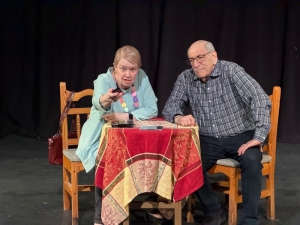
Theatre 31 Productions’ Gus and Alice has returned to the Greenhouse Theater Center this month. Written by Chicago playwright Mike Rago, the light‑hearted slice‑of‑life comedy follows an elderly married couple whose days revolve around avoiding gluten and surviving a game of Trivial Pursuit. As they enter their next chapter, Alice wonders whether a retirement community might be the right move - though her curmudgeonly husband will need some convincing.
Gus and Alice made its debut in New York before heading to the Windy City earlier this year for a sold‑out run. Now the original cast returns for this limited engagement, greeted with an unmistakably warm welcome on opening night.
The one‑act play has the feel of a ’90s sitcom (albeit one with a few well‑placed expletives). It kicks off with snappy dialogue and brisk blackouts that introduce the couple and their marriage - full of the love and bickering reminiscent of The Honeymooners’ Ralph and Alice. These characters are familiar, but the timelessness of the humor still rings true.
Rago set out to write a show centered on aging parents, a group often sidelined in comedy. At the core of the production’s success is the chemistry between Al Lerner and Michelle McKenzie‑Voigt, who bring Gus and Alice to life with a dynamic ease that anchors every scene they share. McKenzie‑Voigt, a Chicago‑based theater actress, professional voice talent, and multiple Chicago Emmy Award‑nominee, gives Alice a warm, grounded presence that balances Lerner’s sharper edges. Chicagoans may recognize Lerner from his days as a sports reporter and radio talk show host - a career that includes his work as a Sports Anchor/Reporter for ABC’s WLS‑TV, a Feature Reporter for NBC’s WMAQ‑TV, and a major on‑air presence at WGN Radio, where his talk show was nationally syndicated. Together, Lerner and McKenzie‑Voigt play off each other beautifully, trading barbs or getting on each other’s nerves while keeping their characters rooted in an understanding of love. Lerner grounds the cantankerous Gus with a short‑tempered crankiness that somehow remains endearing, while McKenzie‑Voigt shines as the sensible, fun‑loving Alice who can keep her husband in check.
Supporting the central pair is Peter Goldsmith as their son. His relaxed, relatable persona fits the role naturally; he deftly portrays a son who understands his parents’ quirks and effortlessly lets it slide when his dad calls him by his brother’s name. He proves to be the perfect straight man, playing the role with an intelligent ease.
The small ensemble adds quirky flavor. Valerie O’Connor is especially funny as the neighbor who’s had a bit too much to drink. A few ensemble members lean into a heightened, overly silly style of comedy, but it mostly suits the material. The show caps off with a high‑energy curtain‑call dance to the Macarena, a playful final beat that even draws a few audience members to join in.
Gus and Alice delivers a warm, laughter‑filled evening. This breezy comedy may tread familiar territory, but it reminds us what truly makes a family: loving each other even when we drive each other crazy.
Runtime: 1 hour 5 minutes
Rating: PG‑13
No intermission
Remaining show dates and times: Saturday, August 15 at 7:30 PM, Saturday, August 22 at 3:00 PM, Sunday, August 23 at 3:00 PM
The Greenhouse Theater Center 2257 N Lincoln Ave Chicago, IL 60614 Up Main Stage
The 37th annual Rhinoceros Theater Festival through October 26 at Six Chicago venues
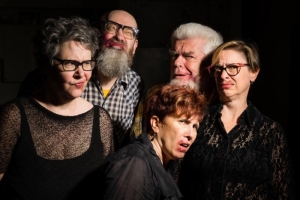
Curious Theatre Branch, with co-producers Chicago Danztheater Ensemble, Chicago Dramatists and Labyrinth Club, are pleased to announce the 37th annual Rhinoceros Theater Festival, September 20 - October 26 at four venues across Chicago. The month-long festival of shows will kick off with a special “afternoon tea” edition of the Full Moon Vaudeville, this concert launches the festival on Sunday, Sept. 20 at 3 p.m. at Facility Theatre, 1138 N. California Ave., headlined by art/folk/cabaret act The Crooked Mouth and other special guests.
Throughout its nearly four decades, Rhinofest has endeavored to welcome as many participants as possible, both as artists and as audience members. To that end, artists pay no fee to apply or to produce their works at Rhinofest and all tickets are offered at pay-what-you-can pricing, with a $25 suggested price. Tickets and details for all upcoming shows will be available Sunday, Sept. 6 at Rhinofest.com.
Since its inception in 1989, as a single weekend of shows in the Wicker Park neighborhood, this unique and mutable fringe festival has expanded and contracted to fit the time and has become the longest running Fringe Festival in Chicago. Festival events will take place at four venues this year: Facility Theatre, 1138 N. California Ave. in Humboldt Park; Chicago Dramatists, 798 N. Aberdeen in River West, Labyrinth Arts Club, 3658 N. Pulaski Rd. in the Irving Park neighborhood and Chicago Danztheatre Ensemble, 1650 W. Foster Ave.
The 37th Rhinofest will feature mostly original work from Chicago artists and companies, including new work from The Fat Theater Project, the 10th anniversary of Ira Murfin’s An Interview, a new work by Jessica Wright Buha, new work from Drinking and Writing Theater, and, of course, an evening of short works by The Curious Theatre Branch, Rhinofest’s host. New to the Festival in 2026 are partnerships with Chicago Danztheater, a beautiful space in Andersonville, featuring movement-based work and a creativity workshop called Maps, Guides & Legends: a generative writing and interdisciplinary art-making workshop on Saturday, Oct. 24 at 10 a.m. - 2 p.m.
This year's festival will feature plays, music and performances from more than 35 companies and solo artists. Among the highlights are:
The Full Moon Vaudeville
Facility Theater, 1138 N. California Ave.
Sunday, Sept. 20 at 3 p.m.
The annual bacchanalia headlined by art/folk/cabaret act The Crooked Mouth
includes a variety of acts to inaugurate the festival featuring cool things as yet unknown and a rare afternoon teatime show.
Make Out the Words
by The Curious Theatre Branch
Chicago Dramatists, 1105 W. Chicago Ave.
Saturday, Oct. 3 at 9 p.m., Sunday, Oct. 4 at 5 p.m., Saturday, Oct. 10 at 7 p.m., Sunday, Oct. 18 at 5 p.m., Friday, Oct. 23 at 7 p.m.
Make Out the Words: two new short plays inspired by the unproduced writing of the late Matt Rieger, by Curious ensemble members Charlotte Lastra and Chris Bower. The show also features a performance of Rieger's own text by Beau O'Reilly.
A strange encounter on a train leaves an aimless woman desperate for answers, and a flood with no explanation leaves a couple with a basement full of ruined Moby Dicks.
Drinking and Writing Theater: Miersten Wolf
Labyrinth Arts Club, 3658 N. Pulaski Rd.
Thursdays: Sept. 24, Oct. 1, Oct. 8, Oct. 15 and Oct. 22 at 7 p.m.
In this 70-minute musical, three stories are interwoven with 10 original songs. The stories include the truthful biographical information of the writer, the history of Chicago's problem/solution with its waste and, lastly, a fictional story of a crib keeper on Lake Michigan who dreams of a mysterious woman named Miersten Wolf.
Works in Progress
By Jeff Glassman, Mark Enslin and Susan Parenti
Chicago Dramatists, 1105 W. Chicago Ave.
Saturday, Oct. 3 at 7 p.m. and Sunday, Oct. 4 at 3 p.m.
Works in progress include Radish is My Teacher by Jeff Glassman, a collection of scripts for puppets by Susan Parenti and a libretto by Mark Enslin about a stranded international volunteer incarcerated firefighter. Both Susan Parenti & Jeff Glassman have had new works produced here in Chicago and around the country over the last decade.
The Metamorphosis aka The Adult Show/I'm a Bug!!! aka the Kids Show
By Jessica Wright Buha
Chicago Dramatists, 1105 W. Chicago Ave.
Sundays: Oct. 4, Oct. 11, Oct. 18 and Oct. 25 at 11 a.m.
This staged reading presents TWO works-in-progress that will happen at the same time (in two separate rooms).
The Metamorphosis aka The Adult Show, is a five-actor immersive show based on Franz Kafka's “The Metamorphosis.”
I'm a Bug!!!! aka the Kids Show, is a two-actor/teaching artist show for kids based on Franz Kafka's “The Metamorphosis.” This second piece will also serve as child care for audience members going to see The Metamorphosis.
Shaking the Beckett:
The Magic of Lady M. and A Needless & Wasteful Requirement
By Fat Theater Company
Chicago Danztheatre Ensemble, 1650 W. Foster Ave.
Friday, Oct. 9 and Saturday, Oct. 10 at 9 p.m.
These two one acts are both subjective and satirical interpretations of the works of two theatrical masters: William Shakespeare and Samuel Beckett. The Magic of Lady M. by Laura Scruggs reimagines the tragedy of “Macbeth” as a feminist political satire in a style akin to John Waters or “Ru Paul's Drag Race.” A Needless & Wasteful Requirement by Robert MacCrae follows two actresses awaiting the performance rights to produce Waiting for Godot, which becomes an existential absurd comedy in the vein of Beckett himself.
An Interview
By Ira Murfin
Sunday, Oct. 18 at 4 p.m. at Labyrinth Arts Club, 3658 N. Pulaski Rd.
Saturday, Oct. 24 at 9 p.m. at Chicago Danztheatre Ensemble, 1650 W. Foster Ave.
An Interview is an ongoing series of encounters between rotating pairs of participants, who meet across a table in front of an audience to first revisit an interview conducted during the previous installment and now to conduct a new, unrehearsed conversation. Every performance is specific, unique and unrepeatable, while each encounter is connected to all the others by the format and sequence that carries through the project’s 10-year history.
Special Event: Maps, Guides & Legends
Led by Sherry Antonini and Jenny Magnus
Chicago Danztheatre Ensemble, 1650 W. Foster Ave.
Saturday, Oct. 24 from 10 a.m. - 2 p.m.
Maps, Guides & Legends is a generative writing and interdisciplinary art-making workshop. A writing and creativity day based on the idea that doing is learning, and experiments and games are an explosive way to try new things. Antonini and Magnus have been teaching together for 30 years, from the incredible Interdisciplinary Arts Department at Columbia College Chicago back in the day to writing classes at The School of the Art Institute and everything in between. This duo knows how to have fun and get ideas rolling. Anyone can get ready to begin, begin again or find a way through the middle of a project. Open to writers and interdisciplinary artists at all levels, this workshop will point to new project routes, productive detours and discoveries of what can be found along unpaved roads.
About the Rhinoceros Theater Festival
The event that became the Rhinoceros Theater Festival began in 1988 as an offshoot of the Bucktown Arts Fest and in its first year featured just two days of performances, including work by Curious Theatre Branch co-founders Jenny Magnus and Beau O'Reilly. Curious went on to produce the Rhino across many neighborhoods and venues over the years, with events variously taking place in Wicker Park/Bucktown, Rogers Park, Andersonville and Avondale; at spaces including the Lunar Cabaret and Full Moon Café, the Neo-Futurarium, the Society for New Things, The Garage, The Firehouse, Remains Theatre and Prop Thtr. In the mid-2000s, Rhinofest settled at Prop Thtr in Avondale as its long-term base and Prop and Curious co-produced the festival among a shifting group of curators for many years. Following the closure of Prop's Elston Ave. space in 2020 and a year off during the height of the pandemic, Rhinofest now returns to its expanded form, producing shows by more than 50 artists at multiple venues.
ETA’s for colored girls Honors the Enduring Power of Ntozake Shange
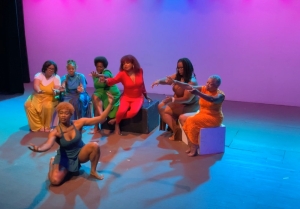
Nearly fifty years after its groundbreaking premiere, Ntozake Shange's for colored girls who have considered suicide / when the rainbow is enuf remains one of the most important works ever written for the American stage. Neither conventional play nor musical, Shange called her work a "choreopoem," a seamless fusion of poetry, dance, music, and theatrical ritual that forever changed the landscape of Black theatre.
When the work premiered in 1976 it shattered theatrical conventions. The original production gave Black women something rarely afforded on the American stage: the authority to tell their own stories without apology, through language that was lyrical, raw, sensual, political, and deeply personal. At a time when Black women were often relegated to supporting roles in theatre, Shange centered their voices, their pain, their joy, and ultimately, their survival. The production earned multiple Tony Award nominations and cemented itself as a cornerstone of the American theatrical canon.
Its relevance today is perhaps even more striking. In an era shaped by conversations surrounding gender-based violence, mental health, reproductive autonomy, identity, and the ongoing struggle for Black women to be fully seen and heard, Shange's words continue to resonate with astonishing clarity. The emotional truths embedded in her poetry refuse to age.
ETA Creative Arts Foundation's production, directed by Donn Carl Harper, wisely understands that the strength of for colored girls lies in trusting Shange's language. Harper resists the temptation to over-direct or impose unnecessary concepts upon the material. His direction is careful, respectful, and largely unobtrusive, allowing the poetry to remain the undeniable centerpiece.
The production, however, begins on an unfortunate note. Opening night started approximately thirty minutes late, a delay that inevitably affected the audience's energy. Compounding that issue was the decision to open with Nina Simone's haunting "Four Women." While Simone's anthem is unquestionably a masterpiece and shares thematic kinship with Shange's work, its placement here felt somewhat gratuitous. After already waiting half an hour, the audience was asked to spend another five minutes listening to a recorded song while nothing occurred onstage. Rather than heightening anticipation, the extended prelude tested the audience's patience before the choreopoem had the opportunity to speak for itself.
Once the production settles into Shange's text, however, it finds its rhythm.
Levi Wilkins' abstract scenic design provides an uncluttered visual landscape that allows the performers to inhabit both literal and emotional spaces. His lighting effectively supports the shifting moods of the evening, although both scenic and lighting concepts occasionally seem content to complement the material rather than challenge it. Given the limitless theatrical possibilities inherent in a choreopoem, I wish he would have made bolder visual choices that embrace the work's dreamlike qualities.
Markene Peavy's costume designs honor the play's iconic color symbolism, a safe choice, but it doesn't distinguish each woman as individuals, a missed opportunity. Peavy's choreography becomes the production's most compelling storytelling device. Rather than serving as decorative movement between monologues, the choreography extends Shange's language into the body, allowing emotion to continue flowing.
Among the ensemble, Madison Savannah (Lady in Purple) emerges as an exceptional physical storyteller. Her dancing possesses remarkable precision, grace, and emotional transparency, making every movement feel deeply connected to the poetry. She consistently commands attention without disrupting the ensemble's collective balance.
The performances throughout demonstrate a clear understanding that these women are not individual characters so much as facets of a shared experience.
Tina Marie (Lady in Red) delivers her poetry with commanding authority and emotional maturity. Margo Harper (Lady in Blue) brings quiet dignity and introspection, while Deborah Ross (Lady in Green) grounds her moments with warmth and humanity. Tracey Renee (Lady in Orange) finds welcome humor amid the heartbreak, providing necessary moments of emotional release. L.A. Holts (Lady in Yellow) infuses her work with youthful vitality and infectious spirit. Kennedi Coleman (Lady in Brown) offers moments of thoughtful restraint that contribute beautifully to the ensemble's collective voice.
Opening night also presented an increasingly familiar frustration that falls outside the production itself but nonetheless affected the theatrical experience. The persistent glow of cell phones and repeated audience distractions proved difficult to ignore. Theatre remains one of the few art forms built upon a shared agreement between artists and audience to be fully present in the moment. When that agreement is repeatedly broken, everyone in the room loses something.
Even with its uneven opening and a few missed opportunities for greater theatrical imagination,
ETA's production succeeds where it matters most: it trusts Shange.
That trust is ultimately enough.
Nearly fifty years after its premiere, for colored girls who have considered suicide / when the rainbow Is enuf continues to remind audiences that Black women's stories are not peripheral to the American experience - they are central to it. Their pain, laughter, sensuality, vulnerability, resilience, and joy remain as urgent today as they were in 1976.
Shange did more than write a play. She created a language for survival.
ETA Creative Arts Foundation honors that legacy with sincerity, sensitivity, and respect, reminding us that some masterpieces require no reinvention- only artists willing to listen deeply enough to let them speak.
Recommended
When: thru August 31
Where: 7558 South Chicago Ave Chicago
Tickets: $30 - $50 general admission
Dead Girl's Quinceañera - Goodman Theatre - Through November 8th

Secrets, sisterhood and solving crime take center stage this fall in the world premiere co-production of Dead Girl's Quinceañera by Miami native playwright Phanésia Pharel. Director Melia Bensussen's ensemble cast includes Carmen Berkeley (Hartford Stage's Romeo and Juliet), Ariana Burks (A Christmas Carol), Andrea Ferro (Columbia Lenfest Center's Big Love) and Jacqueline Guillén (Off-Broadway, Torera). Understudies will be announced at a later date. Co-produced with Barrington Stage Company and Hartford Stage, Dead Girl's Quinceañera appears in the Owen Theatre September 26 – November 1. For tickets ($34 - $79; on sale August 7), call 312.443.3800 or visit GoodmanTheatre.org/Quince. The Goodman is grateful for the support of Conagra Brands Foundation (Corporate Sponsor Partner), The Elizabeth Morse Charitable Trust (Lead Sponsor of IDEAA Programming) and Bold Ventures (Production Support).
"Dead Girl's Quinceañera is a celebration of young women's imagination, initiative and courage," said director Melia Bensussen, who is also Artistic Director of Hartford Stage. "Although all four identify as Latina, each one arrives with a different personal experience and history. In their collaboration and friendship, we see our own journeys reflected – as they harness their power and agency, we too, watching them, celebrate our own transformations and those of our neighbors. ¡Que feliz estar haciendo este trabajo en Chicago!"
FACT: Maria was last seen at her Quinceañera. FACT: The party ended early due to an unknown emergency. FACT: Maria has not responded to any messages in 19 hours. Now, her three best friends—armed with confidence, questionable clues and zero adult supervision—are on the case, racing against the clock to find out what happened. The pressures of Latine girlhood punctuate the joy ride through the power and pleasure of adolescent friendships in this comic thriller.
"I'm in awe that my play appears at The Goodman at the start of their 101st Season and second century," playwright Phanésia Pharel said. "I wrote this play for my best friend, to celebrate how much our relationship changed my life. It's been a beautiful experience to see this coming-of-age story resonate with people who may have never been to Miami and/or who might not be of Hispanic descent. It reminds me that even at this moment where forces are hoping to divide us, theater can connect us all to our true humanity."
ABOUT THE ARTISTS
Phanésia Pharel (Playwright) is a Haitian-American playwright and screenwriter from a dragon fruit farm in Miami. She is the daughter of an immigrant teacher and farmer. She recently made her Off-Broadway debut at the WP Theater with her play The Waterfall. She is the Playwriting Fellow (2025-2027) at Emory University, where she serves as a visiting professor and has a new play produced by their repertory company. Her plays have been developed at the Eugene O'Neill Theater Center's National Playwrights Conference, New Harmony Project, Playwrights' Center, New York Stage and Film, SolFest, Thrown Stone, Shattered Globe and Echo Theater Company. She has received commissions from the Atlantic Theater, Lucille Lortel (Alcove), La Jolla Playhouse, Miranda Family Fund, Hero Theatre, City Theatre Miami and the Latinx Playwrights Circle. Pharel is a member of the Obie-winning EST/Youngblood group and The Wish Collective. As a screenwriter, she is a member of Lena Waithe's Hillman Grad Screenwriting Lab. Her honors include The Kilroys Web, five awards from the Kennedy Center and an A is For Playwriting Award recipient. She holds a BA in Urban Studies from Barnard College of Columbia University and an MFA in Playwriting from the University of California San Diego.
Melia Bensussen (Director) is an award-winning director, teacher and artistic leader who has directed extensively at leading theaters throughout the country. The first woman to lead Hartford Stage, she has been its Artistic Director since the summer of 2019. Devoted to new work as well as to classic texts, she was appointed Artistic Director of the National Playwrights Conference at the O'Neill Theater Center in 2024. Raised in Mexico City, Bensussen is fluent in Spanish and has translated and adapted a variety of texts, including her edition of the Langston Hughes translation of Federico Garcia Lorca's Blood Wedding, published by Theater Communications Group. Among her credits developing and premiering new works, she co-conceived and directed, alongside playwright Kirsten Greenidge, the theatrical adaptation of Anthony J. Lukas' Pulitzer Prize winning Common Ground, which premiered at the Huntington Theater in Boston. A graduate of Brown University, Bensussen serves on the Arts Advisory Board for the Princess Grace Foundation, and on the executive board of the Stage Directors and Choreographers Society (SDC). Prior to her position at Hartford Stage, she was Chair of the Performing Arts Department of Emerson College, in Boston. She is the recipient of an OBIE Award for Outstanding Direction, as well as the Statue Award from the Princess Grace Foundation for Excellence in Directing.
Company of Dead Girl's Quinceañera
By Phanésia Pharel
Directed by Melia Bensussen
A World Premiere Co-Production with Barrington Stage Company and Hartford Stage
Carmen Berkeley...Ensemble
Ariana Burks...Ensemble
Andrea Ferro...Ensemble
Jacqueline Guillén...Ensemble
Creative Team
Set Designer...Sara Brown
Lighting Designer...Dan Kotlowitz
Sound Designer...Salvador Zamora
Costume Designer...Raquel Adorno
Movement Choreographer...Mayte Natalio
Dialect Coach...Cynthia Santos Decure
Associate Director...Ludmila de Brito
Assistant Director...Lorenzo Rush, Jr.
Assistant Set Designer...Daniel Prosky
Assistant Lighting Designer...Emma Berry
Assistant Sound Desiger...Harper Justus
Line Producer...Malkia Stampley
Second Line Producer...Sarah Slight
Casting by Alaine Alldaffer, CSA, Lisa Donadio and Lauren Port, CSA.
ENHANCED AND ACCESSIBLE PERFORMANCES
Visit GoodmanTheatre.org/Access for more information about The Goodman's accessibility efforts.
ASL-Interpreted...October 16 at 7:30pm – An ASL interpreter signs the action/text as played.
Audio-Described...October 17 at 2pm; Touch Tour; 12:30pm – Action audibly enhanced via headset.
Spanish-Subtitled...October 17 at 7:30pm – Spanish-translated dialogue via LED sign.
Open-Captioned...October 18 at 2pm – LED sign presents dialogue in sync with the performance.
ABOUT THE GOODMAN
Since 1925, The Goodman has been a theatrical home for artists and a gathering space for Chicagoland, where bold stories spark connection, conversation and change. Now, as it enters its second century, The Goodman builds on that legacy with an eye toward the future. Under the leadership of Walter Artistic Director Susan V. Booth and Executive Director John Collins, the theater continues to champion new work—following hundreds of plays developed and a national reputation for commissioning and premiering original stories by living writers—while reimagining classics and produce large-scale musicals.
But The Goodman's reach today extends beyond its home in the heart of the Loop. From the intimate magic of The Magic Parlour, now in its third year, to the boundary-pushing world of Theater of the Mind—an immersive experience that blurs the lines between science, storytelling and sensation—and from citywide initiatives like 100 Free Acts of Theater to partnerships with artists and companies across Chicago and around the world, The Goodman is expanding what theater can be, and where it can live.
At its core, The Goodman is driven by a belief that a more empathetic, more connected city is built one story at a time. Generation-spanning productions and programs offer theater for a lifetime—from babies and young children to teens, adults and seniors—including Theater for the Very Young (ages 0–5) and the beloved annual A Christmas Carol, which has welcomed audiences for five decades. Education and Engagement programs, led by Clifford Director Jared Bellot and based in the Alice Rapoport Center, use the tools of theater to spark imagination, reflection and belonging—reaching thousands each year, the majority from underserved communities.
With nearly 200 world or American premieres, two Pulitzer Prizes, 22 Tony Awards and nearly 200 Joseph Jefferson Awards, The Goodman remains a defining force in American theater—and the first to produce all 10 plays of August Wilson's American Century Cycle. The theater also frequently serves as a production partner—from national and international companies to Chicago's Off-Loop theaters—to help amplify a wide range of theatrical voices.
Founded by William O. Goodman and his family in memory of playwright Kenneth Sawyer Goodman, the theater carries forward a legacy of artistic ambition and civic generosity. With the help of Mr. Goodman's descendants—Albert Ivar Goodman and his late mother, Edith-Marie Appleton—that spirit continues to shape its future as The Goodman expands its impact across Chicago and beyond. Marsha Cruzan is Chair of the Goodman Theatre Board of Trustees; Diane Landgren is Women's Board President; and Kelli Garcia is president of the Scenemakers Board for Young Professionals.
The Goodman stands on the unceded homelands of the Council of the Three Fires—the Ojibwe, Odawa, and Potawatomi Nations—and acknowledges the many other Nations for whom this land now called Chicago has long been home, including the Myaamia, Ho-Chunk, Menominee, Sac and Fox, Peoria, Kaskaskia, Wea, Kickapoo, and Mascouten. The Goodman is proud to partner with the Gichigamiin Indigenous Nations Museum (Gichigamiin-Museum.org) and the Center for Native Futures (CenterForNativeFutures.org)—organizations devoted to honoring Indigenous stories, preserving cultural memory, and deepening public understanding.



Latest Articles
-
 Music Theater Works Pours a Beachy Cocktail with Escape to Margaritaville
Written by Kimberly KatzA gentle, tide‑easy current settles in right from the start, immediately signaling the kind of story this musical wants to tell. Rather than relying on big, splashy moments, it settles into a warm, beach-side rhythm, inviting the audience into a…
Music Theater Works Pours a Beachy Cocktail with Escape to Margaritaville
Written by Kimberly KatzA gentle, tide‑easy current settles in right from the start, immediately signaling the kind of story this musical wants to tell. Rather than relying on big, splashy moments, it settles into a warm, beach-side rhythm, inviting the audience into a… -
 Chicago Shakespeare Makes Winter’s Tale a Story Worth Telling
Written by Angelo CamposChicago Shakespeare Theater’s production of The Winter’s Tale delivers a compelling evening of theater, showcasing an exceptional company of actors working at the top of their craft. Under the direction of Artistic Director Edward Hall, this staging marks an exciting…
Chicago Shakespeare Makes Winter’s Tale a Story Worth Telling
Written by Angelo CamposChicago Shakespeare Theater’s production of The Winter’s Tale delivers a compelling evening of theater, showcasing an exceptional company of actors working at the top of their craft. Under the direction of Artistic Director Edward Hall, this staging marks an exciting… -
 A Joe & Melanie Thing Theatre Company announces The Hanukkah Humbug at Greenhouse Theater Center - December 3-6
Written by Buzz Center StageThe world premiere of The Hanukkah Humbug brings ghosts, history, tradition, and a whole lot of family fun to the Greenhouse Theater Center just in time for the holidays, Melanie Ann Apel promises a lively, family-friendly experience with this new…
A Joe & Melanie Thing Theatre Company announces The Hanukkah Humbug at Greenhouse Theater Center - December 3-6
Written by Buzz Center StageThe world premiere of The Hanukkah Humbug brings ghosts, history, tradition, and a whole lot of family fun to the Greenhouse Theater Center just in time for the holidays, Melanie Ann Apel promises a lively, family-friendly experience with this new… -
 Remy Bumppo’s Mud Row: A Family Haunted by the Past
Written by Wesley DavidRemy Bumppo opens its 30th anniversary season with Mud Row, a play by Tony Award nominee and MacArthur “Genius” Grant recipient Dominique Morisseau. Expertly directed by Malkia Stampley, this production is a sublime examination of family, inheritance, and the difficult…
Remy Bumppo’s Mud Row: A Family Haunted by the Past
Written by Wesley DavidRemy Bumppo opens its 30th anniversary season with Mud Row, a play by Tony Award nominee and MacArthur “Genius” Grant recipient Dominique Morisseau. Expertly directed by Malkia Stampley, this production is a sublime examination of family, inheritance, and the difficult…
Does your theatre company want to connect with Buzz Center Stage or would you like to reach out and say "hello"? Message us through facebook or shoot us an email at This email address is being protected from spambots. You need JavaScript enabled to view it..
*This disclaimer informs readers that the views, thoughts, and opinions expressed in the text belong solely to the author, and not necessarily to Buzz Center Stage. Buzz Center Stage is a non-profit, volunteer-based platform that enables, and encourages, staff members to post their own honest thoughts on a particular production.