
Displaying items by tag: Live Music
A Masterwork Reanimated: Manual Cinema's Frankenstein Still Inspires Awe
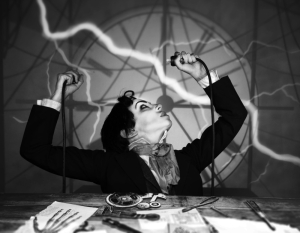
Since premiering at Court Theatre in 2018, Manual Cinema's Frankenstein has stood as one of Chicago's most remarkable theatrical achievements. Returning for just five performances at the Studebaker Theater, the work remains every bit as mesmerizing today as when theatergoers first encountered it. More than an adaptation of Mary Shelley's classic Gothic novel, Frankenstein is a work of brilliant art, a breathtaking fusion of theater, film, music, and visual storytelling that pushes the boundaries of what live performance can accomplish.
Few companies blur the line between theater, cinema, and visual art as completely as Manual Cinema. Through the collective's signature combination of shadow puppetry, miniatures, projected imagery, live acting, original music, and meticulously crafted sound design, Frankenstein unfolds with the wonder of watching a dream take shape in real time. Perhaps most impressive is the dual experience the company creates, allowing audiences to become immersed in the finished cinematic image while simultaneously appreciating the artistry required to produce it.
What makes this version so compelling is its refusal to settle for a straightforward retelling. Rather than focusing solely on Victor Frankenstein and his doomed creation, the piece intertwines the familiar narrative with the life of Mary Shelley herself. Conceived and directed by Drew Dir and devised by Dir, Sarah Fornace, and Julia Miller, the work finds unexpected psychological depth in the parallels between creator and creation. The result is an emotionally resonant exploration of grief, ambition, responsibility, and the mysterious spark behind artistic creation. Shelley's experiences become inseparable from the tale she imagined, giving fresh dimension to a story many may think they know by heart.
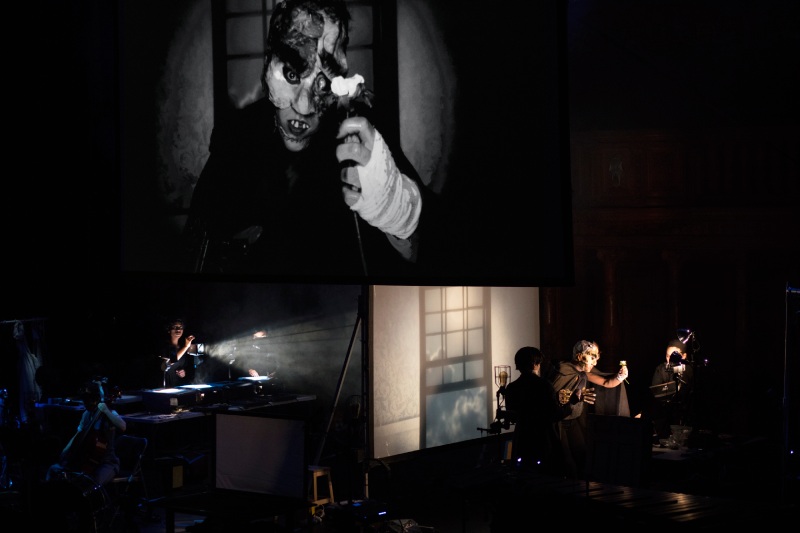
Manual Cinema's Frankenstein. Photo courtesy Elly White.
Manual Cinema's technical accomplishments remain astonishing. The performers serve simultaneously as actors, puppeteers, camera and overhead projection operators, and illusionists, constructing intricate visual worlds before our eyes. Every shadow, every miniature landscape, and every carefully choreographed movement contributes to a cinematic language that feels both innovative and timeless. At times, the work's rich layering of imagery demands careful attention, but the payoff more than justifies the investment. Watching the mechanics at work only deepens one's appreciation for the craftsmanship involved. The production's richly imagined visual language owes much to an exceptional design team. Shadow Puppet Design by Drew Dir and Liza Breit, Projections and Scenic Design by Rasean Davante Johnson, and 3D Puppet Design by Liza Breit provide the foundation for the show's arresting imagery. Lighting Design by Claire Chrzan adds atmosphere and dramatic texture, while Costume and Wig Design by Meka van der Ploeg and Prop Design by Lara Musard enrich the world with thoughtful detail and period character.
Sarah Fornace is a force and anchors the evening with beautifully realized portrayals of both Victor Frankenstein and Mary Shelley, illuminating the parallels between the ambitious scientist and the visionary author who imagined him. Kara Davidson proves equally compelling as both the Creature and Elizabeth Frankenstein, bringing remarkable humanity and quiet complexity to each role. Together, their performances ensure that beneath the show's dazzling technical achievements beats a deeply human heart.
The evocative original score and sound design by Ben Kauffman and Kyle Vegter prove equally vital, transforming every scene into an immersive sensory experience. The music heightens the emotional stakes while the live effects establish an atmosphere that ranges from intimate reflection to Gothic grandeur. There is also something undeniably enjoyable about watching the musicians positioned around the stage assemble the show's haunting sonic landscape in real time, revealing yet another layer of Manual Cinema's theatrical ingenuity. The visual and sonic elements combine to produce an experience that feels as sweeping as a feature film while maintaining the immediacy and vulnerability of live theater.
That artistry was especially evident from our seats directly in front of percussionist Justin Peters (performing the night I attended), whose work became a captivating attraction in its own right. Surrounded by towering xylophones and an eclectic collection of suspended objects that ranged from hubcaps and planters to what appeared to be a kitchen sink, Peters coaxed an astonishing variety of sounds from each piece, his dexterity and precision adding another captivating layer to Manual Cinema's intricate theatrical machinery. The variety of instruments on display is every bit as fascinating as the sounds they produce.
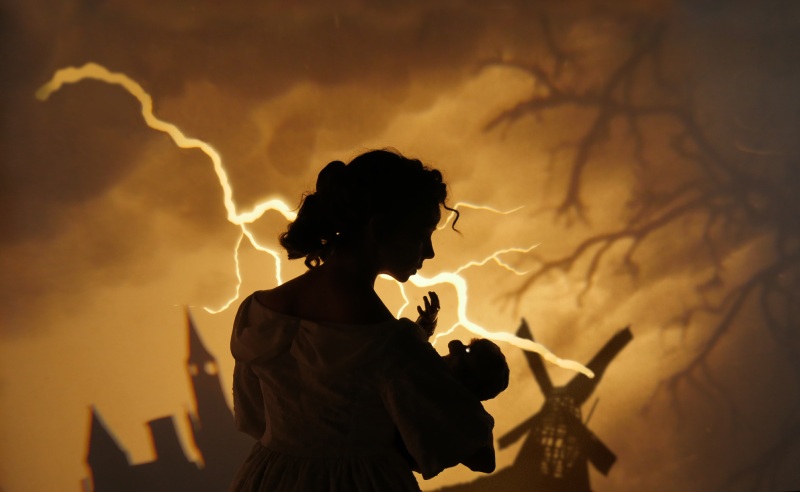
Sarah Fornace as Mary Shelley in Manual Cinema's Frankenstein. Photo by Drew Dir.
One of the evening's greatest delights came after the final curtain. Guests were invited to join the actors, musicians, projectionists, and artistic team onstage to discover firsthand how Manual Cinema brings its signature illusions to life. Visitors could handle puppets, experiment with projectors, appear on camera, and watch their own silhouettes become part of the visual storytelling. Beyond the opportunity to ask questions, take photographs and videos, and interact with the artists, the experience beautifully reinforced one of the company's central ideas: understanding the process does not diminish the magic - it makes it even more extraordinary.
Yet for all its technical and musical wizardry, Frankenstein never loses sight of its humanity. At its heart lies a poignant examination of loneliness, longing, and the desperate need for connection. The Creature emerges not merely as a monster but as a profoundly sympathetic figure whose search for acceptance speaks across centuries. Likewise, the portrayal of Mary Shelley reveals the often-painful relationship between art and life, suggesting that creation itself can be both beautiful and terrifying.
The Halloween season offers no shortage of spooky entertainment, but few works achieve the artistic depth, technical ingenuity, and emotional impact of Manual Cinema's Frankenstein. Years after its debut, it remains a defining achievement of Chicago theater and a shining example of the city's creative excellence. For those fortunate enough to experience one of its five performances only, October 28-November 1, 2026, at the Studebaker Theater, this extraordinary presentation serves as a reminder that great theater can still inspire awe.
Frankenstein is more than a theatrical event. It is a masterwork of visual storytelling, a triumph of imagination and technique, and one of the most distinctive theatrical works to emerge from Chicago in the past decade.
Manual Cinema returns to the Studebaker Theater with A Christmas Carol for a limited engagement December 18-27.
Highly Recommended.
Studebaker Theater in the Fine Arts Building
75 minutes – no intermission
Tickets and information: Fine Arts Building - FrankensteinFrankenstein
3Arts Celebrates the Artists Who Make Chicago Shine: 2026 Awards Celebration honors the creative voices shaping Chicago’s cultural landscape.
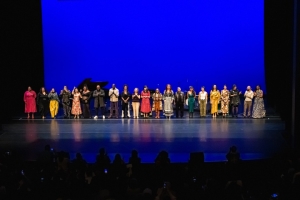
On Monday, October 26, 2026, the Harris Theater for Music and Dance became a gathering place for Chicago’s artistic community as 3Arts celebrated the artists whose creativity, commitment, and vision enrich the cultural life of our city and state. The 2026 3Arts Awards Celebration was more than an awards ceremony. It was an evening devoted to recognizing the people who make art possible, nurture the next generation of artists, and remind us why the arts remain essential to our communities.
The evening began with a welcoming reception featuring delicious canapés, drinks, and lively conversation. Honorees mingled with guests and fellow members of Chicago’s arts community, creating an atmosphere of genuine camaraderie. There was a palpable sense of excitement in the room, but also something more meaningful: an appreciation for the artistic labor being celebrated and the people behind it.
Guests were eventually ushered into the auditorium, where the formal celebration opened with How I Found My Feet Again, choreographed and performed by Keyierra Collins, a 2020 3Arts Awardee. The performance offered an inspiring introduction to an evening centered on artistic expression, perseverance, and the power of creativity.
Photos by Richard Rankin
Celebrating Chicago’s Artists
The program recognized eleven recipients of the 2026 3Arts Awards, each receiving $30,000 in unrestricted funding to support their artistic practice.
The awardees represented a remarkable range of disciplines. In Dance, the honorees were Kara Brody and Silvita Diaz Brown. Music was represented by Tahirah Whittington and Marvin Tate. In Teaching Arts, the recipients were John Chapman and Wisdom Baty. The Theater awardees were Ana Santos and Tina Fakhrid-Deen, while Visual Arts was represented by Luca Cruzat, Diana Solís, and Sandie (Chun-shan) Yi.
Together, these artists demonstrate the breadth of creative work happening throughout the Chicago region. Their disciplines may differ, but their recognition reflects a shared commitment to making art that engages, challenges, educates, and inspires.
The celebration also recognized ten recipients of the Next Level Awards, which provide $50,000 in unrestricted funding to artists who have previously received a 3Arts Award. The program reflects an important understanding: supporting artists should not be a one-time gesture but an ongoing investment in their creative development.
The Next Level Awardees in Visual Arts were Cecilia Beaven, Brenda Torres-Figueroa, and Farah Salem. Teaching Arts recipients were Stephanie Manriquez, Lional “Brother El” Freeman, Sydney Chatman, Meagan McNeal, and Wanees Zarour. Sandra Delgado received a Next Level Award in Music, and Miranda Gonzalez was honored in Theater.
By investing in artists at different stages of their careers, 3Arts recognizes that creativity needs room to grow. Financial support gives artists the freedom to experiment, take risks, pursue new projects, and continue contributing to the cultural life of their communities.
The evening also acknowledged the recipients of the Make a Wave Awards, an artist-to-artist program through which previous 3Arts Awardees select fellow artists to receive $2,000 grants. This peer-driven approach reinforces the spirit of generosity and mutual support that makes Chicago’s artistic community so vital.
Photos by Richard Rankin
The People Behind the Celebration
The evening’s presenters and organizers helped guide the celebration. Sidney Mori Burnett, 3Arts Director of Programs, Lauren Steinberg, Manager of Programs,and Shariba Rivers, a former awardee represented the organization’s commitment to supporting artists. Executive Director Cat Tager joined William Estrada, a 2024 Next Level Awardee, in helping bring attention to the artists being honored. Event co-chairs Alicia Del Real and Remberto Del Real, a 3Arts board member, also contributed to the evening’s proceedings. DJ Lady D served as an event co-chair.
Their participation underscored that supporting the arts is a collective undertaking. Behind every award is an organization, a network of supporters, and a community that believes artists deserve the resources and recognition necessary to sustain their work.
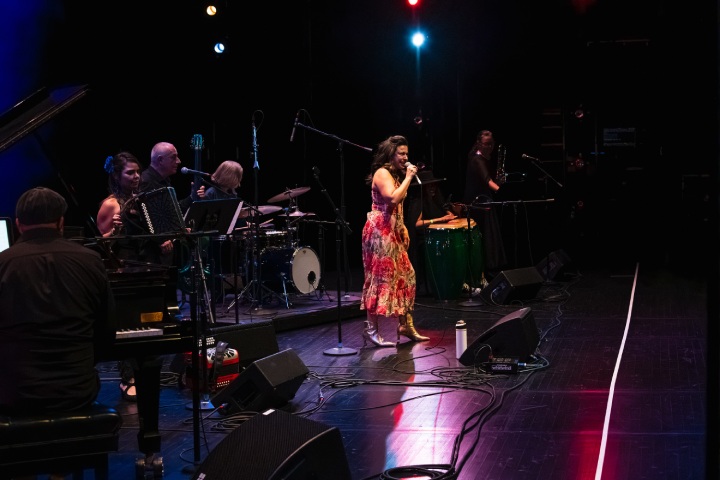
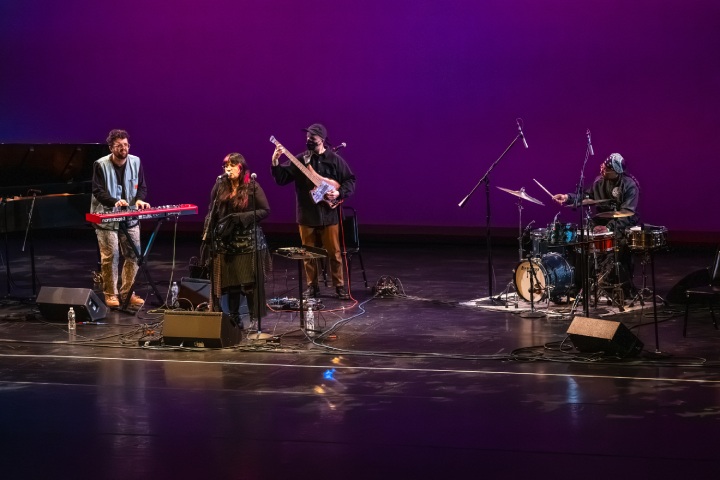
The musical interludes added another dimension to the celebration. Sparkimami, a jazz fusion band, brought an energetic presence to the program, while The Sandra Delgado Experience, featuring Sandra Delgado on vocals, captured the festive spirit of the evening. With its ensemble of musicians, the performance offered a joyful reminder that music can transform a formal ceremony into a shared celebration.
An Evening of Art, Community, and Generosity
After the honorees had been acknowledged, guests returned to the party room for dinner. The buffet offered a satisfying selection of dishes, including fresh garden salad, roasted sweet potatoes, lentil cakes, pumpkin ravioli, and smothered chicken. Dessert followed with chocolate-covered pretzels, pâte de fruits, and assorted cookies.
The meal was another opportunity for guests to continue conversations, congratulate the awardees, and celebrate the artistic community that had gathered under one roof. There was something fitting about ending the evening around a shared meal after spending the night recognizing the work that brings people together.
What distinguished the 2026 3Arts Awards Celebration was not simply the number of artists honored or the financial support distributed. It was the recognition that artists contribute to the life of a city in ways that extend far beyond the stage, gallery, classroom, or rehearsal room. They preserve histories, challenge assumptions, cultivate imagination, and help us understand one another.
In a city as culturally rich as Chicago, that work deserves to be celebrated—and supported.
The evening at the Harris Theater accomplished both with warmth and generosity. From Keyierra Collins’s opening performance to the musical interludes, the recognition of the awardees, and the convivial after-party, the celebration honored not only individual achievement but also the collective spirit that sustains the arts.
Help Keep Chicago’s Arts Thriving
The celebration also serves as a reminder that supporting artists is a responsibility we all share. The talent celebrated that evening does not flourish on creativity alone. Artists need resources, opportunities, and the freedom to develop their work. Through its awards and programs, 3Arts helps provide that support, investing in artists across the performing, teaching, and visual arts.
You can help keep Chicago’s artistic community thriving. If you believe artists deserve the opportunity to create, teach, experiment, and inspire future generations, consider making a donation to 3Arts. Every contribution helps sustain an organization committed to supporting artists and strengthening the cultural life of our city.
To learn more or to make a contribution, visit 3Arts.org/support.
The 2026 3Arts Awards Celebration was a wonderful tribute to the artists who make Chicago a more vibrant, thoughtful, and imaginative place to live. The next step is to ensure that their work continues—not just through applause and recognition, but through the ongoing generosity of a community that understands the value of the arts.
A Spoonful of Magic: Lyric Brings Mary Poppins to Life

Lyric Opera of Chicago’s film‑with‑live‑orchestra series has become one of the city’s most engaging hybrid arts experiences, transforming the opera house into a cinematic concert hall where classic films gain new dimension through live performance. Recent presentations such as Singin’ in the Rain (February 2025) and Coco in Concert (October 2025) have showcased how a full orchestra can elevate familiar scores, bringing warmth, clarity, and emotional immediacy to every musical moment. The format takes full advantage of Lyric’s grand acoustics and visual scale, allowing audiences to rediscover beloved movies with a heightened sense of drama and immersion. It’s a rare blend of nostalgia and spectacle - a celebration of film and music that feels both timeless and newly invigorated each time the orchestra begins to play. Now, the series continues its momentum as Anthony Parthner leads The Lyric Opera of Chicago Orchestra in performing the cherished score to Mary Poppins.

Dick Van Dyke and Julie Andrews in Mary Poppins.
Released in 1964 and starring a dream duo of Dick Van Dyke and Julie Andrews, Mary Poppins follows the magical arrival of an extraordinary nanny who descends - quite literally - into the lives of the Banks family on Cherry Tree Lane. As the children, Jane and Michael struggle under the strict expectations of their distracted father and the anxieties of their well‑meaning mother, Mary Poppins brings order, wonder, and unexpected joy through a blend of firm guidance and whimsical adventure. With the help of her cheerful friend Bert (the loveable chimney sweep), she leads the family through imaginative escapades that reveal deeper lessons about connection, kindness, and the importance of seeing the world with curiosity. By the time she departs, the Banks household has been transformed, not by magic alone, but by the rediscovery of affection and unity.
This film is an ideal showcase for the Lyric Orchestra, and they rise to it beautifully. The score for Mary Poppins was composed by the celebrated songwriting team Richard M. Sherman and Robert B. Sherman, whose work helped define the sound of Disney’s mid‑century musical era. Known as the Sherman Brothers, they created a bright, whimsical, and emotionally rich collection of songs that blend clever lyricism with instantly memorable melodies. Their contributions to the 1964 film produced some of Disney’s most enduring musical moments - from the exuberant “Supercalifragilisticexpialidocious” to the gentle poignancy of “Feed the Birds” - shaping a sonic identity that remains inseparable from the film’s legacy. Their score not only set the tone for Mary Poppins but also solidified the Shermans as two of the most influential composers in the Disney canon.

Conductor Anthony Parnther.
Lyric Opera of Chicago was especially thrilled to welcome Anthony Parnther to the podium, a conductor whose versatility and musical sensitivity made him an inspired choice for a score as iconic as Mary Poppins. One of the busiest conductors in Los Angeles and a world‑class bassoonist with an international performance career, Parnther brought both technical precision and a keen ear for orchestral color - qualities that served him well in shaping a live performance of this beloved film soundtrack. Watching him work was a genuine pleasure. His approach emphasized clarity and warmth, guiding the orchestra in a way that honored the Sherman Brothers’ classic melodies while subtly enhancing the film’s emotional contours in real time. For Lyric, his leadership reflected not only artistic excellence but a continued commitment to presenting musicians who could seamlessly bridge concert performance with cinematic storytelling.
With the success of its recent live‑to‑film presentations, Lyric’s film‑with‑live‑orchestra series continues to build steady momentum, and the company is already preparing for its next project: a live orchestral performance of Amadeus in 2027. Mary Poppins in Concert Live to Film is presented in a limited engagement on April 10 and 11. Click here for more information.
This review is proudly shared with our friends at www.TheatreInChicago.com.
Forq leads night of tasty jazz-infused jams at Martyr's

I heard about Forq, watched a video and decided to go. It was a Friday night and Martyr’s is always an interesting place. It has some of the vibe of the old Rock Clubs but you can bring a date there. This however was Jazz Fusion night, not the 1970’s version exactly.
Spare Parts is a Chicago band. After a look at their website, they describe themselves as a Funk band. This category thing is tricky. One thing the listener will find is that there is indeed Jazz fused into the Funk of Spare Parts.
This is a trio that is keys, bass and drums. Kevin Kozol is on keyboards. That’s where the 70’s funk sounds are really strong with this band. He had two vintage keyboards. It looked like a Wurlitzer ala Ray Charles in the Blues Brothers and something that had that old clavinet sound at times. Run a delay pedal and the sounds were very reminiscent of early Pink Floyd. Kozol has chops, no doubt. There were some nice chord voicings and soloing flowing through the sound system at Martryr’s. How ‘bout that rhythm section? Colin Scott on bass and Mike Bruno on drums. They were solid, funky and more than a good compliment to the keys. Scott’s approach was somewhat unique. He used a variety of effects and techniques to fill ups space without a guitar player. They had a sax player sit in on one song. A melody instrument might be a nice addition to the lineup.
Forq is a band that also seem to be somewhat led by the keyboards but this time, there is guitar added to the mix. Henry Hey is on keys. He sets up right in front with a small keyboard rack. It looked like he had one regular, utility board and one hooked up to a lap top. If Keith Emerson were starting out today, he could use a lap top instead of the giant Moog, but the visuals wouldn’t be the same. The concept is exactly the same. The role of mad scientist takes shape in Hey the same way as it did with Emerson.
Chris McQueen sits in the guitar seat. Chris is a former member of Snarky Puppy. He played a Fender guitar with Gibson style pickups through a Supro if you are a guitar geek keeping score. Pedals and gadgets were tastefully used. He got a great tone and played some tasty stuff. McQueen even snuck a little slide in there in one song.
If you left the other players out, the rhythm sections could have competed for the most solid. Jason “JT” Thomas is a pocket owning drummer. He and bassist Kevin Scott built a very strong foundation for Hey and McQueen. These guys were tight.
Here’s an observation for both bands. You can often say too much in the first song. I would say the same thing to a lot of Jazz influenced bands. Chops are impressive, but in both bands there could have been more melody. I am not claiming to be familiar with either band’s specific music. I just know what I like to hear. Even though I love improvisation and jamming, I am a sucker for a good melody. That’s the song really. It was there but a little more would be nice.
Review: 'Angela Ingersoll Sings Judy Garland' at Venus Cabaret

June 2019 marks the 50th anniversary of the Stonewall Riots and the New York City funeral for Judy Garland. Some suggest that the emotional intensity of the day lead to the patrons of the Greenwich Village bar resisting the police thus starting what we know as “Pride” today. As we head into Pride season in Chicago, fewer cabarets would be more fitting than ‘Angela Ingersoll Sings Judy Garland’.
Some may remember Ingersoll’s excellent performance as Judy in Porchlight Music Theatre’s production of ‘End of the Rainbow’ in 2016. She bears uncanny likeness to Judy Garland in both appearance and voice. This is the closest to seeing the real Judy Garland perform as any of us will get.
Not only does Angela Ingersoll do Judy’s songbook justice, but she’s a real Judy Garland historian. In the two rousing sets, she relays the story of Judy’s life as well as many interesting bits of Garland trivia. This is a show for fans. Interestingly enough, she worked with Judy Garland’s surviving son, Joey Luft, on this act which has now toured the country and has been recorded for PBS.
For those who are well versed in Garland’s work, each song will be a delight. Watching her move to the band with Judy’s signature mannerisms is almost eerie. As she goes through the medleys from the famed Carnegie Hall album, it would be impossible not to smile.
But it’s not just a Judy tribute concert. Angela is very charming as herself. She keeps an informal attitude throughout, while telling her own stories of how she relates to Judy. Some are funny and some are very authentic, creating a bond with the audience the way Judy had with hers. It’s as if she’s holding every patron in the intimate cabaret space in her arms to say I’m happy you’re here.
Angela Ingersoll has made a name for herself as the Judy Garland impersonator. As Judy’s life and death fade further into history, it’s important someone with as much enthusiasm is out there keeping her memory warm. It’s startling how many people from younger generations don’t even know who Judy was or that she’s Liza Minnelli’s mother. Ingersoll is keeping a star alive and doing a first-rate job. This cabaret is a pleasing way to celebrate Pride this year.
Through June 30th at Venus Cabaret. 3745 North Southport Avenue. 773-325-1700.
Hey There! Hey Nonny is here!

Arlington Heights has a new music venue, Hey Nonny, and it is located at 10 S. Vail right in the heart of a hopping downtown area that has been bustling with excitement over the past few years. Unlike difficult parking scenarios that you might find at Chicago venues, a parking garage is conveniently located about a half block down from the front door. Last week the new music club held their grand opening with only club members and press attending. An impressive venue with all the bells and whistles would be an understatement.
Club owner, Chip Brooks, was making the rounds introducing himself to everyone. The entire staff was helpful and friendly, and the place had a good vibe to it. A nice buffet was offered to the guests, which I believe were all essentially samples of what will appear on the menu. And having said that, the food was delicious, the chef also making his way out to make sure everything was going well and that his culinary creations were being enjoyed.
The night’s entertainment was Eric Lindell and his band, which proved to be the perfect choice for the club’s opening night. Sitting in on guitar was Anson Funderburgh who is currently in town playing shows at Fitzgerald’s and SPACE. Lindell and friends put forth a solid straight-ahead blend of roots influences. They took a little blues, some rock and country and rolled it into one fun-filled performance. At times they reminded me of the early 70’s version of the Grateful Dead. Fender guitars sautéed in reverb was the flavor of the night.
All in all, it was a great introduction to a new venue. I looked at the upcoming line up and it sure looked good. You can check out the upcoming performers by clicking here. The ambiance, stage, sound and kitchen all receive high praise. No doubt about it - Hey Nonny is going to be a fantastic place to see some great music. If I had to nitpick about anything at all I would request that they consider easier return access from the restrooms. To use the washroom, one leaves the suite that the club is in and returns to a locked door. Meaning, I had to go back outside and re-enter through the front door. There might need to be a better system involved at some point. A bit inconvenient, but not at all a deal breaker. The venue is top-notch and the owner really put a lot of thought into the place to provide a unique concert and dining experience.
Hey Nonny is in a great location, the food is excellent, and the music line up looks promising. I thought the acoustics in the room was very good, which is a must for any venue that offers live music. And the sound wasn’t overpowering, so friends could talk to each other while the music was playing without shouting back and forth, which is nice. Live club sound engineers have a tendency to peel the paint off the walls, which is unpleasant at times. Not the case here.
If you are in the area and looking for a night out with some good music and yummy food, keep an eye on the music schedule at Hey Nonny.
Charlie Hunter Trio at City Winery Chicago - Not Your Typical Trio

When I heard the Charlie Hunter Trio was playing Chicago’s City Winery over this past weekend, I expected something quite different. I was thinking I’d hear the usual fare of guitar, bass and drums – standard trio stuff. Meanwhile, I was sitting with someone that told me to expect guitar, sax and drums. Okay, sounds good. But what we got was guitar, VOCALS and drums. Interesting. I was also expecting something more in the Jazz vein, but I was wrong on that, too. I know what you’re thinking...Jazz has many forms. The Charlie Hunter Trio was a bit more like R&B - and heavily Blues flavored at times.
Hunter does a good job of making you not missing the fact there is no bass player. The first thing I noticed was he had bass notes coming out the guitar. It was a seven-string, but it seemed to get notes lower than that, so perhaps the bass string was tuned down a bit. Then I noticed he was running through two amps. One is a bass amp and one is for guitar. This made me look up his rig rundown today and I discovered that the bottom three strings on his guitar are bass strings, and the top four are guitar strings. There are two pickups on the instrument that allow splitting the bass and guitar strings into separate amps.
This allows a player to do different things. The first and most obvious is playing bass and guitar at the same time. The second is it allows someone to think like a piano player on the guitar. I have had the notion for quite some time that guitar represents the right hand of the piano and the bass the left. This allows a guitar player to do both. You don’t just pick a guitar like this up and start strumming chords on it. This is a bit of a hybrid machine and requires the technical facility to pull the whole thing off. Hunter did an amazing job in doing this. I can imagine at times he wished he had more fingers.
Dara Tucker was the vocalist and she really brought a lot of life to the show. In many ways, Hunter was her support act. Her voice was nothing less than amazing and was a perfect fit with the trio. I later found out she has music available on her own. Damon Grant was Hunter’s rhythmic accomplice on percussion. A very unconventional drummer. He used all different types of percussion to keep the beat alive.
This was not the band I was expecting to see, which taught me a few things. First, keep an open mind about how bands are constructed. Second, that the guitar can be more than just a guitar. In the hands of Hunter, it was much more. I was not disappointed last night one bit. Great show, and it is one I highly recommend, and should they come back – no better place to check them out than City Winery Chicago.
Cuban Dynamite! Harold Lopez-Nussa Trio at Old Town School of Folk Music

Wow…one more time…WOW! This is one gifted trio and is such a pleasure to watch live. Harold is one of the younger generation Cuban Jazz pianists on the scene. Cuba has had a reputation for delivering some fine Jazz musicians, even though they are less known here in the states. We can thank the Cold War for that. Thankfully that is over. The doors are open again and we need to realize that the best things coming from Cuba are not cigars and rum. Those are nice too, but man…the music is incredible!
Harold is a piano player who has the chops of a Classical player. He also has the rhythmic sense of salsa in his soul. He took this rather student-model looking upright piano and made it dance, baby. A while back I envisioned the piano as a drum set. It is by far, the best harmony instrument out there…but there is a reason why it is often described as a percussion instrument. Rhythm is infectious. It makes you dance, move, scream, etc. The pulse should affect the listeners heart rate. Rhythm controls you. Harold Lopez-Nussa was in command of this, but he did have some serious help.
Younger brother Ruy Adrian was on drums. This young man is one of the finest drummers I think I have ever seen in my life. I am by no means exaggerating. You could isolate the drums and it would be a show. His playing was never overstated either. He played exactly what was needed, which at times was a lot. The music demanded a lot of rhythmic interpretation. Harold’s piano playing already has a ton of rhythmic diversity, the drums added another layer. Watching him play the cajon made my hands hurt. He really put everything into his playing.
Gaston Jova played upright bass. He was described as a “brother from a different mother.” That is a cliché, but I feel that is how the group functions. They are very much a musical family. Gaston is the laid back, jovial kid brother. His playing was very relaxed but very commanding.
Old Town School of Folk Music is such a great resource in the city of Chicago. Not only do they provide education, but entertainment as well. This was in the smaller hall on the east side of Lincoln Ave. This provided a warm, intimate setting. It was general admission and since I was there early…guess who sat in the front row? If you guessed me, put yourself down for a shiny gold star! I was less than 20 feet from someone many consider truly on top of his game. This young man has a serious musical future ahead of him. Take note.
Brave Combo at Brauerhouse in Lombard – Above and Beyond

What a fun band! Carl Finch has been leading this band since 1979 and they have achieved a cult status to some people. This is the band that played David Byrne’s wedding. I would describe them as a polka hybrid with a great sense of humor. Having said that, they are no joke...they are a very serious band.
It is time for Oktoberfest so why not celebrate with a polka band, right? Seems appropriate. The band, Brave Combo, hails from Denton, Texas. They are actually not really just a polka band. They blend a lot of genres into a melting pot of entertainment.
Carl Finch leads the band, but they don’t really have a front person, per se. Rather, it is truly a group effort. Finch plays keys, accordion and guitar as well as handling a chunk of the vocals. He also wore a rather festive red hat and looked like he was the time of his life on stage.
Bubba Hernandez is the bass player. He is a long-time member but has actually been in and out of the band. He is one half of a very strong rhythm section. He also handles vocals in both English and Spanish. The other half of the rhythm section is drummer Alan Emert Mansfield. Very solid and dynamic is how I would describe his playing. Finch couldn’t ask for better support.
Jeffrey Barnes was on sax, clarinet and flute and helped out with some vocals too. I heard some vintage licks of all types from Barnes. I think his strongest voice was the clarinet, followed by the tenor. Funny how I always thought clarinets were always these squeaky instruments of torture. They just need to be played in the right hands.
Danny O’Brien on all things brass related rounds out the lineup. He looked the part of an Oktoberfest celebrant. He also played some nice horn licks. He also had a great hat.
Beer mug holding contests were also part of the show, Bubba clearly the winner (Finch cheated a bit). Great show, but the crowd was small and the sound also could have been better. The vocals were buried in typical Chicago Metal Club fashion. Here’s a clue for soundmen in Chicago…let’s hear the vocals! Ugh…this seems to go way back in history of clubs here. When you are not mixing a Metal band, and the singer isn’t screaming…turn him or her up! Part of the reason they are screaming is the fact that you have the drums and bass too loud!
Rant over. It was great show that should have had been better advertised. This is a band that has a strong cult following and should have packed the room. So, keep an eye on the local music calendar and go see Brave Combo. And don’t forget to support live music whenever you can.
King of Soul, Guy King at SPACE

I am new to Guy King. But I caught him at Blues Fest doing a solo set and was knocked out. He is all about the Blues with a heavy dose of Jazz and Soul. Wanted to hear more, I got a chance to check out him with his band at SPACE in Evanston Monday night. I was very impressed.
King was born in Israel but made his way to Chicago. His repertoire seems pretty broadly based. I hear so many varied influences in his playing and song choices. King is a multi-talented individual. I am not sure what is actually better, his voice or his guitar playing.
King’s voice seems to run the range of the deep Blues to Ray Charles. His style is very polished. I can’t believe I never really heard of him before seeing him at Blues Fest. Maybe I did but dismissed the name because it sounds like he just combined the names of two Blues legends. Perhaps his name could possibly serve against his success. What’s in a name? Well, first impressions are everything and sometimes that works for or against you. Having said that, I think he will do well in this business.
His guitar playing is top notch, and man, can he phrase! I never found him to repeat himself all that much, as he displayed a great vocabulary of chords. I hear a lot of Wes Montgomery voicings in his music. King also uses his thumb instead of a pick ala Montgomery. That may seem like a limitation, but the tone you get by doing that is much warmer than using a pick.
King’s band was great, and they had to be keeping up with a such a gifted performer. One very solid drummer, one adventurous bass player and a great keys player kept the music flowing. Nobody stepped on anyone else’s toes. It was clearly King’s show. A very nice balance of dynamics kept his fans reeled in. I plan on seeing his act again when I can. It would be interesting to see him with his Little Big Band. King turned out to be a really nice guy, too. I said hello to him after the show and he was quite approachable. That is always a good thing. Like I always say, go support live music whenever you can. It is much better in person.



Latest Articles
-
 Nov. 23 at the MAC: "An Evening with Gary Sinise" Author of "Graceful Warrior" to Benefit WSFDV
Written by Buzz Center StageWest Suburban Foundation for Disabled Veterans (WSFDV) presents "An Evening with Gary Sinise," Author of "Graceful Warrior" at the McAninch Arts Center (MAC) located on the campus of College of DuPage, 425 Fawell Blvd. Monday, Nov. 23 at 6:30 p.m. Sinise, an…
-
 Remarkable Production Makes 'The Royale" a Knockout Show
Written by Bill EslerWriters Theatre scores a knockout production with Marco Ramirez’s 2013 play, The Royale. Under the direction of Tyrone Phillips, we see this widely-produced script (it played New York’s Lincoln Center a decade ago) executed to perfection. Centered on boxing legend…
-
David Salsbery Fry returns to Chicago Opera Theater for fourth production with company in Chicago Premiere The Importance of Being Earnest - December 2-6
Written by Buzz Center StageDavid Salsbery Fry sings the role of Rev. Canon Chasuble in the Chicago Premiere of Chicago Opera Theater’s (COT) production of Castelnuovo-Tedesco’s humorous and final stage work – a “sparkling operatic adaptation of Oscar Wilde’s beloved play and a joyful tribute to…
-
Rick Bayless, Anthony Rapp, Jeff Tweedy and More Join Goodman Theatre's Holiday Season
Written by Buzz Center StageFrom an internationally renowned chef and the world-famous rock frontman of Wilco, to a Pulitzer Prize-nominated author and a handful of Chicago's nationally decorated actors, holiday theatergoers find two new seasonal offerings at The Goodman this year. Alongside the perennial…
Does your theatre company want to connect with Buzz Center Stage or would you like to reach out and say "hello"? Message us through facebook or shoot us an email at This email address is being protected from spambots. You need JavaScript enabled to view it..
*This disclaimer informs readers that the views, thoughts, and opinions expressed in the text belong solely to the author, and not necessarily to Buzz Center Stage. Buzz Center Stage is a non-profit, volunteer-based platform that enables, and encourages, staff members to post their own honest thoughts on a particular production.