
Displaying items by tag: The Artistic Home
Intriguing ‘The Sugar Wife’ Is Well Produced, But Its Restraint Is Limiting

The Artistic Home’s U.S. premiere of this 2024 revival by Dublin’s Abbey Theatre, “The Sugar Wife” is intellectually engaging but rather unemotional given its subject lines: marital infidelity, slavery, sexploitation, hypocrisy. Perhaps that goes with its Quaker storyline, a denomination known for an ascetic simplicity and rigorous moral discernment before engaging in action.
Set in 1850, the 2006 script by Elizabeth Kuti revolves around the internal moral struggles of Hannah Tewkley (Annie Hogan), who has married the wealthy Samuel Tewkley (Todd Wojcik), a merchant whose fortune is in sugar and tea. The sugar trade, in Hannah’s view, is contaminated by its reliance on slave labor for production. So in their marriage pact, Hannah has required that Samuel source sugar cane only from “ethical” sources not involving slavery.
Hannah is a morally upstanding Quaker, who now has the wherewithal to fund charities, visit the poor and offer assistance for their betterment, tutoring in reading, for example. But the poor starving Irish (the famine was at its height) really just want food and money. This sentiment is embodied by Martha Ryan (Kristin Collins is the liveliest performer on stage).

From left: Ashayla Calvin, Kristin Collins and Annie Hogan
Ill and wrapped in a blanket on her cot, Ryan rises to challenge Hannah for something more useful than moral improvement, like cash. This scene presents the conflict inherent in dispensing one’s own vision of benefit to parties seeking something more essential to their lives. Ryan gives Collins the insolence and quick Irish wit of which we wish there were more on stage.
The plot, what there is of it, thickens with the arrival of Alfred Darby (John LaFlamboy), a British philanthropist, accompanying Sarah Worth (Ashayla Calvin), a former slave who is on a speaking tour relating the evils of the slave trade. But we learn along the way Alfred has been disinherited from his family’s wealth, and now relies on Sarah’s speaking fees. Alfred takes public credit for buying Sarah’s freedom, but she has entered a different kind of enslavement as the breadwinner for the duo, who reside with the Tewkley’s during this speaking stint.
In a notably precise dive into Quaker matters, Alfred challenges Hannah about the small fortune she spent remodeling the mansion she inhabits with Samuel. She has stripped out all the moulding and embellishments, including a gilded mirror, in the interest in creating a more spare interior, in keeping with her Quaker values. But such an action can be frowned upon in Quaker circles, looking more like virtue signalling since that money might have been used for a social good.
Samuel meanwhile confesses to Alfred, man to man, that he has been untrue, and that, occasionally, he must buy sugar cane from slaveholders to keep his mills operating. He keeps these matters quiet from Hannah. Eventually this and more dirty laundry surfaces among the players, each of them, including Sarah, with something untoward to confess. Despite skillful direction and scenic design by Kevin Hagan, and truly great costumes by Rachel Lambert, it's a slow grind through what is essentially a melodrama, to get to the bottom of it all. At which point we see the light, but with very little heat.
“The Sugar Wife” is recommended, if only because The Artistic Home deserves support for its ordinarily better script selection. “The Sugar Wife” runs through May 3, 2026 at Chicago’s Theater Wit.
This review is proudly shared with our friends at www.TheatreInChicago.com.
Review: Superior Donuts at The Artistic Home at The Den Theatre

“You can’t raise kids without hope.” says terminally pessimistic Arthur Pryszbyszewski in Tracy Letts’ 2008 play “Superior Donuts” now running at The Artistic Home at The Den Theatre. Directed by Artistic Home ensemble member John Mossman, “Superior Donuts” tells an authentic Chicago story in the cozy kind of theater our city is known for.
Originally produced by Steppenwolf on the heels of Letts’ Pulitzer Prize landmark “August: Osage County”, this play feels almost lighthearted by comparison. “Superior Donuts” swaps the blues of the Oklahoma plains for the desperation of Chicago’s Uptown neighborhood, before the Target opened on Wilson.
Arthur Pryszbyszewski, impeccably played by Scott Westerman, is a complicated, introverted middle aged man who’s devoted himself to keeping the family donut shop in business long after its heyday. One morning he finds his shop vandalized and in walks Franco, a young man with big dreams but even bigger debts. Franco is an aspiring novelist with no shortage of things to say on virtually every topic. His stream of conscious babble eventually helps Arthur open up.
Letts’ has a real knack for gritty stories, but what he does especially well is cleanly written scenes. Playwriting doesn’t have to be complicated. “Superior Donuts” excels much like his other work in that each characters’ desires and disappointments are clearly laid out. You’re never wondering what the point of a scene is. That is to say, Letts never leads you into the weeds.
In two briskly paced acts, “Superior Donuts” is both a male-driven comedy and a hard-hitting drama. Letts explores what happens to neighborhoods when small businesses close. You don’t just lose the business; you lose pillars of neighborhoods. Arthur is a reluctant pillar but his paternal affection for Franco becomes his greatest achievement.
Featuring a cast of Artistic Home ensemble and newcomers, Mossman's’ production is stacked. John N. Williams is well suited to the awkward but endearing Franco. Ensemble member Kristin Collins plays CPD officer Randy Osteen, Arthur’s burgeoning love interest. Collins’ Chicago accent and mannerisms are incredibly comforting.
“Superior Donuts” is not only a love letter to Chicago’s Uptown neighborhood but also a world you don’t mind spending a little more time in. In fact, it was adapted into a relatively successful CBS tv series in 2010.
Artistic Home reinterprets “Superior Donuts” at a time when Uptown has more or less been gentrified. No longer on the cusp as depicted in the play. In 2025, it feels more like a heartwarming period piece that true Chicagoans will fondly remember.
Through December 6 at Artistic Home at The Den Theatre. 1331 N Milwaukee Ave. 773-697-3830
Review: ‘Hedda Gabler’ at The Artistic Home at The Den Theatre

‘Hedda Gabler’ has mystified audiences for generations, as this was certainly Ibsen’s intention when creating this endlessly fascinating character. The Artistic Home transforms the Den Theatre into 1890s Norway for their production of Irish playwright Mark O’Rowe’s 2015 adaptation of ‘Hedda Gabler’. Under Monica Payne’s direction, this contemporary-voiced retelling is diabolically humorous.
Any production of ‘Hedda Gabler’ is only as good as their Hedda. In Brookelyn Hebert, Monica Payne has a frighteningly self-assured Hedda who is insatiably fun to watch. Flanked by Todd Wocjik as Jorge Tesman and John Mossman as Judge Brack, Hebert plays both the conqueror and conquered with hot tempered fluidity.
Ibsen, like Chekhov, helped usher in a new era of modern theatre that would inspire 20th century playwrights like Arthur Miller and Eugene O’Neill. With focus on the doldrums of a waning aristocracy, Ibsen captures the everyday hopes and disappointments of his characters in scenes that feel as relevant today as when they were written.
What makes ‘Hedda Gabler’ unique is the myriads of ways a director and an actress can approach the title role. Ibsen’s play is somewhat vague so that audiences and theater makers are free to go with their own interpretation of what motivates Hedda.
In this new version by Mark O’Rowe, many of the Easter eggs Ibsen drops throughout the play are further expanded upon so that audiences have even more context for Hedda’s past and present. In Rowe’s version, Hedda is quicker to anger and more self-aware than in previous iterations. An angrier Hedda shows the brewing hostility of a woman trapped by society, which makes her downfall all the more tragic.
Time seems to fly with O’Rowe’s modern language. Instead of literary innuendo, characters are free to discuss sexuality and substance abuse with more directness. Two and a half hours can feel long for a classic melodrama, but this script has a lot of juicy scene work to keep audiences on the edge of their seat, even if they know what’s going to happen next.
Plays like ‘Hedda Gabler’ do exactly what good plays should, and that is to ask why. As mentioned before, Ibsen purposefully did not provide just one reason for Hedda’s actions, rather he planted many seeds so that nobody can really be sure, opening the door for riveting conversations.
The Artistic Home’s production of ‘Hedda Gabler’ is a good reminder of why classics should be seen every so often. Though the modernized script takes some interesting liberties, and can become a bit meandering in parts, overall Ibsen’s points are well preserved. However, it’s fairly unlikely that high society folks would speak in expletives the way they are in O’Rowe’s script. Still, this production is faithful in its interpretation of the limits of courage. In the end, despite Ibsen’s Easter eggs, this is a play about one woman’s courage to go against the grain of society.
Through March 23 at The Artistic Home at The Den. 1331 N Milwaukee Ave. 773-697-3830
Powerful Production of Requiem for a Heavyweight, Rod Serling’s Searing 1956 Teleplay

Before he was Twilight Zone’s scriptwriter and frontman, Rod Serling broke through with the 1956 teleplay of Requiem for a Heavyweight, a powerful noire telling of a boxer on his way down. This work was originally broadcast live in black and white, and starred Jack Palance, Keenan Wynn, and Kim Hunter. In those days it was performed just once, and in this case the lone recording is of moderate quality.
Putting such a teleplay onto the stage is transformative for the work. The audience is not limited to the camera’s viewpoint, but it tests the writing and of course, the performances. We can report that Artistic Theater’s production is absolutely first rate – first and foremost because it is very well cast, with a staggeringly good performance by Mark Pracht as Harlan “Mountain” McClintock. Pracht seems born for this role, as he is both a mountain of a man, and carefully expresses Serling's portrait of a Tennessee country boy who has taken way too many punches.
This is also a tragedy, in the Greek sense – Mountain had risen to become a contender for world heavyweight champion, but began to decline before he could get there. Like any tragic hero, he is thwarted by an antagonist: his manager, Maish Resnick (Patrick Thornton), who has skimmed profit from Mountain during his rise. Now as Mountain loses more than he wins, Maish plays a deceitful game – which creates the turning point in the play’s resolution.
Thornton is full throttle in this role, playing convincingly enough that you will come to loathe him. But even more forceful and compelling is the performance of Todd Wojcik as Army, as Mountain’s trainer and constant wingman. Wojcik’s performance is freighted with emotion and empathy, and will touch your heart.
There are a several other colorful characters in this cast, hustlers on the make that Serling drew from his own experience as a boxer. And we have a chorus of lower-level boxers and trainers, and thugs. These characters enact stylized boxer training interludes that are very powerful. And though each has a small part, it makes for a stunning effect overall. The set is a simple canvas platform – the ring – and the audience is seated around it, in a very intimate space.
There are just two female figures in Requiem, and both seem bound to be stereotypes of a 1950s male psyche: Golda (Laura Coleman), a “dame with a bad reputation” and Maish’s main squeeze. “What are you doing vertical; is there a recession on?” Maish asks her, in a reference it’s hard to imagine got through the censors.
The other female role is more substantial – Grace Carney (Annie Hogan), an employment agent who falls for Mountain as she tries to help him transition from boxing to something new. Hogan’s performance mines the role for all the meaning it can bear, and she is a strong heroine against the dastardly Maish. Her character in Requiem for a Heavyweight foreshadows another woman who supported Rocky years later.
The teleplay was influential enough to warrant a British TV version starring Sean Connery with a cameo by Michael Caine, and was turned into a 1962 film featuring Anthony Quinn in the lead. As a genre, teleplays are memories, but perhaps they foretold Netflix and Amazon movie productions. Teleplays have been tremendously influential – think of 12 Angry Men, Marty, The Days of Wine & Roses – all originated as live television productions.
Requiem for a Heavyweight is a great show, and a theatrical event. Running through March 31, there are just 50 seats per performance, so it is highly recommended you plan to attend at The Artistic Home on Grand Avenue in Chicago.
Review: How I Learned to Drive at The Artistic Home

Never has there been a more relevant time for Paula Vogel’s 1998 Pulitzer Prize winner ‘How I Learned to Drive’. By now, it’s considered a modern classic and has certainly made Vogel a hot playwright ever since. The fact that this play is now twenty years old and is arguably more topical now than when it premiered is unsettling. The Artistic Home Ensemble is reviving this play in hopes that we don’t have cultural amnesia regarding sexual abuse.
‘How I Learned to Drive’ is simply staged. There’s a few seats on a platform to be the car, and then a few other small set pieces here and there. What’s not so simple is Vogel’s narrative structure. This is almost like a personal essay come to life. Non-linear, or non-traditional structure is a hallmark of Vogel’s work. In this play, Li’l Bit (Elizabeth Birnkrant) relates how her uncle taught her how to drive and also taught her about adult love.
Using driving and cars as a structure, Vogel spins Li’l Bit’s story about growing up in 1960s conservative Maryland. Intermittently, she includes cleverly constructed nuggets of sexual wisdom learned from her mother and grandmother. As Li’l Bit matures into a woman, she notices how the world around her changes. Her Uncle Peck (John Mossman) takes advantage of her isolated feeling. What adds layers to a familiar story are the moments when Li’l Bit initiates or at the very least plays into a pedophile’s hand. There are such moments of tender depth that you nearly forget how illegal their affair is.
With an almost absence of scenery to hide behind, Elizabeth Birnkrant plays to the comedy in the script. She’s often more engaging to watch when she’s portraying Li’l Bit in her teenage years. Adults are quick to forget the agony of being so unavoidably vulnerable. Mossman delivers sex appeal without seeming like a predator, which is what makes his performance all the more slick.
It’s tough to bring much character to the “Greek chorus” as their purpose in the play is mostly to pipe in with mortifying one-liners. Though, Jenna Steege distinguishes herself as Li’l Bit’s heavy smoking mother. She provides some pretty sound advice on how a lady (or anyone) should drink on a date.
Artistic Home Ensemble is a storefront theater that specializes in the Meisner (or method acting) approach. Therefore, their productions tend to rely more on character than set pieces. ‘How I Learned to Drive’ perfectly lends itself to director Kayla Adams’ black box vision. This story is so compelling that you don’t need scenery. The images conjured in Vogel’s script are as familiar to us as a Coca Cola ad. It’s a trip through Americana, which fittingly includes an older man taking advantage of a young woman. It’s an odd thing to comment on the chemistry between a pedophile and his victim but since the actors are both around the same age, it seems okay to say. These two seem very comfortable with each other and that makes the seduction all the more tragic. ‘How I Learned to Drive’ tells us what’s old is new again, but a 2018 audience may ask itself, does it have to be?
Through May 6 at The Artistic Home. 1376 W Grand Ave. 866-811-4111

'Sanctuary Stories' Ventures Into Emotional Drama Behind the News on Immigration
13 October 2026 in Theatre in ReviewSanctuary Stories plumbs the line between theater and journalism, and the powerful human dramas both can depict. Funded by a Northwestern…

Inside Six Strange Worlds: Exquisite Corpse VI: LULLABIES
13 October 2026 in Theatre in ReviewFor its sixth Halloween season, Rough House Theater Co. has transformed Steppenwolf’s Merle Reskin Garage into a spectacular puppet haunted…

Robert Falls Directs a Sinfully Satisfying Don Giovanni at Lyric Opera of Chicago
11 October 2026 in Theatre in ReviewLet he without sin cast the first stone, Lyric’s “Don Giovanni” seemingly says when they bring up the house lights…
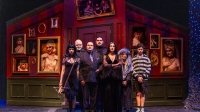
BrightSide’s Addams Family Musical Revives the Wonderfully Weird World of the Addams Clan
10 October 2026 in Theatre in ReviewThey're creepy and they're kooky, Mysterious and spooky, They're altogether ooky, The Addams Family. Yes, ooky. BrightSide Theatre’s production of…
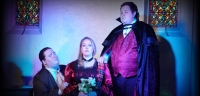
Chicago City Opera Delivers a Rare Operatic Haunting with Der Vampyr
08 October 2026 in Theatre in ReviewWith Halloween creeping closer, there’s something fitting about revisiting one of opera’s earliest flirtations with macabre horror - especially in…

Avalanche Theatre stages the world premiere of They Broke Up by Skyler Tarnas November 6–22, 2026
08 October 2026 in Upcoming TheatreAvalanche Theatre announces the world premiere production of They Broke Up by Chicago playwright Skyler Tarnas, November 6–22, 2026. Opening…

Celebrate 100 Years of the Cadillac Palace and James M. Nederlander Theatres
08 October 2026 in Theatre BuzzGrab your party hats — Broadway In Chicago ’s Cadillac Palace and James M. Nederlander Theatres are turning 100! The…

Oil Lamp Theater Announces the cast and creative team for the return of IT'S A WONDERFUL LIFE: A LIVE RADIO PLAY, Nov. 20 - Dec. 27
08 October 2026 in Upcoming TheatreOil Lamp Theater is proud to announce the cast and creative team for its next production and the final production…
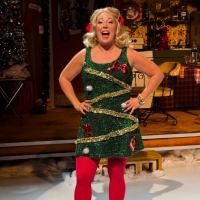
Adults-only holiday fun: Who's Holiday! brings R-rated Cindy-Lou Who back to Theater Wit for her sixth year, Nov. 27-Dec. 27
08 October 2026 in Upcoming TheatreChristmas Day is in our grasp. Why the vodka? Glad you asked! Who's Holiday! brings R-rated Cindy-Lou Who back to…

Two-Time Tony Award-Winning Actress Victoria Clark To Receive the Sarah Siddons Society Award at Annual Benefit on Monday, November 9, 2026
08 October 2026 in Theatre BuzzThe Sarah Siddons Society is pleased to present its 2026 Award to actress and director Victoria Clark, who recently starred…
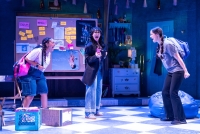
Goodman's Dead Girl’s Quinceañera: When Fifteen Meets the Adult World
07 October 2026 in Theatre in ReviewAt fifteen, the world can feel like a television show you haven't quite figured out how to turn off. For…

Steppenwolf Theatre's ADIRONDACK CHAIR CIRCLE In Rehearsal – Playing October 22 – December 6, 2026 – World Premiere!
07 October 2026 in Upcoming TheatreSteppenwolf Theatre Company, the nation's premier ensemble theater company, is pleased to launch its 51st Season with the world premiere of…

Hell in a Handbag Productions Announces 25th Anniversary Season!
07 October 2026 in Upcoming TheatreHell in a Handbag Productions is thrilled to announce its 25th Anniversary Season, featuring three "camptacular" shows guaranteed to delight lovers of…

Chicago’s Theater Wit introduces new Watchword closed captioning system, dramatically improving access in all three of its theaters
07 October 2026 in Theatre BuzzChicago’s Theater Wit is now offering new, state-of-the-art closed captioning service, marking a dramatic improvement in making live theater more…

Paramount Theatre’s reimagined A Christmas Carol promises to be a dazzling new, all-ages spectacle for Chicago’s holiday theater season, November 11-January 3
07 October 2026 in Upcoming Theatre“God bless us, everyone,” because there’s a fresh, new, reimagined version of Charles Dickens’ classic tale A Christmas Carol debuting…
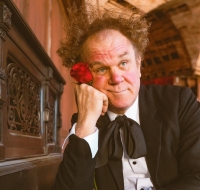
"John C. Reilly is Mister Romantic" Returns to Steppenwolf Theatre - December 10 – 13, 2026
06 October 2026 in Upcoming TheatreFollowing last year's critically acclaimed, sell-out engagement, Steppenwolf Theatre Company is pleased to announce the return of John C. Reilly…

Saint Sebastian Players Open 45th Season With A Murder Is Announced by Agatha Christie Classic Miss Marple Mystery Runs Oct. 23–Nov. 15
06 October 2026 in Upcoming TheatreThe Saint Sebastian Players open their 45th season of travels to different places with A Murder is Announced, a classic Miss Marple mystery…

Announcing "The Goodman, For Good" Campaign
06 October 2026 in Theatre BuzzToday, Goodman Theatre raises the curtain on its future as leadership and artists share a vision for its next century…

Two Edge Theater Company to stage A VIEW FROM THE BRIDGE as its inaugural Chicago production, December 4 through January 10
05 October 2026 in Upcoming TheatreTwo Edge Theater, a reincarnation of the Edge Theater Company that enjoyed eight successful seasons in the Denver, Colorado area,…

Frankenstein at Studebaker Theater adds performances for Halloween run
05 October 2026 in Upcoming TheatreChicago's historic Fine Arts Building and Studebaker Theater are thrilled to announce their Halloween co-production of Manual Cinema's acclaimed Frankenstein…

ANY REBELLION OF WILL - Trap Door Theatre - Through November 1st
05 October 2026 in Now PlayingTrap Door Theatre is thrilled to continue its 33rd season with Any Rebellion of Will, written by S.L. Daniels and…

Chicago-Area World Premiere of Liana Sonenclar's The Years Between Us - October 15-18
05 October 2026 in Upcoming TheatreJonathan James Productions presents the world premiere of The Years Between Us, a new play by Liana Sonenclar, directed by…

Oil Lamp Theater Announces its 2027 Season
05 October 2026 in Upcoming TheatreOil Lamp Theater, currently presenting the highly recommended Dial M for Murder, through November 1, is proud to announce its…

Dial M for Mastery: Oil Lamp’s Thriller Tightens the Screws
04 October 2026 in Theatre in ReviewAs a lifelong Hitchcock fan, Dial M for Murder has always been one of my comfort film thrillers - the…

ARTEMISIA REVEALS PLAYWRIGHTS AND DIRECTORS FOR THE 2026 WEWOMEN PLAY FESTIVAL At Bramble Arts Loft from Nov 16 - 18th
03 October 2026 in Upcoming TheatreArtemisia Theatre is proud to announce the return of the WeWomen Play Festival, its annual celebration of new feminist work.…
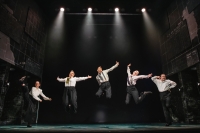
Operation Mincemeat: A Smart, Scrappy Musical That Shines When Its Cast Takes the Wheel
01 October 2026 in Theatre in ReviewIn the 2019 film Yesterday, a struggling musician wakes up in a world where The Beatles never existed. A similar…

Backyard Theatre Company’s Red Bike - Berger Park Coach House Theatre - Through October 24th
30 September 2026 in Now PlayingRed Bike is an intimate, movement‑driven play that follows a young person navigating a town transforming faster than they can…

SANCTUARY STORIES - A JOURNALISM THEATER PROJECT - Athenaeum Center for Thought and Culture - Through October 18th
30 September 2026 in Now PlayingThrough music, documentary video, sound, photos and live actors, “SANCTUARY STORIES: A JOURNALISM THEATER PROJECT” captures in words and images…

Red Theater presents the world premiere of CHURCH HURT October 24 - November 21, 2026
30 September 2026 in Upcoming TheatreRed Theater is thrilled to announce the cast and production team of the world premiere of Church Hurt by Brynne…
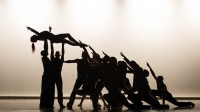
Ballets Jazz Montréal Makes Chicago debut at THE AUDITORIUM Saturday, November 7th
30 September 2026 in Upcoming DanceThe Auditorium (Chicago's landmark stage at 50 E. Ida B. Wells Drive) continues its 2026-27 Dance Season titled North American…





Latest Articles
-
 Robert Falls Directs a Sinfully Satisfying Don Giovanni at Lyric Opera of Chicago
Written by John AccroccoLet he without sin cast the first stone, Lyric’s “Don Giovanni” seemingly says when they bring up the house lights while the cast cheerfully sing about sinners being smote. Lyric Opera of Chicago kicks off the season with a thrilling…
Robert Falls Directs a Sinfully Satisfying Don Giovanni at Lyric Opera of Chicago
Written by John AccroccoLet he without sin cast the first stone, Lyric’s “Don Giovanni” seemingly says when they bring up the house lights while the cast cheerfully sing about sinners being smote. Lyric Opera of Chicago kicks off the season with a thrilling… -
 Inside Six Strange Worlds: Exquisite Corpse VI: LULLABIES
Written by Maddie BurroughsFor its sixth Halloween season, Rough House Theater Co. has transformed Steppenwolf’s Merle Reskin Garage into a spectacular puppet haunted house. Last year I visted House of the Exquisite Corpse V: BLOOD & PUPPETS, and this year’s installment feels familiar…
Inside Six Strange Worlds: Exquisite Corpse VI: LULLABIES
Written by Maddie BurroughsFor its sixth Halloween season, Rough House Theater Co. has transformed Steppenwolf’s Merle Reskin Garage into a spectacular puppet haunted house. Last year I visted House of the Exquisite Corpse V: BLOOD & PUPPETS, and this year’s installment feels familiar… -
 'Sanctuary Stories' Ventures Into Emotional Drama Behind the News on Immigration
Written by Bill EslerSanctuary Stories plumbs the line between theater and journalism, and the powerful human dramas both can depict. Funded by a Northwestern Medill School of Journalism grant to create a verbatim-based theatrical documentary, it is produced, directed and narrated by Craig Duff,…
'Sanctuary Stories' Ventures Into Emotional Drama Behind the News on Immigration
Written by Bill EslerSanctuary Stories plumbs the line between theater and journalism, and the powerful human dramas both can depict. Funded by a Northwestern Medill School of Journalism grant to create a verbatim-based theatrical documentary, it is produced, directed and narrated by Craig Duff,… -
 BrightSide’s Addams Family Musical Revives the Wonderfully Weird World of the Addams Clan
Written by Ken PayneThey're creepy and they're kooky, Mysterious and spooky, They're altogether ooky, The Addams Family. Yes, ooky. BrightSide Theatre’s production of The Addams Family Musical at the Theater at Meiley Swallow Hall feels like stepping back into the wonderfully odd world…
BrightSide’s Addams Family Musical Revives the Wonderfully Weird World of the Addams Clan
Written by Ken PayneThey're creepy and they're kooky, Mysterious and spooky, They're altogether ooky, The Addams Family. Yes, ooky. BrightSide Theatre’s production of The Addams Family Musical at the Theater at Meiley Swallow Hall feels like stepping back into the wonderfully odd world…


Does your theatre company want to connect with Buzz Center Stage or would you like to reach out and say "hello"? Message us through facebook or shoot us an email at This email address is being protected from spambots. You need JavaScript enabled to view it..
*This disclaimer informs readers that the views, thoughts, and opinions expressed in the text belong solely to the author, and not necessarily to Buzz Center Stage. Buzz Center Stage is a non-profit, volunteer-based platform that enables, and encourages, staff members to post their own honest thoughts on a particular production.