
Displaying items by tag: Tamara Wilson
Review: 'The Flying Dutchman' at Lyric Opera of Chicago

Ahoy matey! Climb aboard Lyric’s thrilling, new-to-Chicago production of Wagner’s ‘The Flying Dutchman’ This spooky, nautical classic opens the 2023/24 season and is a perfect way to kick off the Halloween season. While short by Wagner standards, this two-and-a-half-hour opera is performed without intermission, but the cinematic score and dazzling theatrics make the time sail by. This Dutchman leaves its audience spellbound all the way through the final curtain call.
Despite its fantastical elements, ‘The Flying Dutchman’ might be one of Wagner’s most straightforward and easy to follow operas. Based on a century’s old myth, ‘The Flying Dutchman’ spins a yarn about a ghost ship doomed to sail the sea for all eternity unless the supernatural captain can have the true love of a mortal maiden. When the Dutchman suddenly appears on sea captain Daland’s ship offering riches for his daughter Senta’s hand in marriage, an eeriness starts to creep into the port town where Senta awaits her father’s return. If the Dutchman can have Senta’s unwavering love, he can remain mortal and bring about his sinister plans on land.
What’s always striking about Wagner’s operas are how much they sound like today’s movie scores. Though sung in German with English subtitles to guide you, there’s something immediate about the way Wagner’s score conveys emotion. A creepy plot paired with abundant full-cast choruses all add up to an exciting and suspenseful final act.
Dialed-up vocals up under Christopher Alden’s direction really pay off. Part of what keeps people coming back to the same operas time after time are the beautiful moments of song that seem almost fleeting amidst something as sprawling as an opera. Such moments are plentiful too many to count in this production. This is especially true of Tamara Wilson as Senta. Not only can the Chicago native sing to the rafters, but she can also act. The same can be said of her co-star Tomasz Konieczny as the Dutchman.
When an opera takes place on the sea, staging is crucial. Kudos to the cast for doing this entire show on a diagonally slanted stage. Allen Moyer’s vision is more or less minimalism with touches of the old school. The ghostly wedding alone is worth spending two hours in the dark for. Each act though similarly staged provides an uneasy sense of suspense to match Wagner’s haunting music.
Some operas are just plain fun and ‘The Flying Dutchman’ much like Gounod’s ‘Faust’ is a devilishly good time. Wagner’s classic has a little bit of everything and it’s here you start to hear the beginnings of what would become musical theater as we know it today. An enormously talented cast of singers along with reliably sumptuous staging will have audiences under its spell and wondering where the evening went.
Through October 7 at Lyric Opera of Chicago. 20 N Upper Wacker. www.lyricopera.org (312) 332-2244.
Lyric Opera of Chicago’s 'Il Trovatore' by Giuseppe Verdi: A Perfect Storm of Vocalism

As in a perfect storm, where a variety of different factors come together, augmenting the force above and beyond what is imaginable, Lyric Opera of Chicago brought together a group of singers who may, together and individually, define the interpretation of the music of Verdi for our time. The famous tenor Enrico Caruso is quoted as having said, “Il Trovatore is easy to produce, all you need are the five greatest singers in the world”. The Lyric Opera of Chicago has found five outstanding singers, any one of which would have made for a satisfying night in the opera house, but all together they created a perfect storm of thrilling vocalism. Implicit in Mr. Caruso’s statement is that the demands of each of the leading roles require artists at the top of their game. This ensemble delivered a performance which provided the very essence of why we go to the opera. There were moments when just the exquisite sound of their ensemble brought tears to our eyes for no other reason than the pure beauty of the human voice. The sensation wasn’t perceived so much as sustained sound, but more as blow to the chest which leapt across the footlights without warning. If you have never been to the opera, these singers will viscerally make you understand why opera is loved so passionately. If you already love opera, you owe it to yourselves to do whatever it takes to hear these singers.
Il Trovatore, or The Troubador is one of the three pivotal operas of Verdi’s middle period, along with Rigoletto and La traviata (to be heard later this season at LOC) where Verdi begins to move away from the early 19th century bel canto style toward a more through-composed music drama. The stories of Rigoletto and La traviata are more deeply personal and intimate than Il Trovatore, although the story is still based on historical themes of a very human nature, but on a grander, heightened scale. This is no ordinary love triangle - empowered aristocrat / beautiful young noblewoman / dashing rebel - the rivals in love are important adversaries in a major struggle for power which historically occurred in the kingdom of Aragon in early 16th century Spain. It is part of a period in which the common man began to assert his inalienable rights and demand concessions from the aristocracy all throughout Europe. To make it really fun, add to that an old gypsy woman, still obsessively grieving over her mother’s execution at the stake many, many years ago. In her terror and confusion at that horrible event, a baby also ended up in the fire. Ah, but whose baby? Grisly stuff, but not any worse than anything you might have seen on “Vikings” or “Game of Thrones”. Verdi pulled out all the stops to portray these immense passions. The big musical numbers are one blockbuster after another, interspersed with poignant, tender, and mournful music, all of which require every sort of virtuosity to perform.
Yet, in spite of the greatness of this opera, the improbability of the plot is considered fair game for ridicule. You may suspect Gilbert & Sullivan are parodying it in “Pirates of Penzance”, and it was the opera performed in the Marx Brothers film “A Night at the Opera”. Admittedly, there are a few times when, in lesser productions, our suspension of disbelief falls flat. Not so in this revival of the production directed Sir David Mc Vicar, a true master of stage-craft, and faithfully re-staged for Lyric Opera of Chicago by Roy Rallo. The staging challenges are deftly handled by a director who obviously loves the art form, trusts the music, trusts that his singers will communicate with the audience, and that the audience is intelligent, open, and willing to understand the intentions of the composer. Mc Vicar’s staging tells the story simply, yet with a deep understanding which enables the audience to be fully engaged, while making sure that the singers are not left hanging out to dry or trying to pull off unwarranted antics, as theater directors who don’t really understand opera insist upon through their own lack of knowledge or insecurities.
The design and style of the production is reminiscent of the paintings of Goya, conjuring images of the stark contrast between the Spanish nobility and working class. Although Goya’s paintings were of events which happened about 250 years after the historical events of Il Trovatore, the setting, designed by Charles Edwards, is evocative and workable. It is dominated by a huge wall on a turntable revealing different settings, from the fortress at Castellor, to a convent, and to mountainous gypsy encampments, allowing the action to move along without long pauses or multiple intermissions. Marco Armiliato conducted the always wonderful Lyric Opera Orchestra with a great understanding of Verdi and a keen sense of pacing. The musical and dramatic energy never lagged, yet never became frenzied. He was especially sensitive to the extraordinary singers, allowing them to be heard and, most importantly, giving them time to be sublime.
Speaking of sublime, how can we start to describe the perfect storm of vocalism which was created by an ensemble of some of the greatest Verdi voices of our age? Every singer was ideally cast in these difficult roles. Tenor Russell Thomas, who recently made a fine impression as Pollione in Norma, was well up to the daunting task of the Troubador, Manrico. His clarion tenor, so powerful at full voice, was tenderly sympathetic in the softer moments, when his color became more burnished. Manricos’ aria, “Ah, si, ben mio”, was lyrical, idiomatic and meltingly lovely. The ball-buster cabaletta that follows, the famous and rousing ”Di quella pira” was more than adequate, if not quite equal to Mr. Thomas’ complete command of the totality of the role. In fact, we felt cheated and wondered why the second verse was cut. However, this is fully understandable. Growing up with the sound of Corelli and Pavarotti singing this aria would be daunting to any young tenor, and trying to sing it too soon in one’s career is more than likely to build in habits which require a leap of faith to overcome. Mr. Russell shouldn’t be nervous. If he would approach the aria with the same superb vocalism with which he sings the rest of the role, it would be electrifying!
As Leonora, the woman Manrico loves, Tamara Wilson was nothing less than spectacular in her Lyric Opera debut. A winner of the highly prestigious Richard Tucker Award, she dazzled us with her shimmering voice, full from top to bottom, with exquisite pianissimos, stunning high notes and crystal clear coloratura. A true Verdian soprano, there was no high point to her performance. It was all superb, from her sweet “Tacea la notte placida” to the heart rending “Miserere”. Ms. Wilson presents a Leonora who is ingenuous, vulnerable, and tender, yet who displays a plucky determination, passion, and inner strength missing in many interpretations of the role. Let’s hope she returns to Chicago often!
There are very few Verdi baritones singing today who can match Artur Rucinski (or no longer with us, for that matter). In his first appearance in Chicago (oh please, PLEASE don’t let it be his last!) he was perfect, absolutely perfect, as Count di Luna. Mr. Rucinski is handsome, has a manly, but genuine stage presence, and has a voice, the likes of which we have not heard since Leonard Warren and Robert Merrill. He played di Luna as an entitled member of the nobility, but with the real life feelings of a young man, bereft of his brother, and in love with a woman who, for reasons incomprehensible to him, loves a “nobody”. His rich baritone has the power and color for his moments of agitation and anger, but most astonishing was his rendition of di Luna’s great aria, “Il balen del suo sorriso”. It is one of the sweetest and most passionate of all baritone arias, even while manically obsessing about his love for Leonora. Mr. Rucinski’s interpretation was so elegantly sung, it was like warm honey pouring from a jar. Normally we don’t give a hoot where a singer may breathe or not breathe. If a singer sings beautifully and with meaning, we’re happy, even if one needs to sneak a catch breath or two. But Mr. Rucinski’s feat of breath control in his opening phrase of the aria was beyond comprehension. Not only did he not use the opportunities to breathe during the rests which Verdi wrote into the music, he sustained the line through several phrases which united the text in a way which is unprecedented. With some baritones, it might have been a show-off trick, but Mr. Rucinski was so sincere and pure, it was as if time stood still as his thoughts and feelings flowed out of him. If we hadn’t been seated, we would have become weak in the knees.
The gypsy, Azucena, is a troubled soul. Her mother was burned at the stake for witchcraft, and she lives only for vengeance. She has raised Manrico and loves him as any mother loves her own son. The part is often played with hair-raising intensity, bordering on the grotesque. Jamie Barton was a more sympathetic character and sang the role more beautifully, not in small part due to the pathos inherent in her warm full mezzo soprano. Still chilling, yes, but believable.
The Captain of di Luna’s Guard, Ferrando, usually sung by an older basso, was impressively sung by Roberto Tagliavini. He has a marvelous, ample voice, and it is a rare pleasure to hear all the little passing notes sung so tidily. But a big voice alone is not enough. True artistry requires the expression and inflection of the meaning of the words. Mr. Tagliavini’s spectacular voice poured out in an enveloping stream, but with no variation or indication that he understood what he was singing about, even though he hails from Parma, Italy. He could become a great artist if he stopped trying to impress us with how loudly he can sing, and used the music to help explain the emotions behind the meaning of the words. Let’s hope that his musicality and artistry will develop further as his career progresses.
The small roles of Ines, Leonora’s chaperone, and Ruiz, Manrico’s messenger, were luxuriously filled by Ryan Center artists Lauren Decker and Mario Rojas.
The chorus is a big player in this opera in a Cecil B. deMille cast of thousands sort of way: soldiers, rebels, guards, gypsies, outlaws, nuns etc. All were well sung as prepared by Michael Black and well integrated into the action. The confrontation at the end of Act II was without a doubt one of the most exciting fight scenes we’ve witnessed on the live opera stage. Bravo Nick Sandys, Fight Director!
This Il Trovatore is, as we so often say in opera, much greater than the sum of its parts. The good news is there are four performances remaining November 30, December 3, 6 and 9. It’s a winner. Don’t miss it. Go to lyricopera.org for tickets now!
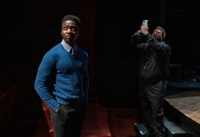
Class is back in session with Victory Gardens’ World Premiere of The Humanities
19 September 2026 in Theatre in ReviewCoincidentally (or not), Victory Gardens’ new play about a controversial campus speaker opens just days after the one-year anniversary of…

Layered, Lovely, and Lasting; The Joffrey Ballet's Liliom Lights up The Lyric Opera
18 September 2026 in Dance in ReviewSometimes when reach into the past to resurrect or revive an old story, it doesn’t age well. The subject matter…

Cast and Production Team Announced for Fleetwood-Jourdain Theatre's THE NICETIES, October 31 – November 15
18 September 2026 in Upcoming TheatreFleetwood -Jourdain Theatre, an award-winning theatre company that has been thrilling audiences with over four decades of unique, inspirational, and invigorating Black…

Goodman’s centennial is its all‑time most successful year, with 300,000 patrons at 4,000 performances & events
18 September 2026 in Theatre BuzzThe Goodman wraps its 2025/2026 Centennial Season, an unprecedented line-up marking the 100th anniversary of Chicago's flagship not-for-profit theater, as the…
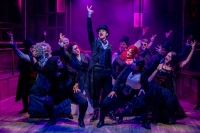
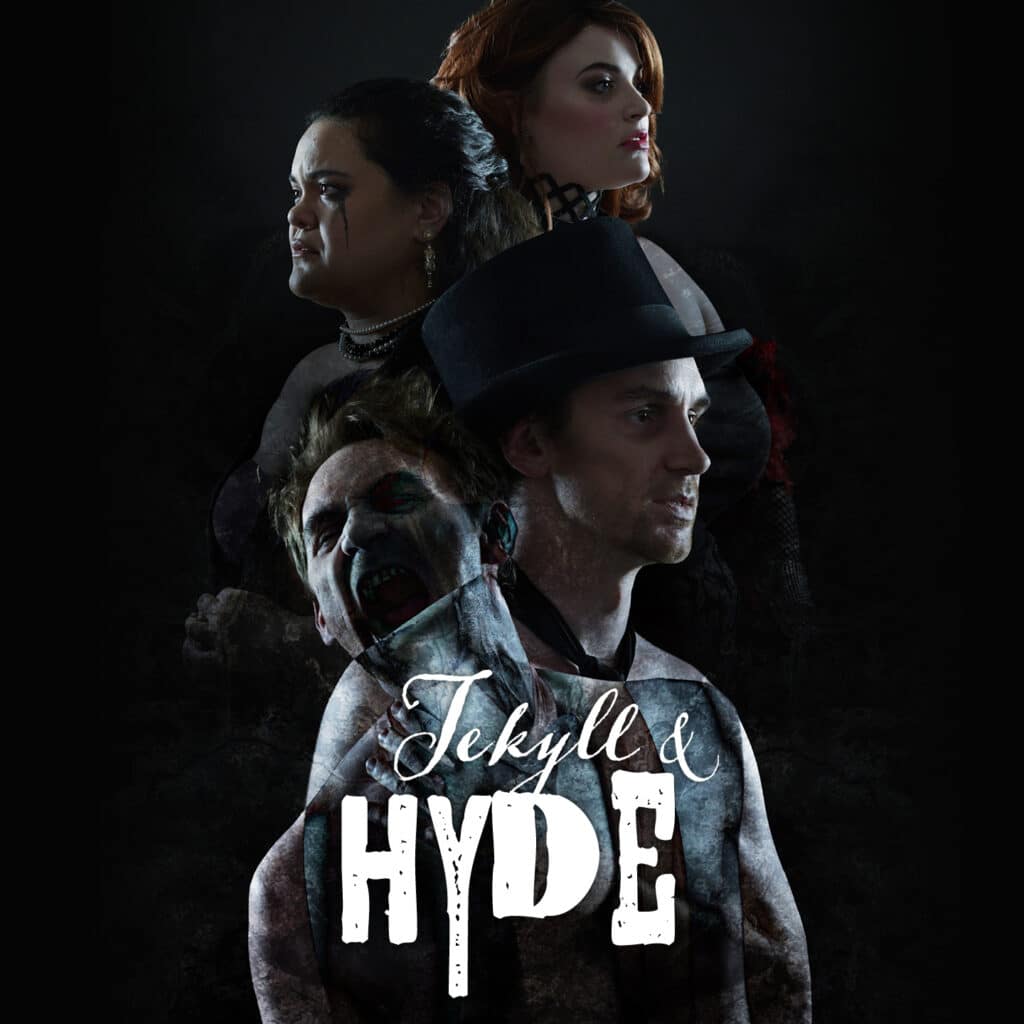
Kokandy Productions’ Jekyll & Hyde: A Fearless Reworking Elevated
17 September 2026 in Theatre in ReviewKokandy Productions’ Jekyll & Hyde, now presented by Broadway In Chicago at the Broadway Playhouse, arrives with the momentum of…
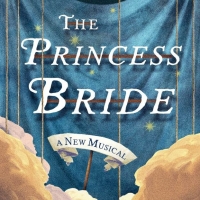
THE PRINCESS BRIDE to have Pre-Broadway World Premiere in Chicago July 19 - August 22, 2027
16 September 2026 in Upcoming TheatreProducer Jeffrey Seller and Broadway In Chicago have announced the world-premiere of the new musical THE PRINCESS BRIDE will begin performances in…

American Son - Friendship Community Place - Through October 4th
16 September 2026 in Now PlayingGhostlight Ensemble's production of American Son, written by Christopher Demos-Brown and directed by Ebby Offord, opens on Friday, September 18,…

MARRIOTT THEATRE REVEALS A 2027 SEASON OF SHOWSTOPPING MUSICALS AND BELOVED STORIES
16 September 2026 in Upcoming TheatreMarriott Theatre, Chicagoland's longest-running musical theatre, presents its 2027 subscription season featuring five thrilling and memorable musicals: Pippin, A Gentleman's Guide to…

Kokandy Productions Concludes 2026 Season with A CLOCKWORK ORANGE: A PLAY WITH MUSIC November 5, 2026 – January 10, 2027 - Full Casting Announced!
15 September 2026 in Upcoming TheatreKokandy Productions is pleased to conclude its 2026 Season with A Clockwork Orange: A Play with Music, a live adaptation of Anthony Burgess's dystopian…

Raíces to Roots’ Unpacking Home - Collaboraction's House of Belonging - Through September 27th
15 September 2026 in Now PlayingCollaboraction Theatre Company is thrilled to host a limited run of Unpacking Home by Chicago’s Raices to Roots as part of the 9th Destinos…
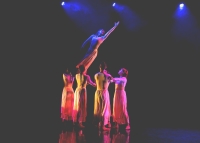
Identity Performing Arts Celebrates 5 Years with Gala Performance at MCA's Edlis Neeson Theater October 18th
14 September 2026 in Upcoming DanceIdentity Performing Arts celebrates five years as a dance company embracing artistic innovation, collaboration and community at their Fifth Anniversary Gala at MCA…

BIRDS OF NORTH AMERICA - Do we listen to each other as much as birdsongs?
14 September 2026 in Theatre in ReviewBirds of North America, written by Anna Ouyang Moench, is a story of a father daughter relationship spanning a decade…
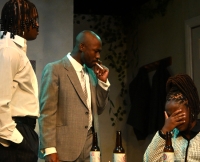
Gwydion Theatre Delivers More than a Satire in Lynn Nottage’s Por’ Knockers
13 September 2026 in Theatre in ReviewLynn Nottage is a skilled playwright, and prolific especially considering the high quality of her works: Pulitzer winners Ruined and…
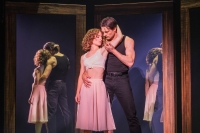
The Dancing Delivers What the Dialogue Doesn’t in Dirty Dancing: The Musical
12 September 2026 in Theatre in ReviewIn a world of theatrical adaptations, there really are two kinds: some reinvent their source material, becoming their own “new”…

Divergent Viewpoints Distract: The Birth of the Pill at Timeline Theatre
11 September 2026 in TheatreThere are always two sides to every story. The writer or playwright will tell a story offering key details and…
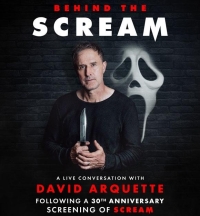
Go Behind The SCREAM: A Live Conversation with David Arquette following a 30th Anniversary screening of SCREAM, one-night-only at Aurora’s Paramount Theatre, Saturday, October 24 at 8 p.m.
10 September 2026 in Upcoming TheatreBe part of a night filled with suspense, stories, and special moments this Halloween season when David Arquette goes Behind the…

GDC Premieres New Work by Al Blackstone in "untamed passion" at the North Shore Center November 6th and 7th
10 September 2026 in Upcoming DanceGiordano Dance Chicago (GDC), America's original jazz dance company, returns to the North Shore Center for the Performing Arts in Skokie, 9501…

Dance Theatre of Harlem returns to Chicago for first time in 10 years at The Auditorium October 17th
10 September 2026 in Upcoming DanceThe Auditorium (Chicago's landmark stage at 50 E. Ida B. Wells Drive) begins its 2026-27 Dance Season titled North American Dance…

The Gift Theatre announces casting for Netta Walker's Hayward
09 September 2026 in Upcoming TheatreThe Gift Theatre, led by Artistic Directors Brittany Burch and Jennifer Glasse, continues its 25th Anniversary Season with the world premiere…

Steep Opens New Home with Simon Stephens' U.S. Premiere A Slow Fire
09 September 2026 in Upcoming TheatreSteep Theatre will open its new theater this coming January with the U.S. Premiere of playwright Simon Stephens' A Slow…

Go behind the scenes of House of the Exquisite Corpse, Chicago’s only puppet haunted house, with new All-Inclusive Experience, October 8-25 at Steppenwolf’s The Merle
09 September 2026 in Upcoming TheatreWant to go behind-the-scenes of Chicago’s one and only puppet haunted house? Rough House Puppet Arts’ House of the Exquisite Corpse returns October…

Full Casting Announced for Steppenwolf Theatre Company's ADIRONDACK CHAIR CIRCLE – October 22 – December 6, 2026 – World Premiere!
08 September 2026 in Upcoming TheatreSteppenwolf Theatre Company, the nation's premier ensemble theater company, is pleased to announce full casting for its world premiere of…

Porchlight Announces "Little Shop of Horrors" Cast & Creative Team
08 September 2026 in Upcoming TheatreThe award-winning Porchlight Music Theatre is proud to announce the cast and creative team of the first mainstage production of…

Chicago Premiere of Tin Drum Theatre's A DARK WOOD to be performed at Greenhouse Theater Center, Oct 15 - Nov 1
08 September 2026 in Upcoming TheatreTin Drum Theatre Company is proud to announce that tickets are now on sale for the Chicago premiere of A Dark Wood, October…

Embrace The Change: Menopause the Musical® 25th Anniversary Tour to play Aurora’s Paramount Theatre Saturday, October 17 at 3 p.m.
08 September 2026 in Upcoming TheatreThe hilarious musical parody Menopause the Musical® is on a 25th Anniversary National Tour this fall, and Aurora’s Paramount Theatre is the…

Paramount’s Mean Girls Delivers a Fierce, Fetch Night Out
07 September 2026 in Theatre in ReviewThis new staging of Mean Girls the Musical, now playing at Paramount Theatre in Aurora’s downtown theatre district, brings Tina…

The Man Who Fell - Trap Door Theatre - Through September 19th
07 September 2026 in Now PlayingTrap Door Theatre is thrilled to begin its 33rd season with the World Premiere of The Man Who Fell with…
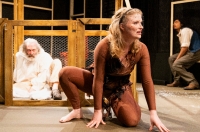
Gabriel Garcia Marquez's Dark Children’s Tale Translates to Stellar Show in ’The Man Who Fell with the Rain’
06 September 2026 in Theatre in ReviewAn exceptionally good show is now on stage at Chicago’s Trap Door Theatre. This wonder—The Man Who Fell with the…

'The Snow Queen' presented by The Impostors Theatre Co. November 6th through November 21st
04 September 2026 in Upcoming TheatreAfter their award winning year, The Impostors Theatre Company (ITC) opens Season Eight with the highly anticipated world-premiere of The…

City Lit announces August Wilson's KING HEDLEY II October 16 through November 29 - here the cast
04 September 2026 in Upcoming TheatreFull cast and production team have been announced for City Lit's production of August Wilson's KING HEDLEY II, to play…




Latest Articles
-
 Cast and Production Team Announced for Fleetwood-Jourdain Theatre's THE NICETIES, October 31 – November 15
Written by Buzz Center StageFleetwood -Jourdain Theatre, an award-winning theatre company that has been thrilling audiences with over four decades of unique, inspirational, and invigorating Black American and African Diaspora-centered storytelling, has announced the cast and production team for the final production of its 2026 season. THE…
Cast and Production Team Announced for Fleetwood-Jourdain Theatre's THE NICETIES, October 31 – November 15
Written by Buzz Center StageFleetwood -Jourdain Theatre, an award-winning theatre company that has been thrilling audiences with over four decades of unique, inspirational, and invigorating Black American and African Diaspora-centered storytelling, has announced the cast and production team for the final production of its 2026 season. THE… -
Goodman’s centennial is its all‑time most successful year, with 300,000 patrons at 4,000 performances & events
Written by Buzz Center StageThe Goodman wraps its 2025/2026 Centennial Season, an unprecedented line-up marking the 100th anniversary of Chicago's flagship not-for-profit theater, as the most successful in its history. Today, the theater released its "A Century of Impact" report, detailing milestone programming and attendance…
-
 Class is back in session with Victory Gardens’ World Premiere of The Humanities
Written by John AccroccoCoincidentally (or not), Victory Gardens’ new play about a controversial campus speaker opens just days after the one-year anniversary of Charlie Kirk’s assassination. Returning from a lengthy hiatus, Victory Gardens once again lights up the Biograph Theater with the world…
Class is back in session with Victory Gardens’ World Premiere of The Humanities
Written by John AccroccoCoincidentally (or not), Victory Gardens’ new play about a controversial campus speaker opens just days after the one-year anniversary of Charlie Kirk’s assassination. Returning from a lengthy hiatus, Victory Gardens once again lights up the Biograph Theater with the world… -
 Layered, Lovely, and Lasting; The Joffrey Ballet's Liliom Lights up The Lyric Opera
Written by Kendall RoyzenSometimes when reach into the past to resurrect or revive an old story, it doesn’t age well. The subject matter could be problematic, the material divisive, the cultural context lost through the fabric of time. Without proper context we tend…
Layered, Lovely, and Lasting; The Joffrey Ballet's Liliom Lights up The Lyric Opera
Written by Kendall RoyzenSometimes when reach into the past to resurrect or revive an old story, it doesn’t age well. The subject matter could be problematic, the material divisive, the cultural context lost through the fabric of time. Without proper context we tend…


Does your theatre company want to connect with Buzz Center Stage or would you like to reach out and say "hello"? Message us through facebook or shoot us an email at This email address is being protected from spambots. You need JavaScript enabled to view it..
*This disclaimer informs readers that the views, thoughts, and opinions expressed in the text belong solely to the author, and not necessarily to Buzz Center Stage. Buzz Center Stage is a non-profit, volunteer-based platform that enables, and encourages, staff members to post their own honest thoughts on a particular production.