
Displaying items by tag: Lyric Opera of Chicago
Poetry in Motion: Joffrey's Eugene Onegin enraptures at the Lyric Opera

There’s something magical about stories. Stories have the power to transcend time, reaching across the centuries to share their thoughts, ideas, and emotions. Tales of heartbreak, anguish, squandered youth, and missed chances written in the 1800s have a way of resonating with us in the modern age, the profound emotions perfectly encapsulated in the prose. The magic happens when that story is lifted from a page to be retold in a new medium for modern audiences to hear and see. In my opinion, there is no finer example of this transformation than what is currently showing at The Lyric Opera House in Chicago, The Joffrey’s Eugene Onegin, now running through June 14th.

The ballet tells the story of Eugene Onegin, a wealthy but disillusioned aristocrat, who is disenchanted with both city and country life. He ventures to the provinces after inheriting his uncle’s estate, restless and indifferent. There, Eugene joins his friend Vladimir Lensky on a visit to his fiancée Olga’s home, where he is introduced to the family, most notably her sister Tatiana. Tatiana is drawn to Onegin’s aloof sophistication and quickly falls in love. She writes him a heartfelt letter and, at dawn, asks her nanny to deliver it. Onegin rejects her, claiming he is unsuited to love or marriage. His refusal deeply wounds Tatiana. At Tatiana’s name-day celebration, a bored Onegin flirts with Olga. Lensky, humiliated and jealous, challenges him to a duel. What begins as wounded pride leads to tragedy. Shakespearean passions of unrequited love, conflict of youth, and the dangers of careless actions play out in this classic tale.

Eugene Onegin is heralded as the foundation of modern Russian literature. Written over the course of eight years in the early 1800s, the novel revolutionized storytelling by blending romantic tragedy with social satire. Its main character was a cautionary tale of the superfluous man, one who is educated, wealthy, cynical, bored, and aimless, whose disillusionment leads to his own moral demise.
Told in four acts, the Joffrey masterfully brings Alexander Pushkin’s “novel in verse” to life through the medium of dance. Choreographer Yuri Possokhov and composer Ilya Demutsky not only capture that complex and bastardous character of Eugene, but also the wide range of emotions conveyed in this story. The adoration, resentment, rejection, joy, anguish, and regret are told through long, elegant lines, sensual pas de deuxs set to a musical score that perfectly captures the emotions of the four seasons the play moves through. Set against a breathtakingly simplistic provincial set, dancers clad in silks as delicate as the changing winds, and a not-love story performed superbly by Joffrey’s José Pablo Castro Cuevas and Victoria Jaiani (Eugene Onegin and Tatiana Larina, respectfully), the Joffrey have truly outdone themselves. It is one of their most visually captivating ballets. Said simply, Eugene Onegin is poetry in motion, a classic tale reenvisioned in the delicate yet powerful medium of ballet.

Hundreds of years later, the story of a charismatic yet pouty man who let his emotions hold him back while driving him towards his own demise still resonates with audiences today. Pushkin’s prose found a way to reach across the centuries and navigate Lower Wacker to make it to the Lyric Opera stage, where dancers bring the story to life. If that isn’t magic, I don’t know what is.
Eugene Onegin is now playing at the Lyric Opera House (20 N Wacker Dr, Chicago) through June 14th. This is one story you don’t want to miss. Get your tickets today at Joffrey.org.
This review is proudly shared with our friends at www.TheatreInChicago.com.
safronia soars at Lyric Opera

safronia at Lyric Opera of Chicago emerges as a deeply personal story of the Great Migration - one that resists grandiosity in favor of something more intimate, more lived-in, and ultimately more affecting. Drawn from the family history of Chicago’s inaugural Poet Laureate avery r. young, the work feels less like a conventional opera and more like an embodied poem, carried on breath, rhythm, and memory.
Young himself, as Fiery Baar Booker, gives a performance that is searing. There is fire in his portrayal - a man negotiating identity, displacement, and legacy. Opposite him, Maiesha McQueen’s Magnolia is the emotional anchor of the piece. Her performance radiates warmth and steadiness, embodying the sustaining force of family amid upheaval. She nurtures without sentimentality, giving Magnolia strength.
Lorenzo Rush Jr. brings a charismatic edge to King Willie Tate, a figure caught between aspiration and instability. His chemistry with Meaghan McNeal’s safronia is particularly compelling. McNeal delivers a spiritual performance - her safronia is less a single character than a vessel of generational memory, carrying the emotional weight of those who moved, hoped, and endured.

The company of safronia. Photo by Kyle Flubacher.
The looming presence of white power is sharply rendered through Zachary James as Cholly and Jeff Parker as Bossman. Their performances are unsettling not because they are exaggerated, but because they are so matter-of-fact. The banality of their authority underscores the systemic nature of the oppression the Booker family faces.
The ensemble - Bailey Haynes Champion, Sydney Charles, Miciah Lathan, Eric Andrew Lewis, Renelle Nicole, Jessica Brooke Seals, Maxel McLoud Schingen, and Kendal Marie Wilson - serves as a living chorus, shifting seamlessly between roles while maintaining a unified emotional pulse. They embody community, memory, and migration itself.
Musically, Paul Byssainthe Jr.’s conducting and orchestration weave together spirituals, blues, and textures into a soundscape that feels both rooted and expansive. Under Timothy Douglas’s direction, the production is carefully shaped, allowing stillness and movement to coexist in a way that honors the story’s emotional depth.
Yet for all its power, safronia at the Lyric Opera feels like a work yearning for closer quarters. Its most resonant moments are the quietest ones - the glances, the silences, the shared breath between performers and audience. It is fitting, then, that the production will be remounted at Court Theatre in May 2027. In that more intimate space, safronia may fully realize its potential, allowing audiences not just to witness the story, but to feel it - deeply, personally, and without distance.
This review is proudly shared with our friends at www.TheatreInChicago.com.
A Spoonful of Magic: Lyric Brings Mary Poppins to Life

Lyric Opera of Chicago’s film‑with‑live‑orchestra series has become one of the city’s most engaging hybrid arts experiences, transforming the opera house into a cinematic concert hall where classic films gain new dimension through live performance. Recent presentations such as Singin’ in the Rain (February 2025) and Coco in Concert (October 2025) have showcased how a full orchestra can elevate familiar scores, bringing warmth, clarity, and emotional immediacy to every musical moment. The format takes full advantage of Lyric’s grand acoustics and visual scale, allowing audiences to rediscover beloved movies with a heightened sense of drama and immersion. It’s a rare blend of nostalgia and spectacle - a celebration of film and music that feels both timeless and newly invigorated each time the orchestra begins to play. Now, the series continues its momentum as Anthony Parthner leads The Lyric Opera of Chicago Orchestra in performing the cherished score to Mary Poppins.

Dick Van Dyke and Julie Andrews in Mary Poppins.
Released in 1964 and starring a dream duo of Dick Van Dyke and Julie Andrews, Mary Poppins follows the magical arrival of an extraordinary nanny who descends - quite literally - into the lives of the Banks family on Cherry Tree Lane. As the children, Jane and Michael struggle under the strict expectations of their distracted father and the anxieties of their well‑meaning mother, Mary Poppins brings order, wonder, and unexpected joy through a blend of firm guidance and whimsical adventure. With the help of her cheerful friend Bert (the loveable chimney sweep), she leads the family through imaginative escapades that reveal deeper lessons about connection, kindness, and the importance of seeing the world with curiosity. By the time she departs, the Banks household has been transformed, not by magic alone, but by the rediscovery of affection and unity.
This film is an ideal showcase for the Lyric Orchestra, and they rise to it beautifully. The score for Mary Poppins was composed by the celebrated songwriting team Richard M. Sherman and Robert B. Sherman, whose work helped define the sound of Disney’s mid‑century musical era. Known as the Sherman Brothers, they created a bright, whimsical, and emotionally rich collection of songs that blend clever lyricism with instantly memorable melodies. Their contributions to the 1964 film produced some of Disney’s most enduring musical moments - from the exuberant “Supercalifragilisticexpialidocious” to the gentle poignancy of “Feed the Birds” - shaping a sonic identity that remains inseparable from the film’s legacy. Their score not only set the tone for Mary Poppins but also solidified the Shermans as two of the most influential composers in the Disney canon.

Conductor Anthony Parnther.
Lyric Opera of Chicago was especially thrilled to welcome Anthony Parnther to the podium, a conductor whose versatility and musical sensitivity made him an inspired choice for a score as iconic as Mary Poppins. One of the busiest conductors in Los Angeles and a world‑class bassoonist with an international performance career, Parnther brought both technical precision and a keen ear for orchestral color - qualities that served him well in shaping a live performance of this beloved film soundtrack. Watching him work was a genuine pleasure. His approach emphasized clarity and warmth, guiding the orchestra in a way that honored the Sherman Brothers’ classic melodies while subtly enhancing the film’s emotional contours in real time. For Lyric, his leadership reflected not only artistic excellence but a continued commitment to presenting musicians who could seamlessly bridge concert performance with cinematic storytelling.
With the success of its recent live‑to‑film presentations, Lyric’s film‑with‑live‑orchestra series continues to build steady momentum, and the company is already preparing for its next project: a live orchestral performance of Amadeus in 2027. Mary Poppins in Concert Live to Film is presented in a limited engagement on April 10 and 11. Click here for more information.
This review is proudly shared with our friends at www.TheatreInChicago.com.
In El último sueño de Frida y Diego, Frida’s Beloved Genius Shines Through Her Pain

El último sueño de Frida y Diego is a love story that outlives the body, outlasts the grave, and keeps burning long after death has done its part.
Frida Kahlo famously said, ‘I’ve had two accidents that changed my life: one when I was hit by a trolley, and the other when I fell in love with Diego Rivera.”
And thus opens the first act of this beautiful dedication to the brilliant fiery artist, so far ahead of her time, the astonishing and disabled Frida Kahlo.
Composed by Gabriela Lena Frank with a libretto by Nilo Cruz, El último sueño de Frida y Diego arrives like a heat‑haze hallucination - lush, uncanny, and thrumming with a love that refuses to stay in the ground. It’s 1957, Día de los Muertos, and the opera drops us into a marigold‑drenched cemetery where the living coax their dead back for one brief visit. Diego Rivera, worn thin by grief and a stalled brush, isn’t there for tradition; he’s there to beg the universe for one more moment with Frida. His plea slices through the veil, catching the ear of an unassuming flower seller who promptly sheds her disguise to reveal Catrina, the regal, razor‑sharp Keeper of the Dead - and the only force powerful enough to answer him.
Deep in the shadowed sweep of Mictlán, Frida pushes back against the summons with the same fierce spark that once lit every brushstroke. Death has finally granted her the relief life never did - no shattered spine, no emotional whiplash, no Diego-shaped storm at her heels - and she has zero interest in reopening the wounds she fought so hard to leave behind.
“So much pain!” she cries again and again, swearing at the start of the production that she will never return to the world of the living - or to her love, Rivera - because of it.
But the underworld is anything but still - teeming with spirits who are playful, meddling, and aching for their own brief return. Among them is Leonardo, a young actor whose flair for drama and easy artistic kinship start to chip away at Frida’s resolve. As Catrina assembles the souls cleared for their 24‑hour crossing, Frida reluctantly lets herself be wrapped once more in the hues, textures, and contradictions of her earthly self. Bound by strict rules - no touching the living, no overstaying the day - she steps toward the world she swore off, setting the stage for a reunion as volatile as it is inevitable.
But she is urged by those on both sides of the afterlife to visit with Diego because spirits on both sides of the veil are ALSO missing her presence, her vibrant, dynamic and powerful personality and essence in a dark landscape of blacks and greys. Rivera and her family and friends on both sides of the veil would give anything to have her back with them to color and ignite their universe - even if only for a day.
And although Frida really does want to see Diego again, she is stopped by the memory of the torment she suffered emotionally in his arms and even more so the pain she suffered in her body from the horrific trolley accident that crippled her.

Ana Maria Martinez as Catrina, Alfredo Daza as Diego and Daniela Mack as Frida.
Many times in the show, Frida sings about her extreme unrelenting physical pain. Kahlo’s paintings - often filled with blood, surgical imagery, and unfiltered grief - also gave voice to the extreme physical agony she endured throughout her chronically ill life. Frida endured surgery after surgery, yet none brought the relief she so desperately needed.
In the end, she chooses to return for her art - to see the colors again, the radiant “colors” she sings of in her paintings and in her lovingly adorned home. Kahlo also descends back into her pain‑ridden earthly body to answer Rivera’s desperate daily pleas - his prayers to her and to God to return and save him from a life emptied of inspiration, a life made unbearably lonely without her.
Kahlo and Diego had a tumultuous relationship marked by marital affairs on both sides, though Diego’s affair with Frida’s own sister caused their divorce. But their love was eternal and they remarried, and we’re together until Frida’s death 10 years later.
This production makes clear that although Diego Rivera was the more famous artist in their lifetime - the towering figure whose reputation often eclipsed Frida Kahlo’s - he relied on her completely, both for artistic inspiration and for the very shape of his life. Rivera even said that his greatest wish was to have his ashes buried with hers.
Finally, a production that honors a female artist not only for her public achievements but for her full humanity - one that is unabashedly in love with Frida herself, not just her legacy.
One of the production’s loveliest moments is a tableau where Kahlo’s most famous paintings step off the canvas and onto the stage. I only found myself wishing for projections - of the actors in their vivid recreations or of the paintings themselves - because the costumes and scenic artistry were so intricate and stunning that not everyone in the house could fully take them in. By then, the audience was aching to see her art come alive.

The company of El último sueño de Frida y Diego.
El último sueño de Frida y Diego is currently running at Lyric Opera House, performed entirely in Spanish with the full vocal score intact. English captions are projected overhead throughout, making the story and its emotional undercurrents easy to follow even if you don’t speak the language.
Directed by Lorena Maza with Roberto Kalb conducting, Lyric’s production fields a powerhouse ensemble, led by mezzo‑soprano Daniela Mack, who returns to the house with a Frida that’s all fire, fragility, and fiercely guarded autonomy. Opposite her, baritone Alfredo Daza makes a striking Lyric debut as Diego - his voice carrying the weight of a man haunted by the art he can’t finish and the woman he can’t release. Countertenor Key’mon W. Murrah, in a radiant Lyric debut, infuses Leonardo with a buoyant theatrical spark that lifts the energy of every scene entered. Meanwhile, Ana María Martínez turns Catrina into a study in imperious grace - her soprano gliding through the score with the kind of effortless authority that makes the boundary between worlds feel like something she can open and close at will.
Musically, the evening’s standout moments come through sweeping duets and emotionally charged arias - Frida’s defiant refusals, Diego’s grief‑soaked pleas, and shimmering ensemble passages that blur the line between the living and the dead. Gabriela Lena Frank’s score leans into lush orchestral colors, letting voices ride waves of percussion, strings, and folkloric textures that feel both ancient and startlingly alive, while the live orchestra - under Roberto Kalb’s precise, fiery baton - does far more than accompany, animating the realm around the singers and giving Mictlán its pulse, the cemetery its glow, and the lovers’ reunion its aching gravity.

Visually, El último sueño de Frida y Diego is a sensory feast - an opera that doesn’t just tell a story but paints one stroke by stroke right in front of you. The stage erupts in the saturated hues of Mexican folklore: cascades of marigolds, candlelit altars, and sweeping bands of cobalt and crimson that echo Rivera’s murals and the raw intimacy of Frida’s self‑portraits. The opening cemetery glows like a living ofrenda, its petals and lanterns shimmering in a soft, uncanny haze that makes the border between worlds feel thin, permeable, almost eager to be crossed.
Once the action plunges into Mictlán, the production morphs into a surreal, shadow‑rich dreamscape - floating fabrics drifting like lost souls or the hem of a woman’s skirt lifted by the wind, skeletal silhouettes stalking the edges of the frame, and sculptural lighting carving the darkness into something at once playful and faintly menacing. Spirits flash in and out like animated brushstrokes, their movement and costuming turning the underworld into a kinetic mural of the afterlife. And when Frida finally steps back into her earthly colors, the entire stage snaps into focus as a living canvas - bold, mythic, and charged with the emotional current of two artists whose love refuses to stay still.
El último sueño de Frida y Diego is being performed at Lyric Opera House through April 4th. For tickets and/or more show information, click here.
Highly Recommended.
Upcoming Performances:
March
- Mar 21 • 7:30 p.m.
- Mar 24 • 7:00 p.m.
- Mar 26 • 7:00 p.m.
- Mar 29 • 2:00 p.m.
April
- Apr 1 • 2:00 p.m.
- Apr 4 • 2:00 p.m.
Running Time: Approx. 2h 15m (one intermission)
This review is proudly shared with our friends at www.TheatreInChicago.com.
Reimagined Madama Butterfly at the Lyric a Masterpiece in its Own Right

Created in 1904, Giacomo Puccini’s Madama Butterfly has become one of the world’s greatest and most popular operas. New York’s Metropolitan Opera alone had performed it 902 times prior to the beginning of its 2023-24 season. Renowned for his gifts for melody, Puccini’s musical component is ravishingly beautiful. His manner of intermixing cultural references into his orchestration also makes it exquisitely complex. Enhanced with a gripping story about the power of trust and the fragility of love, Madama Butterfly qualifies as an irrefutable masterpiece. Throughout its existence though, the opera has also been an artistic triumph with issues.
An adaptation of a one-act play written in 1900, which itself was based on a short story by an American author, John Luther Long two years earlier, it’s been criticized as being a flawed fantasy. One created by white men about the essence of another culture. In this case, Japan. In Madama Butterfly, an American, Lt. B. F. Pinkerton, arrives in the island country and soon begins a quest for love. A love that he never plans to be lasting. Once he returns state side, he’ll re-enter the mainstream and marry traditionally.
Since its origin, issues of perception and portrayal have always haunted Puccini’s Madama Butterfly. He composed it in partnership with Giuseppe Giacosa and Luigi Illica who wrote the text or libretto. For most of the opera’s existence, the way Japanese culture and its people were projected robbed them of dimension and ultimately diminished their humanity. In both early productions of the opera and in virtually all that followed, Japanese men saw their virility erased while Japanese women watched their deference be reduced to an exaggerated docility. As intrinsically lovely Madama Butterfly is as a creative jewel, for the Japanese people and many others of color, it has also been deeply problematic.
For Matthew Ozawa, Director and Chief Artistic Officer of the Lyric Opera of Chicago, it was as well. As a Japanese-American director of operatic works, his relationship with Puccini’s masterpiece has been fraught. He knew intrinsically as a director he could never present it in a conventional way. If he were ever to take on the challenge of staging the piece, he would do it through more enlightened eyes. The current production of Madama Butterfly he directs at the Lyric, running through April 12th, shows how spectacular a 122-year-old classic can look and feel with a total makeover by a gifted artisan.
Ozawa’s Madama Butterfly, co-produced by the Cincinnati Opera, Pittsburg Opera, Detroit Opera and the Utah Opera, dismantles the old format and completely rebuilds it in a contemporary context. The overhaul was so comprehensive, keeping the original orchestration and libretto unaltered and intact was a condition for greenlighting his vision.

The Company of Madama Butterfly.
Like many men of his generation, Ozawa loved playing video games growing up. It wasn’t a leap for him to envision Madama Butterfly taking on the features of a machine generated video game offering a portal to an alternate reality. Pinkerton (tenor Evan LeRoy Johnson) would travel to Japan through his headset and begin a journey that would lead to the devastating consequences we all know will follow.
But first, like any talented leader, Ozawa needed to assemble a team to bring his concept to fruition. Based on opening night’s performance at the Lyric, a better dream team probably doesn’t exist. Recruiting all females as his key collaborators, who were either Japanese or Japanese-American, cultural accuracy and agency would no longer be a concern. Each of them a heavy hitter in her respective craft, the composite experience they created was so remarkable it could easily be considered revelatory. The superb impact of Kimie Nishikawa’s set designs and Yuki Nakase Link’s lighting talents made on the production’s visual potency and dynamism can’t be overstated.
A muted background would suddenly blaze in dramatic color and fill with subtly ornate splendor when Pinkerton donned the goggles that would transport him to Japan. There, Maiko Matsushima’s costume designs bowled you away with their texture, imagination, sophistication and beauty.
Even when we first finally meet Cio-Cio-San, Butterfly, played by Karah Son, we’re visited with the unexpected. She’s as small and delicate as butterflies are, but in her words and carriage you sense the steel in her spine. At 15, she may have become a geisha to support herself, but she’s clearly proud of the fact that she’s also “well-bred”. That inner dignity is an ever-present element of her character.
Son has played this crucial character in houses around the globe; in her native Korea, Warsaw, Berlin, Bologna, Los Angeles and San Francisco just to list a few. This production marks her Lyric debut. She knows this part. From the excellence of her soprano Saturday night, and the flawlessness of her acting abilities, she is this part.
Johnson, a wonderful tenor who’s also making his debut at the Lyric, makes a compelling Pinkerton. He doesn’t quite comprehend the import of his words when Sharpless (Zachary Nelson) tells him to “Be Careful, she trusts you”, until it’s too late. Finally realizing what that trust has cost releases his humanity. But it can’t stop the payment deception exacts.
In the final scene, where only pathos is expected, this presentation all but blinds you with the complex beauty of real life through the fiction of a story. Ozawa’s brilliant directing, Son’s gifts as a marvelous actress/vocalist and Puccini’s stunning score converge to cause the soul to quake.
Puccini’s Madama Butterfly now truly soars.
Madama Butterfly
Through April 12, 2026
Lyric Opera of Chicago
20 N. Wacker Drive
Chicago, IL 60606
For more information and tickets: https://www.lyricopera.org
Highly Recommended
This review is proudly shared with our friends at www.TheatreInChicago.com.
COSI FAN TUTTE or ‘Thus Do They All’ - In other words: ‘Wimmin are like dat’

COSI FAN TUTTE translates loosely as ‘Thus Do They All’, referring to the inconstancy – fickleness, even infidelity – of women. ALL women. The opera, composed by Mozart with libretto by Lorenzo Da Ponte, begins with two infatuated men, Ferrando (Anthony Leon) and Guglielmo (Ian Rucker) extolling the virtues of their fiancées Fiordiligi and Dorabella. Don Alfonso (Rod Gilfry), a self-appointed sage / philosopher, jeers that there is no such thing as a faithful woman and wagers he can prove their perfidy within 24 hours. Ferrando and Guglielmo take the flutter and agree that each will try, in disguise, to seduce the other’s gal. Tough duty, yeah?
Jacquelyn Stucker and Cecelia Molinari are brilliant as sisters Fiordiligi and Dorabella (respectively), with peerless voices and superb acting, including spirited physical comedy. Their performances are matched by Ana Maria Martinez as Despina, the sisters’ puckish maid. Don Alfonso recognizes Despina as a ready collaborator and together they seek to lead Fiordiligi and Dorabella into temptation.
The sisters remain aggravatingly faithful, even when Ferrando and Guglielmo are (seemingly) called into military service and reappear (in disguise) as tempting lady-killers. At the close of Act One the women still stand firm against the wiles of the plotters. I’ll leave to your imagination the further convolutions of the six participants in this 1930’s rom-com battle of the sexes. Hilarity and dazzling arias, frothy costumes and splashy sets, all overlying a hotbed of distrust and deception combine to generate something rather like a skanky reality show.
The production is marvelous – it can hardly be otherwise with Enrique Mazzola conducting, Michael Cavanagh and Roy Rallo directing (with Katrina Bachus’ Assistance) and Constance Hoffman designing costumes. Erhard Rom designed the set and projections, enhanced by Lighting Designers Jane Cos and Chris Maravich, all drawing us inescapably into Fiordiligi and Dorabella’s world. The libretto was sung in Italian; Christopher Bergen projected English translations. My difficulty reading these resided wholly in my eyes (I simply must see an optometrist!). Wig and Makeup Designer John Metzner was responsible for the various mustaches that ultimately adorned the entire cast. Michael Black directed the chorus, and Francesco Millioto conducted the stage band, all drawn together by Stage Manager Alaina Bartkowiak.
Jacquelyn Stucker (Fiordiligi) purports that the frank silliness of COSI FAN TUTTE creates a lens to study the silliness of the strict gender norms of the 1930’s.

Anthony León Ian Rucker and the Company of Cosi fan tutte.
I found Act 1 of COSI FAN TUCCE a delight; in it Mozart and Da Ponte use the theme of "fiancée swapping", which dates back to the 13th century (as in Shakespeare's Cymbeline). At the intermission I was still mystified as to what 19th and early 20th century audiences considered offensive and immoral, but in Act 2 I found myself moving closer to their perspective. From the beginning I, of course, denounced the central tenet: ‘cosi fan tutte’ or ‘all women are like that’, but I found Da Ponte’s cynical libretto effectually counterbalanced by the beauty and emotional resonance of Mozart’s music. In Dorabella’s aria “Smanie implacabili"—"Torments implacable" she bemoans her lover’s absence. This sets the stage for Ana Maria Martinez to establish the maid Despina as pivotal to the comedic theme. The aria "In uomini, in soldati, sperare fedeltà?"—"In men, in soldiers, you expect faithfulness?", was an exhibition of Martinez’ magnificent soprano voice. Act 1 continues with Fiordiligi’s aria "Come scoglio"—"Like a rock"; Guglielmo bragging of his manly attributes with "Non siate ritrosi"—"Don't be shy"; and Ferrando praising his love: "Un'aura amorosa"—"A loving breath".
I have to interject here that I’ve not previously been a devotee of opera – soaring sopranos and booming baritones were wasted on me. However, in reviewing for Buzz Center Stage I’ve come to appreciate the operatic artform and am becoming a true dilettante. So, if you, like me, despise opera, your evaluation may be revised by a suitable overture like COSI FAN TUTTE; though I indeed found it problematic, that very characteristic served to fructify the discussion my companion and I enjoyed during the ride home. Check it out! You never know.
Act 2 helped me understand the antipathy earlier audiences felt for COSI FAN TUTTE. I didn’t find it risqué, vulgar, or immoral [admittedly I personally set these bars pretty high]. I don’t believe I’m introducing spoilers when I say that I found the ending simply wrong. A more believable conclusion [to me] would have Ferrando and Guglielmo running off with each other. I wonder what the reaction would have been to that at its 1790 Viennese premiere.
Additional considerations: this is a long opera – with the 30-minDon’t skip lunch! Or you’ll be stuck with the various flavors of sugar and salt offered at the concession stands at ridiculous prices.ute intermission it runs a full 3½ hours. Think of Return of the King, but with a much-appreciated break to pee. Don’t skip lunch! Make time for lunch/dinner - you’ll feel so much better than if you end up relying on the concession stand’s pricey sugar‑and‑salt options.
COSI FAN TUTTE runs at the Lyric Opera House ONLY until February 15!!
Beautifully Performed, This Outrageous 'Salome' Made Musical History

“Salome” is an opera with an amazing backstory, and comes to us at the Lyric Opera with a content advisory (“adult themes, brief nudity, and disturbing imagery”), especially novel considering this work was first mounted in 1905. No wonder, given the beheading and necrophilic kiss that are at the center of the action.
A remount of a "Salome" production developed by Sir David McVicar directed at the Lyric by Julia Burbach, its underlying story is drawn from the New Testament recounts by Mark and Matthew of the beheading of John the Baptist (Johanaan in the German libretto)—the prophet who prepped the public for the arrival of Jesus. This telling was expanded upon by playwright Oscar Wilde for his French stagework, “Salome.” Wilde drew on Baudelaire, Roman historian Josephus, and significantly his imagination, to create dramatic tension.
The Lyric production, relatively short at one hour and forty minutes (no intermission), sets its Roman Judea characters in pre-war fascist Italy. (Guillermo del Toro used that as a backdrop for his version of “Pinnochio”). It’s a good parallel world of greed and entitlement of a debauched Roman aristocracy.

The sets were quite wonderful, centered in a lower stone vault down a sweeping staircase from the banquet hall above. The fascist neoclassic design rests comfortably on stonework evoking Roman foundations, a telling blend of a Roman-era storyline and its placement in pre-WWII Italy.
Throughout, we have a birdseye view of the goings on at the banquet above, while the main action takes place in this lower level, where Jochanaan (baritone Nicholas Brownlee) is held prisoner in a cistern, and which Salome (soprano Jennifer Holloway) chooses as an escape from the untoward overtures of her stepfather Herod (tenor Alex Boyer in the opening performance). He does really creepy things, like ask her to nibble fruit so he can bite where her lips and teeth have touched. Ugh.
In the lower plaza Salome is intrigued by Jochanaan, who rants inside the cistern. A little turned on, Salome asks to meet him. But he refuses her advances, and Salome is offended by his critique against her mother, who he declares to be in an incestuous marriage to Herod. Wilde gives us this as Salome’s motivation for Jochanaan's eventual beheading.
The opera by Richard Strauss compresses Wilde’s play in a German libretto by Hedwig Lachman: a Page (Catherine Martin) lusts after a military officer, Narraboth (tenor Ryan Capozzo). He in turn lusts after Salome, as does Salome’s stepfather Herod.
Herod has promised to behead Jochanaan, Salome’s requested payment for performing “The Dance of the Seven Veils,” a seductive “striptease” incorporated by Wilde in his play. Herod is repulsed by Salome’s demands, but makes good on his promise after the encouragement of Salome’s mother and Herod’s wife Herodias (mezzo-sopranoTanja Ariane Baumgartner). Jochanaan’s bloody head is delivered on a platter to Salome, where she extracts that kiss he’d refused while alive.
A subplot, and a significant portion of the opera, revolves around arguments among Jewish religious leaders (Jews 1 - 5 in the opera) over Jochanaan, who they believe may be the prophet Elias resurrected. Two Nazereen’s disagree, and proclaim they have seen the arrival of the Messiah, who Jochanaan is foretelling.
Surprising for me was the rather lengthy religious discourse among the Jews about the prophet Elias, since it had no bearing on the action of the mostly melodramatic story. Even more surprising is the modernity of the music by Richard Strauss, who is widely known today for “Thus Spoke Zarathustra,” the striking tone poem associated with “2001: A Space Odyssey.” He’s also known for Der Rosenkavalier, a conventionally melodic comic opera.
For “Salome” Strauss ventures into what is now regarded as a first foray into a dissonant, modernist score. More like Schonberg than Mozart. That also makes “Salome” especially musically noteworthy. But as a listener, this opera was not my cup of tea. The storyline takes a lot of drilling down to appreciate, and the music is warm but not melodic. Still, Lyric gives us a fine production even if it was something I could not fully enjoy.
"Salome" runs through February 14, 2026 at the Lyric Opera of Chicago.
Chicago Christmas Magic: The Nutcracker Celebrates 10 years of Magic at The Lyric Opera

At this time of year, when Christmas lights begin to twinkle and colors of green and red illuminate throughout the city, I am nostalgically drawn to the ballet. To me, there is nothing so quintessentially magical as The Nutcracker ballet at Christmas time. I can hum, and chair compose the entirety of Tchaikovsky’s masterpiece. I can mark every step to every number of the two-act ballet (shout out to Inland Pacific Ballet). I can picture my grandmother sewing the principal dancers into their tutus, and my mother managing ticket sales and donning the mother-ginger costume. For me, the holiday and the ballet are indivisibly interconnected. And now that I’ve lived in Chicagoland for longer than my childhood in Southern California, there is something nostalgically familiar and magical about Christopher Wheeldon's kaleidoscopic reimagining of The Nutcracker, now playing at The Lyric Opera House.

On a magical Christmas Eve, after awakening to an epic battle between Toy Soldiers and the Rat King, a flurry of snowflakes sweeps Marie away on a whirlwind journey to the dreamlike fairgrounds of the World's Columbian Exposition. Set to Tchaikovsky's classic score, experience sprawling attractions representing countries from around the globe: the dazzling Golden Statue, the mystique of an Arabian enchantress, vibrant Venetian masked dancers, Chinese dragons, and Buffalo Bill's Wild West Show. This holiday season, enter the spellbinding world where history and dreams intertwine.

The Nutcracker Amanda Assucena and Hyuma Kiyosawa in Joffrey Ballet's The Nutcracker at Lyric Opera House.
Wheeldon’s The Nutcracker is set against the majesty of the 1893 World’s Fair of Chicago. Though remnants of the fair can still be found in buildings like The Museum of Science and Industry, the true grandeur and spectacle is lost to photographs, sketches, and our imaginations. The magic and marvel of the fair’s White City is rumored to be the inspiration for the Emerald City in his best-selling children’s book of 1900, The Wonderful Wizard of Oz. While there is no solid evidence to support this claim, it would make sense that the fair, where Cracker Jacks, the Ferris wheel, and electricity itself were debuted and displayed, could inspire a magical city of Oz. It’s that same magic that Wheeldon captures in the Joffrey’s production of The Nutcracker. The uniquely Chicago-centric production of the ballet features the familiar storyline of Marie and her family, though it focuses on the love story between The Great Impresario of the Fair, performed by Stefan Gonçalvez, and Marie’s mother, the sculptress for the Fair and The Queen of the Fair, performed by Gayeon Jung. It shows the humble working-class families that built the city itself in the first act, juxtaposed against the vibrant and colorful world of the White City in the second act. The humility and simplicity of one act contrasted with the majesty of the second, coupled with journeys across Lake Michigan, make this production equally familiar and relatable. To date, it’s still one of my favorite productions of the ballet, quintessentially Chicago and absolutely magical.

What I wouldn’t give to be a snowflake in the core, a worker at the fair dancing beneath the first Ferris Wheel, or simply a watcher from the wings of this beautiful ballet. At this point, I have seen and reviewed the play more years than I performed in the ballet, and I still get goosebumps when the tree rises, and the snow falls. Whether you are seeing it for the hundredth time, the tenth time, or the first, every Chicagoan should experience the Nutcracker. Experience the magic for yourself. The Nutcracker is playing now through December 28th at The Lyric Opera House (20 N. Wacker Drive, Chicago). Do not overpay for Joffrey tickets! Beware of ticket resellers offering overpriced or invalid tickets. The Joffrey is the only official seller with the best prices, available at www.joffrey.org.
Un Colpo fa Miracoli: Cavalleria rusticana & Pagliacci offers easy entree into the operatic world

In a world where our attention span seems to be shrinking, it’s comforting to know there are still one-shots available for our entertainment like a limited mini-series, a short story, a collection of poetry, or in the case of operatic masterpieces, double-feature shows. One of the drawbacks to newcomers with the opera is the time and focus the productions require of the audience. Hours long symphonies and classical music scores coupled with lengthy and drawn-out emotive performances can be difficult to follow for new patrons, particularly with the false sense of urgency our modern world requires. Rather than let an art form die out simply to accommodate the times, it’s wonderful to see the Lyric Opera present one-shot masterpieces like Cavalleria rusticana and Pagliacci now playing at the Lyric Opera House this month.

Quinn Kelsey as Tonio and Yulia Matochkina as Santuzza in Cavalleria rusticana at Lyric Opera House.
Cavalleria rusticana and Pagliacci are two 19th-century Italian operas that strip love of its overwrought grandeur and show it for what it can become: messy, corrosive, and even fatal. Short in length but packed with unforgettable fervor, Cav/Pag, as it’s colloquially known in the operaverse, delivers quick emotional blows to the heart. Cavalleria rusticana transports the audience to a Sicilian village on Easter morning, where sacred rituals can’t drown out explosive scandal. Santuzza, a woman shunned by her community and cast aside by her lover Turiddu, clings to her crumbling faith. As she pleads for forgiveness and recognition, she discovers that Turiddu has resumed his affair with Lola, who just so happens to be married to Alfio, a local businessman. As the church bells ring, so does the call for blood to spill. In the church square, as villagers gather to celebrate, personal betrayals erupt into public vengeance. Pagliacci centers on a traveling troupe of performers who arrive in a Sicilian village where envy and deception brew behind the scenes. Canio, the troupe’s leader, learns from Tonio that his wife and leading lady, Nedda, has taken Silvio as her lover. Tonio also rages with an unrequited love for Nedda. Canio must go on with the show, playing a clown whose wife betrays him, a role which hews all too close to his reality. Beneath its painted smiles and vaudeville spectacle, Pagliacci reveals a stage where illusion shatters and truth bleeds through the cracks.

Quinn Kelsey and the Company of Cavalleria rusticana.
Both operas run times are roughly one hour and thirty minutes (give or take) with an intermission to break up the two stories. The storylines are easy to follow with an emotional depth that is relatable whether in commiseration or contempt, making this run a perfect performance for operatic neophytes. It’s easy to see why these two productions are frequently coupled together. Both written in and first performed in the 1890s, the operas broke from the traditional focus on mythology and royalty to ground themselves in the realistic and often gritty depictions of everyday life. Both storylines feature jilted and scorned lovers, duplicitous deeds, and depict what can happen when someone cannot regulate their emotions. Despite hundreds of years between the first performances and the show today, the stories still resonate with audiences proving humans are going to human, adultery is a catalyst towards conflict, and love and vengeance can be a lethal combination. The relatable themes are accompanied by a beautiful musical score that’s regularly featured and parodied in modern media. Led by the incomparable Enrique Mazzola, Lyric’s music director, the score adds a gravitas to the incredible talents of lyric newcomers mezzo-soprano Yulia Matochkina as Santuzza alongside tenor SeokJong Baek as Turiddu and tenor Russell Thomas as Canio and soprano Gabriella Reyes as Nedda. Alongside an incredible ensemble cast, set against an incredibly detailed and charming set designed by Michael Yeargan, the music and voices tug at heartstrings and tickle the brain in the most remarkable ways bridging time and cultures to bring these stories to life.
I’m not going to lie and say the opera is for everyone. The productions are long and require a dedicated time block and focus that not everyone can afford. It’s also often cost prohibitive for many audiences. The Lyric Opera has made incredible strides to lower the cost of admission while staging productions that require no prior knowledge or experience with the medium. As a culture, opera is not always the most welcoming of communities particularly when beloved productions are running. If you haven’t seen the opera a dozen times and can speak about sopranos and tenors as one would old friends, you’re likely to see a shoulder as cold as the theatre mid-performance. But Cavalleria rusticana & Pagliacci is completely different. Two one-shot stories divided by a welcomed intermission featuring storylines that are as scandalous and captivating as any Netflix mini-series. You won’t receive judgmental looks for not knowing the unspoken operatic code of conduct nor for not playing theatre conductor and knowing every rise and fall within the scores. With this performance, you simply get to be immersed into the world of opera with a relatable and down-to-earth production that highlights the best of what it has to offer; incredible scores, powerhouse talent, and one-shot drama that will have you both laughing and gasping. If you’ve ever been curious about the opera or wanted to check off a theatrical or Chicago bucket list, Cavalleria rusticana and Pagliacci is the perfect opportunity for you. And who doesn’t love a good one-shot story set to a classical and dramatic score?
Cavalleria rusticana & Pagliacci is now showing at the Lyric Opera House (20 N Wacker Dr, Chicago) through November 23rd. Sung in Italian with projected English titles, it has a run time of 2 hours and 55 minutes, including 1 intermission. Get your tickets today at lyricopera.org to experience this limited run of these Italian masterpieces today.
Operatic Magic in Motion: Medea a Marvel at Lyric Opera

A famous Chicagoan once said “Life moves pretty fast. If you don't stop and look around once in a while, you could miss it.” Life does move fast, and opportunities and experiences are the simplest way to pause time. For me there’s no better place in all of Chicago where time stops, even for a short while, than the Lyric Opera. There’s something magical about the venue, from the moment you enter the theatre to marvel at the grandness of the entrance hall until the time the lights blink to usher you to your plush red chairs in the audience to view an operatic masterpiece. It’s when you leave the theatre, wandering into the chilly Chicago night air, that you realize that the opera allowed you to stop time, and not just for the lengthy three plus hour run times the operas tend to be, but truly stop time. Because the magic of the opera allows us to stop, look, and reflect that we watched an opera that has been performed for thousands of years. Plays and operas based on plays and works that reach to the earliest stages of life on earth and that we as a modern audience are still moved by today, can still connect to on an emotional level. Time stops at the opera and for a brief run time, you can view the same operatic magic as the Lyric Opera of Chicago’s 2025/26 Season kicks off with a searing tale of vengeance and betrayal: Cherubini’s Medea, on stage October 11–26, 2025.

Hell hath no fury like a sorceress scorned. Euripides's ancient tragedy comes to blazing life in this riveting opera, a late 18th-century masterpiece with music and themes that continue to resonate across the millennia. This centuries-old tale burns with unrelenting emotional fire, and in Cherubini’s hands, it demands to be retold. Audiences witness the tragedy of Medea, a powerful sorceress betrayed by her lover, Giasone, who abandons her and their two children to marry another woman, Glauce, the daughter of the king Creonte. Given just 24 hours to accept her fate, Medea instead bends it to her will, with her accomplice, Neris, at her side, delivering vengeance that shakes the very foundations of the kingdom. A favorite of Beethoven himself, who considered Cherubini to be the greatest living composer of his time, Medea channels the raw power of Greek tragedy and sets it to unforgettable music, leaving audiences breathless as love curdles into rage, and a mother’s heartbreak becomes her most devastating weapon.

With a cast of operatic Olympians, visionary direction, and music that blazes with wrath and beauty, Medea sets the tone for a season defined by bold storytelling and emotional intensity. Medea marks the return of three Chicago-born international stars to the Lyric stage, superstar soprano Sondra Radvanovsky in an Olympic-level performance of the title role, acclaimed tenor Matthew Polenzani, and the rising star mezzo-soprano Zoie Reams. Coupled with the Lyric Opera Orchestra conducted by “Chicago’s Maestro-Around-Town” Lyric Music Director Enrique Mazzola, Cherubini’s score delivers operatic fire and fury as never before. Lyric presents Medea for the first time in its seven-decade history in a production directed by Sir David McVicar, who returns with a sweeping vision of beauty and decay that commands attention from first note to final breath. This spellbinding production transforms myth into music and passion into fire and creates an unforgettable night at the opera that proves hell hath no fury like a sorceress scorned.

Is there anything more profound or timeless as a woman’s rage? Particularly a woman scorned? It’s quite easy to dive into debates about the merits of female rage, how we can examine ancient texts with an often more critical or kinder lens as we reflect on the story that unfolds on the stage. But more striking is the lasting power of the emotions captured in Medea, rage, vengeance, and spite. The emotions depicted and beautifully portrayed in 2025 are the same emotions that were originally captured when the play was first written in 431 BC, the same emotions depicted as an opera for the first time in 1797 France. It’s the power of the humanities, the way that prose and storytelling capture the human experience of a woman scorned and the lengths she would go to seek her revenge. The same shock and outrage audiences felt on October 11th, 2025, are the same feelings audience members experienced in 1797, and in 431 BC. That’s the magic of opera. Other theatric mediums offer testaments and homage to classic tales but operas have an altogether unique quality about that. The blend of storytelling and musicality captivates you, enchants you, and transcends you through time and space with drama tales that still resonate today.

There are only five remaining opportunities to see Medea at the Lyrics Opera in Chicago (20 N Wacker Dr, Chicago, IL 60606): October 14, 17, and 20, at 7 p.m., and matinee performances on October 23 and 26 at 2 p.m. The performance is sung in Italian with easy-to-follow English titles projected above the stage and runs for 2 hours and 45 minutes, including one intermission. Life does move pretty fast, I’d wager those n 431 BC and 1797 thought the same thing. So be sure to stop and look around every once in a while and see this incredible opera before it passes you by. For more information and tickets, visit lyricopera.org/medea or call 312.827.5600.

& Juliet - Auditorium Theatre - Through August 2nd
22 July 2026 in Now PlayingBroadway In Chicago is delighted to announce the highly anticipated return engagement of & Juliet, the hilarious, 9-time Tony Award-nominated jukebox…

An Intervention - Pierce Hall at The Historic Chicago Temple Building - Through August 9th
22 July 2026 in Now PlayingThe Heart of Gold Theatre announces the Chicago Premiere of An Intervention, a searing—and, for better or worse—timeless comedy by…
Steppenwolf Theatre Names Stage Manager Laura D. Glenn Newest Ensemble Member
21 July 2026 in Theatre BuzzSteppenwolf Theatre Company Artistic Directors Glenn Davis and Audrey Francis are thrilled to welcome veteran Production Stage Manager Laura D. Glenn into the company's world-renowned ensemble. Glenn,…

Chicago Tap Theatre Founder, Mark Yonally, Receives HOOFER AWARD from AMERICAN TAP DANCE FOUNDATION
21 July 2026 in Theatre BuzzChicago Tap Theatre (CTT) is proud to announce its Founder and Artistic Director Mark Yonally has been selected by the Preservation Committee for the…

The Lizard y El Sol Returns to Chicago Parks Through August 9th
21 July 2026 in Now PlayingThe whole family can enjoy The Lizard y El Sol, returning by popular demand to 12 public spaces citywide this summer.…
Hell in a Handbag Productions Presents JOAN CRAWFORD GOES TO HELL
20 July 2026 in Upcoming TheatreHell in a Handbag Productions, now celebrating its 25th year, is pleased to present a revival of the fan favorite Joan Crawford…
Kokandy’s HAIR Revival Finds a Modern Footing
19 July 2026 in Theatre in ReviewKokandy Productions’ HAIR revival lets the sunshine in this summer at the Chopin Theatre. Directed and choreographed by Brennan Urbi,…
Frog and Toad is Wholesome, Family Fun
19 July 2026 in Theatre in ReviewThe timeless magic of Arnold Lobel’s beloved children’s book series comes to life in the Marriott Theatre’s delightful production of…

yo ho. - The Edge Theater Off Broadway - Through August 29
19 July 2026 in Now PlayingBabes With Blades Theatre Company’s (BWBTC) 2026 season opens with a world premiere, yo ho., by playwright SMJ, directed by JD Caudill and fight choreography by Carly…
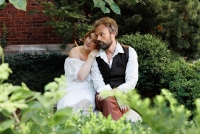
Kokandy Productions Presents SUNDAY IN THE PARK WITH GEORGE - August 13 – November 1, 2026 at The Chopin Theatre
18 July 2026 in Upcoming TheatreFollowing its critically acclaimed productions of Sweeney Todd and Into the Woods, Kokandy Productions once again celebrates the great Stephen Sondheim with a revival of his stunning…
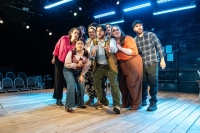
Pure Vocal Magic: Goodman’s Octet Redefines Musical Innovation
18 July 2026 in Theatre in ReviewDave Malloy’s Octet is a musical with daring aspirations, currently gracing the stage in a powerhouse co-production between the Raven…
Disney’s The Little Mermaid - The Performing Arts Center at Deerfield High School - Through August 2nd
18 July 2026 in Now PlayingThe Broadway musical - Disney's The Little Mermaid - will hit the Uptown Music Theater stage this summer in Deerfield,…

Good People - Theater Wit - Through August 23rd
17 July 2026 in Now PlayingWelcome to Southie, a Boston neighborhood where a night on the town means a few rounds of bingo, this month’s…
OPERATION MINCEMEAT: A NEW MUSICAL coming to CIBC Theatre September 29 – October 11
17 July 2026 in Upcoming TheatreBroadway In Chicago is thrilled to announce that single tickets for Tony® and Olivier Award®-winning OPERATION MINCEMEAT: A NEW MUSICAL, Entertainment Weekly’s #1…
Harris Theater Presents return of Chicago Black Dance Legacy Project, Aug. 28
16 July 2026 in Upcoming DanceFollowing last year’s smashing sold-out engagement, the Joan W. and Irving B. Harris Theater for Music and Dance proudly presents the return…

Oil Lamp Theater Announces its New Home
15 July 2026 in Theatre BuzzOil Lamp Theater, currently at 1723 Glenview Road, announces its new future home will be at the former Ten Ninety Brewing Co.…
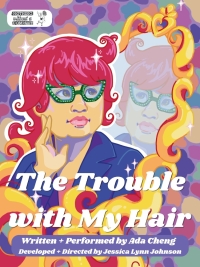
Nothing Without a Company presents The Trouble With My Hair: Coloring, Cutting, and Coming into Who I Am - Five Performances across Chicago, August 21st-30th
15 July 2026 in Upcoming TheatreNothing Without a Company (NWaC) is proud to announce five performances of The Trouble With My Hair: Coloring, Cutting, and…
Theater Wit presents the Chicago premiere of Adolescent Salvation, August 14-October 3
15 July 2026 in Upcoming TheatreOver the course of one night, through a haze of tequila, texting, and Taylor Swift, three teenagers banter, bicker, and…
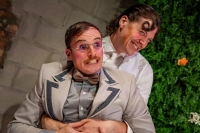
No Dogs’ Delivers an Unfamiliar Earnest
15 July 2026 in Theatre in ReviewOscar Wilde’s The Importance of Being Earnest is one of the greatest farces ever written. His wordplay caricatured high society,…

Northlight Theatre inaugurates the first season in its new home in Evanston with the World Premiere of Jeffrey Hatcher's new adaptation of The Front Page
14 July 2026 in Upcoming TheatreNorthlight Theatre, under the direction of Artistic Director BJ Jones and Executive Director Timothy J. Evans, opens its new theater in Evanston with The Front…

TimeLine Theatre announces cast & production team for world premiere THE BIRTH OF THE PILL
14 July 2026 in Upcoming TheatreA bold story about the controversial creation that reshaped women’s lives is the focus of The Birth of the Pill,…

City Lit announces World Premiere adaptation of SHANE, playing August 21 – October 4
13 July 2026 in Upcoming TheatreFull cast and production team have been announced for City Lit's season-opening production of SHANE, Mark Pracht's World Premiere adaptation…

PrideArts' World Premiere of WINDOWS, August 7 – 23
13 July 2026 in Upcoming TheatrePrideArts' 2026-27 season will open in August with the world premiere of Chicago-based playwright Matt Schutz's WINDOWS, a comedy of LGBT…
Steppenwolf Presents ALEX EDELMAN: WHAT ARE YOU GOING TO DO - August 12 – 16, 2026
13 July 2026 in Upcoming TheatreFollowing a critically-acclaimed, sell-out run of Just For Us at Steppenwolf Theatre and around the globe, Tony and Emmy Award-winning comedian Alex Edelman returns…
DIRTY DANCING: the MUSICAL WILL PLAY BROADWAY IN CHICAGO’S JAMES M. NEDERLANDER THEATRE SEPTEMBER 9 – 20
13 July 2026 in Upcoming TheatreGet ready to have the time of your life! Broadway In Chicago is pleased to announce that single tickets for DIRTY DANCING:…
A Thoughtful Evolution of Her Own Making: Overshadowed Theatrical Productions’ My Fair Lady
12 July 2026 in Theatre in ReviewOvershadowed Theatre Productions brings fresh energy to one of musical theatre’s most enduring classics, offering a spirited and thoughtful take…
A Legendary Transformation: John Mulaney’s Historic Night at Wrigley Field
12 July 2026 in Theatre in ReviewJohn Mulaney didn’t just perform at Wrigley Field. He made history there. In a venue synonymous with baseball legends, rock…
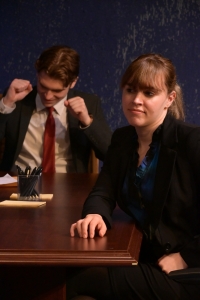
Powerhouse Performances on Display in Gwydion's Dry Powder
11 July 2026 in Theatre in ReviewIn the sharp-tongued world of Sarah Burgess’s Dry Powder, presented by Gwydion Theatre Company at the Greenhouse Theater Center, the…
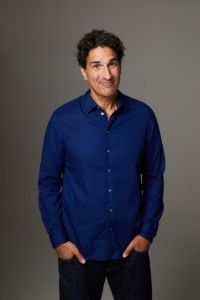
The Beautiful Overthinking of Gary Gulman’s 7th Hour
10 July 2026 in Theatre in ReviewGary Gulman brings his new tour, 7th Hour: An All New Standup Show, to The Den Theatre, offering Chicago audiences…

HEDWIG AND THE ANGRY INCH - Catalyst Ranch - Through July 26th
09 July 2026 in Now PlayingJK Entertainment is proud to announce the final production of their inaugural season: HEDWIG AND THE ANGRY INCH, the cult-classic created…


Latest Articles
-
 & Juliet - Auditorium Theatre - Through August 2nd
Written by Buzz Center StageBroadway In Chicago is delighted to announce the highly anticipated return engagement of & Juliet, the hilarious, 9-time Tony Award-nominated jukebox musical that flips the script on Shakespeare’s classic tragedy, imagining what would happen if Juliet didn’t end it all over…
& Juliet - Auditorium Theatre - Through August 2nd
Written by Buzz Center StageBroadway In Chicago is delighted to announce the highly anticipated return engagement of & Juliet, the hilarious, 9-time Tony Award-nominated jukebox musical that flips the script on Shakespeare’s classic tragedy, imagining what would happen if Juliet didn’t end it all over… -
Kokandy Productions Presents SUNDAY IN THE PARK WITH GEORGE - August 13 – November 1, 2026 at The Chopin Theatre
Written by Buzz Center StageFollowing its critically acclaimed productions of Sweeney Todd and Into the Woods, Kokandy Productions once again celebrates the great Stephen Sondheim with a revival of his stunning masterpiece Sunday in the Park with George, playing August 13 – November 1, 2026 in the intimate Chopin Downstairs Studio, 1543 W. Division St.…
-
Steppenwolf Theatre Names Stage Manager Laura D. Glenn Newest Ensemble Member
Written by Buzz Center StageSteppenwolf Theatre Company Artistic Directors Glenn Davis and Audrey Francis are thrilled to welcome veteran Production Stage Manager Laura D. Glenn into the company's world-renowned ensemble. Glenn, whose journey with Steppenwolf began as a summer intern in 1988, has worked on more than 100 Steppenwolf productions over…
-
The Lizard y El Sol Returns to Chicago Parks Through August 9th
Written by Buzz Center StageThe whole family can enjoy The Lizard y El Sol, returning by popular demand to 12 public spaces citywide this summer. Co-Directors Jamal Howard (Splish Splash: A Day on the Lake) and Raquel Torre (BOOK UP!) again take the reins of this beloved "Theater for…


Does your theatre company want to connect with Buzz Center Stage or would you like to reach out and say "hello"? Message us through facebook or shoot us an email at This email address is being protected from spambots. You need JavaScript enabled to view it..
*This disclaimer informs readers that the views, thoughts, and opinions expressed in the text belong solely to the author, and not necessarily to Buzz Center Stage. Buzz Center Stage is a non-profit, volunteer-based platform that enables, and encourages, staff members to post their own honest thoughts on a particular production.