
Displaying items by tag: Events Chicago
Eos Turns Ancient Anguish Electric in a Blazing Trojan Women

I’m going to start with a bit of backstory. In high school we all read (more or less voluntarily) The Iliad, Homer’s poetic exploration of a war that occurred during the Bronze Age yet continues to resonate with twenty-first century significance. Homer focuses (naturally!) on the guys: heroic Greek Achilles and his lover Patroclus; Hector, prince and hero of Troy; Greek King Menelaus vs. Paris, Prince of Troy. The women are pretty much either pawns or plunder. The Iliad begins with Hector’s baby bro Paris swiping Helen, wife of Menelaus. Menelaus and Paris duel, intending Helen to be the prize, but when Paris is defeated, Aphrodite delivers him to Helen’s bed before Menelaus has a chance to kill him – a good example of the ambivalent outcomes when the gods and goddesses mix it up with mortals. THE TROJAN WOMEN actually begins with an introduction by Poseidon (Brian Weddington), god of the sea, and Rachel Sledd as Athena, goddess of war.
THE TROJAN WOMEN analyzes the costs of war through the trauma and grief of the Trojan women after their city has been sacked, their husbands killed, and their remaining families taken away as slaves. It’s set in a present-day hospital maternity ward that’s serving as confinement for troublesome females. The Chorus (Morgan Lavenstein), that hallmark of ancient Greek drama who provides insight into events both on- and offstage, appears as a woman vastly pregnant and chained to the bed. She’s not best pleased at any of this, and no more tickled about rooming with Hecuba (Ashway Lawver), queen of vanquished Troy and vehemently unreconciled to its overthrow.
Ben Page is Talthybius, a Greek herald who pops in and out with news bulletins, each more hideous than the last. His is the task to reveal to the women their destinies: Hecuba will be given to the Greek king Odysseus, the widowed princess Andromache (Jazmine Mazique) is to be the concubine of Achilles’ son, and Cassandra (Liliana Mastroianni) is destined to become the conquering king Agamemnon’s doxy. Cassandra is clairvoyant, which one might assume to be an asset, but her mother has always dismissed her revelations as hysterical attention-seeking, especially as in such grievous times the future may not be something you really want to hear about. Andromache, Princess of Troy, has just borne a son to her ex-husband ex-Prince Hector, and Talthybius must also break the news that her baby must die, as the Greeks fear he will grow up to avenge his father Hector. And Helen (Morgan Burkey), whose beauty launched a thousand playwrights, ends up back with her husband Menelaus (Marcus Castillo). There’s lots of babies around – we’re in a maternity ward, remember? – and babies are a natural outcome of the unbridled rape that is ubiquitous in wartime; in fact, it appears that the primary position of women in conquered Troy is prone. Plus, ça change, plus c'est la même chose.
OK, are you more or less caught up on characters and setting? cos I need to tell you about Eos Theatre Company. Their stated mission is ‘to shine light into the darkness of the human condition and to amplify women’s voices and stories’, and they’ve chosen THE TROJAN WOMEN as their inaugural presentation because it does both brilliantly. The four co-founders of Eos united at the first table read of The Trojan Women in February 2025. That production was not only fabulous but propagative as well: the four decided to remount the show and simultaneously create a brand-new, all-woman company, named EOS in honor of the Greek Goddess of the dawn who flies her chariot across the sky, pulling back the curtain of night to usher in the light of the sun.
Rachel Sledd is a born-and-bred Chicagoan who lived and acted between New York and Los Angeles until 2006, when she returned to her hometown. Ashway Lawver grew up in Los Angeles. Her passion for the art and study of Acting led her to Chicago to attend The School at Steppenwolf and she found in Chicago her true theatrical home. Morgan Lavenstein began acting in Baltimore at the ripe old age of 8. She attended The School at Steppenwolf and Chicago became her forever home. Morgan Burkey is originally from Texas. In 2017 she was accepted into School at Steppenwolf, where she met fellow co-founders Morgan Lavenstein and Ashway Lawver. Amazing, innit, how extraordinary people from far-flung origins are drawn together? Call it destiny, fate, or kismet, in this case it’s providential.
The production team was as superb as the cast. Co-founder Rachel Sledd was Director and Michael Lesko Stage Manager. Shayna Patel’s Set Design portrayed the ambience before the actors took the stage. The story was encompassed by Mason Absher’s Sound; his choices of music interlocked perfectly and toward the end the impassioned sound pulled the storyline together, as did Garrett Bell’s breathtaking lighting effects.
Seeing THE TROJAN WOMEN was thrilling not only for the splendid play itself, but for the chance to witness the emergence of Eos, a feminist company whose development is sure to beguile and invigorate Chicago for years to come.
Running through April 18th at Bramble Arts Loft
RECOMMENDED
This review is proudly shared with our friends at www.TheatreInChicago.com.
Court Theatre Announces 2026-2027 Season

Under the leadership of Marilyn F. Vitale Artistic Director Avery Willis Hoffman and Executive Director Angel Ysaguirre, Court Theatre is proud to announce its 72nd season. As America marks 250 years of nationhood, Court Theatre, as Chicago's premier stage for classic work, responds with a season that examines our shared pursuit of Life and Liberty.
The 2026/27 season will feature the American premiere of Winsome Pinnock's Tituba, set in colonial Salem against the backdrop of the infamous witch trials, directed by Associate Artistic Director Gabrielle Randle-Bent, with dramaturgy by Avery Willis Hoffman, performed at the University of Chicago's iconic Rockefeller Memorial Chapel. Following Tituba, we move to twentieth-century Pittsburgh one last time as Resident Artist Ron OJ Parson directs August Wilson's masterwork, Joe Turner's Come and Gone, bringing his staging of the August Wilson American Century Cycle at Court Theatre to a triumphant conclusion. We then proudly feature Luis Alfaro's Mojada, a blistering reimagining of the Greek classic Medea, as a testament to twenty-first century immigrant life in Chicago, produced in partnership with Teatro Vista Productions and directed by Wendy Mateo and Denise Yvette Serna. The season concludes with safronia, an epic new opera that highlights a family's fight for justice across generations, created by inaugural Chicago Poet Laureate avery r. young and directed by Timothy Douglas.
Court Theatre's 72nd season is an exploration of Life, Liberty, and the Pursuit. America is at an undeniable inflection point. We, as a set of complex communities, are reexamining our systems and very ways of being, challenging long-held beliefs, and asking urgent questions. Theatre—which we believe to be a foundational pillar of civic discourse—helps us to find new pathways through complicated times. The 2026/27 season peers deep into the heart of distinctly American stories—with all their nuance, contradictions, and beauty—and reaffirms the crucial resilience of the classics.
Marilyn F. Vitale Artistic Director Avery Willis Hoffman shares, "As our country passes a historic milestone, Court's 2026/27 season works towards demonstrating theatre's place at the center of civic life. Our art form has historically offered fresh perspectives, inspired spirited discourse, and created unique and shared experiences that help us better understand each other and ourselves. In this moment of intense reflection, we are re-committing to this complicated, but basic, mission, all of which feels increasingly urgent, and getting to the heart of how theatre can make a real impact. In my first full season as the new Marilyn F. Vitale Artistic Director, I am proud that Court is leading these conversations."
Executive Director Angel Ysaguirre adds, "The 2026/27 season affirms that American stories are varied, complex, and beautiful, and it has something for everyone. From Resident Artist Ron OJ Parson's historic completion of the August Wilson Century Cycle, to a new opera, to a national premiere, to a Chicago-specific adaptation, this season stretches our expectations and expands the boundaries of our art form. This is exciting for us, our audiences, and the artists we're working with—some of whom we're thrilled to welcome to Court's stage for the first time. We can't wait to present a season that is as varied, complex, and beautiful as the America outside our doors."
The first production in Court Theatre's 2026/27 season begins in December 2026, markedly later than years past, and will take place offsite at the University of Chicago's Rockefeller Memorial Chapel. Court's Abelson Auditorium will be dark for the summer and fall of 2026 as we modernize our lighting equipment and implement a new fall protection system. These changes will create a safer working environment for theatre technicians, and provide necessary and exciting updates to our intimate house.
The 2026/27 Court Theatre Season Up Close:
AMERICAN PREMIERE
TITUBA
By Winsome Pinnock
Directed by Associate Artistic Director Gabrielle Randle-Bent
Dramaturgy by Marilyn F. Vitale Artistic Director Avery Willis Hoffman
Limited Engagement at Rockefeller Memorial Chapel
December 2026, dates to be announced
Performed in the hallowed halls of the University of Chicago's Rockefeller Memorial Chapel, the 2026/27 season opens with the American premiere of Tituba—a theatrical experience that offers a new lens on pre-Revolutionary War America through spiritually charged language, music, and dance.
In this solo performance, Tituba—the real-life person accused in the Salem witch trials of 1692 and featured in Arthur Miller's classic The Crucible—invites the audience to journey through her mystical world to hear her side of the story. With care and wry humor, she details her history with the girls in Salem Village, her beloved mother and husband, Reverend Parris's rage, the violence of enslavement, and her unspoken indigenous name, building to a scathing climax and the ignition of historic mass hysteria.
Set against the backdrop of the institution that accused Tituba centuries ago, Associate Artistic Director Gabrielle Randle-Bent directs, with dramaturgy by Marilyn F. Vitale Artistic Director Avery Willis Hoffman. Together, they bring Tituba's life story to light in a sacred place, uplifting her voice and showcasing the transformational power of storytelling.
JOE TURNER'S COME AND GONE
By August Wilson
Directed by Resident Artist Ron OJ Parson
January 8 - February 7, 2027
More than twenty years in the making, Resident Artist Ron OJ Parson completes a defining chapter of his artistic legacy. With Joe Turner's Come and Gone, Parson completes August Wilson's American Century Cycle and joins an elite circle of directors who have staged all ten plays at the same theatre.
It is 1911, and Harold Loomis and his daughter, Zonia, have been on the road for years, searching for Zonia's mother and, unbeknownst to Harold, chasing his forgotten song. Their journey leads them to Seth Holly's boardinghouse, where they meet Holly, his wife, and fellow boarders who, like them, are in relentless pursuit of love, identity, freedom, and purpose.
Wilson's iconic, evocative prose and vivid characters shine in this portrayal of a nation haunted by slavery, with spirits around every corner and no escape in sight.
Ron OJ Parson's residency is made possible by The Joyce Foundation.
MOJADA
By Luis Alfaro
Directed by Wendy Mateo and Denise Yvette Serna
Presented In Partnership with Teatro Vista Productions
March 12 - April 11, 2027
An adaptation of an ancient classic tale of revenge, sacrifice, and the high price of pursuing freedom, Mojada renders Euripides's Medea myth urgently and achingly alive in the city of Chicago.
Medea survived a treacherous journey from Mexico to the United States in search of a better life, but the promise of the American Dream is quickly unravelling. She sews exquisite garments in her backyard, suffocated by fear. Her son sheds tradition as fast as he can, trading huaraches for Vans. And her husband grows distant, seduced by ambition and proximity to power. Trapped between who she was and who America demands she become, Medea finds herself in a standoff with the very dream she risked everything to reach.
Co-directed by Teatro Vista Productions' Artistic Director Wendy Mateo and Artistic Collective member Denise Yvette Serna, Mojada confronts the contradictions at the center of American identity: opportunity and erasure, belonging and betrayal. Both a love letter and a searing indictment, this electrifying production asks: What are we willing to sacrifice in the pursuit of liberty?
safronia
Written, composed, and scored by avery r. young
Directed by Timothy Douglas
May 14 - June 13, 2027
An extraordinary new opera from inaugural Chicago Poet Laureate avery r. young, safronia blends gospel, blues, funk, folklore, poetry, and history to tell a tale of triumph and trauma, ownership and loss. Banished from their land, the Booker family is deadset on reclaiming what's theirs and granting their patriarch's last wish. But one final reckoning remains: safronia must avenge her father's death.
safronia is an epic poem told through the vibrant music of the hundreds of thousands who journeyed to Chicago during the Great Migration—and a revelatory conclusion to the 2026/27 season. It celebrates the sonic legacy of artists like Curtis Mayfield, Nina Simone, and Oscar Brown Jr., and completely reimagines the scope of the American classical music landscape.
After mounting a concert-style performance at Lyric Opera, composer avery r. young and director Timothy Douglas bring a fully realized production to Court's intimate venue, promising an evening that shimmers, soars, and binds us in a communal American history.
safronia was workshopped and commissioned by Lyric Opera of Chicago, with its world premiere concert-style production at Lyric Opera House on April 17-18, 2026.
Subscription Information
Three and four-play subscriptions to Court's 2026/27 season range from $120 to $300 and are on sale now. Please note, seating at Rockefeller Memorial Chapel is general admission; subscribers will receive access to the preferred section. To purchase a subscription or to receive more information, call the Court Theatre Box Office at (773) 753-4472, or visit Court's website at CourtTheatre.org. Individual tickets for Tituba will go on sale September 1st. Individual tickets for all other productions will go on sale October 1st.
About the Artists
WINSOME PINNOCK (Tituba Playwright) is a recipient of the 2022 Windham-Campbell Prize. She was born in Islington, North London, and is an award-winning playwright and dramaturg. Her work has been produced on the British stage and internationally since 1985. She was the first black British female writer to have a play produced by the Royal National Theatre. Winsome was Associate Professor in Drama at Kingston University from 2005 to 2019, and was Senior Visiting Fellow at Cambridge University. She has worked as a dramaturg with the Royal National Theatre's New Views scheme as well as with the Royal Court's International Department. The prizes awarded to her work include the George Devine Award, The Pearson Plays on Stage Award and the Unity Theatre Trust Award.
GABRIELLE RANDLE-BENT (Tituba Director, Associate Artistic Director) is a mother, director, dramaturg, and scholar. Her directorial highlights include A Raisin in the Sun; Antigone; The Island; and The Tragedy of Othello, The Moor of Venice (co-directed with Charles Newell) at Court Theatre; 1919 (Steppenwolf); and The Year of Magical Thinking (Remy Bumppo). She is a co-founder of the Civic Actor Studio, a leadership program of the University of Chicago's Office of Civic Engagement. She has a BA in Drama from Stanford University, an MA in Performance as Public Practice from the University of Texas at Austin, and a PhD from Northwestern University.
DR. AVERY WILLIS HOFFMAN (Tituba Dramaturg, Marilyn F. Vitale Artistic Director) is proud to join Court Theatre. Avery recently served as inaugural Artistic Director, Brown Arts Institute and Professor of the Practice of Arts and Classics at Brown University. Over the last two decades, she has curated multidisciplinary projects as inaugural Program Director at Park Avenue Armory, led content development for the Smithsonian's National Museum of African American History, managed Avery Productions, and produced multiple artistic collaborations with director Peter Sellars. A Marshall Scholar, Avery earned a DPhil and MSt in Classical Languages and Literature from Oxford, and a BA in Classics and English from Stanford.
AUGUST WILSON (Joe Turner's Come and Gone Playwright) authored Radio Golf, Joe Turner's Come and Gone, Ma Rainey's Black Bottom, The Piano Lesson, Seven Guitars, Fences, Two Trains Running, Jitney, King Hedley II, and Gem of the Ocean. Mr. Wilson's works garnered many awards, including Pulitzer Prizes for Fences (1987) and for The Piano Lesson (1990); a Tony Award for Fences; Great Britain's Olivier Award for Jitney; as well as seven New York Drama Critics Circle Awards for Ma Rainey's Black Bottom, Fences, Joe Turner's Come and Gone, The Piano Lesson, Two Trains Running, Seven Guitars, Jitney, and Radio Golf. He was an alumnus of New Dramatists, a member of the American Academy of Arts and Sciences, a 1995 inductee into the American Academy of Arts and Letters, and on October 16, 2005, Broadway renamed the theatre located at 245 West 52nd Street, The August Wilson Theatre. Mr. Wilson was born and raised in the Hill District of Pittsburgh, Pennsylvania, and was posthumously inducted into the Theater Hall of Fame in 2007.
RON OJ PARSON (Joe Turner's Come and Gone Director, Resident Artist) is Resident Artist at the Tony Award-winning Court Theatre. Credits include East Texas Hot Links, The Lion in Winter, Arsenic and Old Lace, and Two Trains Running at Court Theatre; HYMN (Chicago Shakespeare Theater); Twisted Melodies (Northlight Theatre); Toni Stone (Goodman); Trouble in Mind (TimeLine Theatre); Relentless (TimeLine and Goodman); and The Reclamation of Madison Hemings (Indiana Repertory Theatre). Ron received a 3Arts Make a Wave grant in 2021, the 2022 Zelda Fichandler Award, a University of Chicago Diversity Award, many Jeff Awards and Black Theatre Alliance Awards, the LA NAACP Award for Jitney; he is a Joyce Foundation grantee, and was named Chicagoan of the Year for Theater by the Chicago Tribune. Ron is a proud member of AEA, SAG-AFTRA, and SDC. www.ronojparson.net.
LUIS ALFARO (Mojada Playwright) is a Chicano playwright, poet, and performance artist born and raised in downtown Los Angeles. He is the 2024 World Theatre Artist for Theatre Communications Group (TCG) and the recipient of the 2024 award in literature from the American Academy of Arts & Letters. He was the Associate Artistic Director of Center Theatre Group at the Music Center of Los Angeles County (2021-2022, 1995-2005), home of the Mark Taper Forum, and the Ahmanson and Kirk Douglas Theaters, where he produced over one hundred and fifty new play commissions, productions, workshops, and readings. His plays include Aztlan, Earlimart, The Travelers, Electricidad, Oedipus El Rey, Mojada, Delano, Body of Faith, Alleluia the Road, Black Butterfly, Bruja, and Straight as a Line. He was a student of the playwright Maria Irene Fornes, performance artist Scott Kelman, and a product of the Inner-City Cultural Center in downtown Los Angeles.
WENDY MATEO (Mojada Co-Director) is the Artistic Director of Teatro Vista Productions, and an actor, writer, director, and filmmaker. Mateo has been seen on stages throughout Chicago, including at Lookingglass Theatre, where she is an ensemble member. Mateo's directing credits include the play Not for Sale 2.0 by Guadalis del Carmen at UrbanTheater Company, ¡Bernarda! By Emilio Williams at Teatro Vista Productions and the upcoming world premiere of The Brief and Wondrous Life of Oscar Wao at Goodman Theatre. On television and film, Mateo can be seen on Chicago Med, as Ronnie in Station Eleven, and in Steve McQueen's Widows. As a filmmaker, Wendy has written and produced three short films including the latest, Hair, written and directed by Lorena Diaz and Wendy Mateo.
DENISE YVETTE SERNA (Mojada Co-Director) is an award-winning theatre practitioner in Chicago, Illinois. Credits include productions and new play development with Teatro Vista Productions, Lyric Opera of Chicago, MCA Chicago, Goodman Theatre, Steppenwolf Theatre Company, The Neo-Futurists, Paramount Theatre, Bramble Theatre Company, Strawdog Theatre Company, Prop Thtr, and Global Hive Laboratories. Denise has facilitated international workshops, productions, readings, fundraisers, panels, and festivals to promote activism for racial equity, accessibility, climate justice, gender based violence, immigration, literacy, community collaboration, and collective joy. deniseyvetteserna.com.
avery r. young (safronia Playwright, Composer, and Librettist) is Chicago's inaugural Poet Laureate, American Poet Laureate Fellow, interdisciplinary artist, and a co-director of The Floating Museum. His art practice spans from the co-curation of The Chicago Architecture Biennial 5, This Is A Rehearsal, to written and performance works featured in national and international exhibitions, theater, festivals, and anthologies. He has scored Lise Haller Baggeson's Hatorgrade Retrograde: The Musical, scoring Red Clay Dance's Rest.Restore.Nourinsh.Move.Heal, and produced two albums, booker t soltreyne: a race rekkid and tubman. The latter is the soundtrack to his volume of poetry titled, neckbone: visual verses [Northwestern].
TIMOTHY DOUGLAS's (safronia Director) credits include The Color Purple (Signature Theatre, Helen Hayes Award), She Who Dared (Chicago Opera Theater), Champion (Boston Lyric Opera), Blue (New Orleans Opera), the premiere of Something Happened in Our Town (Children's Theatre Company), Frankenstein (Classic Stage Company), and the Great Theatre of China production/tour of Disgraced. He has made productions for Arena Stage, Berkeley Rep, Cincinnati Playhouse in the Park, Cleveland Playhouse, Denver Center, Downstage New Zealand, Folger Shakespeare, Guthrie Theater, Juilliard, Kennedy Center, Mark Taper Forum, Milwaukee Rep, National Theatret Norway, Portland Center Stage, Red Bull, and Steppenwolf, among many others, including Yale Rep's world premiere of August Wilson's Radio Golf. timothydouglas.org.
About Court Theatre
Winner of the 2022 Regional Theatre Tony Award, Court Theatre reimagines classic theatre to illuminate our current times. In residence at the University of Chicago and on Chicago's historic South Side, we engage our audiences with intimate and provocative experiences that inspire deeper exploration of the enduring questions that confront humanity and connect us as people.
Chicago Takes Its Shot: Hamilton’s 2026 Comeback

Nearly a decade after it first upended the American musical, Hamilton returns to Chicago’s CIBC Theatre as part of Broadway In Chicago’s 2026 season, and its cultural voltage hasn’t dimmed one bit. Inspired by Ron Chernow’s book, Alexander Hamilton, Lin‑Manuel Miranda’s genre‑shifting epic — part biography, part political thriller, part hip‑hop opera — still hits with the force of a story determined to be heard. Having seen it in its inaugural year, I can say this revival lands even sharper, richer, and more assured than ever.
Alexander Hamilton didn’t just witness the birth of the United States — he helped engineer its architecture. As a delegate at the Constitutional Convention, he argued fiercely for a unified national government, and though not the primary drafter, he became one of its most influential defenders, authoring the majority of The Federalist Papers to secure the Constitution’s ratification. His imprint only deepened from there: he built the nation’s financial system from the ground up, established the U.S. Treasury, championed a national bank, and laid the groundwork for the country’s credit, industry, and economic identity. In Hamilton, these achievements aren’t treated as dry civics lessons but as the combustible fuel of a man determined to transform a fragile collection of states into a functioning nation — a legacy as complicated as it is foundational. The musical captures not just his ascent, but the way his ideas became the scaffolding of a country still deciding what it wanted to be.
Through songs like “My Shot,” “The Room Where It Happens,” and “Hurricane,” Miranda reframes the Founding Fathers not as marble statues but as flawed, hungry, deeply human figures fighting to define a nation and themselves. What Miranda is ultimately trying to convey — and what this production underscores beautifully — is that America’s story has always been messy, contested, and built by people who rarely saw themselves as the heroes of their own narrative.
Director Thomas Kail’s staging remains a masterclass in kinetic storytelling. The turntable choreography, the razor‑sharp transitions, and the way bodies carve through space all contribute to a sense of history constantly in motion. Under his direction, the show feels both epic and immediate — a revolution unfolding in real time.

l-r-Tyler Fauntleroy as Alexander Hamilton and A.D. Weaver as George Washington in Hamilton at CIBC Theatre. Photo by Joan Marcus.
What continues to astonish about Hamilton is how much storytelling power resides in its deceptively simple visual world. David Korins’ now‑iconic set — all timber, ropes, brickwork, and scaffolding — frames the action like an unfinished nation still under construction. The exposed architecture becomes a living metaphor for the country Hamilton is trying to build, while the revolving stage keeps history literally turning beneath the actors’ feet. Paul Tazewell’s costumes layer silhouettes with subtle modern inflections, allowing the cast to move with the velocity the score demands while still grounding the story in its 18th‑century roots. The palette shifts almost imperceptibly as alliances form and fracture, and the contrast between the Schuyler sisters’ elegance, the soldiers’ grit, and King George’s absurd opulence adds texture to every scene. Together, the set and costumes create a world that feels both historical and urgently contemporary — a perfect visual match for Miranda’s reimagined revolution.
This Chicago cast brings its own intensity. The Chicago engagement of Hamilton boasts a powerhouse company led by Tyler Fauntleroy, who delivers a relentless, razor‑sharp Alexander Hamilton—equal parts tactician, poet, and live wire. His performance feels carved from pure momentum, capturing both Hamilton’s brilliance and his self‑destructive drive. Opposite him, Jimmie “J.J.” Jeter turns in a magnetic, exquisitely controlled Aaron Burr, layering charm, calculation, and simmering envy into a portrayal that peaks beautifully in a soul‑baring “Wait For It” and a show‑stopping “The Room Where It Happens.” Lauren Mariasoosay brings warmth, emotional clarity, and a quiet steel to Eliza Hamilton (through April 12th), while Amanda Simone Lee commands the stage with fierce intelligence and vocal fire as Angelica Schuyler. Lily Soto shifts effortlessly between the wide‑eyed innocence of Peggy Schuyler and the seductive, wounded edge of Maria Reynolds through April 12th, with Nadina Hassan stepping into the roles beginning April 14th. A true force, A.D. Weaver anchors the production with statesmanlike gravitas as George Washington, and Christian Magby all but steals the show with his dual swagger as Lafayette and Jefferson—two performances so distinct they feel like separate universes. Nathan Haydel brings youthful fire and heartbreaking vulnerability to both John Laurens and Philip Hamilton, while Eddie Ortega grounds the ensemble with muscular presence as Hercules Mulligan and James Madison. And rounding it out, Matt Bittner delivers a perfectly petty, wickedly funny King George III, milking every entrance for maximum delight, stealing the moment with a perfectly calibrated blend of comedy and menace in “You’ll Be Back.”.
Musically, the production remains a marvel. The blend of hip‑hop, R&B, traditional musical theatre, and lyrical density still feels revolutionary, and the orchestra at the CIBC gives the score a muscular, propulsive energy. Even familiar numbers feel newly alive in this space. The production is expansive and brimming with moments that land with exhilarating force.
The run at the CIBC Theatre continues through April 26th, giving audiences a generous window to revisit — or finally experience — the show that redefined what Broadway could be.
In a city that knows its way around bold storytelling, Hamilton still stands out. It’s a reminder that history is not a fixed monument but a living argument — and that the voices shaping it are far more diverse, complicated, and compelling than the textbooks ever let on. Whether you’re seeing it for the first time or the fifth, this production makes the revolution feel brand new.
Highly recommended.
For tickets and/or more show information, click here.
This review is proudly shared with our friends at www.TheatreInChicago.com.
Delayed by Pandemic, ‘The Ally’ Even More Timely in Rock Solid Chicago Premier

Since its original 2020 Off-Broadway debut was postponed until 2024 by the Covid-19 Pandemic, Itamar Moses’ “The Ally” has likely ripened in its effectiveness. Not because the play has changed, but because the world has.
A 2025 Pulitzer finalist, now in its Midwest premier at Theater Wit, it revolves around the ambivalence of Jewish college writing professor Asaf (Jordan Lane Shappell in a sterling performance) as his Black student Baron (DeVaughn Asante Loman) asks him to sign-on to a manifesto decrying the killing of his cousin by campus police.
Initially sympathetic to this cause, Asaf becomes reluctant to sign on, even though he agrees with its indictment of systemic injustice against people of color. His sticking points? A section ties in charges against Israel for operating an apartheid state vis a vis Gaza, condemning what it describes as policies of genocide against Palestinian people—even more timely topics today given current political discourse and a war in Iran.
Through a fast-paced dialog, the playwright puts on stage detailed explications of points of view that are known to trigger family battles during holiday dinners, or have become verboten altogether in the interests of peaceful coexistence. There seems nowhere safe to listen to opposing positions.
But not so on the stage in “The Ally.” Expertly directed by Jeremy Weschler, who has led a stellar cast to precision delivery with impeccable timing, this production is remarkable simply on the basis of how well rehearsed the performers seem to be in a complicated, granular script.
In publicizing the play, Weschler says, "Before October 7th, I — like a lot of American Jews on the left — held two ideas at once: that Israel was a haven and that the occupation was wrong. Itamar Moses saw, honestly before I did, that those two ideas were becoming impossible to hold simultaneously. But there are always two ways to answer the question ‘What do I believe?': what do I think, and what do I feel? Where we land on that spectrum is a constant negotiation between ourselves and the world around us. What ‘The Ally’ asks — what it really demands — is that we face that negotiation honestly. Can we be good people when our hearts and our heads aren't aligned?”

In the main setting, a library meeting room, impassioned, invested characters put forth their positions. Most have direct experience of that about which they speak. This is both enthralling and compelling, emotionally engaging at the peak moments, as we hear them passionately expounded their positions. Each felt equally compelling, even though they are often diametrically opposed.
Moses is a skillful playwright. He has wrapped the political discourse in a romantic drama, the relationship between Asaf and his wife Gwen (K Chinthana Sotakoun), a faculty member who is of Asian descent. The play opens with a skillful rendering of a couple tentatively probing and challenging each other in a very realistic way.

That scene changes from the living room to campus. Having heard from Baron, and as Asaf tussles with signing the manifesto, the playwright ups the stakes. Palestinian student Farid, (Arman Ghaeini) and his “ally” (a recurring theme) Jewish student Rachel (Mira Kessler), ask Asaf to support the appearance of a noted speaker who questions Israel’s actions in Gaza. Asaf agrees to be their student group sponsor authorizing the speaker.
When Reuven (Evan Ozer) a Jewish PhD student, discovers this, he barges in on Asaf to lay out all the reasons this speaker should not be allowed to address the student body. While Israel may seem brutal at home, he contends, one must think of it in context: Israel is surrounded by middle eastern states that oppose its very existence. Any presentation that might undermine Israel’s welfare should be banned.
Moses’s script is designed to give each of the characters a long moment in the spotlight. For relief he reverts to scenes between Asaf and Gwen. Each of the characters is articulate and brilliant. When Reuven makes his case for Israel, for example, he also recounts accurately the arguments of its opposition as he dispels them.
Most intriguing, and emotionally compelling, is Farid. In his first few appearances he is reticent, retreating, polite. But when the playwright offers him his featured monolog, Farid expresses the suffering of Palestinians, and then, moves to a vehement display of their anger. Arman Ghaeini runs away with this scene, engendering from me empathy and even catharsis. When have I heard this expressed? Never before.
Likewise for Baron, who is generally rather laconic. As the debates on stage progress over the connections between the Israel-Palestinian conflict and racial injustice in the U.S., Baron has his moment for a passionate peroration, and Loman's delivery is powerful.
Throughout, Asaf remains the buffeted everyman, conscious of the warring sympathies within himself, and unable to resolve them. The play has some weaknesses as a drama—an old flame now community activist Nikea (Sharyon Culberson) appears, igniting jealousy in Gwen. But as an expression of the struggle we experience societally, through the vehicle of the conflicted Asaf—that weakness doesn’t hamper the impact and value of “The Ally.”
It is worth noting “The Ally” was written before the Hamas strike against Israel in October 2023. That event killed 1,200 and saw 251 taken hostage. In its subsequent defense, Israel has retaliated and sought to destroy Hamas, killing 73,000 Palestinians and isolating Gaza. Also noteworthy: this Chicago production is only the second staging of the work. Perhaps its incendiary subject makes producers skittish.
But “The Ally” has a heightened immediacy today, and should be seen. Highly recommended, “The Ally” runs through May 2, 2026 at Theater Wit in Chicago.
Extended through May 17th!
This review is proudly shared with our friends at www.TheatreInChicago.com.
Raiders Reborn: Indy, Williams, and the Chicago Philharmonic Bring the Adventure Alive

Auditorium Philms’ presentation of Steven Spielberg’s 1981 classic Raiders of the Lost Ark with the Chicago Philharmonic Orchestra transforms a beloved blockbuster into a full‑body cinematic jolt. Indiana Jones’ adventures play out across the towering Auditorium Theatre screen, but it’s the live orchestra that makes the familiar feel astonishingly new. John Williams’ legendary score doesn’t just sit beneath the film—it surges through it, electrifying every frame. Each chase, each narrow escape, each sweeping desert vista lands with heightened force as the Philharmonic unleashes the “Raiders March” and the score’s darker, more mysterious undercurrents with breathtaking clarity. The result is an experience that feels both nostalgically rooted in movie history and thrillingly alive in the present moment.
Set in 1936, Raiders of the Lost Ark follows archaeologist and adventurer Indiana Jones (Harrison Ford) as he’s recruited by U.S. Army Intelligence to locate the Ark of the Covenant, a biblical artifact believed to hold immense supernatural power. The Nazis are already searching for it, hoping to harness its destructive force for their military ambitions.
Indy’s quest takes him from the jungles of South America to the snowy mountains of Nepal and the bustling streets of Cairo. Along the way, he reunites with his tough, resourceful former flame Marion Ravenwood (Karen Black), and together they battle traps, treachery, and relentless Nazi agents. Standing in Indy’s way is his rival, the suave and morally slippery archaeologist René Belloq (Paul Freeman), who has aligned himself with the Nazis to claim the Ark for his own purposes.
The adventure barrels toward a race‑against‑time finale as Indy fights to keep the Ark out of enemy hands—culminating in one of the most unforgettable climaxes in action‑adventure cinema.
The stunning Auditorium Theatre amplifies the magic, its grand acoustics allowing the orchestra’s sound to bloom without ever overpowering the action onscreen. The coordination between musicians and film is so precise that it feels as though the score is being created in the moment, perfectly synced to every crack of Indy’s whip and every pulse‑pounding twist. The result is a seamless blend of concert and cinema, a reminder of just how essential Williams’ music is to the film’s spirit, humor, and sense of adventure.

Conductor Thiago Tiberio.
Brazilian conductor Thiago Tiberio brings remarkable artistry and precision to the podium, making him one of the standout talents in the world of film‑in‑concert performance. Known for his expert live‑to‑picture synchronization, Tiberio has led orchestras in acclaimed presentations of Star Wars, The Nightmare Before Christmas, Coco, Lord of the Rings, and other major studio projects across the globe. His background spans opera, multimedia productions, and award‑winning work recognized by organizations including the United Nations. What truly distinguishes Tiberio is his dynamic presence and emotional clarity - he draws rich, expressive playing from musicians and elevates every score he touches, turning familiar soundtracks into thrilling live experiences.
Each time Indy charges onto the screen with a burst of heroism - or the Chicago Philharmonic unleashes a perfectly rendered cue from Williams’ score - the audience responds as one. Cheers ripple through the theatre, a spontaneous wave of energy that makes the experience feel communal and electric.
Whether you’ve seen Raiders a dozen times or are discovering it for the first time, this live‑orchestra presentation is a joyous celebration of movie magic - an electrifying tribute to one of Hollywood’s most enduring collaborations.
As a newly crowned favorite way to experience a film classic, Auditorium Philms makes a strong case for returning again and again. Their upcoming slate keeps the magic alive, offering even more opportunities to see iconic movies reimagined through the power of live orchestral performance. Keep an eye on their calendar - you won’t want to miss the cinematic treasures still to come.
Saturday, May 16, 2026 • 7:30 PM
Auditorium Philms Presents
Rocky In Concert – 50th Anniversary
with the Chicago Philharmonic
Saturday, September 26, 2026 • 7:30 PM
Auditorium Philms Presents
Top Gun: Maverick
Saturday, October 24, 2026 • 7:30 PM
Auditorium Philms Presents
Edward Scissorhands In Concert – Live to Film
with the Chicago Philharmonic
Saturday, December 19, 2026 • 7:00 PM
Auditorium Philms Presents
Home Alone 2: Lost in New York – Live in Concert
For tickets and/or more information, visit https://www.auditoriumtheatre.org/events/buy-tickets/auditorium-philms.
About Face’s Modern Gentleman Adds a Valuable Piece to a Fascinating Puzzle

There are thousands of stories you’d love to see brought to the stage. Stories that slip into the lives of people who walk through the world either unseen or are barely considered by those possessing more standard existences. People who, because of the way they look or talk or are intrinsically wired to move through life find themselves on the periphery. Or who mask their true selves by pretending to be something they’re not. With all the same desires, hopes and dreams of a common human being, something about them hinders them from freely striving for type of self-actualization we all crave.
How they see themselves, relate to others and fulfill their aspirations can produce illuminating and often engrossing stories about who and what we, as a species, inherently are. They’re in the family of stories queer focused About Face Theatre has been telling boldly and honestly since 1995. And it’s current production by playwright Preston May Allen, Modern Gentleman, fits snugly in the theater company’s oeuvre of truth.
By stepping into and exploring the life of Adam, a trans man living in present day New York, About Face again provides a platform to enlighten through alternative storytelling. Uniquely structured, and under Landree Fleming’s novel direction, Modern Gentleman presents ideas, beliefs and circumstances that provoke serious and stimulating contemplation. Despite all the things it either suggests or leaves a mystery, it’s the common threads of life that stand out most distinctly.
Passion, drama and rewardingly precocious humor are the trinity that pervade this profile of a person trying to live their most complete life in the gender they feel most comfortable.
Its passion that opens the play as Adam (Alec Phan) and his girlfriend Lily (Kaylah Marie Crosby) tumble through the front door of Adam’s apartment tearing at each other’s clothes in their rush to get busy between the sheets. A young articulate couple, they’ve been together for five years and have that satisfyingly acclimated aura of a happily nested pair. The only odd note is that after a certain point, they seem to be a little awkward about undressing in front of one another.
It isn’t long before the barely visible specter of foreboding that steals over them gets pulled from the shadows. Sometime since they’ve been together, Adam’s found the courage to confess his desire to transition from being a woman and become male. When they originally met, they were two women, lesbians whose relationship led to love. It may have been a startling revelation for Lilly. But that depends on the amount of candor that defined their union. Others in her position would have left immediately. Lilly stayed, but two years into a regimen of testosterone treatments and the transformation of her once girlfriend’s physical appearance, and Lilly is experiencing a change of heart. She eventually tells Adam she can’t go do it and leaves.
Her departure though doesn’t prove final. She keeps resurfacing, coming back to the apartment to house sit and care for Adam’s diabetic cat when he needs to travel for work. Stopping by repeatedly to clarify her position and probe his. Through their back and forth, we get an enlightening, indeed an enlivened picture of the complexity and far-reaching ripple effects a single very personal decision can produce.
Because they’re both so expressive, so fluent in disclosing their innermost feelings, we learn the rupture isn’t at heart due to superficialities. It seems to center on personal perception of self and how they both want to experience intimacy beyond sex.
Because he has allies, Adam enjoys the benefit of other insights. His friend Samuel (Omer Abbas Salem), whose “gayese” is superb and whose piquant wit is lined with razors, has tons of excellent advice. Adam’s sister Natalie (Ashlyn Lozano) is equally supportive and just savvy as Sam. We never know why neither Samuel or Natalie seem to care for Lily who, despite the amount of time she has on stage and the good sense she consistently demonstrates, seems bereft of boosters in her corner.
A woman Adam meets at a family social event and eventually hooks up with, Alycia, played with wonderfully brash assurance by Emma Fulmer, helps paint a bracing image of what dating looks like 2 ½ decades into the 21st century. Through her frankness, she lets Adam get a clearer picture of how a trans man who hasn’t had any below the belt alterations can fit into today’s sexual cosmos.
Milo Bue’s subdued polished set offers an unobtrusive and pleasing backdrop to this edifying drama of the heart. Ethan Korvne’s sound design and original music bring unexpected texture to Adam’s story and shows how well composed sound elements can complement dramatic theater. And thanks to Catherine Miller’s cosmopolitan approach to casting, we gain a promising view into the possible.
Language that sometimes strays toward the ponderous, and occasionally less than fluid scene transitions, prove only mildly distracting. They don’t lessen the suspense of how Adam will come to fully accept himself as the man he now is rather than some fantasized ideal. Nor do they leave us less curious of about how that kind of epiphany will impact his relationship with Lily.
What Modern Gentleman does most gratifyingly is shed thoughtful and intelligently humane light on one of the unseen and unheralded in our midst to give us a fuller understanding of ourselves.
Modern Gentleman
Through April 18, 2026
About Face Theatre
Venue: Raven Theater
6157 N. Clark Street
Chicago, IL 60660
For more information and tickets: https://aboutfacetheatre.com
This review is proudly shared with our friends at www.TheatreInChicago.com.

& Juliet - Auditorium Theatre - Through August 2nd
22 July 2026 in Now PlayingBroadway In Chicago is delighted to announce the highly anticipated return engagement of & Juliet, the hilarious, 9-time Tony Award-nominated jukebox…

An Intervention - Pierce Hall at The Historic Chicago Temple Building - Through August 9th
22 July 2026 in Now PlayingThe Heart of Gold Theatre announces the Chicago Premiere of An Intervention, a searing—and, for better or worse—timeless comedy by…
Steppenwolf Theatre Names Stage Manager Laura D. Glenn Newest Ensemble Member
21 July 2026 in Theatre BuzzSteppenwolf Theatre Company Artistic Directors Glenn Davis and Audrey Francis are thrilled to welcome veteran Production Stage Manager Laura D. Glenn into the company's world-renowned ensemble. Glenn,…

Chicago Tap Theatre Founder, Mark Yonally, Receives HOOFER AWARD from AMERICAN TAP DANCE FOUNDATION
21 July 2026 in Theatre BuzzChicago Tap Theatre (CTT) is proud to announce its Founder and Artistic Director Mark Yonally has been selected by the Preservation Committee for the…

The Lizard y El Sol Returns to Chicago Parks Through August 9th
21 July 2026 in Now PlayingThe whole family can enjoy The Lizard y El Sol, returning by popular demand to 12 public spaces citywide this summer.…

Hell in a Handbag Productions Presents JOAN CRAWFORD GOES TO HELL
20 July 2026 in Upcoming TheatreHell in a Handbag Productions, now celebrating its 25th year, is pleased to present a revival of the fan favorite Joan Crawford…
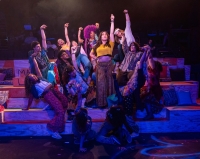
Kokandy’s HAIR Revival Finds a Modern Footing
19 July 2026 in Theatre in ReviewKokandy Productions’ HAIR revival lets the sunshine in this summer at the Chopin Theatre. Directed and choreographed by Brennan Urbi,…
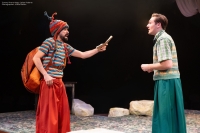
Frog and Toad is Wholesome, Family Fun
19 July 2026 in Theatre in ReviewThe timeless magic of Arnold Lobel’s beloved children’s book series comes to life in the Marriott Theatre’s delightful production of…

yo ho. - The Edge Theater Off Broadway - Through August 29
19 July 2026 in Now PlayingBabes With Blades Theatre Company’s (BWBTC) 2026 season opens with a world premiere, yo ho., by playwright SMJ, directed by JD Caudill and fight choreography by Carly…

Kokandy Productions Presents SUNDAY IN THE PARK WITH GEORGE - August 13 – November 1, 2026 at The Chopin Theatre
18 July 2026 in Upcoming TheatreFollowing its critically acclaimed productions of Sweeney Todd and Into the Woods, Kokandy Productions once again celebrates the great Stephen Sondheim with a revival of his stunning…

Pure Vocal Magic: Goodman’s Octet Redefines Musical Innovation
18 July 2026 in Theatre in ReviewDave Malloy’s Octet is a musical with daring aspirations, currently gracing the stage in a powerhouse co-production between the Raven…

Disney’s The Little Mermaid - The Performing Arts Center at Deerfield High School - Through August 2nd
18 July 2026 in Now PlayingThe Broadway musical - Disney's The Little Mermaid - will hit the Uptown Music Theater stage this summer in Deerfield,…

Good People - Theater Wit - Through August 23rd
17 July 2026 in Now PlayingWelcome to Southie, a Boston neighborhood where a night on the town means a few rounds of bingo, this month’s…

OPERATION MINCEMEAT: A NEW MUSICAL coming to CIBC Theatre September 29 – October 11
17 July 2026 in Upcoming TheatreBroadway In Chicago is thrilled to announce that single tickets for Tony® and Olivier Award®-winning OPERATION MINCEMEAT: A NEW MUSICAL, Entertainment Weekly’s #1…
Harris Theater Presents return of Chicago Black Dance Legacy Project, Aug. 28
16 July 2026 in Upcoming DanceFollowing last year’s smashing sold-out engagement, the Joan W. and Irving B. Harris Theater for Music and Dance proudly presents the return…

Oil Lamp Theater Announces its New Home
15 July 2026 in Theatre BuzzOil Lamp Theater, currently at 1723 Glenview Road, announces its new future home will be at the former Ten Ninety Brewing Co.…
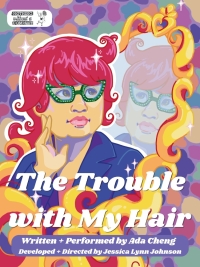
Nothing Without a Company presents The Trouble With My Hair: Coloring, Cutting, and Coming into Who I Am - Five Performances across Chicago, August 21st-30th
15 July 2026 in Upcoming TheatreNothing Without a Company (NWaC) is proud to announce five performances of The Trouble With My Hair: Coloring, Cutting, and…

Theater Wit presents the Chicago premiere of Adolescent Salvation, August 14-October 3
15 July 2026 in Upcoming TheatreOver the course of one night, through a haze of tequila, texting, and Taylor Swift, three teenagers banter, bicker, and…

No Dogs’ Delivers an Unfamiliar Earnest
15 July 2026 in Theatre in ReviewOscar Wilde’s The Importance of Being Earnest is one of the greatest farces ever written. His wordplay caricatured high society,…

Northlight Theatre inaugurates the first season in its new home in Evanston with the World Premiere of Jeffrey Hatcher's new adaptation of The Front Page
14 July 2026 in Upcoming TheatreNorthlight Theatre, under the direction of Artistic Director BJ Jones and Executive Director Timothy J. Evans, opens its new theater in Evanston with The Front…

TimeLine Theatre announces cast & production team for world premiere THE BIRTH OF THE PILL
14 July 2026 in Upcoming TheatreA bold story about the controversial creation that reshaped women’s lives is the focus of The Birth of the Pill,…

City Lit announces World Premiere adaptation of SHANE, playing August 21 – October 4
13 July 2026 in Upcoming TheatreFull cast and production team have been announced for City Lit's season-opening production of SHANE, Mark Pracht's World Premiere adaptation…

PrideArts' World Premiere of WINDOWS, August 7 – 23
13 July 2026 in Upcoming TheatrePrideArts' 2026-27 season will open in August with the world premiere of Chicago-based playwright Matt Schutz's WINDOWS, a comedy of LGBT…

Steppenwolf Presents ALEX EDELMAN: WHAT ARE YOU GOING TO DO - August 12 – 16, 2026
13 July 2026 in Upcoming TheatreFollowing a critically-acclaimed, sell-out run of Just For Us at Steppenwolf Theatre and around the globe, Tony and Emmy Award-winning comedian Alex Edelman returns…
DIRTY DANCING: the MUSICAL WILL PLAY BROADWAY IN CHICAGO’S JAMES M. NEDERLANDER THEATRE SEPTEMBER 9 – 20
13 July 2026 in Upcoming TheatreGet ready to have the time of your life! Broadway In Chicago is pleased to announce that single tickets for DIRTY DANCING:…
A Thoughtful Evolution of Her Own Making: Overshadowed Theatrical Productions’ My Fair Lady
12 July 2026 in Theatre in ReviewOvershadowed Theatre Productions brings fresh energy to one of musical theatre’s most enduring classics, offering a spirited and thoughtful take…
A Legendary Transformation: John Mulaney’s Historic Night at Wrigley Field
12 July 2026 in Theatre in ReviewJohn Mulaney didn’t just perform at Wrigley Field. He made history there. In a venue synonymous with baseball legends, rock…
Powerhouse Performances on Display in Gwydion's Dry Powder
11 July 2026 in Theatre in ReviewIn the sharp-tongued world of Sarah Burgess’s Dry Powder, presented by Gwydion Theatre Company at the Greenhouse Theater Center, the…
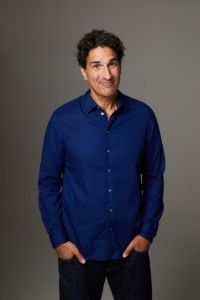
The Beautiful Overthinking of Gary Gulman’s 7th Hour
10 July 2026 in Theatre in ReviewGary Gulman brings his new tour, 7th Hour: An All New Standup Show, to The Den Theatre, offering Chicago audiences…

HEDWIG AND THE ANGRY INCH - Catalyst Ranch - Through July 26th
09 July 2026 in Now PlayingJK Entertainment is proud to announce the final production of their inaugural season: HEDWIG AND THE ANGRY INCH, the cult-classic created…


Latest Articles
-
 & Juliet - Auditorium Theatre - Through August 2nd
Written by Buzz Center StageBroadway In Chicago is delighted to announce the highly anticipated return engagement of & Juliet, the hilarious, 9-time Tony Award-nominated jukebox musical that flips the script on Shakespeare’s classic tragedy, imagining what would happen if Juliet didn’t end it all over…
& Juliet - Auditorium Theatre - Through August 2nd
Written by Buzz Center StageBroadway In Chicago is delighted to announce the highly anticipated return engagement of & Juliet, the hilarious, 9-time Tony Award-nominated jukebox musical that flips the script on Shakespeare’s classic tragedy, imagining what would happen if Juliet didn’t end it all over… -
Kokandy Productions Presents SUNDAY IN THE PARK WITH GEORGE - August 13 – November 1, 2026 at The Chopin Theatre
Written by Buzz Center StageFollowing its critically acclaimed productions of Sweeney Todd and Into the Woods, Kokandy Productions once again celebrates the great Stephen Sondheim with a revival of his stunning masterpiece Sunday in the Park with George, playing August 13 – November 1, 2026 in the intimate Chopin Downstairs Studio, 1543 W. Division St.…
-
Steppenwolf Theatre Names Stage Manager Laura D. Glenn Newest Ensemble Member
Written by Buzz Center StageSteppenwolf Theatre Company Artistic Directors Glenn Davis and Audrey Francis are thrilled to welcome veteran Production Stage Manager Laura D. Glenn into the company's world-renowned ensemble. Glenn, whose journey with Steppenwolf began as a summer intern in 1988, has worked on more than 100 Steppenwolf productions over…
-
The Lizard y El Sol Returns to Chicago Parks Through August 9th
Written by Buzz Center StageThe whole family can enjoy The Lizard y El Sol, returning by popular demand to 12 public spaces citywide this summer. Co-Directors Jamal Howard (Splish Splash: A Day on the Lake) and Raquel Torre (BOOK UP!) again take the reins of this beloved "Theater for…


Does your theatre company want to connect with Buzz Center Stage or would you like to reach out and say "hello"? Message us through facebook or shoot us an email at This email address is being protected from spambots. You need JavaScript enabled to view it..
*This disclaimer informs readers that the views, thoughts, and opinions expressed in the text belong solely to the author, and not necessarily to Buzz Center Stage. Buzz Center Stage is a non-profit, volunteer-based platform that enables, and encourages, staff members to post their own honest thoughts on a particular production.