
Displaying items by tag: Chicago events
Prayer Circle - Redtwist Theatre - Through November 8th

Award-winning Redtwist Theatre’s new 22nd season, “State of Violence,” begins with Prayer Circle, September 17 - November 8, by Erik Gernand and directed by Executive Artistic Director Dusty Brown, at Redtwist Theatre, 1044 W. Bryn Mawr Ave. Preview performances are Thursday, Sept. 17, Friday, Sept. 18 and Saturday, Sept. 19 at 7:30 p.m. Regular performance schedule includes Thursdays through Saturdays at 8 p.m. and Sundays at 3:30 p.m. Single tickets are on sale starting August 15 for $50 (seniors and veterans: $35; students: $10 and Fridays are Pay-What-You-Can) with subscriptions also available at RedtwistTheatre.org.
As the world hurtles ever faster in the wrong direction, Addy discovers she may have the power to make it better. Joining with the members of a small town prayer circle, four people try to convince their pastor to pray with them… to bring about some killer results. Erik Gernand, Redtwist’s resident playwright, invites audiences to a darkly comedic debate - how far would you go to save your country?
The cast of Prayer Circle includes Jaqueline Grandt* (Marilyn); Philip Matthews* (Pastor Evans); Andi Muriel (Addy); Kezia Waters (Doug); Macaria Chaparro Martinez* (Carol); Natalie Rae (Marilyn U/S); Jeff Menezes (Pastor Evans U/S); Jessie Skonesey (Addy U/S) and Marco Antonio Perez (Doug U/S).
The creative team of Prayer Circle includes Erik Gernand (playwright); Dusty Brown (director); Joshua Servantez (assistant director); Jeff Brain* (scenic designer); Leo Bassow* (props designer); Piper Kirchhoffer* (lighting designer); Madeline Felauer (costume designer) and Charlie Tolbert (production manager).
*denotes Redtwist Theatre Ensemble Member
ABOUT ERIK GERNAND, playwright
Erik Gernand is a Chicago-based playwright and filmmaker. His play The Totality of All Things won a Jeff Award for Best New Work for its 2024 production at Redtwist Theatre where he is the playwright in residence. His plays have been produced around the country, including at The Barrow Group (New York City), The ROAD Theatre Company (Los Angeles) and City Theatre (Miami) and have been published by Dramatic Publishing and Smith & Kraus. His award-winning short films have screened at more than 100 film festivals around the world including SXSW, Cinequest, Outfest and the Chicago International Film Festival and have been broadcast on IFC, PBS and The Logo Channel. Gernand is a professor of instruction in radio-TV-film at Northwestern University.
ABOUT DUSTY BROWN, director
Dusty Brown is the executive artistic director of Redtwist Theatre. They began their career as a stage hand in Atlanta, Georgia, working on everything from Shakespeare to new works, and everything in between. They received their MFA in directing from Ohio University in 2021. Notable productions include: Steve Yockey's Wolves at Redtwist and Pluto at Ohio University; William Shakespeare's Macbeth at Three Crows and Ohio University; Tracy Letts' Bug at Ohio University; Stephen Sondheim's Sweeney Todd at DramaTech in Atlanta; Uffizi at Bottled Lightning in Atlanta and Neil Simon's Barefoot in the Park at Vox Populi Productions in Chattanooga.
The 2026 - 2027 Redtwist Theatre season also includes:
SHOW TWO - TO BE ANNOUNCED
January 28 - March 14, 2027
Previews: Thursday, Jan. 28 - Saturday, Jan. 30 at 7:30 p.m.
Opening Night: Sunday, Jan. 31 at 3:30 p.m.
Performance Schedule: Thursdays through Saturdays at 8 p.m. and Sundays at 3:30 p.m.
Tickets: $50 (seniors and veterans: $35; students: $10 and Fridays are Pay-What-You-Can)
Single tickets go on sale Saturday, Aug. 15
Redtwist Theatre will be announcing the second production at a later date.
Julius Caesar
April 8 - May 30, 2027
Written by William Shakespeare
Previews: Thursday, April 8 - Saturday, April 10 at 7:30 p.m.
Opening Night: Sunday, April 11 at 3:30 p.m.
Performance Schedule: Thursdays through Saturdays at 8 p.m. and Sundays at 3:30 p.m.
Tickets: $50 (seniors and veterans: $35; students: $10 and Fridays are Pay-What-You-Can)
Single tickets go on sale Saturday, Aug. 15
“Friends, Romans, Countrymen…” Something’s rotten in the republic. Most people know what happened on the Ides of March, but do they remember what came next? Join Redtwist in a riveting new take on Shakespeare’s classic story of political violence and its consequences.
Twisted Tuesday New Play Readings
Tuesdays at 7 p.m.
On select Tuesdays, Redtwist welcomes audiences for a new play reading from a variety of Chicago-based playwrights. All readings are Pay-What-You-Can.
One-On-Wednesday
Wednesdays at 7:30 p.m.
For three years, each Wednesday, Redtwist invites unique solo performers to take over its space and bring their singular, edgy perspective to the black box in Edgewater. All performances are Pay-What-You-Can.
Twisted PlayFest
Summer 2027
Returning for its third season, Twisted PlayFest is a new play incubator that provides ongoing play readings and development for aspiring Chicago playwrights. The centerpiece of this initiative is the annual Twisted Play Festival. The festival features ten plays at various stages of development.
ABOUT REDTWIST THEATRE
Redtwist is an award-winning theatre company that has for 22 seasons staged up close and personal contemporary dramas annually in its intimate black box theatre housed proudly within the heart of Edgewater’s Bryn Mawr Historic District.
Performances at Redtwist are designed to place the theatre patron in the midst of the stories being told, making them accessible and riveting. Redtwist strives for excellence with every project and endeavors to take risks while offering opportunities for up-and-coming actors, designers and directors to work with established talent. Redtwist provides the very best Chicago storefront theatre experience from excellence on stage, to warm hospitality in a clean, friendly environment.
Award-winning Redtwist Theatre’s new 22nd season, “State of Violence,” begins with Prayer Circle, September 17 - November 8, by Erik Gernand and directed by Executive Artistic Director Dusty Brown at Redtwist Theatre, 1044 W. Bryn Mawr Ave. Preview performances are Thursday, Sept. 17, Friday, Sept. 18 and Saturday, Sept. 19 at 7:30 p.m. Regular performance schedule includes Thursdays through Saturdays at 8 p.m. and Sundays at 3:30 p.m. Single tickets are on sale starting August 15 for $50 (seniors and veterans: $35; students: $10 and Fridays are Pay-What-You-Can) with subscriptions also available at RedtwistTheatre.org.
You Can't Fake the Funk: A Journey Through Funk Music - Black Ensemble Theater Through October 25th

Black Ensemble Theater continues its 50th Anniversary Season with the world premiere of You Can't Fake the Funk: A Journey Through Funk Music, written and directed by Artistic Director Director Daryl D. Brooks. You Can't Fake the Funk runs September 5-October 25, 2026, at the Black Ensemble Theater Cultural Center, 4450 N. Clark Street in Chicago.
Information and tickets are available at www.blackensemble.org, (773) 769-4451 and at the Black Ensemble Theater Box Office, 4450 N. Clark Street in Chicago. Please note the new curtains times: Fridays at 7:00pm, Saturdays at 2:00 p.m. and 7:00 p.m. and Sundays at 2:00 p.m. Tickets are $69 (fees included). Valet parking is available for $15 (cash only).
Hop aboard the Mothership and take a groovy ride back to the era when Afros were high, bell-bottoms were tight, and the music was truly out of sight! You Can't Fake the Funk: A Journey Through Funk Music is a high-energy, feel-good celebration of the sound that defined a generation. From Sly and the Family Stone to Parliament-Funkadelic to Earth, Wind & Fire, this electrifying production will have audiences dancing in the aisles and testifying to the unstoppable power of the Funk.
The cast is led by Dwight Neal (Dr. Funk) with an ensemble cast including: Vincent Jordan, Britt Edwards, Jaitee Thomas, Miciah Lathan, Jordan Taylor, Darrow Richmond, Darren Patin, Johnathon Lee and Brandon Lavell. The understudies are Blake Reasoner and Kentrell Dawson.
The creative team includes: Founder/CEO Jackie Taylor (producer), Artistic Director Daryl D. Brooks (director, writer), Robert Reddrick (music director), Qiana McNary (associate director), Robin DaSilva (vocal arranger), Christopher Chase Carter (choreographer), Denise Karchewski (lighting and set designer), Robert Kunh (costume designer), Sean Alverez (sound designer), and DJ Douglass (projection designer), Harrison Orneals (technical director), Kristi Martens (Equity stage manager), and Cat Andrade (Equity assistant stage manager).
The live band is: Music Director Robert Reddrick (drums), Adam Sherod (keys), Oscar Brown (guitar), Charles "Chip" DuBose (guitar), Walter Harrington (bass), Mark Allen Felton (sax), Corey Wilkes (trumpet), Bill McFarland (trombone), and Myron Cherry (drum understudy).
The 5-Play Card
Black Ensemble Theatre's 5-Play Card is a digital ticket package unlike any other. At a cost of $280 (including fees), it offers a savings of $65 over regular ticket prices. One of the greatest perks of the 5-Play Card is its flexibility – use the five tickets any way you want! You can: bring five people to one show, treat yourself to five different shows, or use the 5-Play Card in any ticket number combination until all five tickets are spent.
The 5-Play Card is good for 18 months and becomes active immediately after purchasing. If you buy multiple 5-Play Card packages, please note that a maximum of five tickets can be redeemed on a single show date.
The 50th Anniversary Season continues with:
Jackie Taylor's The Other Cinderella
Written and directed by Founder & CEO Jackie Taylor
Music by Jackie Taylor and Michael Ward
December 12, 2026-January 24, 2027
Opening: Sunday, December 20, 2025
Jackie Taylor's The Other Cinderella is a beloved Black Ensemble Theater classic that has delighted audiences for 50 years. This joyful African American version of the timeless fairy tale is filled with laughter, soul, and heart. In this story, Cinderella is from the projects, the Stepmamma works at the post office, the Fairygodmama hails from Jamaica, and the Brothers from the Hood keep the kingdom jumpin'!
Overflowing with show-stopping songs, vibrant dancing, and unforgettable characters, The Other Cinderella is a treasured family tradition, and the perfect way to close our 50th Anniversary Season, reminding us to embrace our greatness and follow our spirit!
Black Ensemble will continue with the Plays With A Purpose series for school groups, Black Playwrights Initiative, Soul of a Powerful Woman on June 7, 2026, the free summer outside concert series Fridays on the Green in August, and the annual Gala on October 15, 2026,
About Black Ensemble's Free to Be Village
Construction is underway on the new Studio Theater, the second phase of the visionary Free to BE Village. This intimate space will nurture new work, emerging voices, innovative storytelling, and the next generation of talent. It represents a bold step forward as we continue expanding the artistic possibilities of Black Ensemble Theater.
The Studio Theater, housed on the second floor of the Black Ensemble Cultural Center at 4450 N. Clark St., will be transformed into a 3,150 sq. ft., 150-seat performance space, plus a dance studio/rehearsal room and a dressing room. The Studio Theater was the final project designed by the outstanding late architect John Morris. The Studio Theater will have flexiblility to accommodate at least eight stage and seating configurations and will feature state-of-the-art lighting and sound design.
The inaugural season for the Studio theater will be announced in September or October. It will offer much needed space for new and experimental works, including the works of the Black Playwrights Initiative. The Studio theater will also include musical as well as non-musical stage productions.
The architect is Morris Architects Planners; John Morris passed away in 2025. The construction administration phase by Seek Design. The contractor is Ujamaa Construction.
Funding for the project is generously provided by City of Chicago Community Development funds; Federal community project funds – Representative Jan Schakowsky and Representative Mike Quigley; Illinois Arts Council; Paul M. Angell Family Foundation; and the State of Illinois DCEO.
Black Ensemble Theater
Founded in 1976 by acclaimed producer, playwright, and actress Jackie Taylor, Black Ensemble Theater is the only African American theater on the culturally, racially, and ethnically diverse North Side in Uptown. Through its Educational Outreach Programs, Black Ensemble has served more than 10,000 young people. Its Four Play Season of Excellence has captivated audiences locally, nationally, and internationally with outstanding original musicals that entertain, uplift, and bridge cultural divides, reminding us that we are all one. Black Ensemble Theater has produced more than 100 productions and employed more than 5,000 artists.
The mission of the Black Ensemble Theater Company is to eradicate racism and its devastating effects upon society through the theater arts and community engagement. For more information on the Black Ensemble Theater Company, visit www.BlackEnsembleTheater.org or call 773-769-4451.
Jackalope Theatre Company Announces The Cast And Creative Team For The World Premiere of Engines and Instruments of Flight: A Fantasia In Three Acts By Calamity West, November 11 - December 19
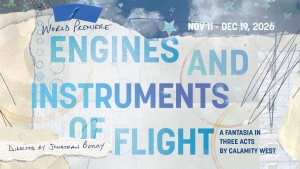
Jackalope Theatre Company, presenting the 17th Annual Newspaper Festival, August 20 - 24, is proud to announce the world premiere of Engines and Instruments of Flight: A Fantasia in Three Acts by Calamity West, written by Calamity West and directed by Jonathan Berry, November 11 - December 19, 2026, at Jackalope Theatre in the Broadway Armory Park, 5917 N Broadway St. The total running time, including one intermission, is two hours and 30 minutes. Preview performances are Wednesday, Nov. 11, Friday, Nov. 13 and Saturday, Nov. 14 at 7:30 p.m. and Sunday, Nov. 15 at 2 p.m. The performance schedule is Mondays, Fridays and Saturdays at 7:30 p.m. and Sundays at 2 p.m. with no Friday, Nov. 27 or Saturday, Nov. 28 performances. Tickets are $20 - $45 with student and Edgewater resident discounts available. Subscription and single tickets are now available at JackalopeTheatre.org or call/text the box office at 773.340.2543.
Calamity West is conjuring a fantasia: It’s 1986 New York and Tony is a playwright who isn’t writing. As he and his closest collaborators search for meaning in an increasingly fractured America, figures from history begin appearing with agendas of their own. Engines and Instruments of Flight is a play about the magic of making theatre in a world that refuses to stand still.
The cast of Engines and Instruments of Flight: A Fantasia in Three Acts by Calamity West includes Raphael Diaz (he/him, Henry); Julian Hester (he/him, William); Niko Kourtis (he/him, Tony); Andrew Burden Swanson (he/him, Calvin); Johnard Washington (he/him, Gene) and Mary Williamson (she/her, Eleanor).
The creative team for Engines and Instruments of Flight: A Fantasia in Three Acts by Calamity West includes Calamity West (she/her, playwright); Jonathan Berry (he/him, director); Salman Lee (he/him, assistant director); Tianxuan Chen (she/her, scenic and lighting designer); Delena Bradley (she/her, costume designer); Steve Labedz (they/them, sound designer); Courtney Abbott (they/she, intimacy coordinator); Madie Doppelt (she/her, script advisor); E Tylkowski (they/them, production manager); Tseela Sokolin-Maimon (she/her, stage manager); Mayah Jaimes (they/them, assistant stage manager) and AJ Links, CSA (she/her, casting director).
ABOUT CALAMITY WEST, PLAYWRIGHT
Calamity West is the 2026 recipient of the Laurents/Hatcher Foundation Award, one of the nation’s most significant prizes for new American plays, for her play FEAST!. Originally developed in New York at Primary Stages through the Dorothy Strelsin New American Writers Group, FEAST! received further development at the Lucille Lortel Theatre. West’s work has been produced, commissioned and developed by some of the country’s leading theatrical institutions including The Public, Williamstown Theatre Festival, Roundabout Theatre Company, the Lee Strasberg Theatre and Film Institute and Jackalope Theatre Company. From 2022 to 2026, West was an invited member of Primary Stages’ Dorothy Strelsin New American Writers Group, where she wrote three new plays: FEAST!, Sgt. Hank Cole’s Drama Club of Algona and PARALLAX. Her body of work also includes In the Canyon, Give It All Back, Rolling and Greetings from Moscow: A Love Story. West’s Engines and Instruments of Flight: A Fantasia in Three Acts is receiving its world premiere at Jackalope Theatre Company to be followed by the world premiere of FEAST! at Goodman Theatre, February 27 - March 28, 2027.
ABOUT JONATHAN BERRY, DIRECTOR
Jonathan Berry is a Chicago-based director, producer, educator and is the recently appointed artistic director at Raven Theatre. For Jackalope, he directed the world premiere of The Casuals. He was an artistic producer at Steppenwolf, where directing credits include: Lindiwe, The Children, You Got Older, Constellations, Curious Incident… and The Crucible. Other work includes: Steep Theatre (Company Member): Paris, Birdland, Red Rex, The Knowledge, Festen, Moment and The Resistible Rise of Arturo Ui. Griffin (Company Member): The Harvest, Balm in Gilead, Golden Boy, Spring Awakening, Punk Rock, Port, Company and Picnic. Other credits include Roundabout Theater: Suicide, Incorporated; Gift Theatre: the remount of Obliterarion, the world premieres of Dirty and Suicide, Incorporated and at Goodman Theatre: The Solid Sand Below and The World of Extreme Happiness for New Stages. Assistant director for Broadway productions of Of Mice and Men and This is Our Youth. He taught classes at UIC, Columbia College, Northwestern and was instrumental in leading the ensemble training program, The School, at Steppenwolf. For three years, he served as artistic director of the Penobscot Theatre Company in Bangor, Maine.
Coming Up from Jackalope:
17th Annual Living Newspaper Festival
August 20 - 24
Press Opening: Thursday, Aug. 20 at 7:30 p.m.
Performance Schedule: Thursday - Saturday at 7:30 p.m., Sunday at 3 p.m. and Monday at 7:30 p.m.
The Broadway Armory, 5917 N Broadway
JackalopeTheatre.org/2025-2026
Tickets: $20 - $35
The Living Newspaper Festival is inspired by the 1930s Living Newspapers of the Federal Theatre Project that created stories based on recent events. This year’s Festival includes world premieres inspired from recent news headlines.
Performances, show times, dates are subject to change.
ABOUT JACKALOPE THEATRE
Jackalope Theatre Company expands the definition of American Identity by engaging with communities to produce works that celebrate diverse perspectives. Jackalope is a premier home for new and exciting Off-Loop Theatre based in Chicago's Edgewater and Rogers Park neighborhoods. They are committed to cultivating new voices that contribute to an expanding American culture and mythology. Each season, Jackalope produces full-length plays, new play development programming and provides free classes in partnership with the Chicago Park District.
Jackalope Theatre Company, presenting the 17th Annual Newspaper Festival, August 20 - 24, is proud to announce the world premiere of Engines and Instruments of Flight: A Fantasia in Three Acts by Calamity West, written by Calamity West and directed by Jonathan Berry, November 11 - December 19, 2026, at Jackalope Theatre in the Broadway Armory Park, 5917 N Broadway St. The total running time, including one intermission, is two hours and 30 minutes. Preview performances are Wednesday, Nov. 11, Friday, Nov. 13 and Saturday, Nov. 14 at 7:30 p.m. and Sunday, Nov. 15 at 2 p.m. with the press opening Tuesday, Nov. 17 at 7:30 p.m. The performance schedule is Mondays, Fridays and Saturdays at 7:30 p.m. and Sundays at 2 p.m. with no Friday, Nov. 27 or Saturday, Nov. 28 performances. Tickets are $20 - $45 with student and Edgewater resident discounts available. Subscription and single tickets are now available at JackalopeTheatre.org or call/text the box office at 773.340.2543.
Jersey Boys coming to CIBC Theatre November 10 - 22

Broadway In Chicago is excited to announce tickets for t he original Tony® & Olivier Award-winning musical sensation, JERSEY BOYS, are now on sale. The highly anticipated engagement will play Broadway In Chicago’s CIBC Theatre for a limited two-week engagement, November 10 - 22. This engagement of JERSEY BOYS is part of a multi-city North American Tour beginning September 2026 in celebration of its 20th Anniversary year.
JERSEY BOYS is the behind-the-music true story of Frankie Valli and The Four Seasons. They were just four guys from Jersey, until they sang their very first note. They had a sound nobody had ever heard… and the radio just couldn’t get enough of. But while their harmonies were perfect on stage, off stage it was a very different story – a story that has made them an international sensation all over again. The show features all their hits including “Sherry,” “Big Girls Don’t Cry,” “December 1963 (Oh, What a Night),” “Walk Like A Man,” “Can’t Take My Eyes Off You,” “Beggin’” and “Working My Way Back To You.”
JERSEY BOYS is written by Academy Award-winner Marshall Brickman and Rick Elice, with music by Grammy Award-winner Bob Gaudio, lyrics by Bob Crewe.
The recipient of Broadway’s Tony, London’s Olivier and Australia’s Helpmann Awards for Best New Musical, JERSEY BOYS is the winner of 65 major awards and has been seen by over 30 million people worldwide.
The Broadway production originally opened on November 6, 2005, and, by the time it closed on January 15, 2017, it was the 12th longest running show in Broadway history. It returned to New York with a new production from November 2017 to May 2022. JERSEY BOYS has also had multiple record-breaking US National Tours from 2006 through 2022 as well as productions in Las Vegas, Chicago and Toronto.
JERSEY BOYS ran in London’s West End from March 18, 2008 to March 26, 2017 and, at the time, was the 6th longest musical running in the West End. The musical returned to the West End as the first show to play the reinstated Trafalgar Theatre from April 14, 2021 to January 4, 2024. JERSEY BOYS previously played three record-breaking UK and Ireland tours from 2014 to 2016, 2017 to 2019 and 2021 to 2022.
A JERSEY BOYS 20th Anniversary UK and Ireland tour also opened on June 15, 2026, at the New Wimbledon Theatre, currently booking dates through 2027.
The JERSEY BOYS 20th Anniversary North American tour will be staged by the entire original Broadway creative team, led by the Tony Award-winning team of director Des McAnuff and choreographer Sergio Trujillo, with scenic design by Klara Zieglerova, costume design by Jess Goldstein, lighting design by Howell Binkley, sound design by Steve Canyon Kennedy, projections design by Michael Clark and production supervision by Danny Austin. The orchestrations are by Steve Orich and the music supervision and vocal arrangements by Ron Melrose.
The Original Broadway Cast Recording of JERSEY BOYS, produced by Bob Gaudio, was certified Platinum by the Recording Industry Association of America. The cast recording is available on Rhino Records. JERSEY BOYS: The Story of Frankie Valli & The Four Seasons (Broadway Books) is the official handbook to the smash Broadway hit. Season’s Greetings: A JERSEY BOYS Christmas, a holiday CD featuring international cast members of JERSEY BOYS, produced by Bob Gaudio, is available on Rhino Records.
For more information, please visit www.JerseyBoysInfo.com
Instagram: @JerseyBoysBroadway
Facebook: @JerseyBoysBroadway
TikTok: @JerseyBoysBroadway
YouTube: @JerseyBoys
Threads: @JerseyBoysBroadway
PERFORMANCE SCHEDULE
Tuesday, November 10 – 7:00 p.m.
Wednesday, November 11 – 7:00 p.m.
Thursday, November 12 – 7:00 p.m.
Friday, November 13 – 7:00 p.m.
Saturday, November 14 – 2:00 p.m. & 7:30 p.m.
Sunday, November 15 – 1:00 p.m. & 6:30 p.m.
Tuesday, November 17 – 7:00 p.m.
Wednesday, November 18 – 1:00 p.m. & 7:00 p.m.
Thursday, November 19 – 7:00 p.m.
Friday, November 20 – 7:00 p.m.
Saturday, November 21 – 2:00 p.m. & 7:30 p.m.
Sunday, November 22 – 1:00 p.m.
TICKET INFORMATION (As of August 14, based on availability and subject to change)
Individual tickets for JERSEY BOYS are on sale now and range from $40.00 - $140.00 with a select number of premium tickets available. Ticket price listed is when purchased in person at the box office. Additional fees apply for online purchases. Tickets are available now for groups of 10 or more by calling Broadway In Chicago Group Sales at (312) 977-1710 or emailing This email address is being protected from spambots. You need JavaScript enabled to view it.. For more information, visit www.BroadwayInChicago.com.
ABOUT BROADWAY IN CHICAGO
Broadway In Chicago was created in July 2000 and over the past 26 years has grown to be one of the largest commercial touring homes in the country. A Nederlander Presentation, Broadway In Chicago lights up the Chicago Theater District entertaining up to 1.7 million people annually in five theatres. Broadway In Chicago presents a full range of entertainment, including musicals and plays, on the stages of five of the finest theatres in Chicago’s Loop including the Cadillac Palace Theatre, CIBC Theatre, James M. Nederlander Theatre, The Auditorium, and just off the Magnificent Mile, the Broadway Playhouse at Water Tower Place.
For more information and tickets, visit www.BroadwayInChicago.com.
Follow @BroadwayInChicago on
Facebook ● Instagram ● TikTok ● Bluesky ● YouTube
#broadwayinchicago
From Subway Cars to Chicago Stages: Marcus Monroe at The Comedy Bar
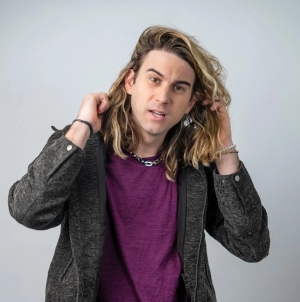
Sometimes the best way to find a comedian who’s new to you is by stumbling onto a clip that stops your scroll cold. That’s exactly how I first encountered Marcus Monroe: a burst of chaotic silliness on Instagram that made me immediately wonder what his full stand-up looked like beyond the quick-hit reels. As I have with both up-and-coming comedians, and even more established ones I haven’t really explored, I first discovered Monroe online by chance. Outside of a good handful of snippets - mostly from his Stand Up on the Subway series that I’ll get to shortly - I had very little to go on in terms of what his actual live stand-up would be like. In his case, I couldn’t stop watching the run of hilarious reels: quick, character-driven, highly silly bursts of comedy that immediately stood out for their timing and playful absurdity. Those clips ended up being a solid introduction to Monroe’s live show, which delivers a smart, engaging blend of his signature comedy. And yes - he’s genuinely funny.
I finally saw him live at The Comedy Bar in downtown Chicago, and it was the perfect venue to experience his style up close. The night was packed with laughs. Opener Brett Druck was outstanding, delivering sharp, tightly crafted jokes with a calm confidence that immediately locked the room in. His humor leans clever and observational, the kind of writing that sneaks up on you and lands with a clean, satisfying snap, perfectly setting the stage for headliner Marcus Monroe.
Monroe’s current tour highlights the style he’s become known for: sharp, in-your-face comedic banter paired with fast-paced variety performance. Born and raised in Milwaukee, Wisconsin, and now residing in New York City, Monroe brings a Midwest-friendly looseness to his delivery, even as he leans into the nonconformist energy that has defined his career. He’s a past recipient of the Andy Kaufman Award, given annually to a performer whose originality and creative spirit echo Kaufman’s own. His résumé spans television appearances, cruise line entertainment, and major comedy festivals, and he’s been seen by millions, including performances on The Late Show with David Letterman and America’s Got Talent.
Onstage, he delivers a tight, energetic set that mixes storytelling, improvisation, and physical comedy in a way that feels both polished and spontaneous. His crowd work delivers some of his best moments - he’s genuinely comfortable interacting with the audience, slipping into quick riffs and playful exchanges that feel effortless and keep the room locked in. His material ranges widely, from the chaos of travel and performing on the road, to the odd realities of being somewhat of a “variety act” in a stand-up world, to the strange encounters that come with doing comedy in unconventional spaces. He also dives into his relationship with his wife, who’s fifteen years older and has been with him for over a decade. They never signed a prenup, but he’s unfazed - as he jokes, everything’s hers anyway. In fact, most of her belongings came from a divorce settlement with her ex-husband, so should they ever split, Monroe figures he’d walk away with half of Steve’s stuff. And toward the end of the show, he folds in his juggling - often with sharp knives - not as a gimmick, but as a comedic tool he uses for timing, misdirection, and playful escalation, giving his set a physical dimension most stand-ups don’t attempt. And this is the same guy who has juggled flaming torches while riding a sky-high unicycle, so the physicality isn’t just a flourish - it’s part of his comedic DNA.
A major part of Monroe’s growing national profile comes from his Stand Up on the Subway series, the viral project that helped expand his audience far beyond traditional comedy venues. For more than two years, he’s been performing fully costumed bits on New York City trains, transforming everyday commutes into pop-up comedy sets. The punchlines in these subway bits, while some downright goofy, are often purposefully so bad in a brilliant way - beyond dad-joke territory and deep into gleeful absurdity - that they loop back around into being hilarious. It’s part of what makes the series addictive, and I’ve become hooked on watching each new character drop into a train car with that “what’s he going to do next?” unpredictability. His Stand Up on the Subway series has now surpassed 100 million views and even features cameos from Bowling for Soup, Train, Bobby Moynihan, BBMak, Ryan Cabrera, and more, adding an extra layer of delightful unpredictability to the chaos. His roster of subway personas is part of the fun: Michael Jackson, Marty McFly, Ozzy Osbourne, the Grinch, Ronald McDonald, Freddie Mercury, a watermelon, a foot, Uncle Sam, an emo kid, and an endless supply of other characters pulled from whatever corner of his imagination he’s exploring that day. He’s even created a Chicago version on the EL train, suiting up as a Bears player for a local twist. The reactions - amused, confused, delighted, or occasionally baffled - become part of the show, and the series has become a defining piece of his creative identity.
Taken together, the tour, the reels, and the Stand Up on the Subway series reveal a performer who thrives on unpredictability, connection, and inventive silliness. Monroe isn’t trying to reinvent comedy so much as he’s carving out his own lane within it, one built on enthusiasm, oddball charm, and a willingness to commit fully to the bit. It’s a combination that works, and his stand-up is highly recommended. For upcoming tour dates, videos, and more of his character work, visit www.marcusmonroe.com.
CHICAGO HUMANITIES announces full Fall Festival 2026 programming

Chicago Humanities proudly announces the full lineup for its Fall Festival 2026, with conversations ranging from social justice, music, politics, literature, food, poetry, photography, architecture and much more. This year’s Fall Festival spans Sept. through Nov. and offers day-long festival dates throughout three Chicago neighborhood hubs, in addition to standalone presentations, all reflecting Chicago Humanities’ deep commitment to civic and civil dialogue, creative expression and community-rooted programming.
Some noteworthy standalone programs include a sold-out concert by beloved musician Susanna Hoffs, and a performance by GRAMMY Award-winning percussion ensemble Third Coast Percussion joined by Pulitzer Prize-finalist composer, performer, and electronic musician Jlin. A storytelling conversation will take place with actor Kyle MacLachlan on his new memoir, Fictional Selves, as well as a separate program featuring some of MacLachlan’s costars from the 1990s cult classic TV show Twin Peaks. Chef Yotam Ottolenghi will join for an intimate and energizing evening celebrating his long-awaited new cookbook, SIMPLE TOO. NPR host of This American Life Ira Glass and world-renowned writer Etgar Keret will combine their skills for an evening of powerful and funny stories. Key political programs include conversations with CEO and publisher of The Bulwark Sarah Longwell and strategist/commentator David Axelrod, as well as award-winning authors and organizers Naomi Klein and Astra Taylor.
As part of its ongoing mission, Chicago Humanities brings programs to neighborhoods and venues across Chicagoland, with implemented neighborhood and campus tours of the rich history, architecture, and public art of these culturally rich Chicago community gems. These experiences include the popular Pilsen Public Art tours, Brick of Chicago tours, and Doorways of Chicago tours. This Fall, Chicago Humanities presents full “festival days” of programming in three neighborhood hubs: Pilsen (National Museum of Mexican Art and Thalia Hall, Evanston (Northwestern University), and Hyde Park (The University of Chicago).
The Fall Festival’s Pilsen Day on Saturday, Sept. 26 takes place at the National Museum of Mexican Art and Thalia Hall and features an impressive list of programs, including a collection of award-winning authors including Emily St. John Mandeland Marlon James. Music-related creatives include Latino music documentarian, photojournalist and curator Ramón Hernández, and a program with cultural historian, DJ, and author Ruben Molina. Conversations around photography include a panel of artists and curators gathering to discuss Chicano Camera Culture, an exhibition highlighting the last six decades of Chicano photography, as well as a program with acclaimed photographer Merrick Morton – best known for his intimate photography of ‘80s Los Angeles barrios and Chicano culture and his still photography for iconic films like La Bamba, Fight Club and The Big Lebowski.
Evanston Day takes place at Northwestern University on Saturday, Oct. 4. This Hub Day’s highlights include the return of a three-part U.S. Constitution series, the first titled Supremacy, hosted by NPR Host of Chicago’s Wait Wait... Don't Tell Me! Peter Sagal and joined by law professor Daphna Renan. There will be a talk and singalong with Monty Python’s Eric Idle and a celebration of Jeff Garlin (Curb Your Enthusiasm, The Goldbergs) on his newest book of never-before-seen photographs and hilarious personal stories, Best Seat in the House, that capture the heart of life on and offstage. More, internationally bestselling author John Green will join for a conversation around his adult fiction debut, Hollywood, Ending, and bestselling journalist and political analyst Anand Giridharadas will join for a discussion about his new work, Man in the Mirror, the story of a tragic encounter in a New York subway.
The final Fall Festival Hub Day will be held in Hyde Park at The University of Chicago on Sunday, Nov. 7. Acclaimed harpist Mary Lattimore will be joined by musician Haley Heynderickx at the University of Chicago's stunning Rockefeller Chapel, and guests will hear from Pulitzer Prize-winning photojournalist David Hume Kennerly, whose lens has captured six decades of defining moments in world history. Trans scholar, writer and professor Susan Stryker joins for an urgent conversation on her new book, Changing Gender. The day of programming includes the final two installments of this season’s Peter Sagal’s Constitution series: How to Save a Constitutional Democracy and The Legacy of the Declaration of Independence. For the former, Sagal will be joined by UChicago law professors Aziz Huq and Tom Ginsburg, and for the latter, by an esteemed panel of UChicago English and history faculty members including Eric Slauter, Steve Pincus and Alison LaCroix. Additionally, there will be an incredible lineup of free programming throughout the day curated by and featuring UChicago faculty.
“Each festival season, Chicago Humanities brings the very best of the arts and humanities to audiences across the city,” said Co-Creative Director Michael Green. “Our 2026 Fall Festival continues this tradition with an exciting line-up of speakers and performers: from renowned writers such as Hilton Als and Barbara Kingsolver, award-winning journalists like Anand Giridharadas, the innovative composer and musician Jlin who performs with Third Coast Percussion, and beloved film and television star Kyle MacLachlan.”
“One of the best ways to understand our city is through its neighborhoods, and this season with Chicago Humanities invites audiences to do just that through conversations with artists, writers, musicians, photographers, chefs, historians, and scholars – alongside walking tours, museums, performances, and community partnerships,” said Co-Creative Director Lauren M. Pacheco. “From our continued collaboration with the National Museum of Mexican Art during Hispanic Heritage Month to programs across Hyde Park, Pilsen, Evanston, and beyond, we're creating opportunities for audiences to discover new ideas while experiencing Chicago through the people, places, and stories that shape its cultural life.”
Tickets for members are on sale now on the Chicago Humanities website and will be on sale to the general public later this week. More information at chicagohumanities.org.
Full Line-up for Fall Festival 2026
Sept. 14, 8pm Musician Susanna Hoffs in Concert at Old Town School of Folk Music
Sept. 17, 7:30pm Sarah Longwell and David Axelrod at First United Methodist Church
Sept. 18, 7:30pm Naomi Klein and Astra Taylor at First United Methodist Church
Sept. 22, 8pm John Pizzarelli at Old Town School of Folk Music
Pilsen Day, Saturday, September 26
Sept. 26, 10:30am, Pilsen Public Art Tours
Sept. 26, 10:30am, Pilsen Brick of Chicago Tours
Sept. 26, 11am Latino music documentarian, photojournalist, curator and author Ramón
Hernández at National Museum of Mexican Art
Sept. 26, 1:30pm Photographer Merrick Morton at National Museum of Mexican Art
Sept. 26, 2pm Award-winning author Emily St. John Mandelat Thalia Hall
Sept. 26, 5:30pm Novelist Marlon James at Thalia Hall
Sept. 26, Cultural historian and DJ Ruben Molina at National Museum of Mexican Art
Sept. 26, 4pm Chicano Camera Culture ExhibitPanel at National Museum of Mexican Art
Sept. 30, 7:30pm Actor Kyle MacLachlan at Athenaeum Center
Northwestern Day, Sunday, October 4
Oct. 4, 11:30am, Northwestern Doorways of Chicago Tours
Oct. 4, 12pm Professor and political scientist Francis Fukuyama at Lutkin Hall
Oct. 4, 1pm Talk and Singalong with Monty Python’s Eric Idle at Cahn Auditorium
Oct. 4, 1pm Pulitzer Prize-winning playwright and novelist Ayad Akhtar at Norris Center
Louis Room
Oct. 4, 2:30pm Peter Sagal’s U.S. Constitution Sessions: Supremecy at Lutkin Hall
Oct. 4, 4pm Comedian Jeff Garlin at Cahn Auditorium
Oct. 4, 4pm Prize-winning historian Sarah M. S. Pearsall at Norris Center Louis Room
Oct. 4, 5:30pm Bestselling author Leïla Slimani at Lutkin Hall
Oct. 4, 7pm #1 internationally bestselling author John Green at Cahn Auditorium
Oct. 4, 7pm Bestselling journalist and political analyst Anand Giridharadas at Norris
Center Louis Room
Oct. 5, 7:30pm NPR host Ira Glass and world-renowned writer Etgar Keret at
Athenaeum Center
Oct. 12, 7:30pm Chef and author Yotam Ottolenghi at Athenaeum Center
Oct. 15, 7:30pm GRAMMY Award-winning Third Coast Percussion and Pulitzer
Prize-finalist Jlinat Museum of Contemporary Art
Oct. 17, 7:30 pm Fiction writer Barbara Kingsolver at Francis W. Parker School
University of Chicago, Saturday, November 7
Visit ChicagoHumanities.org for free events with esteemed UChicago faculty throughout the day
Nov. 7,11am Famous photojournalist David Hume Kennerly at Ida Noyes Hall
Nov. 7, 11am Writer and critic Hilton Als at Laboratory Schools
Nov. 7, 12:15pm, Hyde Park Doorways of Chicago Tours
Nov. 7, 12:15pm Hyde Park Brick of Chicago Tours
Nov. 7, 1:30pm Best-selling author Daniel Kraus at Ida Noyes Hall
Nov. 7, 1:30pm Peter Sagal’s U.S. Constitution Sessions: How to Save a Constitutional
Democracy at Laboratory Schools
Nov. 7, 1:30pm New York-based graffiti artist Stephen “ESPO” Powers at Ida Noyes Hall
Nov. 7, 4pm Trans scholar, writer and professor Susan Stryker at Ida Noyes Hall
Nov. 7, 6pm Performance and conversation with harpist Mary Lattimore and musician Haley Heynderickx at Rockefeller Chapel
Nov. 7, 6:30pm Peter Sagal’s U.S. Constitution Sessions: The Legacy of the Declaration of Independence panel at Ida Noyes Hall
Nov. 14, 7:30pm The stars of the cult classic show Twin Peaks at Old Town School of Folk
Music
About Chicago Humanities
For more than 35 years, Chicago Humanities has been presenting live events that bring the world to Chicago, while elevating Chicago on behalf of the people who call it home. Centered on culture, creativity and connection, these experiences expose audiences to the most provocative thinkers—both established and emerging—while celebrating new perspectives and ways of thinking. Chicago Humanities remains one of Chicago’s most vibrant civic institutions.Chicagohumanities.org.
The 37th annual Rhinoceros Theater Festival through October 26 at Six Chicago venues
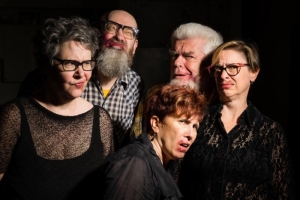
Curious Theatre Branch, with co-producers Chicago Danztheater Ensemble, Chicago Dramatists and Labyrinth Club, are pleased to announce the 37th annual Rhinoceros Theater Festival, September 20 - October 26 at four venues across Chicago. The month-long festival of shows will kick off with a special “afternoon tea” edition of the Full Moon Vaudeville, this concert launches the festival on Sunday, Sept. 20 at 3 p.m. at Facility Theatre, 1138 N. California Ave., headlined by art/folk/cabaret act The Crooked Mouth and other special guests.
Throughout its nearly four decades, Rhinofest has endeavored to welcome as many participants as possible, both as artists and as audience members. To that end, artists pay no fee to apply or to produce their works at Rhinofest and all tickets are offered at pay-what-you-can pricing, with a $25 suggested price. Tickets and details for all upcoming shows will be available Sunday, Sept. 6 at Rhinofest.com.
Since its inception in 1989, as a single weekend of shows in the Wicker Park neighborhood, this unique and mutable fringe festival has expanded and contracted to fit the time and has become the longest running Fringe Festival in Chicago. Festival events will take place at four venues this year: Facility Theatre, 1138 N. California Ave. in Humboldt Park; Chicago Dramatists, 798 N. Aberdeen in River West, Labyrinth Arts Club, 3658 N. Pulaski Rd. in the Irving Park neighborhood and Chicago Danztheatre Ensemble, 1650 W. Foster Ave.
The 37th Rhinofest will feature mostly original work from Chicago artists and companies, including new work from The Fat Theater Project, the 10th anniversary of Ira Murfin’s An Interview, a new work by Jessica Wright Buha, new work from Drinking and Writing Theater, and, of course, an evening of short works by The Curious Theatre Branch, Rhinofest’s host. New to the Festival in 2026 are partnerships with Chicago Danztheater, a beautiful space in Andersonville, featuring movement-based work and a creativity workshop called Maps, Guides & Legends: a generative writing and interdisciplinary art-making workshop on Saturday, Oct. 24 at 10 a.m. - 2 p.m.
This year's festival will feature plays, music and performances from more than 35 companies and solo artists. Among the highlights are:
The Full Moon Vaudeville
Facility Theater, 1138 N. California Ave.
Sunday, Sept. 20 at 3 p.m.
The annual bacchanalia headlined by art/folk/cabaret act The Crooked Mouth
includes a variety of acts to inaugurate the festival featuring cool things as yet unknown and a rare afternoon teatime show.
Make Out the Words
by The Curious Theatre Branch
Chicago Dramatists, 1105 W. Chicago Ave.
Saturday, Oct. 3 at 9 p.m., Sunday, Oct. 4 at 5 p.m., Saturday, Oct. 10 at 7 p.m., Sunday, Oct. 18 at 5 p.m., Friday, Oct. 23 at 7 p.m.
Make Out the Words: two new short plays inspired by the unproduced writing of the late Matt Rieger, by Curious ensemble members Charlotte Lastra and Chris Bower. The show also features a performance of Rieger's own text by Beau O'Reilly.
A strange encounter on a train leaves an aimless woman desperate for answers, and a flood with no explanation leaves a couple with a basement full of ruined Moby Dicks.
Drinking and Writing Theater: Miersten Wolf
Labyrinth Arts Club, 3658 N. Pulaski Rd.
Thursdays: Sept. 24, Oct. 1, Oct. 8, Oct. 15 and Oct. 22 at 7 p.m.
In this 70-minute musical, three stories are interwoven with 10 original songs. The stories include the truthful biographical information of the writer, the history of Chicago's problem/solution with its waste and, lastly, a fictional story of a crib keeper on Lake Michigan who dreams of a mysterious woman named Miersten Wolf.
Works in Progress
By Jeff Glassman, Mark Enslin and Susan Parenti
Chicago Dramatists, 1105 W. Chicago Ave.
Saturday, Oct. 3 at 7 p.m. and Sunday, Oct. 4 at 3 p.m.
Works in progress include Radish is My Teacher by Jeff Glassman, a collection of scripts for puppets by Susan Parenti and a libretto by Mark Enslin about a stranded international volunteer incarcerated firefighter. Both Susan Parenti & Jeff Glassman have had new works produced here in Chicago and around the country over the last decade.
The Metamorphosis aka The Adult Show/I'm a Bug!!! aka the Kids Show
By Jessica Wright Buha
Chicago Dramatists, 1105 W. Chicago Ave.
Sundays: Oct. 4, Oct. 11, Oct. 18 and Oct. 25 at 11 a.m.
This staged reading presents TWO works-in-progress that will happen at the same time (in two separate rooms).
The Metamorphosis aka The Adult Show, is a five-actor immersive show based on Franz Kafka's “The Metamorphosis.”
I'm a Bug!!!! aka the Kids Show, is a two-actor/teaching artist show for kids based on Franz Kafka's “The Metamorphosis.” This second piece will also serve as child care for audience members going to see The Metamorphosis.
Shaking the Beckett:
The Magic of Lady M. and A Needless & Wasteful Requirement
By Fat Theater Company
Chicago Danztheatre Ensemble, 1650 W. Foster Ave.
Friday, Oct. 9 and Saturday, Oct. 10 at 9 p.m.
These two one acts are both subjective and satirical interpretations of the works of two theatrical masters: William Shakespeare and Samuel Beckett. The Magic of Lady M. by Laura Scruggs reimagines the tragedy of “Macbeth” as a feminist political satire in a style akin to John Waters or “Ru Paul's Drag Race.” A Needless & Wasteful Requirement by Robert MacCrae follows two actresses awaiting the performance rights to produce Waiting for Godot, which becomes an existential absurd comedy in the vein of Beckett himself.
An Interview
By Ira Murfin
Sunday, Oct. 18 at 4 p.m. at Labyrinth Arts Club, 3658 N. Pulaski Rd.
Saturday, Oct. 24 at 9 p.m. at Chicago Danztheatre Ensemble, 1650 W. Foster Ave.
An Interview is an ongoing series of encounters between rotating pairs of participants, who meet across a table in front of an audience to first revisit an interview conducted during the previous installment and now to conduct a new, unrehearsed conversation. Every performance is specific, unique and unrepeatable, while each encounter is connected to all the others by the format and sequence that carries through the project’s 10-year history.
Special Event: Maps, Guides & Legends
Led by Sherry Antonini and Jenny Magnus
Chicago Danztheatre Ensemble, 1650 W. Foster Ave.
Saturday, Oct. 24 from 10 a.m. - 2 p.m.
Maps, Guides & Legends is a generative writing and interdisciplinary art-making workshop. A writing and creativity day based on the idea that doing is learning, and experiments and games are an explosive way to try new things. Antonini and Magnus have been teaching together for 30 years, from the incredible Interdisciplinary Arts Department at Columbia College Chicago back in the day to writing classes at The School of the Art Institute and everything in between. This duo knows how to have fun and get ideas rolling. Anyone can get ready to begin, begin again or find a way through the middle of a project. Open to writers and interdisciplinary artists at all levels, this workshop will point to new project routes, productive detours and discoveries of what can be found along unpaved roads.
About the Rhinoceros Theater Festival
The event that became the Rhinoceros Theater Festival began in 1988 as an offshoot of the Bucktown Arts Fest and in its first year featured just two days of performances, including work by Curious Theatre Branch co-founders Jenny Magnus and Beau O'Reilly. Curious went on to produce the Rhino across many neighborhoods and venues over the years, with events variously taking place in Wicker Park/Bucktown, Rogers Park, Andersonville and Avondale; at spaces including the Lunar Cabaret and Full Moon Café, the Neo-Futurarium, the Society for New Things, The Garage, The Firehouse, Remains Theatre and Prop Thtr. In the mid-2000s, Rhinofest settled at Prop Thtr in Avondale as its long-term base and Prop and Curious co-produced the festival among a shifting group of curators for many years. Following the closure of Prop's Elston Ave. space in 2020 and a year off during the height of the pandemic, Rhinofest now returns to its expanded form, producing shows by more than 50 artists at multiple venues.
Collaboraction announces two major productions at its new House of Belonging in Humboldt Park in 2026-27

Collaboraction Theatre Company announced today two major productions for its 2026-27 season: the world premiere of Chicago writer Willie Round’s Mud Life this fall, and the return of Trial in the Delta: The Murder of Emmett Till in February.
“For our 31st season, at our House of Belonging, Collaboraction opens our chamber of change to Chicagoans to cultivate new knowledge, empathy, dialogue, and action with two plays by writing partners and Collaboraction Company Members, G. Riley Mills and Willie Round. One play is in the present. The other in the past. Both impact our future,” said Collaboraction Artistic Director Anthony Moseley. “Mud Life, set in a worn down recording studio on Chicago’s West side and based on Willie's actual life, is a raw, revealing look at the hopes and dreams of escaping poverty and scarcity through music. The other is based on the heartbreak of Mamie Till-Mobley's life, an excavation of the once-erased courtroom proceeding where a mother and others risked their lives to confront and dismantle white hatred, changing us all, forever.”
Both productions will have multiweek runs at Collaboraction’s new House of Belonging, now anchoring the Kimball Arts Center, 1757 N. Kimball Ave. in Chicago’s Humboldt Park community. Tickets to both productions are already on sale at collaboraction.org.
First is the debut of Mud Life, a raw, intimate drama by and based on Chicago writer, rapper, producer and Collaboraction Company Member Willie Round’s experiences growing up on Chicago’s west side making music.
The plot spins around Anthony and Devontae, two aspiring hip-hop artists from Chicago’s North Lawndale community who are struggling to climb beyond their circumstances while creating music under the control of a manipulative strip-club owner. When an enigmatic outsider offers them a rare shot at escape, their loyalty fractures, and their bond is tested in ways that alter the course of their lives.
Mud Life first entered Collaboraction’s orbit in 2019 as the seven-minute short play Broke Down Drone in Collaboraction’s Peacebook Festival. That experience spawned an award-winning short film of the same name. More recently, Round returned to the script, which received workshops and readings earlier this summer at both Bramble Theatre and Definition Theatre.
Collaboraction Artistic Director Anthony Moseley will direct Collaboraction’s world premiere of Mud Life. Martine Kei-Green Rogers, Dean, The Theatre School at DePaul University, is dramaturg.
Previews are Wednesday through Saturday, October 21-24 at 7:30 p.m. Performances run through November 15: Thursday through Saturday at 7:30 pm; Sunday at 3 p.m. Industry Night is Monday, November 2 at 7:30 p.m. No show Saturday, October 31. Tickets are $15-$50.
Collaboraction’s season continues with the return of its critically acclaimed smash hit Trial in the Delta: The Murder of Emmett Till, February 3-March 14, 2027. Back by popular demand, Trial in the Delta is an unforgettable theatrical event that invites audiences to confront the truth, honor a legacy, and experience one of the greatest injustices of all time as if it were happening today.
On September 20, 1955, the trial of the men who murdered 12-year-old Emmett Till began in Sumner, Mississippi, and the world would never be the same. In this immersive, 90-minute live docudrama, Collaboraction transforms the long-buried trial transcript into a gripping theatrical experience that places audiences face-to-face with the people whose testimony spurred the civil rights movement. Actors seated among the audience rise to take the stand as witnesses for the prosecution and defense—including Mamie Till-Bradley—bringing raw, unfiltered history to life. The Chicago Reader called last year’s staging, the first production in Collaboraction’s new home in Humboldt Park, “a sharp reminder of how close the events of 70 years ago are to our own time.” The Chicago Tribune gave it 3-½ stars, noting it “makes plain the injustice of that moment.”
Collaboraction’s fourth remount of the award-winning Trial in the Delta, co-adapted by Willie Round and G. Riley Mills, co-directed by Anthony Moseley and Dana Anderson, will feature a powerhouse cast of returning artists, including NK Gutiérrez as Mamie Till-Bradley, along with new faces.
Previews are Wednesday, Thursday and Friday, February 3-5 at 7:30 p.m. Opening Night is Saturday, February 6 at 7:30 p.m. Performances continue through March 15: Thursday at 7:30 p.m., Saturday at 3 p.m. and 7:30 p.m., and Sunday at 3 p.m. Each show will be followed by a short Crucial Conversation. Tickets are $20-$60. Twelve premium seats inside the jury box are sold at every show. Groups of 10 or more receive a 10% discount. Email This email address is being protected from spambots. You need JavaScript enabled to view it. or call (312) 226-9633 for more information.
Trial in the Delta: The Murder of Emmett Till is presented in partnership with The Emmett Till and Mamie Till-Mobley Institute, as part of the Till Life Matters Initiative. Thanks to this relationship, Trial in the Delta was showcased at The Till Institute’s Emmett Till’s 85th Birthday Commemorative Dinner on July 31, the first public gala at the new Obama Presidential Center.
Also on stage this season at Collaboraction
Collaboration’s new You Belong Here series is keeping the company’s home in Humboldt Park activated year round.
You Belong Here provides a new platform for independent artists and groups at any stage in their career, with an emphasis on those who live in proximity to the Kimball Arts Center in Humboldt Park. Curated by company member Sandra Delgado, the series is meant to take the barriers out of self-producing by providing free space and equipment, stage management, marketing and PR support and a generous door split model.
To illustrate, You Belong Here shows this August at Collaboraction include:
Bilingual Improv School’s ¡El Showcase!, Wednesday, August 12 at 7 p.m.
A night of hard-core dance music with Silver October’s HEARTFELT HARDCORE, Friday, August 14 at 8 p.m.
Darshita Jain and Ghutarghoo Productions’ literary reading series Roomani, Tuesday, August 25 at 6:30 p.m.
The People’s Pot & Pantry, serving free, healthy meals to Chicago’s performing arts community, Monday, August 24 at 4 p.m.
The hilarious comedy variety show Max and Binkey: The Funktion, Wednesday, August 26 at 7 p.m.
Bilingual Improv School’s Cómo Se Dice?, Friday, August 28 at 7:30 p.m.
That’s not all. Collaboraction Executive Director Darlene Jackson, aka DJ Lady D, continues to present her new monthly gathering series, The Frequency. Collaboraction’s youth ensemble The Luminaries continues to take over the stage once a month with its open mic night, Radiate.
And Collaboraction looks forward to being a new host site for the Chicago Latino Theater Alliance’s Destinos Festival this fall.
For tickets and more information about any of these shows, visit collaboraction.org. To submit a You Belong Here performance proposal, visit collaboraction.org/you-belong-here.
Note: Free and nearby street parking is available near the Kimball Arts Center. For CTA riders, the 82 Kimball-Homan bus stops right in front of the building. The theater is also a short walk from the Kimball stop on the 72 North and 73 Armitage bus lines. For bikers and pedestrians, the Kimball trailhead on The 606 leads directly to the Kimball Arts Center.
About Collaboraction
Celebrating its 30th anniversary in 2026, Collaboraction is an award-winning Chicago theater company that uses immersive, socially conscious performance to spark change and build equity. Across all platforms, Collaboraction uses its KEDA methodology - Knowledge, Empathy, Dialogue, and Action - to spark changes in behavior and attitudes that manifest social change.
Collaboraction’s past work includes NBC Chicago’s three-time Emmy Award-winning The Lost Story of Emmett Till: Trial in the Delta, the resulting live stage play film, Trial in the Delta: The Murder of Emmett Till, live productions of Crime Scene, Moonset Sunrise, A Blue Island In the Red Sea, its annual Peacebook and Sketchbook festivals, and its youth ensembles, The Light and The Luminaries.
Collaboraction receives generous operating support and program funding from the Joseph and Bessie Feinberg Foundation, the Paul M. Angell Family Foundation, Marc and Jeanne Malnati Family Foundation, Gary Grube, the Lester and Hope Abelson Fund for the Performing Arts at the Chicago Community Trust, Naperville Rotary Club, Field Foundation, Chicago Department of Cultural Affairs and Special Events, the Illinois Arts Council, a state agency.
Collaboraction is led by Darlene Jackson, Chief Executive Officer and Executive Director; Anthony Moseley, Chief Programming Officer and Artistic Director; and a dedicated board, company members and staff. For more information, visit collaboraction.org or follow Collaboraction on Facebook, Instagram, YouTube or TikTok.
Red Clay Dance Company announces Season 18 programming
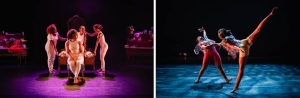
Red Clay Dance Company, Chicago's premier Afro-contemporary dance company, proudly announces its exciting Season 18: Spectrum programming, including Founding Artistic Director and CEO Vershawn Sanders-Ward's powerful evening-length work Freedom Square: The Black Girlhood Altar at Northwestern University's Wirtz Center in Evanston in October 2026, and a spring concert featuring work by Sanders-Ward alongside Rena Butler, Beatrice Capote and Bebe Miller at The Dance Center of Columbia College Chicago in April 2027.
For more information, concert updates and tickets, visit redclaydance.com/season18. Tickets for performances of Freedom Square: The Black Girlhood Altar, October 1-3, 2026, are now available starting at $42, with discounts for students and seniors.
In its 18th season, Red Clay Dance Company celebrates the theme Spectrum, a reflection of how one bold vision has grown into a vibrant movement. Like light passing through a prism, the Company's founding mission has expanded into a diverse community of artists, students, educators, audiences, partners and supporters—each bringing their own unique brilliance to a shared purpose. Season 18: Spectrum honors the collective power of Artivism and the many voices that shape Red Clay Dance Company's story, celebrating the full spectrum of Artivists whose creativity, resilience and collective action are shaping a more just, vibrant and connected future.
"I am thrilled to welcome audiences to our 18th season, Spectrum. Every season is a milestone worth celebrating, and this one feels especially meaningful because it reflects the extraordinary village that has grown from one vision into a movement fueled by so many voices and spirits," says Red Clay Dance Company's Founding Artistic Director and CEO Vershawn Sanders-Ward. "As we celebrate where we've been and look toward the future through our 1 Million Artivists Strong initiative, I hope this season reminds us all that our unique gifts shine brightest when they come together to create something greater than ourselves."
Season 18: Spectrum kicks off with a performance from Red Clay Dance Company during the free Chicago Live Festival at Navy Pier on Saturday, September 19 at 6:30 p.m.
Fall 2026 concert Freedom Square: The Black Girlhood Altar
In October, the Company stages a reprisal of Vershawn Sanders-Ward's powerful evening-length work Freedom Square: The Black Girlhood Altar at Northwestern University's Wirtz Center (1949 Campus Drive, Evanston, IL) from October 1–October 3, 2026, at 7:30 p.m. daily. A post-show discussion will be held in partnership with the Black Arts Consortium on opening night, October 1, moderated by Northwestern University Professor Thomas F. DeFrantz.
Freedom Square: The Black Girlhood Altar honors the lives, stories and enduring legacy of missing and murdered Black women and girls. Performed by the award-winning Red Clay Dance Company ensemble, with original music by acclaimed Chicago musician Jamila Woods and costume design by Shaqui Reed and Alyna Michelle, the production blends Afro-contemporary dance, storytelling, digital media and immersive design to create a powerful and deeply resonant experience.
Inspired by The Black Girlhood Altar—the mixed-media installation created by A Long Walk Home artists Scheherazade Tillet and Robert Narcisco—this dance performance incorporates elements of the altar into its scenic and visual design, transforming the stage into a living sanctuary for remembrance, healing and collective action.
Spring 2027 concert at The Dance Center of Columbia College Chicago
Season 18: Spectrum continues with concerts from the Red Clay Dance Company ensemble at The Dance Center of Columbia College Chicago (1306 S. Michigan Avenue, Chicago) on April 8 and April 9, 2027, at 7:30 p.m. daily. The Company will perform Her Table by Rena Butler, Field: New Ground by Bebe Miller, Written on the Flesh by Vershawn Sanders-Ward, and a new work by Beatrice Capote.
Paint the Town Red fundraiser
Red Clay Dance Company's season concludes with its annual Paint the Town Red Fundraiser on Saturday, April 10 at 7 p.m. at Red Clay Dance Center (808 E. 63rd Street, Chicago). Themed A Spectrum Celebration, this evening of entertainment, community engagement and philanthropy supports Red Clay Dance Company's mission to awaken Glocal Artivism and empowerment through dance, and build the Company's 1 Million Artivists Strong initiative to connect and activate supporters who believe the arts can strengthen communities and move justice forward.
About the Season 18 choreographers
Vershawn Sanders-Ward is a visionary director, choreographer, educator, and Artivist who is transforming the landscape of contemporary dance through her art and activism. As the Founding Artistic Director and CEO of Red Clay Dance Company, she blends African diasporic dance forms with contemporary techniques, creating performances that inspire social change and provoke thought. A lifelong advocate for community empowerment, Vershawn uses dance as a platform to explore themes of identity, race, and justice.
She has earned numerous accolades, including the inaugural Walder Platform Award, a Dance/USA Artist Fellowship, a Chicago Dancemakers Forum Award, and a 3Arts Award. Most recently, she was selected as a 2026 Creation Fund Artist in support of her new interdisciplinary work, WE THE PEOPLE, and as a 2026 BTLI Artist-in-Residence, contributing to the creative development of the Bronzeville Trail through community-engaged artistic practice. She is also commissioned to create a new work for the University of Texas at Austin Department of Theatre and Dance during the 2026–27 season.
Vershawn's choreography has been presented at prestigious institutions including Northwestern University and Loyola University Chicago, with commissions extending across the United States and internationally. An accomplished educator, she holds an MFA in Dance from NYU. Her influence extends beyond the stage through her service as a Board Trustee for Dance/USA. A Community Impact Fellow for the Harvard Business School Club and a featured guest on PBS's The Expressway with Dulé Hill, Vershawn's commitment to equity and inclusion in the arts continues to shape the future of dance, culture, and civic engagement globally.
Rena Butler hails from Chicago and began her studies at The Chicago Academy for the Arts. She studied overseas at Taipei National University of the Arts in Taiwan, and received her BFA from SUNY Purchase Conservatory of Dance. Rena performed with companies including Hubbard Street Dance Chicago, AIM by Kyle Abraham, Bill T. Jones/Arnie Zane Company, David Dorfman Dance, The Kevin Wynn Collection, Pasos Con Sabor Salsa Dance Company, and Gibney Company. Rena is a recipient of the prestigious 2019 Princess Grace Foundation Award for Choreography and San Francisco's 2024 Isadora Duncan Dance Award for Outstanding Achievement in Choreography. She has created works for Het Nationale Ballet in The Netherlands, National Ballet of Canada, San Francisco Opera's Orpheus and Euridice, Hubbard Street Dance Chicago, Pacific Northwest Ballet, Norrdans in Sweden, AIM By Kyle Abraham, Gauthier Dance in Stuttgart, Germany, The Lyric Opera of Chicago's Proximity, Cincinnati Ballet, Le Ballet de L'Opéra Grand Avignon and Arles Youth Ballet Company in France, The New Orleans Museum of Modern Art, SALT Dance, a film for Third Coast Percussion x Devonté Hynes/Blood Orange, Oregon Ballet Theater, The Juilliard School, Oklahoma City Ballet, Parsons Dance, TEDxChicago Virtual Salon 3.0: Design Your Life, Charlotte Ballet, BalletX, and more. She was the featured cover story for Dance Magazine's November 2021 issue.
Beatrice Capote is a Cuban American dancer, choreographer, and educator, and the creator of Capotechnique™, a fusion of Afro-Cuban traditions and Contemporary dance. She is an Associate Professor of Contemporary Dance at Indiana University Bloomington and has received critical acclaim for her work, including her role as Yoruba Consultant and Choreographer for The Half God of Rainfall, which earned a 2023 AUDELCO Award nomination. Capote's choreography centers Afro-Cuban narratives and has been presented at major festivals and venues nationwide. She has collaborated with artists such as Angeìlique Kidjo, Paquito D'Rivera, and Wynton Marsalis, and performed with renowned dance companies including Camille A. Brown & Dancers, A.I.M by Kyle Abraham, INSPIRT by Christal Brown, and others. Her honors include the 2024–2025 Mellon Foundation Hemisphere Guest Artist in Residence award.
A native New Yorker, Bebe Miller first performed her choreography at NYC's Dance Theater Workshop in 1978. She formed Bebe Miller Company in 1985 to pursue her interest in finding a physical language for the human condition. Committed to keeping dance available to a wide spectrum of people and to further the conversation about the role of arts and creativity in our culture, Miller is dedicated to providing access to the creative process and expression to diverse communities. She has created more than 50 dance works for the company and has been commissioned and presented by 651 ARTS, BAM Next Wave, DTW, Jacob's Pillow, Joyce Theater, PICA, REDCAT, Walker Art Center, and Wexner Center for the Arts among others. Her choreography has been performed by Kyle Abraham's A.I.M. (Abraham In Motion), Dayton Contemporary Dance Company, Oregon Ballet Theater, Boston Ballet, Philadanco, Salt Lake City's Repertory Dance Theater, the UK's Phoenix Dance Company, PACT Dance Company of Johannesburg, South Africa, and at a host of colleges and universities including the Dance Center of Columbia College Chicago. Named a Master of African AmericanChoreography by the Kennedy Center in 2005, Bebe has been a Movement Research honoree, has received four New York Dance and Performance "Bessie" awards, the David R. White Award from New York Live Arts, United States Artists and Guggenheim Fellowships, honorary doctorates from Ursinus College and Franklin & Marshall College, and is one of the inaugural class of Doris Duke Artist Award recipients. Bebe is a Distinguished Professor Emerita in The Ohio State University's Department of Dance and lives in Columbus, OH.
About Red Clay Dance Company
Led by Founding Artistic Director and CEO Vershawn Sanders-Ward, Red Clay Dance Company is a Black women-led, Black-benefiting professional dance organization that moves the world through Artivism—the integration of art and activism to inspire social transformation. Rooted in the dances, histories, and movement technologies of the African Diaspora, Red Clay Dance creates, performs, and teaches work that uplifts Black voices, dismantles systemic inequities, and cultivates collective joy and liberation.
At the heart of the organization is our professional touring company, Red Clay Dance, Chicago's premier Afro-Contemporary dance ensemble. Now in its 17th season, this award-winning company serves as the artistic engine of Red Clay Dance Company, touring locally, nationally and internationally to share stories of the African Diaspora that challenge oppression, celebrate identity, and ignite agency. Red Clay Dance has graced renowned stages such as Jacob's Pillow, The Yard, the Museum of Contemporary Art Chicago, Harris Theater for Music & Dance, the Dance Center of Columbia College Chicago, the DuSable Museum of African American History, ODC Theater, Dance Mission Theater, The Painted Bride Art Center, and the National Theatre of Uganda. Through technically rigorous and culturally grounded performance, the company affirms African-rooted forms as powerful and enduring modes of innovation, expression, and resistance.
The touring company's artistic excellence informs our education and community engagement programs, including Making the Artivist Apprenticeship and School/Community Education Partnerships, reaching more than 2,500 students and 4,000 families annually. From our home—the Red Clay Dance Center in Chicago's historic Woodlawn neighborhood—we provide access to high-quality dance training, mentorship, and professional development for artists and community members through our classes and In the Making Membership. Together, our ecosystem of touring, teaching, and training sustains a vibrant hub for Glocal Artivism—proving that dance is not just performance, but a pathway to equity, empowerment, and lasting change.
Steppenwolf Theatre Presents ADIRONDACK CHAIR CIRCLE – October 22 – December 6, 2026 – World Premiere!

Steppenwolf Theatre Company, the nation's premier ensemble theater company, is pleased to continue its 51st Season with the world premiere of Chicago playwright Stephanie Alison Walker's biting satire Adirondack Chair Circle, directed by Tony Award winner Pam MacKinnon (Downstate, Edward Albee's Who's Afraid of Virginia Woolf?), playing October 22 — December 6, 2026 in Steppenwolf's Ensemble Theater, 1646 N. Halsted St. in Chicago. Single tickets are now on sale at steppenwolf.org or the Box Office at (312) 335-1650.
Adirondack Chair Circle will feature ensemble member Caroline Neff (Mr. Wolf, Fool for Love, POTUS, Another Marriage), with additional casting to be announced shortly.
About the Production:
A gaggle of suburban moms, armed with pickleball paddles and hard kombucha, are ready to take on the school board in the fight of their lives: attempting to ban the controversial books available to their kids in the school library. But is this trusted inner circle all on the same page? A piercing world premiere from a Chicago playwright, Stephanie Alison Walker's Adirondack Chair Circle exposes the hilarious hypocrisy of the causes we claim and the company we keep. And has a damn good time doing it.
The creative team includes Todd Rosenthal (Scenic Design), Izumi Inaba (Costume Design), Barbara Samuels (Lighting Design), Mikhail Fiksel (Sound Design), Nicholas Hussong (Projection Design), Kate DeVore (Vocal Coach), Bryar Barborka (Dramaturg), Patrick Zakem (Creative Producer), Elise Hausken (Production Manager), JC Clementz, CSA (Casting), Michelle Medvin (Production Stage Manager) and Kathleen Barrett (Assistant Stage Manager). For full cast and creative team bios, click here.
Production Details:
Title: Adirondack Chair Circle
Playwright: Stephanie Alison Walker
Director: Pam MacKinnon
Cast: ensemble member Caroline Neff (Evelyn Grace). Additional casting to be announced.
Location: Steppenwolf's Ensemble Theater, 1646 N. Halsted St., Chicago
Dates: Previews: Thursday, October 22 – Saturday, October 31, 2026
Opening: Sunday, November 1, 2026 at 6 pm
Regular run: Tuesday, November 3 – Sunday, December 6, 2026
Curtain Times: Tuesdays, Wednesdays, Thursdays and Fridays at 7:30 pm; Saturdays at 3 pm & 7:30 pm; and Sundays at 3 pm. Please note: there will not be 7:30 pm performances on Tuesday, October 27, Thursday, November 5, Tuesday, November 10, Wednesday, November 18, Wednesday, November 25, Thursday, November 26 and Tuesday, December 1; there will be an added 2 pm matinees on Wednesday, November 25 and Wednesday, December 2.
Tickets: Classic Memberships starting as low as $165 are now on sale for Steppenwolf's 2026/27 season at steppenwolf.org/myseason. Single tickets for Adirondack Chair Circle ($20 – $149*) are now on sale at steppenwolf.org and the Box Office at (312) 335-1650. Steppenwolf Flex Memberships are currently on sale: Black Card Memberships with six tickets for use any time for any production and RED Card Memberships for theatergoers under 30. *Pricing includes an $8.50 handling fee
Steppenwolf offers 20 tickets for $20 (no added fees) for each performance of every membership series production. Use promo code 20FOR20 to redeem this offer online, available in advance until they're sold out for every main series show. Limit 2 tickets per person. You can also purchase by phone at (312) 335-1650 on the day-of show at 12 pm for main series performances. Limit 2 tickets per person.
Accessible Performance Dates:
Audio-Described and Touch Tour: Sunday, November 22 at 3 pm (1:30 pm Touch Tour)
Open-Captioned: Saturday, November 7 at 3 pm, Thursday, November 19 at 7:30 pm and Saturday, November 28 at 3 pm
ASL-Interpreted: Friday, December 4 at 7:30 pm
Education and Engagement:
Throughout the 2026/27 season, Steppenwolf continues its commitment to the next generation of theatre learners, makers and appreciators with robust education and engagement programming. Programming includes dedicated student matinee performances during four of the five Membership Series productions including Topdog/Underdog, Adirondack Chair Circle, The Comeuppance and Ellen B., in-school residencies in partnership with Chicago Public schools, workshops, panels and events specifically geared towards teens, as well as professional development trainings and resources for educators. For additional information about Steppenwolf's Education and Engagement programming and to register your school for a field trip visit steppenwolf.org/education-community/school-teacher-programs/field-trips.
Artist Biographies:
Stephanie Alison Walker (Playwright) is an internationally-produced, award-winning playwright whose work is known for the personalization of the political, humor in darkness and the dramatization of the resilience of women. She is a native Chicagoburbian who has lived all over including London, Buenos Aires, San Juan Island and fifteen years in Los Angeles. She received her Bachelors in English/Creative Writing and Spanish from the University of Colorado and her Master of Professional Writing from the University of California. She began writing plays while working for Fox Theatricals in Chicago. Her play about the housing crisis, American Home, was the inaugural winner of American Blues Theatre's Blue Ink Award. Her play about the mothers of the disappeared in Argentina, The Madres, received a National New Play Network Rolling World Premiere at Teatro Vista in Chicago, Skylight Theatre Company in L.A., Moxie Theatre in San Diego and Shrewd Theatre Company in Austin. It was the 2019 Winner of the Francesca Primus Prize, winner of the Ashland New Plays Festival, the Generations Prize and semi-finalist for the CTG/ Humanitas Prize for playwriting. Her follow-up play The Abuelas, premiered at Teatro Vista and was recently adapted into a short film titled The Birthday Gift. The Art of Disappearing was a finalist for the Primus Prize and enjoyed critical praise for the world premiere in Chicago by 16th Street Theater in 2015. Friends with Guns, her play about liberals and gun ownership was an O'Neill Finalist, winner of Best New Play at the 2019 Valley Theatre Awards, and had its Chicago premiere by A Short Leap Theatre Company in 2025. Sophia Hayden Deserves Better tells the story of the architect of the Woman's Building at the 1893 World's Columbian Exposition in Chicago and was recently a part of Gglassfest by Lookingglass Theatre in Chicago. The Ordeal of Water, inspired by the first women to work as Longshoremen at the Port of Los Angeles, was most recently a part of Bay Street Theater's New Works Festival. Adirondack Chair Circle, her play that tackles suburban book-banning moms, was developed at The Inkwell Theater Company and A Red Orchid's Studio at A Red Orchid. Her short plays have been anthologized by Smith & Kraus. Her full-lengths are published by Broadway Publishing, Inc. In addition to writing plays, she is currently adapting Friends with Guns and The Abuelas as features while raising two spirited boys and selling real estate in the suburbs of Chicago. She is a proud member of the Dramatists Guild of America, Honor Roll Playwrights, NNPN Affiliated Artist, and a proud alumni of the Playwrights Union. stephaniealisonwalker.com
Pam MacKinnon (Director) is a Tony, Drama Desk and multi-Obie Award winning director. She is the artistic director of American Conservatory Theater in San Francisco. She has directed more than eighty productions. Her Tony Award-winning production of Edward Albee's Who's Afraid of Virginia Woolf? originated at Steppenwolf. Her production of Bruce Norris's Downstate (Steppenwolf, National Theatre and Playwrights Horizons) was celebrated with several Jeff Awards and won Pam her second Obie. She served as president of SDC, the national Union of choreographers and directors.
Caroline Neff (Evelyn Grace) is a Steppenwolf ensemble member. At Steppenwolf, she was last seen in Mr. Wolf, Fool for Love, POTUS, Another Marriage, Describe the Night, Seagull, Dance Nation, The Curious Incident of the Dog in the Night-Time, You Got Older, Linda Vista (also Taper Forum and Broadway), The Fundamentals, The Flick, Airline Highway (also Broadway), The Way West, Three Sisters, Annie Bosh is Missing and Where We're Born. Select theatre credits include: Lettie (Jeff Award Best Actor; Victory Gardens Theater); Uncle Vanya (Goodman Theatre); A Brief History of Helen of Troy (Jeff Award for Best Actress), The Knowledge, Harper Regan, In Arabia We'd All Be Kings (Steep Theatre); The Downpour (Route 66 Theatre); Port (Griffin Theatre); 4000 Miles (Northlight Theatre); Moonshiner (Jackalope Theatre). Regional credits include: Peerless (Yale Repertory Theatre). Film and television credits include: FBI, Three Women, Let the Right One In, The Red Line, Chicago PD, Chicago Fire, Open Tables and Older Children, and heard in multiple Audible Projects such as: Song of the Northwoods, Crowded Hours, Denali and Boar's Nest. She is a proud company member of Steep Theatre and holds her BA from Columbia College.
Accessibility:
As a commitment to make the Steppenwolf experience accessible to everyone, performances featuring American Sign Language Interpretation, Open Captioning and Audio Description are offered during the run of each STC production. Assistive listening devices (ALDs), large-print programs and Braille programs are available for every performance and all our spaces are equipped with an induction hearing loop. Our building features wheelchair accessible seating and restrooms, push-button entrances, a courtesy wheelchair and all-gender restrooms, with accessible counter and table spaces at our bars. For additional information regarding accessibility, visit steppenwolf.org/access or e-mail This email address is being protected from spambots. You need JavaScript enabled to view it..
Sponsor Information:
United Airlines is the Official and Exclusive Airline of Steppenwolf. Steppenwolf is also grateful for the significant season support from lead sponsors Allstate Insurance Company, Paul M. Angell Family Foundation, Bloomberg Philanthropies, Crown Family Philanthropies, Caroline and Keating Crown, Julius Frankel Foundation, Lefkofsky Family Foundation, Northern Trust, Anne and Don Phillips, John Hart and Carol Prins, Shubert Foundation, Inc, Walder Foundation, and Zell Family Foundation. Steppenwolf also acknowledges generous support from premier sponsors Anonymous, Andrew and Amy Bluhm, Michael and Cathy Brennan, Ann and Richard Carr, Chicago Community Trust, Rich and Margery Feitler, FROST CHICAGO, Jessica and Dominic Green Family Fund, John D. and Catherine T. MacArthur Foundation, The Orlebeke Foundation, Polk Bros. Foundation, Sacks Family Foundation, Gary Sinise Foundation, Harold and Mimi Steinberg Charitable Trust, Thoma Bravo, and Bryan Traubert and Penny Pritzker. Steppenwolf also acknowledges support from the Illinois Arts Council and the City of Chicago Department of Cultural Affairs and Special Events.
About Steppenwolf Theatre Company:
Steppenwolf Theatre Company is the nation's premier Ensemble Theater with 51 members who are among the top actors, playwrights and directors in the field. Thrilling, powerful, groundbreaking productions have made this theatre legendary. From the early phenomenon of Balm in Gilead, to The Grapes of Wrath, August: Osage County, Downstate, The Brother/Sister Plays, and more recently, the Pulitzer Prize and Tony Award-winning Purpose, Steppenwolf Theatre has had a long-running and undeniable impact on American Theatre and Chicago's cultural landscape. Founded in 1974 by Terry Kinney, Jeff Perry and Gary Sinise, Steppenwolf started as a group of friends in their teens and early 20s performing in the basement of a school in Highland Park, Illinois. Today, the company's artistic force remains rooted in the original vision of its founders: an artist-driven theatre, whose vitality is defined by its appetite for bold and innovative work. Every aspect of Steppenwolf is rooted in its Ensemble ethos, from the intergenerational artistic programming to the multi-genre performance series LookOut, to the nationally recognized work of Steppenwolf Education and Engagement which serves nearly 15,000 teens annually. While grounded in the Chicago community, more than 40 original Steppenwolf productions have enjoyed success nationally and internationally, including Broadway, Off-Broadway, London, Sydney, Galway and Dublin. Steppenwolf also holds accolades that include the National Medal of Arts, 14 Tony Awards, two Pulitzer Prize-winning commissions and more. Led by Artistic Directors Glenn Davis and Audrey Francis, Executive Director E. Brooke Flanagan and Board of Trustees Chair Keating Crown — Steppenwolf continually redefines the boundaries of live theater and pushes the limits of acting and performance.
Steppenwolf's Mission: Steppenwolf strives to create thrilling, courageous and provocative art in a thoughtful and inclusive environment. We succeed when we disrupt your routine with experiences that spark curiosity, empathy and joy. We invite you to join our ensemble as we navigate, together, our complex world. steppenwolf.org, facebook.com/steppenwolftheatre, twitter.com/steppenwolfthtr and instagram.com/steppenwolfthtr.
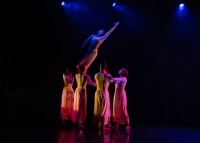
Identity Performing Arts' Fifth Anniversary Gala: Movement That Keeps Becoming
19 October 2026 in Dance in ReviewFive years is an important milestone for any arts organization, but for a contemporary dance company it also marks an…

Overshadowed Theatrical Productions Brings Beloved Holiday Classic It’s a Wonderful Life to the Stage
18 October 2026 in Upcoming TheatreThis holiday season, Overshadowed Theatrical Productions is thrilled to present the timeless holiday classic, It’s a Wonderful Life, live on…
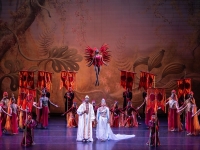
Dance Theatre of Harlem fills Auditorium Theatre with fire and funk
18 October 2026 in Dance in ReviewProjecting a vibe that felt more homecoming party than ballet presentation, Dance Theatre of Harlem returned to Chicago on October…
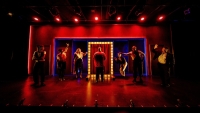
“A Strange Loop” Lets the Intrusive Thoughts Win at Raven Theatre in partnership with About Face Theatre
17 October 2026 in Theatre in ReviewA musical, but it’s just the voices in your head. Sounds just crazy enough to win the 2020 Pulitzer for…

Announcing Goodman's 22nd New Stages 2026 Festival Line-Up
15 October 2026 in Upcoming TheatreFrom a "Kung Fu rom-com" to a witchy new musical, The Goodman's popular New Stages Festival in its 22nd year continues…

TIMELINE THEATRE’S 100TH PRODUCTION, THE CHICAGO PREMIERE OF LAURA WADE’S HOME, I’M DARLING, DIRECTED BY MECHELLE MOE, SATIRIZES THE SEDUCTIVE FANTASY OF A “SIMPLER PAST,” NOVEMBER 11 - DECEMBER 13
14 October 2026 in Upcoming TheatreTimeLine Theatre’s 30th Anniversary Season at its new home in Uptown rolls merrily along in November with the company’s 100th…

Court Theatre announces America@250 - Now is the Time: Artists Go to Work
14 October 2026 in Theatre BuzzUnder the leadership of Marilyn F. Vitale Artistic Director Avery Willis Hoffman and Executive Director Angel Ysaguirre, Court Theatre proudly…
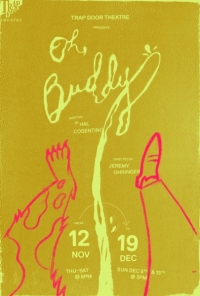
Trap Door Theatre Presents the World Premiere of OH, BUDDY, by Hal Cosentino. Opening November 12th, 2026
14 October 2026 in Upcoming TheatreTrap Door Theatre is thrilled to continue its 33rd season with a Chicago Premiere of Oh, Buddy, written by Hal…
Announcing the Cast of the 49th A CHRISTMAS CAROL
14 October 2026 in Upcoming TheatreTis the season, in spite of today's unseasonable temps, as A Christmas Carol begins rehearsals for The Goodman's 49th annual…

NOVA ENTERTAINMENT CURRENT AND UPCOMING 2026 CIRCA PINTIG UPDATES
14 October 2026 in Now PlayingNova Entertainment is pleased to announce the upcoming performance schedule and updates for CIRCA Pintig, with a visual rebrand and…
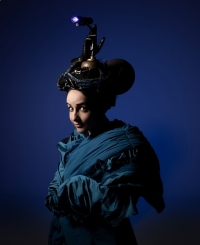
Steppenwolf Theatre Announces "ha ha ha ha ha ha ha" January 13 – February 7, 2027
14 October 2026 in Upcoming TheatreThe blurb is: hahahahahahahahahaha hahahahahahaha hihihi hahahahahahaha hoho hahahhahaha hehe hahahahahahahahahaha. Julia Masli's award-winning solo phenomenon ha ha ha ha…

'Sanctuary Stories' Ventures Into Emotional Drama Behind the News on Immigration
13 October 2026 in Theatre in ReviewSanctuary Stories plumbs the line between theater and journalism, and the powerful human dramas both can depict. Funded by a Northwestern…
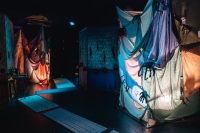
Inside Six Strange Worlds: Exquisite Corpse VI: LULLABIES
13 October 2026 in Theatre in ReviewFor its sixth Halloween season, Rough House Theater Co. has transformed Steppenwolf’s Merle Reskin Garage into a spectacular puppet haunted…
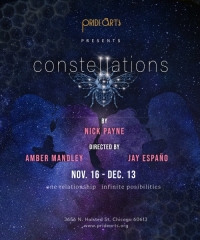
PrideArts announces cast and production teams for Nick Payne's CONSTELLATIONS, performed by alternating same-sex casts, November 13- December 13
12 October 2026 in Upcoming TheatreThursdays – Saturdays at 7:00 pm, Sundays at 3 pm Additional Saturday matinees at 3:00 pm on November 28 and December…
Robert Falls Directs a Sinfully Satisfying Don Giovanni at Lyric Opera of Chicago
11 October 2026 in Theatre in ReviewLet he without sin cast the first stone, Lyric’s “Don Giovanni” seemingly says when they bring up the house lights…

Teatro Vista Productions in collaboration with Audible presents Cafecito & Loops: A Mexodus Listening Tour Headed South Sundays, through November 1st
11 October 2026 in Now PlayingTeatro Vista Productions (TVP), the Midwest's only Latine-led Equity theatre company, in collaboration with Audible, presents Cafecito & Loops: A…
BrightSide’s Addams Family Musical Revives the Wonderfully Weird World of the Addams Clan
10 October 2026 in Theatre in ReviewThey're creepy and they're kooky, Mysterious and spooky, They're altogether ooky, The Addams Family. Yes, ooky. BrightSide Theatre’s production of…
Chicago City Opera Delivers a Rare Operatic Haunting with Der Vampyr
08 October 2026 in Theatre in ReviewWith Halloween creeping closer, there’s something fitting about revisiting one of opera’s earliest flirtations with macabre horror - especially in…
Avalanche Theatre stages the world premiere of They Broke Up by Skyler Tarnas November 6–22, 2026
08 October 2026 in Upcoming TheatreAvalanche Theatre announces the world premiere production of They Broke Up by Chicago playwright Skyler Tarnas, November 6–22, 2026. Opening…
Oil Lamp Theater Announces the cast and creative team for the return of IT'S A WONDERFUL LIFE: A LIVE RADIO PLAY, Nov. 20 - Dec. 27
08 October 2026 in Upcoming TheatreOil Lamp Theater is proud to announce the cast and creative team for its next production and the final production…
Adults-only holiday fun: Who's Holiday! brings R-rated Cindy-Lou Who back to Theater Wit for her sixth year, Nov. 27-Dec. 27
08 October 2026 in Upcoming TheatreChristmas Day is in our grasp. Why the vodka? Glad you asked! Who's Holiday! brings R-rated Cindy-Lou Who back to…
Two-Time Tony Award-Winning Actress Victoria Clark To Receive the Sarah Siddons Society Award at Annual Benefit on Monday, November 9, 2026
08 October 2026 in Theatre BuzzThe Sarah Siddons Society is pleased to present its 2026 Award to actress and director Victoria Clark, who recently starred…
Goodman's Dead Girl’s Quinceañera: When Fifteen Meets the Adult World
07 October 2026 in Theatre in ReviewAt fifteen, the world can feel like a television show you haven't quite figured out how to turn off. For…
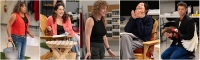
Steppenwolf Theatre's ADIRONDACK CHAIR CIRCLE In Rehearsal – Playing October 22 – December 6, 2026 – World Premiere!
07 October 2026 in Upcoming TheatreSteppenwolf Theatre Company, the nation's premier ensemble theater company, is pleased to launch its 51st Season with the world premiere of…
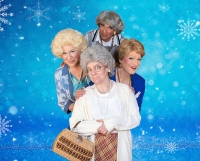
Hell in a Handbag Productions Announces 25th Anniversary Season!
07 October 2026 in Upcoming TheatreHell in a Handbag Productions is thrilled to announce its 25th Anniversary Season, featuring three "camptacular" shows guaranteed to delight lovers of…
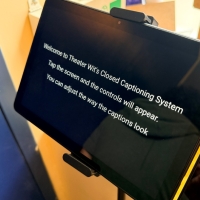
Chicago’s Theater Wit introduces new Watchword closed captioning system, dramatically improving access in all three of its theaters
07 October 2026 in Theatre BuzzChicago’s Theater Wit is now offering new, state-of-the-art closed captioning service, marking a dramatic improvement in making live theater more…

Paramount Theatre’s reimagined A Christmas Carol promises to be a dazzling new, all-ages spectacle for Chicago’s holiday theater season, November 11-January 3
07 October 2026 in Upcoming Theatre“God bless us, everyone,” because there’s a fresh, new, reimagined version of Charles Dickens’ classic tale A Christmas Carol debuting…
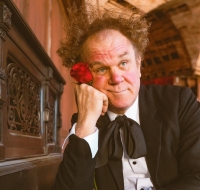
"John C. Reilly is Mister Romantic" Returns to Steppenwolf Theatre - December 10 – 13, 2026
06 October 2026 in Upcoming TheatreFollowing last year's critically acclaimed, sell-out engagement, Steppenwolf Theatre Company is pleased to announce the return of John C. Reilly…
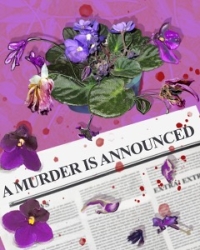
Saint Sebastian Players Open 45th Season With A Murder Is Announced by Agatha Christie Classic Miss Marple Mystery Runs Oct. 23–Nov. 15
06 October 2026 in Upcoming TheatreThe Saint Sebastian Players open their 45th season of travels to different places with A Murder is Announced, a classic Miss Marple mystery…
Announcing "The Goodman, For Good" Campaign
06 October 2026 in Theatre BuzzToday, Goodman Theatre raises the curtain on its future as leadership and artists share a vision for its next century…
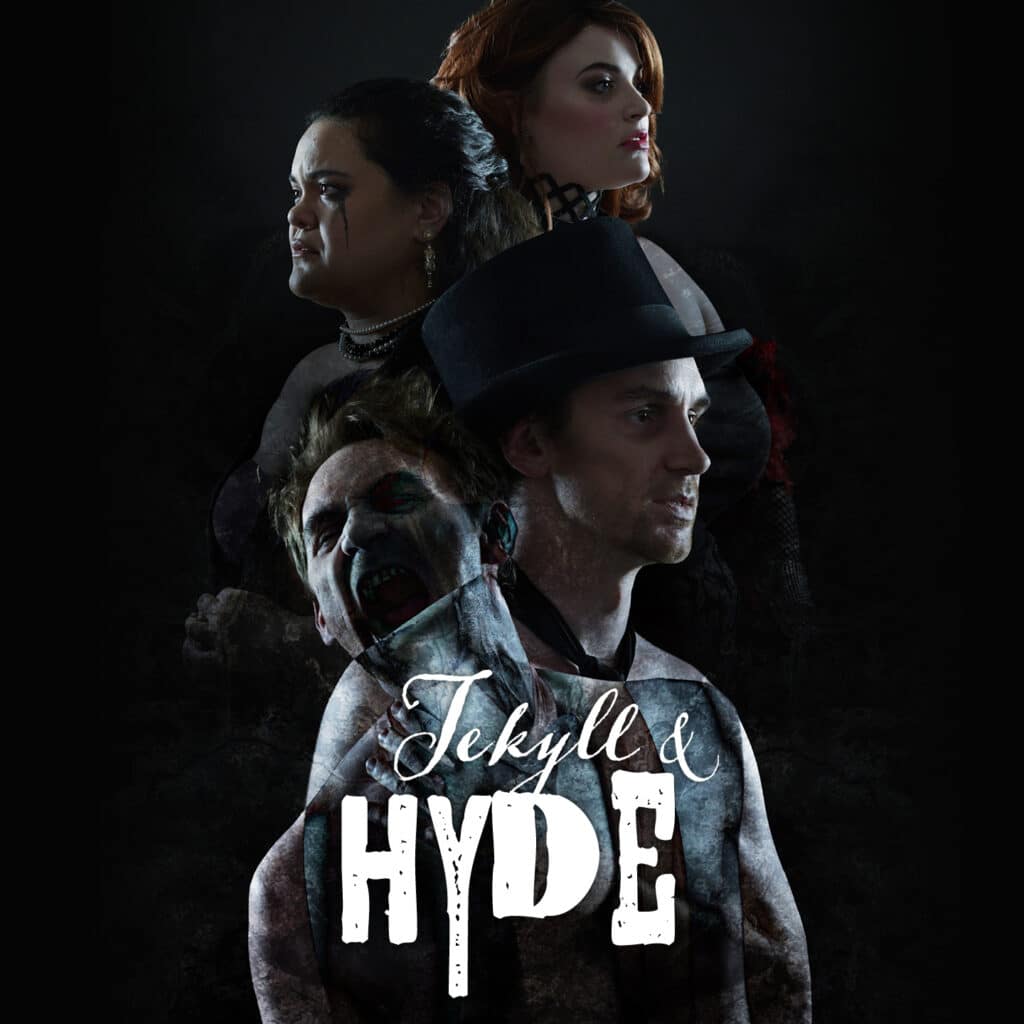


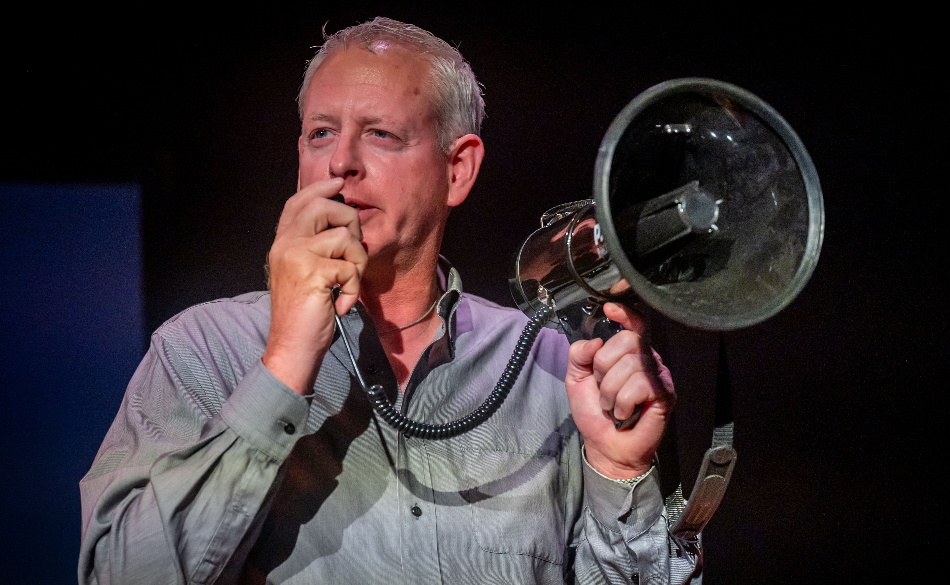

Latest Articles
-
 Identity Performing Arts' Fifth Anniversary Gala: Movement That Keeps Becoming
Written by Wesley DavidFive years is an important milestone for any arts organization, but for a contemporary dance company it also marks an artistic coming of age. Identity Performing Arts celebrated its fifth anniversary at the Edlis Neeson Theater at the Museum of…
Identity Performing Arts' Fifth Anniversary Gala: Movement That Keeps Becoming
Written by Wesley DavidFive years is an important milestone for any arts organization, but for a contemporary dance company it also marks an artistic coming of age. Identity Performing Arts celebrated its fifth anniversary at the Edlis Neeson Theater at the Museum of… -
 Overshadowed Theatrical Productions Brings Beloved Holiday Classic It’s a Wonderful Life to the Stage
Written by Buzz Center StageThis holiday season, Overshadowed Theatrical Productions is thrilled to present the timeless holiday classic, It’s a Wonderful Life, live on stage. As Frank Capra’s legendary film celebrates its 80th anniversary, this stage adaptation offers the perfect way for families and…
Overshadowed Theatrical Productions Brings Beloved Holiday Classic It’s a Wonderful Life to the Stage
Written by Buzz Center StageThis holiday season, Overshadowed Theatrical Productions is thrilled to present the timeless holiday classic, It’s a Wonderful Life, live on stage. As Frank Capra’s legendary film celebrates its 80th anniversary, this stage adaptation offers the perfect way for families and… -
 Dance Theatre of Harlem fills Auditorium Theatre with fire and funk
Written by Susan LiebermanProjecting a vibe that felt more homecoming party than ballet presentation, Dance Theatre of Harlem returned to Chicago on October 17th after a 10-year absence. The Auditorium Theatre audience took a while to assemble itself largely because people were having…
Dance Theatre of Harlem fills Auditorium Theatre with fire and funk
Written by Susan LiebermanProjecting a vibe that felt more homecoming party than ballet presentation, Dance Theatre of Harlem returned to Chicago on October 17th after a 10-year absence. The Auditorium Theatre audience took a while to assemble itself largely because people were having… -
 “A Strange Loop” Lets the Intrusive Thoughts Win at Raven Theatre in partnership with About Face Theatre
Written by John AccroccoA musical, but it’s just the voices in your head. Sounds just crazy enough to win the 2020 Pulitzer for Drama. “A Strange Loop” by Michael R. Jackson finally makes its Chicago premiere at Raven Theatre in a co-production with…
“A Strange Loop” Lets the Intrusive Thoughts Win at Raven Theatre in partnership with About Face Theatre
Written by John AccroccoA musical, but it’s just the voices in your head. Sounds just crazy enough to win the 2020 Pulitzer for Drama. “A Strange Loop” by Michael R. Jackson finally makes its Chicago premiere at Raven Theatre in a co-production with…


Does your theatre company want to connect with Buzz Center Stage or would you like to reach out and say "hello"? Message us through facebook or shoot us an email at This email address is being protected from spambots. You need JavaScript enabled to view it..
*This disclaimer informs readers that the views, thoughts, and opinions expressed in the text belong solely to the author, and not necessarily to Buzz Center Stage. Buzz Center Stage is a non-profit, volunteer-based platform that enables, and encourages, staff members to post their own honest thoughts on a particular production.